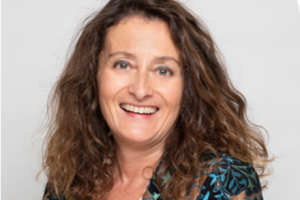
Paola Barbarino, CEO of Alzheimer’s Disease International, shares her insights into the growing global challenge of the disease and the urgent need for action across all income settings. In this interview, she discusses the importance of post-diagnosis support, the burden on caregivers, the impact of stigma, and the role of governments in creating Alzheimer’s-inclusive societies. Barbarino also highlights the organization’s global advocacy efforts and calls for a unified, collaborative approach to tackling the disease worldwide.
You started your career in education and the arts before moving into the field of Alzheimer’s advocacy. What led you to this transition and what fuels your passion for dementia awareness and policy change?
I have explored various fields because I have always been interested in many areas, particularly working in the international space. When Alzheimer’s Disease International (ADI) approached me to lead the organization, I thought this was incredibly important, not only because I had not previously worked in healthcare, but also because I was genuinely curious to learn more about the field. My interest was further intensified by personal experiences with Alzheimer’s and dementia affecting friends and family members. I recognized this as an extraordinary opportunity to join a significant non-profit at a very interesting time.
Since joining, I have grown increasingly passionate in the space because ADI serves as the global voice for people who are among the least privileged and face the toughest circumstances. When I speak at global meetings, I always remember that I am representing individuals who cannot speak up for themselves. This responsibility fuels my commitment. I believe the group we represent is one of the last frontiers in exclusion. Many still dismiss older age, and I have observed ageism at every level of society. We are facing a massive issue with the global aging population while most governments worldwide continue to ignore the problem.
Can you provide an overview of ADI, its mission, and its key activities?
ADI is an international non-governmental organization that represents over 100 national Alzheimer’s and dementia organizations. ADI was founded in the 1980s, at a time when dementia was largely ignored and stigmatized. In contrast, the equivalent organization for cancer was founded in the 1930s. This timeline shows the long history of denial surrounding Alzheimer’s and dementia.
Our mission is to shape global dementia policy and to ensure that there is a comprehensive framework to guide national Alzheimer’s and dementia strategies. For instance, our World Alzheimer’s Report in 2009 was the first to provide global figures on the disease. This report helped to bring widespread attention to the issue, although it took a long time for the data to be officially adopted by organizations such as the World Health Organization (WHO).
At ADI, we build a repository of strategies and plans that have worked in various countries. This repository serves as a resource so that governments can learn from the successes and challenges experienced elsewhere. I often work directly with governments when they call upon us, as change must happen at the local level to make a real difference in the lives of people living with dementia.
I also lead our advocacy efforts at the global level. For example, we have been instrumental in advocating for a global dementia action plan with the WHO. This action plan is vital because it gives us the authority to hold governments accountable for implementing necessary changes. Although many countries now have dementia plans, there is still a significant gap. Only around 45 countries have a plan despite nearly 200 agreeing to implement one based on the needs of their population.
Ultimately, every activity we undertake is focused on improving the lives of families and individuals living with Alzheimer’s. I believe that even a small policy change at the national level can have a profound impact on the care and support available to those affected.
What you see today as the biggest gaps when it comes to addressing Alzheimer’s?
I refer to our 2024 World Alzheimer’s Report on Global changes in attitudes to dementia, which revealed that 65 percent of healthcare professionals believe that dementia is a normal part of aging. This statistic demonstrates that many people around the world still do not understand the true challenges posed by Alzheimer’s and dementia. New treatments and diagnostics are emerging, and hope is on the horizon for the patients and families affected. However, widespread misconceptions about the disease persist, presenting a major challenge in our current healthcare ecosystem.
When it comes to allocating the proper resources to this area, I have participated in many discussions about cost-benefit analyses. I fully understand the necessity of these assessments as a taxpayer, but I find it difficult to grasp why governments can make such decisions for certain disease areas but seem reluctant to invest in Alzheimer’s disease. Often, it appears that decision-makers believe that older individuals are less deserving of investment, which is not acceptable. This issue is compounded by the fact that ageism is present not only among the general public, but also among healthcare professionals. I recall a report from the Organisation for Economic Co-operation and Development that noted over the course of a doctor’s training, only 12 hours are dedicated to education on dementia and Alzheimer’s. This is a serious concern because these professionals are responsible for making decisions about cost benefits, medicine prescriptions, and the implementation of diagnostics. Addressing these educational gaps is essential for improving outcomes in Alzheimer’s care.
What are the key barriers to the early detection of Alzheimer’s? In your perception, how equipped are healthcare professionals to recognize and diagnose the disease?
I have mentioned that 65 percent of primary care doctors consider Alzheimer’s or dementia as an inevitable consequence of aging. And yet, in our 2024 report, we found that 90 percent of the general public would seek a diagnosis if a disease-modifying treatment were available. This situation is much like the chicken and egg dilemma because every part of the system is interconnected. We cannot address one aspect in isolation—the entire framework needs to move forward together.
Many healthcare stakeholders view Alzheimer’s as a giant cruise ship that cannot be easily redirected, but meaningful change requires a comprehensive approach. We must elevate Alzheimer’s and dementia as a policy priority, improve risk assessment and prevention, enhance early diagnosis, and raise general awareness. In addition, treatment, care, support, and end-of-life palliative care all need to be addressed simultaneously. The current healthcare systems were not designed for these challenges and must be fundamentally changed to accommodate the evolving needs of an aging population. Even when a diagnosis is made and treatment options are limited, there are many steps that can be taken to improve a person’s quality of life.
How critical is the role of screening programs and education initiatives in improving Alzheimer’s diagnosis rates?
Recently, I attended a screening program in England designed for older people. The program focused on measuring blood pressure, discussing hypertension, and addressing nutritional habits. However, when I asked whether they would assess cognitive health or perform any brain health evaluation, I was told that it was not on their list of procedures. This was shocking to me, especially in a country that prides itself on comprehensive healthcare.
In our 2022 World Alzheimer’s Report: Journey through the diagnosis of dementia, we recommended that people receive assessments at specific age milestones so that doctors may monitor any cognitive decline over five to ten years. Such regular screenings would greatly simplify a timely diagnosis. Unfortunately, even in high-income countries like England, these cognitive assessments are not part of routine practice.
On a related note, we are awaiting a report from Public Health Canada regarding a major campaign they launched last year. This campaign, which was developed following discussions with ADI, aimed to raise public awareness about Alzheimer’s and dementia and to promote risk reduction measures. The outcomes of this campaign will provide valuable insights into how the disease is being considered, the level of awareness among patients and healthcare professionals, and what are the major gaps that must be tackled.
In general, it is rare to see public health campaigns focused solely on Alzheimer’s and dementia; usually, they cover multiple health conditions. As a result, specific initiatives to promote brain health and education remain uncommon although they are deeply needed.
Are there any countries in particular that are leading in the implementation of Alzheimer’s and dementia initiatives? What can ADI and other countries learn from such examples?
I have just returned from Malta, where the government proudly informed me that they now have respite care programs available for everyone on the island. Although Malta is a small economy with fewer people living with dementia, it is a significant achievement for them to invest in comprehensive respite care, which is critical.
In my home country of Italy, caregivers did not receive government support until about three years ago, when, despite having had a strategy in place, the government only started financing the program. This example shows that even advanced economies may still be catching up. In China, a dementia plan was introduced around three or four years ago, and they are gradually addressing the challenges of a rapidly aging population.
I believe the most advanced example is South Korea. South Korea launched an all-encompassing initiative, often described as a “war on dementia.” They invested significant resources to create a dedicated institute, provided wearables to at-risk citizens, and offered preemptive care classes. This comprehensive approach demonstrated that a government-led strategy can have a massive impact. However, even well-established plans are at risk when government priorities and funding change. That is why having a solid plan is crucial—it enables the next government to build on an established baseline rather than having progress evaporate.
Japan’s Orange Plan is another excellent example which has been in place for many years and is a model of consistency. On the other hand, some European countries have experienced challenges. For instance, France once had an effective dementia plan, but it was later merged into a broader neurodegenerative strategy that did not work as well. Italy, despite having a good plan, did not allocate sufficient funding and is only now catching up. But it is particularly concerning to see large, developed countries like Spain without a national dementia strategy.
In South America, some nations have made significant strides by enacting laws that protect the rights of their citizens, and by addressing dementia from a human rights perspective. Although these advances create supportive communities for older citizens, they remain vulnerable to political instability and fluctuations in government support.
I have also observed innovative initiatives in countries like Switzerland and Japan. In Switzerland, there is a time bank system where younger individuals provide care for the elderly and earn credits that they can later use when they need care. Similarly, in Japan, a program called Fureai Kippu, known as the caring relationship ticket, was introduced in 1991. In this system, individuals earn time credits by assisting elderly or disabled persons with tasks such as shopping, cleaning, or providing companionship. These credits can then be redeemed to support their own family members in need when the time comes.
These examples demonstrate that while some countries are pioneering comprehensive, well-funded dementia strategies, others still have significant gaps to address. There are valuable lessons to be learned from these diverse approaches, and it is clear that consistent, well-supported initiatives are essential for making a lasting impact on dementia care.
Beyond lack of access to diagnosis and medical treatment, what are the biggest challenges faced by people living with Alzheimer’s and their caregivers?
When someone receives a diagnosis of Alzheimer’s or another form of dementia, they should not be left without support. They need access to information and resources that can improve their quality of life, and that of their family. We are not just talking about the 55 million people currently living with dementia, we estimate that between 200 and 250 million people are affected when we include family members and caregivers. That impact comes with economic consequences—including loss of income and broader costs to society, which we have highlighted in many of our publications.
There are also generational challenges that are often overlooked. In some countries, working adults may leave the care of their parents or grandparents to children because they have to work to support the family. This puts a significant burden on younger generations, who may not be prepared or supported to take on this responsibility. The emotional, physical, and financial toll on families is immense.
One of the biggest challenges is the lack of support for caregivers. Many experience guilt, feeling they are not doing enough, but it is crucial for caregivers to take breaks and look after their own well-being. Respite care is essential. If caregivers are exhausted or unwell, they cannot properly care for their loved ones. Governments must step in to support this need.
Another issue is the misconception around residential care. Many people believe it is the best or only option, but in fact, the ideal setting for most people living with Alzheimer’s and dementia is to remain in their own home for as long as possible. Residential care is expensive and not always the best environment. With appropriate support, such as in-home caregivers or community services, people can remain at home, which improves their quality of life and reduces long-term care costs.
We are also seeing new challenges, such as the growing vulnerability of older adults to fraud and financial abuse. This can come from external scams or even from within families. We have worked with a partner organization of legal and financial professionals to explore this issue globally. I first became aware of it while chairing a panel on financial abuse in Taiwan, and since then, we have been doing extensive work on this topic.
Stigma is another major issue. In our 2024 World Alzheimer’s Report on stigma, we found that more than 40 percent of people living with dementia and their caregivers reported withdrawing from social activities after receiving a diagnosis. This isolation is harmful and can accelerate the progression of the condition. It is vital that we help people remain socially engaged and included in their communities.
We also published a report in 2020 focused on the built environment—how to create spaces that support people living with dementia, whether at home, in formal care settings, or in hospitals. A supportive environment can reduce anxiety, aggression, and other distressing symptoms. Too often, these symptoms are treated solely with medication, when a better understanding of a patient’s own surroundings and how they are feeling is also essential to their care journey.
I have seen these principles successfully applied all over the world, not only in high-income countries but also in low-resource settings. In Mumbai, for instance, I saw care environments that followed the same core ideas as those in wealthier countries. Yes, there are beautifully designed spaces in Korea with advanced features, but the same principles of dignity, stimulation, safety, and respect can be implemented anywhere. It is not about the money. It is about the will and commitment to make things better for people living with dementia and those who care for them.
What steps need to be taken to reduce the burden on families and support informal caregivers?
One of the most important things we can do is help people feel less alone. New systems and services that support people living with dementia and keep them happier for longer are crucial. A lot of our work at ADI is about connection. When a new society member joins us, one of the first things they often say is, “We thought we were the only ones going through this.” Realising they are not alone is incredibly powerful.
Of course, not everyone wants to socialise, but many people benefit from having a safe space where they can talk to others who understand what they are going through. This sense of connection can prevent serious mental health issues, both for those living with dementia and for their caregivers. Our members run Alzheimer cafés, organise dance classes, yoga sessions, and even workshops on how to make your home more dementia-friendly. During COVID, they showed incredible creativity, finding ways to reduce fear caused by masks, and creating safe, familiar spaces.
Our role at ADI is to act as a bridge. We help our members share what works, and we ensure that best practices are spread and implemented globally. That is how we support caregivers—by helping them feel connected, supported, and empowered.
What opportunities exist for cross-functional collaboration among the diverse stakeholder groups such as governments, HCPs, patients, industry, NGOs, etc. What partnerships or alliances is ADI fostering to drive systemic change in Alzheimer’s?
At ADI, we often say, “the more of us, the better.” thousands of people globally work in this field, but billions of people do not fully understand the issue. The scale of our task is enormous, and the more voices we have speaking about Alzheimer’s, the more progress we can make.
In theory, collaboration is essential and effective. But in practice, it can be challenging to identify who your real stakeholders are and who can be a genuine partner. It is easy to gravitate toward people who do exactly what ADI does—they understand our work, and it feels familiar. However, our role at ADI is to step outside of that comfort zone and engage with people and organisations who may not be directly involved in the Alzheimer’s space.
Over the past five years, we have made a concerted effort to do just that—to create more global conversations and reach new audiences. World Alzheimer’s Month, for instance, started as a well-loved initiative largely confined to those already within the sector. Through our expanded efforts, we have achieved to over 80 million last year.
That said, progress is not always linear. When we published the World Alzheimer’s Report on stigma, we saw improvement in some areas, but in others, very little had changed. It can be discouraging, but it also highlights how deeply rooted some of these issues are.
In many cases, it is not about telling people what to do. The ministries of health or social welfare already know what is needed, they are professionals. Sometimes, what we need to do is bring them together with caregivers, with people living with Alzheimer’s, and with other stakeholders, so they can hear directly how urgent the situation is. Too often, Alzheimer’s and dementia are things that governments feel they can “come back to later,” but it cannot be postponed. It is a public health emergency, and governments know that action is required.
Consultancy can still play a role, helping countries understand how many people are affected by dementia, or identifying areas in the healthcare system where improvements can be made quickly. But ultimately, the key to making a real impact in Alzheimer’s care is that everyone must feel they have a stake in the solution. Only then can we create the kind of systemic change that is truly needed.
A great example of successful collaboration is the development of the Armenian national dementia plan. There, we saw real engagement from a wide range of stakeholders. They conducted proper outreach and engagement sessions, and as a result, everyone felt ownership of the plan. That is crucial. When people feel excluded, and think, “this is not my plan,” they are far less likely to support or implement it. Inclusive collaboration ensures shared responsibility and follow-through.
How must healthcare systems evolve to better accommodate the needs of Alzheimer’s patients?
In 2020, the number of people aged 60 and over surpassed the number of children under five. That shift alone should tell us something about the urgency of preparing our healthcare systems for an ageing population. In the UK for instance, a recent statistic showed that people over 70 are now more likely to be paying income tax than those under 30. It is a clear sign that older people are living longer, staying active longer, and are contributing members of society, but their health needs are not being met with the same urgency.
From a healthcare system perspective, government bodies are often underfunded and unprepared to support changes as new diagnostics and treatments for Alzheimer’s become available. This is what concerns me. We have these innovations coming into the space with new diagnostic tools and new treatments, but many governments are simply not preparing for them. Are there enough neurologists and psychiatrists? Are there enough diagnostic facilities, infusion centres, and MRI and PET scanners? Have countries considered co-locating infusion services with cancer centres to optimise resources? Generally, I am not seeing that level of planning, although a few countries are making progress towards these benchmarks. But this is no longer just about preparing for the future. These treatments are already here, and if action is not taken, healthcare systems will fail the very people we are meant to support.
We must also talk about the pace of policy change. It is simply too slow. I want to stress this clearly: governments are moving far too slowly. One example is the approval timeline for a recent Alzheimer’s medication in Europe took 26 months. Moreover, this treatment is only effective within a specific window after diagnosis. So during that approval delay, countless individuals likely passed that window and are now no longer eligible for treatment by the time it gained approval. This is not just a slow process, there are real, human consequences behind each moment that passes.
Healthcare systems and governments must move faster, plan better, and work more collaboratively with the other health stakeholders. Only by doing that will we be able to serve Alzheimer’s patients properly.
What gives you the greatest optimism, and where do you feel the greatest cause for concern with regard for the future of the Alzheimer’s field?
What gives me the greatest optimism is the progress we are seeing in research and development. Last year, we conducted a forecast and found that there are over one hundred potential treatments currently in advanced stages of clinical trials. These are not just early stage assets, but potential therapies that are well into the later stages of clinical development. That gives me enormous hope.
Of course, there is still a lot to be done in other areas like awareness and care, but I believe that when people see there is real potential for treatment, they will be more likely to take an interest in this field. Often, people turn away from issues they feel powerless to change. But when there is something to be done, something that can make a true difference, I hope the public will begin to demand more action from their governments.
That said, I have not yet seen public demand emerge at the level that I believe we need. There is hope, but we still have a long way to go in raising awareness and pushing for change from a public perspective.
What final message would you like to share with global healthcare leaders, policymakers, and the general public regarding the fight against Alzheimer’s?
We now need to place much more focus on the needs of lower-income countries. There are many reasons for this, including the value these regions bring to research, but most importantly, because many of their governments have yet to begin prioritizing dementia. Africa, in particular, presents a major challenge. Despite its rapidly aging population, we are still waiting to see the first national dementia plans being implemented throughout the continent.
My final message is this: I hope everyone can understand that this is a truly global issue. No country can solve it alone. We must work together, across borders and sectors, to address Alzheimer’s in a meaningful way. Only by coming together will we be able to make a real difference for families and individuals living with Alzheimer’s.