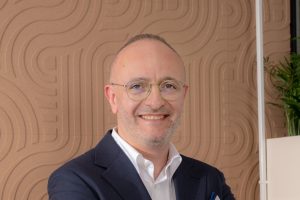
Osama Braiwish leverages over 26 years of industry experience across the Gulf region and Saudi Arabia. He joined Bristol Myers Squibb (BMS) in 2024, drawn to the company's commitment to addressing significant unmet medical needs in
oncology, hematology, immunology, cardiovascular and neuroscience. In his first few months at BMS, Braiwish focused on understanding the team dynamics and opportunities within the region, particularly in areas of inherited blood disorders like thalassemia, where collaboration and local data are key. His vision for success in Saudi Arabia involves improving patient access to innovative treatments, driving sustainable growth, and fostering a culture that attracts and retains top talent.
You have been with BMS for about five months. Can you walk us through the journey that led you to this point and what made the role at BMS exciting for you?
Joining Bristol Myers Squibb (BMS) has been an especially exciting new chapter in my career journey. The company’s unwavering commitment to scientific excellence and addressing high unmet medical needs resonate deeply with me. Throughout my career, I have been passionate about providing access to treatments that significantly improve patients’ lives. BMS’s focus on breakthrough therapies in oncology, hematology, immunology, cardiovascular and neuroscience aligns perfectly with my values.
I am thrilled by the opportunity to lead a team that is aligned with BMS’s strategy of advancing medicines that make a profound difference to patients, particularly in areas where there is limited access to innovation.
My professional journey began in Jordan in Pharma 26 years ago, where I spent the first 10 years specializing in oncology. Over the years, I advanced through various roles in sales, marketing, and management, eventually becoming country manager for Jordan and Palestine at a major pharmaceutical company. From there, I took on leadership positions across the Gulf region and Levant before moving to Saudi Arabia as Country President.
My transition into diagnostics was driven by a combination of personal and professional factors. I relocated to Singapore, but the challenges of commuting without my family became difficult. I then moved to a leading diagnostics company, which provide me with an invaluable understanding of the patient journey from diagnosis to treatment. This experience broadened my perspective and added a valuable new dimension to my career.
Given your vast experience in the region, including your time as Saudi country manager at other companies, how have you found the transition into this new role?
Reflecting on my initial months, my primary focus has been understanding the broader landscape of BMS’s business, its team dynamics, and the strategic opportunities ahead. While my regional experience provides a valuable foundation, approaching BMS with a fresh perspective has allowed me to identify new avenues for strengthening our impact on the healthcare ecosystem.
My key observation is the exceptional expertise and dedication within the BMS team. Their specialized knowledge and proven ability to deliver results within their respective therapeutic areas are truly impressive. This deep specialization is critical in our key disease areas, and I’ve been particularly impressed by the level of focus and commitment to excellence at BMS in Saudi Arabia and the Gulf region.
In parallel, I’ve been evaluating the broader healthcare environment, including evolving regulatory frameworks and stakeholder expectations. This proactive approach is essential to ensuring BMS remains agile and strategically positioned for sustained success in this dynamic region.
Can you share more about BMS’s portfolio and pipeline in the region? What are the key focus areas and how does that focus differ from the global approach?
As with any global corporation, BMS maintains a unified strategy focused on key therapeutic areas, including oncology, hematology, immunology, cardiovascular and neuroscience. However, we also recognize the importance of regional differentiation to address specific local needs.
In our region, we place a strong emphasis on areas of high unmet medical need, particularly in oncology, cardiovascular diseases, and blood disorders. For example, the prevalence of conditions like thalassemia is notably influenced by factors such as consanguineous marriages, which are more common in this region and significantly impact disease rates.
The treatments we are developing have the potential to significantly improve the quality of life and daily routines of individuals impacted by these conditions. Looking ahead, we have an exciting pipeline of novel therapies that aim to address unmet medical needs across various therapeutic areas. Our commitment to innovation remains at the forefront of everything we do as we work to expand access to exciting treatments and introduce new solutions that will transform patient care.
Presumably, for an issue like thalassemia, which has cultural causes and educational and awareness issues, bringing the medication to market alone may not be enough. How do you approach this issue?
Absolutely. Addressing thalassemia requires more than just providing treatment; it involves tackling cultural, educational, and awareness barriers. At BMS, we partner closely with patient associations to provide education and raise awareness around thalassemia and its management. Our objective is to empower these associations with the tools and knowledge they need to support patients and families.
I am particularly proud that we have reached a milestone where premarital testing for thalassemia has become mandatory in the region. This is a significant step forward in preventing new cases of the disease. However, despite mandatory premarital testing in many areas, new cases of thalassemia continue to be diagnosed, especially in rural areas, where awareness may be lower, and adherence to testing guidelines may be inconsistent.
Is there much of a culture of blood donation in Saudi Arabia?
Blood donation is absolutely critical, not only for thalassemia but for a range of medical needs. Maintaining a steady, safe blood supply remains a challenge. While awareness efforts around blood donation continue to grow, the need remains constant especially with diseases like thalassemia, which require frequent transfusions. The demand is very high.
A key issue is ensuring that the blood supply is safe, which requires rigorous screening for viruses like HIV and hepatitis. This process is very costly, and many people don’t realize that while blood donation is voluntary, blood transfusion is not free—it has associated costs, and there is no guarantee that blood will always be available when needed. Patients sometimes need to bring relatives to donate blood if the hospital’s supply runs low.
To address this, the Saudi Ministry of Health is making a significant strides to address this by establishing central blood banks across the country.
From BMS’s perspective, we focus on working closely with healthcare providers – doctors, nurses, and primary care physicians – to ensure optimal care for blood disorder patients. Many thalassemia patients are children, often under the age of 12, so pediatricians play a crucial role in managing these patients’ wellbeing. Given the specialized nature of hematologic disorders like thalassemia, ongoing education and collaboration across specialties are essential to ensure these patients receive optimal care and BMS is committed to supporting these educational efforts and driving collaboration to improve outcomes.
How are you ensuring your affiliate in Saudi Arabia remains lean and focused on the right goals, especially in the midst of a global cost savings and efficiency push throughout the company?
In Saudi Arabia, BMS is in a unique position with a high-growth market and ongoing transformation. The key is maintaining a focus on new launches and indications that provide substantial opportunities for growth.
Our five-year plan reflects this approach, and by prioritizing new opportunities, we can remain lean and resource efficient. We are preparing for the launch of new treatments and therapeutic indications that will expand our portfolio and better serve patients.
The future looks promising, especially in the Gulf and Saudi Arabia, where we anticipate continued growth and expansion over the next five years. This momentum presents new opportunities for innovation, strategic partnerships, and an enhanced role in shaping the healthcare landscape. By advancing new treatments, strengthening our educational initiatives, and expanding patient access, we are well-positioned to drive meaningful impact and remain a key player in the region’s evolving healthcare ecosystem.
How do you see BMS operations aligning with Saudi Arabia’s Vision 2030, and how do you navigate potential conflicts or challenges in achieving this alignment day-to-day?
Bristol Myers Squibb’s operations are fully aligned with Saudi Arabia’s Vision 2030, particularly in the area of healthcare transformation. Vision 2030 envisions a shift towards a more diversified economy, and the healthcare sector plays a pivotal role in that transformation. BMS’s presence in Saudi Arabia is growing stronger, particularly with the establishment of our reginal headquarters (RHQ), and we are committed to supporting the government’s efforts to achieve Vision 2030’s ambitious goals. Collaboration with government authorities and healthcare providers is essential, and we are continuously working to contribute meaningfully to this transformation.
A key milestone for us at BMS is the introduction of our new leadership team for Saudi Arabia and the gulf-a group of outstanding leaders focused on shaping a more dynamic future. Strengthening collaboration, driving innovation, and identifying areas where we can make a tangible difference will be fundamental to our success. With a strong foundation and a commitment to continuous progress, we are proud to contribute to the kingdom’s healthcare transformation.
How does BMS’s status as a global innovation leader help support Saudi Arabia’s ambitious national biotech strategy to become a regional and global innovation hub?
As a global leader in innovation, BMS is playing a key role in supporting Saudi Arabia’s ambitious national biotech strategy to become a regional and global innovation hub. Our local affiliate acts as a bridge between Saudi Arabia’s burgeoning innovation capabilities and our organization. The country’s strategy is clear: transitioning from a receiver of innovation to a generator of it.
We serve as ambassadors for both Saudi Arabia and BMS, ensuring mutual understanding of each other’s potential. By leveraging local data, we can drive early diagnoses and shift from treatment to prevention in various diseases. Collaboration is key, and there is still much to share with our corporate headquarters about Saudi Arabia’s evolving capabilities.
Saudi Arabia today is vastly different from a decade ago — the healthcare infrastructure, manpower, and quality of providers have significantly improved. It is crucial to communicate these changes clearly to fully capitalize on the opportunities here.
What will success look like for you over the next five years?
Success for me is defined from three perspectives. First, from the patient perspective, I want to ensure as many patients as possible in the region have access to innovative treatments. There are still many patients who lack access, and we need to be agile and innovative in creating access models that match the affordability of these patients. It is not just about selling medication—it is about providing life-changing therapies. Success for me will be hearing feedback from patients on how our treatments or programs changed their lives.
From a business perspective, my goal is for BMS to be the fastest-growing biopharmaceutical company in the region. This means not just expanding in terms of sales, but also creating a strong business foundation with sustainable growth.
Finally, the third piece is about building the right culture. A great culture drives high performance, and I want to ensure we not only attract the top talent but also retain them. Saudi is a dynamic place with a competitive job market, so it is crucial to create an environment where people want to stay and thrive.
To summarize, patient access, business growth, and cultivating a strong company culture are the pillars that define success for me and for BMS in the region over the next five years.