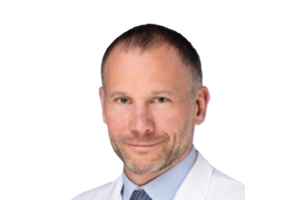
Dr. Olivier Michielin serves as Head of Oncology at Geneva University Hospital (HUG) and Head of the Division of Precision Oncology, whilst maintaining his professorship at the University of Geneva as well as the École Polytechnique Fédérale de Lausanne (EPFL). A co-director of the Swiss Cancer Centre Leman, Dr. Michelin bridges the academic and clinical worlds through his unique background in physics and medical oncology, specialising in melanoma and precision oncology research. His work exemplifies the convergence of advanced data science, artificial intelligence, and personalised medicine in transforming oncological care across Switzerland's healthcare ecosystem.
Could you please introduce yourself and share a bit about your background, as well as the various roles you currently hold?
I am the Head of the Department of Oncology at Geneva University Hospitals (HUG), as well as Head of the Division of Precision Oncology. I also serve as a Professor at the University of Geneva and the École Polytechnique Fédérale de Lausanne (EPFL) and Co-Director of the Swiss Cancer Centre Leman, based at the Agora campus in Lausanne. The centre brings together key institutions, including the Universities and University Hospitals of Geneva and Lausanne, as well as EPFL.
By background, I initially trained in physics, completing my Master’s at EPFL. I then pursued medical training in Lausanne, followed by an MD-PhD programme split between Switzerland and Harvard, where I focused on protein simulation and complex systems analysis. Since then, I’ve specialised in medical oncology, with a particular focus on melanoma and precision oncology—applying data science and artificial intelligence to support clinical decision-making.
What are your current research priorities and the clinical applications that are commanding your attention?
Our primary focus centres on extracting comprehensive biological intelligence from patient biopsies to decode tumour pathophysiology and resistance mechanisms. We have established an ambitious spatial omics programme at HUG and UNIGE, enabling us to conduct spatial proteomics and transcriptomics directly on tissue samples. This technological capability serves as the foundation for precision treatment decision-making, allowing us to determine which immunotherapy, targeted therapy, or alternative treatment modalities a patient could receive.
This initiative represents a collaborative effort with Dr. Michael Pittet, the Director of the Center for Translational Research in Hemato-Oncology (CRTOH) and a distinguished researcher specialising in tumour microenvironment analysis. Our integrated approach aims to develop a comprehensive programme that optimises treatment selection within our precision oncology framework, ensuring that therapeutic decisions are grounded in robust biological understanding rather than empirical approaches.
Geneva University Hospital enjoys considerable international recognition. What distinguishes your oncology department within this prestigious institution?
HUG represents Switzerland’s largest healthcare institution and possesses a distinguished legacy in, among others, internal medicine and medical informatics. This heritage has proven invaluable, as HUG has pioneered comprehensive digitalisation, establishing itself as a genuinely data-driven healthcare organisation. The institution’s commitment to digital transformation has generated significant operational advantages, particularly evident in our pathology Division, which represents one of the most technologically advanced facilities globally.
The complete digitalisation of the clinical workflow enables pathology to process approximately 1,000 patient slides daily, creating unprecedented opportunities for analysis and artificial intelligence applications. This capability, developed in collaboration with Professors Laura Rubbia-Brandt and Doron Merkler, who lead the digital pathology programme, provides an optimal environment for both traditional oncology and precision medicine initiatives. The synergy between precision oncology and digitalisation through data science creates a powerful platform for advancing patient care.
Your work appears to straddle the boundary between clinical research and patient care. Could you elaborate on your approach to clinical research and highlight the most promising developments?
Precision oncology inherently operates at the intersection of clinical research and direct patient care. We leverage comprehensive spatial analysis, sequencing data, and omics technologies to inform treatment decisions through our molecular tumour board framework. Patients provide explicit consent, understanding that they are participating in a more experimental aspect of their treatment journey, typically following standard therapy failure.
This approach generates substantial clinical research opportunities. After treating thousands of patients through our molecular tumour boards, we can identify critical factors that determine patient response to specific treatments, subsequently validating these findings through targeted clinical trials. We have developed a systematic approach where we extract predictive biomarkers from our molecular tumour board experiences, and are now moving towards validating these discoveries through focused clinical trials.
This methodology creates a continuous cycle of hypothesis generation and validation, with precision oncology serving as the primary catalyst for clinical trial development. The integration of clinical care and research enables us to rapidly translate observations into actionable therapeutic strategies.
Are you focusing on specific applications, or do you maintain a broader approach across multiple cancer types?
Our strategy encompasses both tumour-specific and pan-tumour approaches, depending on the nature of our discoveries. For instance, we have developed an AI-based algorithm capable of analysing melanoma tissue slides to predict immunotherapy response likelihood. Once fully validated, this technology will undergo prospective clinical trial validation specifically for melanoma patients.
Simultaneously, we identify molecular events and immune system characteristics that predict response to specific treatments across tumour types. These discoveries potentially yield tumour-agnostic biomarkers with broad therapeutic applicability. Our portfolio, therefore, includes both highly targeted, disease-specific applications and broader pan-tumour solutions, enabling us to address the full spectrum of precision oncology opportunities.
Switzerland maintains a formidable reputation for innovation. How would you assess the current clinical research environment, and what positioning advantages does Switzerland offer?
Switzerland possesses several distinctive advantages for translating novel concepts into clinical applications. Our robust basic research foundation, combined with effective mechanisms for commercial translation—particularly through organisations like Innosuisse—enables early-stage funding for hypothesis testing with commercial potential. These pathways facilitate the transition from academic discovery to viable enterprise development.
However, funding mechanisms for Phase I and II clinical trials require enhancement. We have established an effective network through The Swiss Cancer Institute (formerly SAKK), which provides centralised coordination for multi-phase clinical trials and can serve as a sponsorship mechanism. The Swiss Cancer Institute enables both single-centre and multi-centre trials, from first-in-human Phase I studies through comprehensive Phase III programmes.
We are constructing a systematic ecosystem for efficient trial execution, though additional support infrastructure remains necessary. This represents a priority area for development in the coming years, particularly given competitive pressures from major markets in the US and China.
How do you collaborate with the pharmaceutical industry to advance oncological innovation?
Our industry collaboration operates through multiple complementary mechanisms. Traditional partnerships involve pharmaceutical companies developing compounds that engage with our centres to conduct trials, either directly or through the Swiss Cancer Institute for coordination. Additional innovative collaborations emerge through investigator-initiated trials (IITs), where academic researchers propose new therapeutic strategies or novel applications for existing pharmaceutical compounds, leading to co-development opportunities.
These reverse-innovation partnerships occur with increasing frequency and should become more prevalent given their mutual benefits. Additionally, we engage in collaborative data sharing initiatives, combining clinical trial data with additional research datasets to accelerate joint research advancement.
The collaboration landscape is well-established, with clear navigation pathways for various partnership structures. Our experience spans the full spectrum of industry engagement, from traditional sponsored research to innovative co-development initiatives.
You have emphasised the importance of data sharing and digitalisation. What is your assessment of healthcare digitalisation progress, and what represents the next evolutionary step?
Given Switzerland’s geographic constraints, meaningful impact requires national coordination and data integration. Seven years ago, we launched the Swiss Personalised Health Network (SPHN) programme, establishing Swiss Personalised Oncology (SPO) as a cornerstone initiative. This programme addresses two fundamental challenges: creating standardised vocabulary for hospital data exchange and establishing programmatic data access capabilities.
Rather than relying on manual data extraction, we have developed automated systems that interrogate data warehouses through sophisticated scripts, extracting structured information using common semantics that ensure data interoperability. This infrastructure enables nationwide interrogation for specific patient populations, outcomes, and molecular characteristics, creating a powerful analytical engine.
Our National Molecular Tumour Board connects university hospitals and non-university hospitals through the Swiss Cancer Institute, facilitating collaborative discussion of complex cases. The clinical programme incorporates comprehensive multi-omics analysis before molecular tumour board review, with rapid patient recruitment aiming at 300 participants before the end of 2026.
For each patient, we conduct comprehensive proteomics, drug screening, and digital pathology analyses, enabling treatment decisions based on multi-omics integration. This represents a transformative period for Swiss precision oncology, as we are establishing AI-driven, digitally-informed clinical programmes with national scope.
The programme appears to overcome Switzerland’s traditional decentralisation challenges. How do you ensure standardisation across different centres?
Our success stems from basing data retrieval on university hospital and non-university hospital data warehouses through programmatic access systems. This approach enables continuous re-interrogation with excellent temporal resolution, ensuring rapid system updates, a critical capability given oncology’s rapid evolution.
Once we assemble patient cohorts across multiple centres, we can rapidly update datasets, maintaining competitive analytical capabilities. The multi-omics protocols are standardised and agreed upon by all participating centres, ensuring that patients receive identical analytical approaches whether treated in Zurich, Geneva, Basel or any Hospital within our network. This standardisation creates nationally interpretable data whilst maintaining local treatment delivery.
What concrete benefits does this infrastructure deliver for patients?
The infrastructure provides rational pathways to personalised treatment options. Patients presenting to our molecular tumour board receive standardised multi-omics analyses and benefit from collaborative input from 20 to 30 precision oncology specialists across Switzerland. This collective knowledge approach adds substantial value through expert collaboration on complex cases whilst advancing multi-omics data utilisation.
When we identify promising treatment options, Switzerland’s unique Article 71 legislation enables implementation. Article 71 mandates that patients with terminal diseases who lack standard care options and demonstrate rational therapeutic benefit should receive negotiated access between patient insurance and pharmaceutical manufacturers. This mechanism has enabled unprecedented precision oncology implementation in Switzerland, providing patients with access to innovative treatments based on molecular evidence.
Artificial intelligence features prominently in your work. What excites you most about AI’s potential in oncology?
Oncology has evolved from limited biological understanding to comprehensive molecular insights, creating a paradox of overwhelming complexity. We now recognise numerous pathways, resistance mechanisms, and molecular aberrations, requiring big data approaches to comprehend tumour biology effectively.
Our multi-omics programmes generate gigabytes of data per patient—volumes that exceed human cognitive processing capabilities but represent optimal conditions for AI applications. The transition requires controlled, secure AI implementation, ensuring both data security and scientific rigour so that algorithmic conclusions remain within validated training parameters.
We are developing advanced AI systems to maximise patient benefit and efficiency. AI represents not merely a valuable addition to precision oncology but an essential pillar for advancing to the next level of therapeutic sophistication.
What is the current penetration of AI in clinical practice, and what expansion opportunities exist?
AI currently operates behind the scenes across multiple analytical layers. Companies like Sophia Genetics incorporate AI extensively in their data analysis pipelines, exemplifying existing integration at various levels. However, we anticipate significant acceleration through AI agents capable of handling diverse data types and establishing connections between disparate information sources.
The future will enable AI to extract relevant signals from multiple data streams, assembling these into coherent clinical decisions under physician supervision. AI will provide sophisticated treatment opportunity recommendations, augmenting clinical decision-making rather than replacing physician expertise.
Given your multiple institutional affiliations, what are your long-term ambitions for patient impact?
The privilege of working across multiple institutions—hospitals, universities, and polytechnical schools—provides access to essential components of the innovation ecosystem. We require hospital infrastructure, university research capabilities, and polytechnical expertise in AI and computational resources. This comprehensive ecosystem is fundamental for advancing precision oncology initiatives.
These collaborations and affiliations will prove transformative in revolutionising precision oncology practice and operational implementation. The integration of diverse institutional capabilities creates synergistic opportunities that individual organisations cannot achieve independently.
Looking ahead two to three years, what key achievements do you aim for, and what improvements would best support oncology innovation for patients?
The critical requirement is establishing regulatory frameworks that rigorously protect patients whilst enabling discovery research. We must achieve optimal balance, positioning Switzerland and Europe competitively to develop impactful AI applications for precision oncology.
Our ambition centres on establishing a nationwide AI approach that synthesises data generated across Switzerland to benefit individual patients. While this may appear overly ambitious, we must maintain high aspirations, and this goal may indeed be achievable given our current trajectory and infrastructure development.