Clinigen is in the midst of a major transformation, repositioning itself as a pure services partner focused on bridging patient access to critical medicines worldwide. Its recent acquisition of SSI Strategy underscores this shift, combining SSI’s strategic depth, established U.S. and European footprint, and innovative partnership models with Clinigen’s global reach and decades of expertise in clinical trial supply, managed access, and commercialisation.
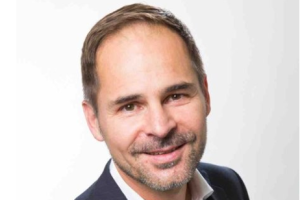
Two years into his mandate, Nihad Hasagic, Senior Vice President of Clinigen Lifecycle Services, reflects on the unit’s rapid growth – fuelled by targeted acquisitions, strengthened regulatory expertise, AI adoption, and a commitment to trusted partnerships.
What is your professional background, and how did it lead you to your current role at Clinigen?
I have been with Clinigen for the past two years, based in Switzerland, which proved an ideal location for an international remit, even though the company’s headquarters are in the United Kingdom. Before joining, I spent more than a decade at Ecolab, a global business-to-business company specialising in water, hygiene, and infection-prevention solutions. During my time there, I helped establish and lead the European healthcare business before moving into general management within the life sciences unit, focused on pharmaceutical manufacturing. Earlier in my career, I worked as a Principal at Monitor Group (now Monitor Deloitte), advising medtech, pharmaceutical, and speciality chemicals clients across Europe on competitive analysis, sales and marketing strategy, and organisational performance. Interestingly, although hired into Monitor’s Swiss office, I never actually worked on a Swiss project, making my current role here something of a full-circle moment.
How would you describe Clinigen today, and where does Clinigen Lifecycle Services fit within the broader group?
Medicines are often perceived as easily accessible, particularly in developed markets, but this is increasingly not the case. I saw this personally when my father-in-law was diagnosed with a serious heart condition, and no treatment was available. Through a specialist and an early access programme, he was able to receive a novel therapy still in clinical trials in the United States, and he continues to live well today. This experience illustrates what we at Clinigen strive for: accelerating the path of critical medicines to patients who need them most.
Clinigen is a global pharmaceutical services partner with more than 35 years of experience, serving over 1,000 clients worldwide. We operate across the full product lifecycle, from clinical supply management for early biotechs, to early and managed access programmes before market authorisation, to commercial support once products are approved. Because many companies choose not to commercialise globally, we also provide unlicensed supply to ensure patients can access essential treatments even in remote or underserved regions.
Building on this foundation, we established Clinigen Lifecycle Services (CLS) about a year ago. CLS focuses on regulatory services, pharmacovigilance, and medical information, capabilities that span the lifecycle and link together our wider portfolio. When I joined in 2023, my mandate was to create this unit, and early conversations with leadership and Triton, our majority investor, centred on building a strategically focused, commercially driven platform. Over the past two years, we have defined our mission and five-year roadmap, completed two targeted acquisitions – Ascenian Consulting in market access and Kinesys Consulting in regulatory affairs – and strengthened our commercial presence through digital channels, thought leadership, and on-the-ground teams in key markets. These steps allow us to engage more prominently with clients, build trust, and provide integrated end-to-end solutions.
How have recent acquisitions strengthened Clinigen Lifecycle Services and advanced your long-term objectives?
We began shaping a new strategic vision in 2023, and it was immediately clear that becoming a genuine end-to-end global services partner required closing certain gaps in capability, geographic reach, and talent. I carried out the same assessment for Clinigen Lifecycle Services, which led to two highly targeted acquisitions.
The first was Ascenian Consulting, a market access specialist whose expertise lies in supporting customers navigating regulators, payers, pricing bodies, and stakeholders, ensuring that patients can obtain and afford innovative medicines. While we already had established strengths in regulatory affairs and pharmacovigilance, it was essential to complement these with market access if we wanted to support clients all the way through commercialisation. This has become even more important with the new European regulations requiring that marketing authorisation and health technology assessment submissions be filed in parallel, initially for oncology products but soon for all therapies. Ascenian has therefore become a cornerstone in expanding our capabilities.
The second was Kinesys Consulting, a regulatory affairs provider distinguished by its focus on the clinical stage. Their value lies less in Marketing Authorisation holding and managing filings and more in providing strategic guidance to early-stage companies, helping them secure INDs, navigate approvals, and progress through the development cycle. With an Advisory Board that includes former members of regulatory authorities, they bring a depth of insight that is difficult to replicate. Combined with our existing expertise, this acquisition enables us to offer clients comprehensive support, from clinical development through to licensing, maintenance, and international expansion.
What makes me particularly proud is that these were not broad, scattershot acquisitions but carefully selected, strategic moves. These are people-driven businesses, and not only have we been able to grow their operations, but we have already begun successfully cross-selling their services to Clinigen’s broader client base.
What global trends are shaping your business, and where do you see the greatest opportunities?
The global environment is evolving rapidly, and while these shifts pose challenges, they also create important opportunities. One of the clearest dynamics is the growing complexity of the regulatory landscape. Although collaboration has improved in some areas, geopolitical tensions are pulling markets apart. The United States is increasingly taking a more independent stance, while in Europe, despite the central role of the EMA, individual countries continue to follow their own distinct approaches. The result is a highly fragmented system that clients find difficult to navigate, making specialist expertise more critical than ever.
In parallel, the emergence of advanced therapies is reshaping the industry. Personalised medicine, cell and gene therapies, and increasingly individualised oncology treatments offer tremendous potential for patients, but they also add new layers of complexity to regulatory processes and submissions. Deep therapeutic knowledge, combined with regulatory expertise, is therefore essential to guiding companies through this environment with confidence.
We have already seen these dynamics play out in practice. One US client, after facing considerable delays with the FDA, turned to us for support. We advised them to move forward in Europe instead, and thanks to our local expertise in both regions we were able to advance the filing without further delay. Similarly, a Chinese company recently approached us after encountering obstacles in the US market. They asked us to manage European registration for a pain treatment, with us holding the licence on their behalf while they continue manufacturing in China. This engagement also covers import licensing, quality release, distribution, and drug safety monitoring to help support patient safety. These examples demonstrate how, in a fragmented global environment, we can deliver the end-to-end solutions that allow clients to reach patients in need.
How has Clinigen evolved in recent years, and how do you ensure the organisation stays ahead in terms of new technologies, therapies, and regulatory requirements?
Under the leadership of Shaun Chilton, who served as CEO from 2016 to 2022, Clinigen expanded into a global business, with strong contributions from its clinical supply management and managed access services, complemented by Link Healthcare, which had been acquired in 2015 and provided a solid presence in Asia-Pacific and South Africa. At the same time, Clinigen maintained a portfolio of proprietary products, which at times created uncertainty among partners and investors about whether the company was acting as a collaborator or a competitor. A decisive shift has since been made: divesting the product portfolio, integrating capabilities, and positioning Clinigen clearly as a pure services partner offering end-to-end solutions worldwide.
Staying ahead in such a complex environment requires both deep expertise and the ability to anticipate change. Within Clinigen Lifecycle Services, we now have around 80 specialists, more than half of whom are industry veterans with over a decade of experience. This depth of knowledge, supported by significant investment in databases, proprietary resources, and new technologies, allows us not only to remain current but to anticipate emerging regulatory and therapeutic developments. As a result, when clients come to us, we can provide more than operational support: we can offer strategic guidance on how best to structure commercialisation, when to deploy early or post-market access, and how to maximise both investment and patient impact. What is particularly rewarding is that many of our experts, who were previously internally focused, are now engaging directly with senior decision-makers as trusted advisors, making the transformation both visible and meaningful.
Where do you see the strongest demand for your services internationally?
The United States remains the largest pharmaceutical market and is therefore a central focus for us, not only because of its sheer size but also because of its role as a driver of innovation. To be absent from this market would be inconceivable. At the same time, some of the most significant opportunities lie in supporting companies to reach patients in complex or fragmented markets. Historically, the path was straightforward: license a product, launch in the US, then in the EU5, and only afterwards look further afield. Today, particularly in the case of personalised medicines, many markets are too small for such a model, and some companies have no plans to distribute beyond their core territories. Our role is to bridge that gap. Last year, for example, we supplied products to patients in more than 120 countries, demonstrating how we can help partners accelerate access to critical medicines, whether through licensed or unlicensed routes, even in the most challenging environments.
Partnerships seem central to Clinigen’s model. How do you approach collaborations, and could you share an example that illustrates this in practice?
Partnerships are increasingly central to our transformation. In the past, our discussions were often functional, taking place with clinical development managers or equivalent roles within specific units. Today, we are deliberately engaging at a more senior level, with chief commercial officers and CEOs, because the real value of partnering with Clinigen lies in the breadth of our service portfolio and our ability to provide integrated solutions. Our aim is always to demonstrate that collaboration with us not only maximises value for our clients but also delivers the greatest possible impact for patients in need of innovative medicines.
One example is our partnership with MaaT Pharma. In June 2025, the EMA accepted its marketing authorisation application for a pioneering microbiota therapy for acute graft-versus-host disease. From the outset, we made clear that our role would extend well beyond distribution. We worked alongside MaaT to support their regulatory pathway, commercial strategy, and early access programme across Europe, while also engaging in market access planning, payer and pricing discussions, and regulatory interactions. By providing this end-to-end support, we showed that our collaboration was not transactional but a true partnership, built on a shared commitment to ensuring that innovative therapies reach the patients who need them most.
How is Clinigen approaching artificial intelligence and new technologies, both at an organisational level and from your own perspective?
Artificial intelligence is one of the most disruptive forces in our industry, and I mean disruptive in the best sense, even if its trajectory is not yet fully clear. It is important to distinguish between how companies like ours are beginning to adopt AI and how regulators are responding. Authorities remain cautious, raising questions about safety, and have issued guidelines that permit its use while requiring companies to disclose where it has been applied. They have also been explicit that regulatory submissions must not be AI-generated. In other words, regulators are still navigating their position, while users like us are eager to explore the possibilities.
Pharmacovigilance is a prime example. Traditionally, it has been a discipline characterised by repetitive manual processes, collecting reports, translating information, and interpreting observations, often with subjective differences between reviewers. AI can transform this work by automating routine tasks, structuring data more effectively, and reducing the scope for human error. More importantly, it enables the analysis of vast datasets, allowing patterns to be identified that would be impossible for individuals to detect, ultimately strengthening patient safety.
At Clinigen, we have already taken concrete steps. All of our teams have access to Microsoft Copilot and have been trained in how to use it. We are running pilot projects with Microsoft and Google to explore how AI can be integrated into our broader solutions. In addition, we recently made a strategic investment in Tepsivo, a digital pharmacovigilance company founded in 2020 with the ambition of transforming safety monitoring through machine learning and AI. Their work complements our own ambitions and expands what we can offer. Importantly, this allows us to provide clients with flexibility: some prefer to maintain traditional pharmacovigilance models given the sensitivities around patient safety, while others are ready to embrace AI-driven approaches for greater speed and efficiency. By offering both, we can support clients wherever they are on this journey.
What is the typical profile of your clients, and how do you tailor your support to their needs?
Our client base spans the full spectrum, from large pharmaceutical companies to mid-sized firms and early-stage biotechs. Historically, some of our services, such as clinical supply, have been most relevant to smaller players in early development, while managed access programmes have tended to involve larger pharma. Looking ahead, we see the greatest opportunity in building end-to-end partnerships with biotechs and emerging biopharma – often companies with a single lead asset but a promising pipeline – where we can support them throughout the entire journey from development to commercialisation.
Larger pharmaceutical companies will also remain highly important partners, though the nature of those collaborations is often more focused on specific projects or services. By contrast, with smaller or mid-sized firms, particularly when we engage early in their lifecycle, our role tends to be broader. In many cases, we act as an extension of their teams, providing regulatory or pharmacovigilance expertise that they may not yet have in-house. This type of close collaboration, where we serve as both a trusted partner and an incremental resource, is where we can create particularly strong value and impact.
Looking ahead, what is your vision for Clinigen over the next three years, and what kind of people will you need to realise it?
My vision is that within three years, Clinigen will be a household name across the pharma, biotech, and services industries. When people hear our name, I want them to think immediately of our ability to bring critical and innovative medicines to patients, even in the most complex markets. This is the essence of our mission: to accelerate pathways for patients in need, regardless of geography or regulatory barriers.
Reaching that goal depends on continuing the transformation already underway. With the creation of Clinigen Lifecycle Services, we have begun to expand our capabilities and strengthen our organisation with people who can engage credibly at the C-suite level. Because we are ultimately a people business, the right talent is central to our future. We need individuals who are both sellers and doers, people who can articulate a compelling vision and back it with firsthand experience of delivery. Alongside this, we will continue to invest in technology to improve efficiency and sustainability, such as using AI to optimise shipments and reduce waste, while also pursuing targeted acquisitions to fill capability or geographic gaps. Taken together, these priorities will ensure that Clinigen continues to evolve into the trusted, end-to-end partner that clients and patients can rely on.
As a closing message, what would you like international readers to take away when they think of Clinigen?
I would like readers to think of Clinigen as a trusted partner in the pharmaceutical services space, one that works hand in hand with clients to accelerate access to critical and innovative medicines for patients around the world. That is the role we strive to play and the way we want to be recognised.
I would also highlight our commitment to sustainability and responsible business practices. We were recently awarded a Gold Medal by EcoVadis for our ESG performance, placing us among the top five percent of companies assessed globally. This recognition reflects our efforts on decarbonisation, patient advocacy, and safety, but also on ensuring consistency through supplier audits, addressing issues such as the gender pay gap, and creating a safe, fair environment for our people. These elements are fundamental to how we operate and to the trust our partners place in us.