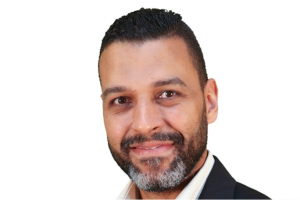
Mohamed Fawzy, Country President for Pfizer Saudi Arabia, discusses the company’s evolving role in supporting the Kingdom’s rapidly transforming healthcare sector. He shares insights on Pfizer’s local footprint, its contributions to public health through innovative vaccines and oncology treatments, and the company’s commitment to talent development and localization. Fawzy also comments on the inspiring impacts of Saudi Arabia’s Vision 2030 and the growing opportunities for public-private partnerships to accelerate patient access to breakthrough therapies.
Could you please introduce yourself and share an overview of Pfizer’s operations within Saudi Arabia?
I have spent 25 years in the pharmaceutical industry, including one year in the United States. For the past 15 years, I have been with Pfizer, where I have had the opportunity to work across multiple functions, from sales and marketing to pricing and market access. Over the last decade, I have held general management roles across different countries and clusters, and for the past four years, I have served as the Country President for Saudi Arabia and Chairman of the Board.
Pfizer has a strong and well-established presence in Saudi Arabia. Many may not realize that we were the first company to receive a commercial license in the Kingdom, personally handed to us by the Crown Prince. This milestone reflects our long-term commitment to Saudi Arabia. Today, Pfizer operates through three legal entities in the country: Pfizer Saudi Limited, which owns our manufacturing site in King Abdullah Economic City, Pfizer Saudi Trading, and Pfizer Saudi Scientific Office.
Our investment in Saudi Arabia clearly demonstrates our commitment to the country’s healthcare sector and Vision 2030. I strongly believe that true commitment is reflected not just in words but in action, and our footprint in the Kingdom is proof of that.
What were your initial impressions of the development and growth you observed upon arriving in Saudi Arabia?
I arrived in Saudi Arabia in the middle of the COVID pandemic, and before that, my experience with the country was limited to visiting for Umrah with my family. Coming here during such a critical time, I have witnessed the remarkable transformation taking place. Like any major shift, this transformation comes with both challenges and opportunities, but the scale and pace of progress have been truly impressive.
One of the most striking changes I have observed is the evolution of the healthcare system. Previously, it was a relatively simple landscape with only a few key players, such as the Ministry of Health and the National Unified Procurement Company. Today, it has expanded into a complex network of stakeholders, including the Council of Cooperative Health Insurance, the Health Holding Company, and various transformation initiatives. This shift has introduced a level of ambiguity, but at the same time, it has created immense opportunities for growth and improvement.
The push toward privatization is particularly exciting, as it is setting the stage for public healthcare institutions to compete with private providers on standards and efficiency. At the same time, new regulatory bodies, such as the Competition Center and the Saudi National Institute of Health (NIH), are emerging, further reshaping the healthcare landscape. For anyone in a leadership role within the industry, engaging with this expanding network of stakeholders is no longer optional—it is essential.
Each of these institutions has a clear vision and mission, and our role as industry leaders is to find common ground where we can work together to improve patient care. While collaboration between all these entities is still evolving, I believe it will mature over time as we navigate this learning curve collectively. The future holds great potential for stronger partnerships and a more integrated healthcare ecosystem.
With the ongoing transformation of the local healthcare system, what opportunities do you see for Pfizer’s operations moving forward in the Kingdom?
I believe the greatest opportunity lies in our innovative portfolio. Currently, we serve approximately six million patients every year through our vaccines and medicines. Today, with the transformation of the healthcare system, the alignment between our mission and the Kingdom’s evolving healthcare landscape has never been stronger. Many of the newly established institutions share the same overarching goal—improving patient care—and this creates significant potential for public-private partnerships.
These partnerships offer a crucial opportunity for collaboration—enabling us to work with key stakeholders to ensure patients have timely access to the treatments they need. However, with the rapid expansion of healthcare entities in Saudi Arabia, there is also the challenge of maintaining focus. Engaging with a broad network of institutions can be demanding and there is always the risk of spreading resources too thin.
That is why it is essential to have a defined strategy. We must have a clear understanding of what we aim to achieve, identify the right partners, and quickly find common ground to drive meaningful progress. By doing so, Pfizer can maximize its impact and contribute effectively to the country’s healthcare transformation.
Pfizer has made significant strides in oncology through recent acquisitions, while vaccines remain central to its public health efforts. How do these priorities align with Pfizer’s strategy in Saudi Arabia, and how do they drive access and innovation in the Kingdom?
Pfizer has long been a leader in the vaccine space—not just through our products but through continuous innovation. A prime example of this continuous innovation is our pneumococcal conjugate vaccine (PCV). Over the years, we have consistently advanced the level of protection it offers—starting with a seven-valent vaccine, then 13-valent, and now we are introducing PCV20, expanding coverage even further. We are not stopping there either, as our pipeline includes developments toward 25-valent and 30-valent vaccines—further enhancing protection against pneumococcal disease. This long-term investment reflects our commitment to public health and disease prevention on a global scale including in Saudi Arabia.
Beyond pneumococcal disease, respiratory syncytial virus (RSV) is a critical area of focus for us, especially in Saudi Arabia, where the impact is significant. Today, one in four babies in neonatal ICUs is there due to bronchiolitis caused by RSV—a staggering figure shared by healthcare authorities in the Kingdom. While maternal vaccination is widely adopted in places like the U.S. and Latin America, it is still gaining traction in Saudi Arabia. Our goal is to raise awareness and emphasize the importance of maternal immunization—ensuring that mothers know they can protect their newborns from the very first breath by passing on immunity.
Another key area in our vaccine portfolio is COVID-19. While many believe the pandemic is over, COVID remains a significant health concern. In the U.S., data from the last six months shows that COVID-related deaths are three times higher than flu-related deaths and infection rates remain three times higher than flu. This reinforces the need for continued vaccination, particularly for high-risk populations, to ensure long-term protection.
On the oncology front, Pfizer has made a major move with the acquisition of an antibody-drug conjugate (ADCs) innovation—significantly strengthening our position as a leader in cancer care. Historically, Pfizer was not primarily seen as an oncology company, but that perception has changed over the years, particularly with our success in breast cancer. Now, we have one of the largest oncology pipelines globally, with a strong focus on ADCs—a groundbreaking technology that is changing cancer treatment.
ADCs combine a targeted biologic with a small molecule linked together—a mechanism that directly delivers chemotherapy to cancer cells while minimizing toxicity to healthy cells. This approach not only improves survival rates but also significantly reduces the side effects that have traditionally been a major challenge in cancer treatment. Much like how mRNA technology revolutionized vaccine development, we believe ADCs represent the next major leap in oncology—opening the door to more effective and better-tolerated treatments for cancers such as breast and lung cancer.
For Saudi Arabia, both vaccines and oncology represent critical opportunities to enhance patient care and improve access to life-saving treatments. Through collaboration with healthcare stakeholders, we aim to drive greater adoption of preventive care while ensuring that Saudi patients benefit from the latest breakthroughs in these critical areas.
With SFDA achieving WHO Maturity Level 4 and leading in fast-track approvals, how has your experience been working with them to bring innovations to market?
My experience of working with the Saudi FDA has been exceptional. Their agility and patient-centric approach set them apart from many other regulators in the region. The SFDA has not only streamlined regulatory processes through an abridged approval methodology, significantly reducing the time it takes for innovations to reach patients, but they have also introduced fast-track pathways for treatments that address critical unmet medical needs.
One of the most impressive initiatives is the breakthrough designation pathway, which accelerates approvals for highly innovative treatments with high-impact potential in Saudi Arabia. Pfizer has already had two products granted this designation, which is a testament to both the level of innovation we bring and the SFDA’s commitment to prioritizing patient needs. Their focus is not just on the novelty of a treatment, but on whether it addresses an urgent, unmet medical need within the Saudi community.
Looking ahead, I have full confidence that our first ADC therapies will follow the same fast-track pathway. The key question we are now discussing internally is whether we could launch a breakthrough therapy in Saudi Arabia before the US. We are open to this idea, but I would want to ensure that the treatment aligns with Saudi Arabia’s unique healthcare needs—for example, targeting sickle cell anaemia or specific types of cancer that are highly prevalent in the region.
To make this a reality, Saudi Arabia needs to become a key player in global clinical trials. If the Kingdom aims to secure first-market authorizations ahead of other regions, then phase three pivotal clinical trials must take place locally. Encouragingly, Saudi Arabia’s R&D ecosystem has developed significantly in recent years, and Pfizer is actively supporting this transformation.
We have been working closely with the Saudi NIH, the SFDA, and other key local institutions to strengthen Saudi Arabia’s position as a regional hub for clinical research and innovation. Through initiatives such as the Pfizer Scientific Institute in the Kingdom, we are focused on enhancing the local research ecosystem, not only for Pfizer but for the entire pharmaceutical industry. This of course aligns with the government’s Vision 2030 ambition to transform Saudi Arabia into a global leader in healthcare and innovation.
Can you share your perspective on the vaccination path in Saudi Arabia, including the progress made and the ongoing challenges that need to be addressed in collaboration with the government and other stakeholders?
Having managed multiple countries across the region, I can confidently say that Saudi Arabia and Oman stand out as the two most advanced countries in terms of vaccination programs. Their approach to implementation, enforcement, public awareness, and reimbursement structures is highly effective. The way they manage vaccine accessibility goes beyond just government funding and it is a well-orchestrated system.
That being said, one of the biggest challenges is not vaccine availability but consumer mobilization. You can have the best vaccines stocked and ready but how many people actually go and get vaccinated? For paediatric vaccines, this is a relatively easier battle because parents are naturally inclined to protect their children. However, vaccinating older adults and at-risk populations is much more challenging. Many adults tend to ignore their symptoms or delay medical attention. If a child gets sick, parents will naturally rush to the hospital. On the other hand, if an adult experiences symptoms, they often just take a couple of days off work—dismissing the potential severity of the issue. By the time they seek medical attention, it might already be too late. This is why raising awareness among caregivers, particularly for older adults, is critical. Saudi Arabia has already made significant strides in public awareness campaigns and accessibility, but there is always room for further engagement—especially for adult and high-risk group vaccinations.
Additionally, Saudi Arabia faces a unique public health challenge that no other country in the world has—the Hajj and Umrah pilgrimages. Managing the health and safety of 3 to 3.5 million people in a confined area over a span of 10 to 15 days is an enormous logistical and epidemiological challenge. From a public health perspective, ensuring that pilgrims return to their home countries without spreading infectious diseases is crucial. Saudi Arabia has done an exceptional job in managing this risk—setting a global example of how mass gatherings should be handled.
Speaking about Pfizer specifically, our latest vaccine solution, PCV13, is already part of Saudi Arabia’s National Immunization Program. This year, we launched PCV20 globally, obtained marketing authorization, and presented our comprehensive clinical data to the key decision-makers. The next step is determining the transition timeline from PCV13 to PCV20—a decision that is now in the hands of the government.
Transitioning to a new national vaccine involves significant operational planning. If a vaccine is already printed on official vaccination cards as a standard immunization for children and adults, shifting to a new version requires a careful phased rollout. Every country has its own methodology for handling this process—taking into account factors such as existing vaccine stock levels, logistics, and the overall implementation strategy.
Therefore, we are in close collaboration with the Saudi government and stakeholders to ensure a seamless transition when the time comes. Given Saudi Arabia’s track record of prioritizing the best vaccines for its population, I have no doubt that they will continue to adopt the latest and most effective immunization solutions as part of their commitment to public health.
With Saudi Arabia’s national biotech strategy and ongoing healthcare transformation, how is Pfizer contributing to these initiatives and the overall advancement of the Kingdom’s healthcare sector?
First and foremost, it is remarkable to see a country not only launch a clear biotech strategy but also publicly share it—ensuring that all stakeholders, both public and private, understand its direction. This level of transparency helps facilitate partnerships as it provides a solid foundation for identifying common ground between the government and industry players. Saudi Arabia’s biotech vision is ambitious and well-structured with a focus on multiple areas, including biologics, biosimilars, and of course vaccines.
We recognize that many global players are interested in partnering with Saudi Arabia to localize vaccine production. However, certain economic and logistical challenges need to be addressed. For instance, Saudi Arabia has a relatively small birth cohort of around 500,000 per year which may not naturally support the economies of scale required for vaccine manufacturing. If we look at a country like Brazil which has a significantly larger birth cohort, it has a much stronger demand base for localized production.
However, there are still solutions to overcome these challenges. At Pfizer, we have extensive experience in technology transfer, and we are fully open to exploring potential partnerships with Saudi Arabia. The key is to ensure that any localization efforts are strategically sustainable and can be scaled efficiently to serve not just the local market but also broader regional or global needs.
However, biotech localization is only one part of the equation. Many people tend to focus on the brick-and-mortar aspect of biotech—manufacturing facilities and tech transfer. This is especially true since the strategy is being led by the Ministry of Industry. But there is another critical component that must go hand in hand with localization—knowledge-based innovation.
In my conversations with senior officials from the Ministry of Industry and key committees overseeing the biotech strategy, we discussed the importance of attracting more clinical trials to Saudi Arabia. If new biotech assets are going to be localized, then it is essential to create an environment where these innovations can also be tested, refined, and expanded through clinical research.
Another major opportunity is leveraging Saudi Arabia’s biotech capabilities for humanitarian efforts. For example, the King Salman Humanitarian Aid and Relief Center is now the third-largest donor worldwide, and the country is shifting its approach from simply providing monetary aid to donating goods manufactured in Saudi Arabia. This presents an incredible opportunity for locally produced vaccines and medicines to be distributed to underserved populations globally, enhancing both Saudi Arabia’s global healthcare impact and its biotech industry’s viability.
Overall, Pfizer is already engaged as a thought partner in these discussions, and I am confident that this collaboration will translate into meaningful, impactful contributions to Saudi society.
As a leader, how do you view the role of talent development in Saudi Arabia in achieving the healthcare outcomes that the Kingdom is striving for?
Today, we have nearly 60 colleagues working at our manufacturing site and approximately 140 employees across our other two legal entities—Pfizer Scientific Office and Pfizer Trading. One of our key priorities that I would like to specifically highlight has been investing in local talent—particularly in empowering Saudi women.
Having worked in many different markets, I have seen firsthand that Saudi women entered the workforce later—especially as the country’s Vision 2030 reforms began to take shape. To support their accelerated career growth, we launched the Women in Leadership Program which provides a structured pathway for Saudi women within Pfizer to develop their leadership skills and prepare for more senior roles. Next week, we will celebrate the graduation of our third intake, and I could not be prouder of the progress they have made. Saudi women make up nearly 40 percent of our workforce, and their professionalism, dedication, and impact on our business have been truly commendable. We are committed to equipping them with the leadership and strategic skills needed to take on greater responsibilities in the organization.
When it comes to overall business growth, Pfizer has been one of the fastest-growing pharmaceutical companies in Saudi Arabia over the last three years. While tender market dynamics play a role, our primary measure of success is patient impact. The number of patients benefiting from our medicines has increased significantly year over year—reinforcing our commitment to expanding access to innovative treatments in the Kingdom.
Reflecting on your four years in this role, what has been the most significant lesson you have learned about leadership and working with teams in this context?
The first lesson I have learned in this role is the power of helping people achieve more than they believe they can. This is what motivates me every morning—to support my team in unlocking their full potential. Often, people set limits on what they think they can accomplish, but their true capabilities extend far beyond that. Seeing them grow, take on bigger challenges, and ultimately contribute to something meaningful is incredibly rewarding.
The second key lesson is the importance of embracing ambiguity. The healthcare landscape in Saudi Arabia has evolved rapidly. What was once a relatively simple system with a few key stakeholders has expanded into a complex network of players—each bringing their own policies, procedures, and objectives. This creates a fast-moving and sometimes unpredictable environment. Change can bring uncertainty, both positive and challenging, but that is the nature of any major transformation.
What helps me navigate this constant evolution is keeping sight of the broader vision. On a day-to-day basis, we may encounter unexpected policies or shifts that require us to adapt quickly. Some changes may raise questions about their immediate impact on patients or business operations. However, by focusing on the long-term direction and the broader goals of Vision 2030, I remind myself and my team that these shifts are part of a larger journey toward a more advanced and sustainable healthcare system. Believing in that vision allows us to embrace uncertainty with confidence and continue moving forward.
As we begin the year 2025, what are the key milestones and directions you are aiming for in Pfizer’s operations in Saudi Arabia?
Stepping into 2025, our focus at Pfizer Saudi Arabia is on achieving key milestones that will significantly impact public health. One of our top priorities is the introduction of three vaccines that have the potential to transform millions of lives in the Kingdom. In a country of nearly 29 million people, reaching such a large segment of the population is both exciting and truly impactful.
This year marks a major shift for our COVID-19 vaccine as we make it available to the private sector for the first time. Until now, it has been distributed exclusively through emergency authorization and government channels. This transition allows us to engage directly with the public—raising awareness that while the pandemic may be over, COVID-19 remains a health concern that requires ongoing protection.
Another major milestone is the launch of our RSV vaccine, which I believe is one of the most important vaccines to be introduced in Saudi Arabia in recent years. In particular, the focus on maternal vaccination will be a massive step forward in protecting newborns.
Lastly, we are working on the transition from PCV13 to PCV20, ensuring broader protection against pneumococcal disease. This upgrade in the national immunization program will provide a stronger defence for children and adults alike.
If we successfully deliver on these three key vaccine initiatives, we will have made a significant contribution to public health in Saudi Arabia—reinforcing Pfizer’s commitment to improving lives and supporting the Kingdom’s healthcare transformation journey.