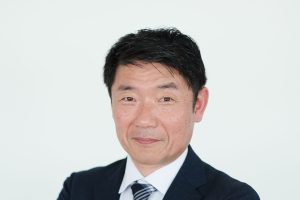
Michio Kondo, Fujifilm’s MEA managing director, discusses the company’s remarkable growth in the Middle East and Africa since 2022, highlighting key developments such as the acquisition of Hitachi’s imaging division in 2021, which expanded their product portfolio to include MRI, CT, and ultrasound equipment. Fujifilm has also strengthened its presence in the region with initiatives like the opening of a Fujifilm Technology Centre in the UAE and plans to establish a regional headquarters in Saudi Arabia. The company is committed to Saudi Arabia’s Vision 2030, focusing on healthcare transformation through early detection, prevention, and advanced medical technology. Fujifilm’s comprehensive solutions, including imaging, medical IT, and AI integration, make it uniquely positioned to support this shift in the region’s healthcare sector, with a focus on collaboration and training to enhance the capabilities of local healthcare professionals.
Since our last conversation in 2022, Fujifilm has seen considerable growth, particularly in the Middle East and Africa. Could you share the key developments and achievements over the past few years?
Fujifilm has a rich history, with the company founded in 1934, and Fujifilm Middle East established in 2010. Initially, we started with a very small team, but today we have over 100 employees dedicated to healthcare in the region. Following the challenges of the pandemic in 2020, our business has been on an impressive upward trajectory. We expect to nearly double our revenues from 2020 to 2025 in the Middle East and Africa.
A significant milestone for us came in 2021, when we acquired Hitachi’s imaging division. This expanded our product portfolio to include MRI, CT, and ultrasound equipment, allowing us to offer a broader and more comprehensive range of solutions to our customers. Over the past couple of years, we have expanded both our product offerings and our regional footprint, particularly in key markets like the UAE and Saudi Arabia.
In the UAE, we opened the Fujifilm Technology Centre in 2020, which has been crucial in educating both our partners and customers. We offer hands-on experience with our entire product range, including X-ray, MRI, CT, mammography, and medical IT. This facility has supported our business by providing valuable training and product demonstrations. Furthermore, in Saudi Arabia, we began the process of establishing a regional headquarters last year and are actively increasing our workforce to support our growing operations in the country.
Looking ahead, we continue to focus on expanding our presence and capabilities across the region, with a clear goal to meet the growing demand for advanced healthcare solutions. The past few years have been very promising, and we are excited about what lies ahead.
You mentioned the acquisition of Hitachi. While that seems to have been a key driver of growth, what other factors have contributed?
Our product portfolio is growing and is quite unique. We offer a complete range of radiology equipment, and in addition, we have expertise in endoscopy, IVD (In-Vitro Diagnostics) and medical IT. This comprehensive and distinctive portfolio sets us apart. Unlike other healthcare or diagnostic equipment companies that may specialize in just one area, our ability to integrate these diverse fields allows us to take a more holistic approach with our customers. This enables us to offer a “one-stop shop,” something we couldn’t provide before, which has made a significant impact for us.
Moreover, globally, Fujifilm extends its Healthcare expertise into the Life Sciences sector, where we are engaged in manufacturing cell culture media and operating as a Biopharmaceutical Contract Development and Manufacturing Organization (Bio-CDMO). These divisions, while not yet established in the Middle East and Africa, signify our broad capabilities, and reach in the healthcare industry worldwide, positioning us as a comprehensive healthcare solutions provider.
Additionally, here in the Middle East, our alignment with Saudi Arabia’s Vision 2030 has been essential in driving growth. The vision is designed to transform the country’s healthcare sector and enhance the quality of life, which aligns perfectly with Fujifilm’s own goals of providing advanced healthcare solutions. Through our innovative technologies and diverse product offerings, we have been able to contribute meaningfully to this transformation. As we move forward, we are excited to continue supporting the vision and leveraging this alignment to fuel future growth in the region.
Our primary focus in the region is on expanding and strengthening our healthcare sector, which aligns closely with Saudi Arabia’s Vision 2030. One of our main goals is to capitalise on our unique and comprehensive product portfolio to drive further growth. Healthcare – which encompasses MedTech, life sciences and Bio-CDMO – has become the top segment for Fujifilm, and by 2030, we aim for healthcare to represent 50% of global revenue, up from 35% today. This represents a significant shift as we prioritise the sector’s development, making it a key driver for the company’s overall growth. We are fully committed to playing an active role in Vision 2030, helping to enhance the region’s healthcare infrastructure through our innovative solutions, and positioning Fujifilm as a leader in the healthcare industry.
Fujifilm’s portfolio spans a wide range of medical technologies, from imaging and diagnostics to AI-powered solutions and biopharma manufacturing. In the region, what are the key areas of focus for Fujifilm, and where do you see the greatest potential for development?
In the region, the healthcare sector continues to be driven by medical imaging, particularly with products like MRI, CT, X-ray, and mobile X-ray systems. Women’s healthcare, including mammography and DEXA, is also a significant focus. However, the next critical area of growth is medical IT. Our Synapse platform has expanded to include not just PACS (Picture Archiving and Communication System), but also pathology and cardiology solutions, which helps create a more connected, comprehensive healthcare ecosystem.
Additionally, our expertise in ultrasound, bolstered by our acquisition of Hitachi, provides us with a unique position in the market. On the endoscopy technology front we leverage our strong background in optics, and we are also integrating artificial intelligence to improve diagnostic capabilities, allowing GI doctors relying on our technology to diagnose with 95% expert level accuracy. Our point-of-care solutions, like SonoSite ultrasound, are highly durable, being initially designed for military use and is the only product in the industry with a standard warranty of five years, which enhances our value proposition in the region.
Another standout innovation is our dry chemical system for IVD, which doesn’t require water and is simple to use, making it ideal for remote areas and smaller clinics.
On the B2C side, we have initiated a screening programme called NURA, focusing on early detection and prevention, which is a further development of the Japanese health screening program, which has contributed to the country’s long life expectancy. By diagnosing certain diseases in their early stages, treatment is most likely to succeed, and this in turn will help increase life expectancy. We have opened around 10 NURA centres globally, with 5 in India, and plan to expand to 100 by 2030. This initiative ties perfectly with Saudi Arabia’s Vision 2030, as it emphasises early diagnosis, and the screening model has proven to be a viable business model with a rapid return on investment. The demand for such services is high, and the centres are helping drive positive health outcomes across the region.
Saudi Arabia is a key part of the region, especially with the ongoing healthcare transformation aligned with Vision 2030. How significant is Saudi Arabia for Fujifilm’s growth in the region, and can you tell us about any recent initiatives and plans there?
Saudi Arabia is indeed an incredibly significant market for Fujifilm, especially with the major investments being directed into healthcare as part of Vision 2030. In 2022, at the Saudi-Japan Public Private Forum, which was attended by then Prime Minister Kishida, we initiated discussions with the Saudi government which resulted in signing an MOU with the Investment Authority for the establishment of a strong medical checkup center. This collaboration aims to establish screening centres, which ties in with Fujifilm’s NURA initiative, focused on early detection and prevention.
In 2023, during an intergovernmental forum in Japan, we signed an MoU with the Ministry of Health (MOH) in Saudi Arabia to cooperate in establishing a medical checkup center. This is a critical step as we move into the implementation phase, and we are actively planning to open the first NURA centre in Saudi Arabia, likely in the near future.
Furthermore, we have just announced a collaboration with Pure Health in the UAE to The PURA center will be managed and operated by Pure Health, a key operator of public medical institutions and medical insurance in the UAE. As a public healthcare facility, PURA will offer cancer screening and lifestyle diseases testing services to UAE residents. Drawing from Fujifilm’s expertise in managing NURA health screening centers that leverage AI technology, PURA will utilize Fujifilm’s medical devices and medical IT systems. This collaboration represents a significant first step for Fujifilm in the region, and we are eager to replicate it in Saudi Arabia. We aim to establish a new lab in Saudi Arabia within this year, continuing our commitment to support the country’s healthcare transformation efforts.
With Vision 2030’s focus shifting from treatment to prevention, how is Fujifilm contributing to this transformation in Saudi Arabia, and what specific goals have you discussed with the government to address gaps in early detection and prevention?
The shift toward prevention is indeed a key aspect of Vision 2030, and it is something we fully support. Our goal is to utilize our product portfolio to support this shift, particularly in screening and early detection. For example, endoscopy not only detects but can also treat early-stage cancers, which fits perfectly with the preventive approach. We also have products for IVD and the fecal immunochemical testFIT, a stool blood test for colon cancer detection. Combining FIT and endoscopy is a perfect solution for early detection and treatment of colon cancer, one of the highest cancer incidences. Additionally, we offer mammography, a vital tool for breast cancer screening. We have implemented one of the largest breast cancer screening programs in Qatar, collaborating with Hamad Medical Corporate and Primary Health Care Cooperation PHCC. Our system doesn’t just sell the equipment but also creates programs to conduct the screenings, which we consider our asset.
In Saudi Arabia, we have partnered with the Ministry of Health to implement mobile units equipped with mammography machines. These trucks visit rural areas, providing breast cancer screenings with more privacy, and enhancing access to healthcare. The Saudi government is focused on increasing access to screening for nationals, and our mobile units contribute to this effort.
Moreover, the implementation of these programs relies heavily on public-private partnerships. While the government lays out mandates and ideas, funding often comes from charity organizations, like the Zahra Foundation in this case. These collaborations are essential to ensuring the success of these initiatives. Our approach goes beyond just providing equipment; we offer a comprehensive solution that includes IT systems, and teleradiology. For example, in Japan, we monitor the functionality of our machines remotely, addressing any issues without the need for on-site technicians.
Lastly, awareness campaigns are crucial for promoting the importance of regular screening. Many people avoid screenings because they feel healthy and don’t see the need. In Japan, regular screenings can catch cancer in its early stages, significantly improving treatment outcomes. Early detection increases survival rates, particularly for cancers detected in stages 1 and 2. It is crucial for private companies like ours to collaborate with governments to promote these programs and raise awareness about the importance of early screening.
With the restructuring of the healthcare system in Saudi Arabia, where the clusters are being privatized with their own budgets, what opportunities do you see for Fujifilm in this new environment, and how do you plan to augment your impact as a global leader?
In the past, healthcare purchasing was centralized under the Ministry of Health, and decisions were often spec and price driven. With the shift to privatization, there is a greater focus on patient benefit and meeting doctors’ needs. This transition is an opportunity for us to offer a solution-oriented approach, especially in areas like screening and education. We can present more advanced products and demonstrate their full value by ensuring users understand how to effectively utilize them.
Moreover, we have been heavily involved in knowledge transfer through workshops, seminars, and training programs, both in Saudi Arabia and at our Fujifilm Technology Centre. These initiatives train not only doctors but also nurses, biomedical engineers, and service staff, providing a holistic approach to healthcare improvement. This knowledge-sharing helps ensure that all healthcare professionals are well-equipped to handle the latest digital and AI-driven healthcare technologies.
We have several programs in Saudi Arabia aimed at improving healthcare delivery. For instance, we have partnered with hospitals to establish in-house repair centres for our endoscopy equipment, reducing turnaround times for repairs and providing educational support to hospital staff. Additionally, we have signed multiple MOUs to enhance digitalization within hospitals, including partnerships with the top hospitals to implement medical IT systems and AI technologies to support diagnosis and improve workflows.
Fujifilm is also focused on interoperability, meaning our IT solutions can integrate seamlessly with third-party equipment, ensuring efficient data sharing and improved patient outcomes. This flexibility is a unique feature that enhances our solutions’ value, especially in a region that is transitioning to more privatized healthcare systems.
Fujifilm has a strong history in photography and lenses, but it is also known for its innovative approach in medical technology. How is the brand perceived in the region, and what would you say makes Fujifilm unique, especially with the integration of IT and solutions you offer?
Fujifilm’s uniqueness lies in our comprehensive portfolio. Unlike many companies that focus solely on radiology or medical imaging, we integrate a wide range of solutions, from imaging to digitalization and screening. Our approach is focused on offering a seamless, one-stop solution, combining products, services, and collaboration with customers to create customized solutions. Additionally, we have invested in technology centres and educational programs like Fujifilm Academy to support our clients and further enhance our impact in the healthcare industry.
You have been with Fujifilm since 1991, leading the company in the region for several years. In such a competitive market, especially in Dubai where so many regional headquarters are located, how do you create an environment that empowers people and brings these initiatives to life?
At Fujifilm, we have focused on shifting from a product-driven to a solution-driven approach over the past few years. This transformation allows us to offer comprehensive healthcare solutions rather than just individual products. Our team is key to this success — each member brings their strengths to the table, and we align everyone around common regional strategies for growth.
Japanese culture plays a big role here, providing stability and a family-like environment that supports long-term development. While comfort can sometimes limit growth, our team is driven and always looking for new challenges. We give our employees the chance to take on multiple roles and expand their responsibilities, which fosters personal and professional growth. This creates an environment where everyone is motivated to innovate and push boundaries. It is this unique combination of stability, growth opportunities, and a focus on collaboration that has helped us thrive in this competitive market.
Our publication will reach a global audience, but also key stakeholders in the region, including Saudi Arabia. Could you share your thoughts on Fujifilm’s commitment to being a partner in Saudi Arabia’s healthcare transformation, and what key strategic directions you envision moving forward in the country?
Saudi Arabia is undoubtedly a critical market for us, and it is our strategic priority in the region. We have made significant investments by opening a regional headquarters and expanding our team there. This enables us to engage directly with stakeholders, such as NUPCO and various healthcare organizations, to propose tailored solutions that align with the country’s healthcare transformation goals.
Our approach is focused on providing complete solutions, from screening centres and preventive healthcare programs to maintaining infrastructure and ensuring the continuous service of our medical equipment. We are committed to supporting Saudi Arabia’s Vision 2030 by driving innovation, enhancing early diagnosis, and improving patient outcomes. Our investments are not just in products but in building strong local partnerships that will help strengthen the healthcare system in Saudi Arabia for years to come.
This partnership and our solution-oriented approach are central to our long-term strategy in the country, and we are excited about the possibilities ahead.