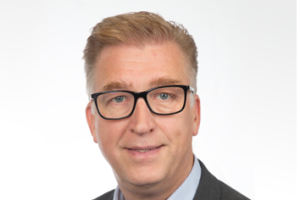
QIAGEN’s Sample Technologies portfolio sits at the core of the company’s mission to deliver the highest-quality products to enable valuable molecular insights to more than 500,000 customers across life sciences and clinical diagnostics. Under the leadership of Michael Scheffler, Vice President and Head of Global Sample Technologies, this portfolio continues to evolve through automation, AI integration, and close collaboration with partners worldwide, ensuring laboratories can meet growing complexity with confidence.
What is your professional background, and how do you define your role as Head of Global Sample Technologies at QIAGEN?
I trained as an electronic engineer and completed my PhD at ETH Zürich before beginning my career in a medtech start-up focused on hardware and software development. After five years in that entrepreneurial environment, I sought broader opportunities within a larger organisation and joined QIAGEN 20 years ago in Switzerland. This was my introduction to sample technologies, an area that has remained at the heart of my work ever since.
QIAGEN was founded in 1984 as a spin-off from the University of Düsseldorf, with the invention of the spin-column method for reliably separating genetic material. One of the founders, Dr Metin Colpan, still serves on our supervisory board, preserving this expertise within the company. Over the past four decades, QIAGEN has expanded from life sciences into the clinical field with solutions such as QuantiFERON, for latent tuberculosis testing, and QIAstat-Dx for syndromic testing. Today, we generate around USD 2 billion in annual revenues, split roughly equally between life sciences and diagnostics customers.
Within our Molecular Tools business, Sample Technologies provides the foundation upon which reliable results are built, ensuring samples are properly collected, stabilised, and purified before moving to downstream applications. This sits alongside our PCR, digital PCR, and next-generation sequencing (NGS) portfolios, as well as QIAGEN Digital Insights (QDI), which curates bioinformatics knowledge bases and develops tools to transform raw data into actionable insights. Managing such a broad portfolio is a shared responsibility: regional leaders drive commercial activities in their markets, while portfolio leaders adapt and evolve products to address customer needs. This dual focus on lifecycle management and future innovation ensures we can support today’s requirements while preparing the solutions our customers will need in the years ahead.
What key trends are currently shaping sample technologies, and where do you see the greatest opportunities ahead?
The two most important dynamics today are versatility and automation. Versatility reflects the expanding spectrum of sample types that must be managed across different application areas. In oncology, standard formats such as tissue, blood, and plasma are central to liquid biopsy workflows. In biopharma, plasma plays a similar role, but biodistribution studies demand analysis across multiple organs in animal models – from lung and kidney to spleen and beyond – adding layers of complexity. More recently, the shift from animal studies towards organoids has further advanced expectations, requiring technologies that can adapt seamlessly to new models.
Alongside this comes automation, which has become essential as laboratories strive for results that are not only efficient but also standardised and reproducible. High-throughput environments clearly benefit from automation, but its value is equally evident in low-volume settings where only a few samples are processed and errors cannot be tolerated. In both cases, automation underpins reliability and quality, ensuring that every result can be trusted. Together, versatility and automation define the trajectory of sample technologies and represent the most significant opportunities for the years ahead.
How does QIAGEN foster innovation in laboratories, particularly within the biopharmaceutical and diagnostics fields?
In the biopharmaceutical sector, samples are integral across the entire value chain, from the identification of new biomarkers and the exploration of pathways, through candidate selection and clinical trials, to routine manufacturing. The key challenge lies in ensuring that each sample is prepared in the right way, aligned with the downstream application and the scientific question being addressed.
At the discovery stage, where thousands of candidates are screened, the priority is efficiency and throughput rather than maximum sensitivity, since the aim is to identify those few that stand out from the crowd. As projects move into preclinical phases, sample numbers decline but their complexity and value increase, making sensitivity and the avoidance of contaminants essential. By the time production is reached, it may come down to just one or two samples deciding whether a batch can be released. In areas such as cell and gene therapies, including CAR-T, the urgency is even greater, with strict timeframes requiring samples to be processed and returned to physicians without delay.
Our role is to provide technologies that can support each stage of this journey, from large-scale screening to highly sensitive and time-critical testing. The industry is right to take a conservative view. New methods are only gradually incorporated into pharmacopoeias. This, however, places a greater responsibility on us to innovate responsibly, offering solutions that are both reliable and forward-looking, and that enable laboratories to meet today’s needs while preparing for the therapies of tomorrow.
How do you stay aligned with industry needs while serving such a broad and diverse customer base?
Staying close to customers is essential. Through conferences, direct visits, and regular exchanges, we gain the insights needed to adapt our solutions to evolving demands. For me personally, these interactions are also a source of motivation. Last year, I visited laboratories in Japan, and earlier this year in Thailand, and in both cases I was impressed by the quality of research being carried out, even in remote settings far from traditional hubs. Encounters like these highlight the importance of engaging with customers wherever they are.
Partnerships further strengthen this approach. We are active in international organisations such as the European Liquid Biopsy Society (ELBS) and support local start-ups and incubators, helping promising ideas move from concepts to laboratory reality, a transition that requires significant investment. The ecosystem around Boston on the US East Coast is a strong example of how such innovation can be fostered, and it is a model from which Europe can continue to learn. In parallel, we work directly with pharmaceutical companies, often in ways not visible publicly, to align our technologies with their specific processes. Even among large players such as Novartis and Roche, approaches differ, and understanding these nuances allows us to deliver solutions that create real value.
This philosophy is reflected in the diversity of our customer base. Biopharma remains a core segment, complemented by oncology and liquid biopsy, where our historic ties with academia remain strong. Applied testing is equally important and highly varied, ranging from food and cosmetics in some regions to environmental monitoring, including soil, wastewater, which proved vital during the pandemic, and recreational water. Forensics is another area where our solutions play a critical role, from solving criminal cases to humanitarian efforts such as identifying war victims. These are contexts where samples are often limited or degraded, and accuracy is non-negotiable. For this reason, advancing methodologies, including new launches planned for 2026, remains a key focus, ensuring reliability across every application.
Which innovations within your portfolio are you most excited about, and how are they positioned to address evolving customer demands?
While our portfolio comprises more than 6,000 catalogue items, the strongest momentum for innovation today comes from automation. We have invested substantially in this area, and the next few years will be especially significant, with three new platforms scheduled for launch.
The first, QIAsymphony Connect, will be rolled out in phases beginning in 2025. As the next-generation version of our established QIAsymphony system, it can process up to 96 samples per run, increase throughput by up to 50%, and is tailored to the needs of liquid biopsy, oncology, and genomics workflows.
Two further instruments will follow in 2026 and mark QIAGEN’s entry into segments of automation where we were not previously active.
QIAsprint Connect is an ultra-high-throughput system capable of handling up to 192 samples per run with less than 30 minutes of hands-on time, supporting a broad variety of sample types.
QIAmini, by contrast, is designed for smaller laboratories and batch sizes, providing a cost-efficient option to reduce manual work while maintaining reliability. This innovation reflects the changing role of scientists, who are increasingly expected to move seamlessly between generating data at the bench and interpreting results. For them, dependable tools are indispensable, technologies that, like a trusted coffee machine, can be relied upon to perform flawlessly whenever required.
Offering such reliability across small, medium, and large-scale workflows is what excites me most, and as an engineer, I take particular satisfaction in seeing these advances become reality.
What is the strategic importance of Sample Technologies within QIAGEN, and what dynamics are driving its growth globally?
Sample Technologies contributes around one third of QIAGEN’s total revenues, in the range of USD 600-700 million, making it both sizeable and strategically central. As the company’s oldest portfolio, it benefits from established momentum, but today its main growth driver is automation. Researchers working with digital PCR and NGS increasingly require processes that are not only faster but also standardised and reliable, which is accelerating the transition towards automated solutions.
Although 2024 was muted due to reduced capital expenditures by customers across the industry, investment is now recovering as laboratories replace ageing equipment and expand capacity, fuelling renewed growth.
While Sample Technologies is expected to grow at three to four percent annually, slightly below QIAGEN’s overall target of seven percent, it continues to outpace the broader market, which is expanding at only one to two percent. Certain segments are particularly dynamic: biopharma is growing at high single digits, while oncology – especially liquid biopsy applications in therapy selection, relapse monitoring, minimal residual disease, and increasingly early cancer detection – is advancing much faster, with annual sales growth at a double-digit rate.
Geographic patterns mirror these dynamics. In biopharma, the United States leads, with strong activity on both the East and West Coasts, followed by key European markets such as the UK, Benelux, Switzerland, and Germany, with promising opportunities also emerging in Eastern Europe. In the Asia-Pacific, South Korea and Japan stand out as growth hubs. Oncology is concentrated largely in North America and Europe, while applied testing is more widely distributed, with demand rising across Latin America and Asia-Pacific as industries expand their testing capabilities.
How is QIAGEN incorporating artificial intelligence into its strategy, and what role does it play within Sample Technologies?
Digitisation is a cornerstone of QIAGEN’s strategy, and with our scientific background, we have always placed a strong emphasis on data-driven approaches. Within Sample Technologies, however, what we generate is essentially raw material; it only becomes meaningful once it is combined downstream with the analyte and the scientific question at hand. This is where our colleagues at QDI come in, curating data, linking it with clinical outcomes, and transforming it into insights that support both research and personalised medicine.
From the Sample Technologies side, the focus is more practical. With a portfolio of over 6,000 catalogue items, navigating options can be overwhelming, so we are looking into an AI-based assistant to guide customers in selecting the most appropriate sample preparation methods. Rather than scrolling endlessly through lists, users should be able to rely on an intelligent tool to simplify choices and provide tailored recommendations.
AI is also becoming an important enabler in automation and service. By monitoring instrument data, we aim to strengthen predictive maintenance, identifying issues before they disrupt workflows. At the same time, our technical service teams are being equipped with AI tools to deliver faster and more precise support, even in complex situations. While much of what emerges from Sample Technologies remains raw until processed further downstream, AI is already helping us enhance reliability, streamline decision-making, and provide greater value to our customers.
What role does Switzerland play in QIAGEN’s global operations, and what advantages does it bring?
Switzerland has played an important part in QIAGEN’s history. When I joined in 2005, it served as a hub for automation, development, and production, although our organisational structure has since evolved. Today, QIAGEN’s corporate headquarters is in Venlo, the Netherlands, and our main operational headquarters is in Hilden, Germany. In Switzerland, our activities are now centred on the PAXgene joint venture with Becton Dickinson, which focuses on sample collection and stabilisation technologies.
Even so, Switzerland remains a valuable base. Several colleagues are located here, and for me personally, it is meaningful, as I completed my PhD at ETH Zürich and continue to maintain close ties there, as well as with EPFL in Lausanne. The proximity to these world-class universities provides ongoing opportunities for collaboration and exchange, ensuring that we stay connected to leading academic research. More broadly, Switzerland offers a compact but dynamic life sciences environment, with strong innovation, close networks, and excellent connectivity. Basel, for example, is only a short train ride away. Even as a mid-sized life science tools and diagnostics company with around 6,000 employees worldwide, it remains worthwhile for QIAGEN to sustain a presence here, combining professional benefits with valuable local connections.
What are your priorities for the next three years, and which innovations do you see as most significant?
In the immediate future, my priority is to deliver on the strategy already in motion, particularly the new automation platforms scheduled for launch in 2026. These projects will demand a great deal of focus and execution discipline over the next two years. Yet, beyond these milestones, we are also looking ahead to what will shape the field from 2028 onwards.
One of the most important developments is the growing adoption of organoids, which are beginning to complement, and in some cases replace, traditional animal studies. This shift brings exciting opportunities but also requires us to adapt our technologies, stay closely aligned with partners, and validate processes to ensure that reliability and the exclusion of contaminants are never compromised.
Automation will continue to serve as the unifying theme, enabling laboratories to manage the increasing diversity and complexity of sample types with efficiency and confidence. Together, these priorities define the path forward for Sample Technologies and illustrate how we intend to anticipate and respond to the evolving needs of the biopharma and life sciences sectors.
What kind of culture are you seeking to foster within Sample Technologies at QIAGEN?
My own experience in a start-up environment aligns well with QIAGEN’s roots, and I believe that spirit still shapes how we work. In a start-up, progress often depends on everyone being ready to step in wherever needed, and that “all hands on deck” mentality remains valuable today. At the same time, we now benefit from the depth of a global organisation, with experts who bring highly specialised knowledge, but there are still moments when teamwork and flexibility are what ensure projects reach the finish line.
Creativity is another essential part of our culture. We make a point of listening to ideas from across the team and encouraging colleagues to contribute their perspectives. Building this environment takes time, particularly when stepping into leadership of an established group, but what I see now is a strong balance: experienced colleagues who bring continuity and historical insight working alongside newer members who provide fresh ways of thinking.
For me, this blend of experience and new perspectives reflects QIAGEN’s broader identity. Innovation comes not from one or the other, but from the combination of both. That is the culture I want to continue fostering within Sample Technologies: collaborative, creative, and committed to moving innovation forward in ways that serve both our industry and the customers who rely on us.