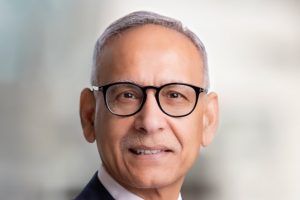
Despite groundbreaking advances in longevity science, one fundamental challenge remains: how to turn wellness into a scalable, investable industry. Speaking at The Global Healthspan Summit (GHS 2025) in Riyadh, Dr. Mehmood Khan, CEO of the Hevolution Foundation, argues that without a structured economic model, healthy longevity will remain an untapped opportunity. He emphasizes the need for a new financial framework that values health as an asset, stating, "No single sector holds the answer—progress depends on business leaders, policymakers, and scientists building a true economy around wellness."
What are the Hevolution Foundation’s current priorities in advancing healthy lifespan extension?
Our mission remains steadfast, but our strategic priorities continue to evolve in response to the most pressing gaps in the field. At its core, Hevolution is committed to funding breakthrough science and investing capital to accelerate its translation into real-world impact. However, a fundamental challenge we are increasingly addressing is the global shortage of human capital dedicated to longevity research. Scientific progress depends on talent, and there are far too few experts focusing on this area.
To bridge this gap, we are investing in people as much as in research. That is why we have launched initiatives such as new investigator award grants, postdoctoral training programs, fellowships, and endowed academic chairs, all aimed at cultivating the next generation of leaders in longevity science. Importantly, our funding comes with no obligation for recipients to work for Hevolution or any particular institution—our goal is simply to increase the number of highly skilled professionals advancing the field, whether in academia, the private sector, or public policy. This effort must be global, benefiting both developed and emerging economies.
Another critical challenge is the absence of a standardized, objective biomarker to measure aging—a metric that can reliably predict the future rate of aging. The field will struggle to progress without such a tool, which is why Hevolution is actively funding research in this area. Our stance is clear: whatever is developed must be open source, ensuring accessibility to researchers, industry leaders, and policymakers alike. A universally accepted aging biomarker could serve as the foundation for new therapeutics and diagnostics, much like low-density lipoprotein (LDL) revolutionized cardiovascular medicine. LDL itself was never patented, but it enabled the development of statins, which transformed the prevention of heart disease. A similar paradigm shift is needed for aging research.
Beyond scientific advancement, our mission explicitly calls for democratizing access to longer, healthier lives. This requires not only innovation but also a fundamental shift in how we assess the economic value of health. While the costs of disease are well-documented, there is currently no metric that quantifies the financial value of staying healthy. Working alongside experts such as Professor Andrew J. Scott and Sir Jonathan Symonds, we are exploring financial models that could drive investment in wellness. Drawing inspiration from carbon credits and water trading, we envision a system where longevity gains can be measured and monetized, enabling financial markets to support the sector. If successful, this framework could incentivize greater private sector investment, ultimately accelerating the development and scaling of longevity solutions.
At the policy level, our focus is on creating the conditions for industry to commercialize and scale these innovations. Progress in longevity will not be driven by philanthropy alone—it will happen when businesses recognize the commercial viability of investing in healthspan extension. Governments also have a critical role to play in enabling this shift through policies that facilitate investment and adoption.
Hevolution is uniquely positioned to convene key stakeholders—scientists, policymakers, investors, and industry leaders—to drive this transformation. As I emphasized during my discussion with Sir Jonathan Symonds, corporate shareholders must begin to recognize the long-term value of investing in wellness. If the private sector, financial markets, and governments align behind this vision, we can redefine how the world approaches aging—not as an inevitability, but as a challenge that can be tackled through science, investment, and policy innovation.
How does Hevolution support Saudi Arabia’s Vision 2030, and what key indicators define its impact?
Hevolution is fully aligned with Saudi Arabia’s Vision 2030, which prioritizes not only increasing life expectancy—from 76 to 81 years—but ensuring that people live healthier, more fulfilling lives. The Kingdom’s leadership recognizes that longevity alone is not enough; the real goal is to extend healthspan, ensuring that individuals remain physically and mentally well as they age. This vision extends beyond healthcare to a broader emphasis on quality of life, understanding that well-being and happiness are intrinsically linked to health.
Hevolution plays a crucial role in realizing this transformation, positioning Saudi Arabia as an unexpected yet undeniable global leader in longevity science. Many are surprised to see the Kingdom taking center stage in shaping the future of healthy aging, yet the evidence is clear. The overwhelming response to our initiatives—including an event that attracted over 3,500 participants—demonstrates the immense demand for progress in this field. The global need for longevity research already existed; Hevolution’s role has been to catalyze action by providing the platform, funding, and leadership needed to accelerate advancements.
Measuring impact requires more than tracking lifespan extension. Our success is defined by scientific breakthroughs, talent development, and policy influence, ensuring that longevity research translates into real-world solutions. We are funding cutting-edge studies, supporting the next generation of researchers, and fostering collaboration across academia, industry, and government. By shaping the ecosystem necessary for progress, Hevolution is not only advancing the science of aging but also helping Saudi Arabia set a new global standard for how nations approach health, longevity, and innovation in the 21st century.
How does Hevolution strategically direct its investments for maximum impact?
Effective investment decisions begin with assembling the right expertise. My role is not to be the sole authority in every field but rather to identify and bring together the brightest minds—whether as employees, advisors, board members, or external collaborators. Hevolution’s strength lies in its expansive global network, which includes 250 funded research scientists worldwide. With more than 2,000 research proposals reviewed, we have unparalleled visibility into the most promising scientific advancements and emerging innovations in longevity research. This vast knowledge base allows us to make informed, strategic investments that drive meaningful progress.
Our investment strategy follows a carefully structured portfolio approach, ensuring diversification across multiple scientific disciplines, stages of development, and geographic regions. We recognize that breakthroughs in longevity science can emerge from anywhere, and we are committed to supporting the most transformative ideas, regardless of origin. This philosophy has led us to expand our focus globally, including our first investment in a European biotech company, which we will soon announce. While details remain confidential, we have already unveiled four major investments and anticipate confirming at least six more in the near future, with additional opportunities on the horizon.
As a nonprofit, our mission is not driven by financial return but by the advancement of science and its real-world application. By leveraging our unmatched access to global expertise, we are ensuring that our investments accelerate scientific breakthroughs in longevity and healthspan research, paving the way for a future where longer, healthier lives become a reality for all.
How can the private sector drive progress in wellness and longevity?
One of the key obstacles to advancing wellness and longevity is the absence of a structured value chain comparable to that of the pharmaceutical, diagnostics, or medtech industries. In these sectors, governments typically fund foundational research, while the private sector drives commercialization, operating within a well-defined regulatory framework that facilitates product development, approval, and market adoption. This model, however, does not yet exist for wellness, leaving industry leaders uncertain about how to engage and monetize innovations in this space.
To address this, we must first establish a clear regulatory and commercialization framework, ensuring that wellness solutions have a defined path to validation, approval, and large-scale implementation. This process cannot be undertaken in isolation; it requires active collaboration with the private sector. Business leaders should not merely react to a pre-existing structure but play a direct role in shaping it. Their expertise in navigating regulatory pathways, scaling innovations, and assessing market viability is crucial in designing a system that aligns scientific advancements with real-world applicability and economic sustainability.
Beyond regulation, a fundamental challenge remains: quantifying the economic value of staying healthy. Other industries have successfully assigned market value to resources once considered intangible. Carbon credits and water trading provide relevant analogies—Australia, Singapore, and Israel have developed systems that place economic value on water, allowing for conservation incentives and structured trading mechanisms. A similar approach is needed for health and longevity. If a standardized financial model for wellness can be established, it will allow for the development of risk assessments, investment instruments, and commercial incentives that drive substantial private-sector participation.
Once the economic viability of longevity is clearly defined, the private sector will have the confidence to invest and scale solutions at a transformative level. However, achieving this requires a multi-sector approach, where scientists, policymakers, and industry leaders collaborate to create a sustainable ecosystem. The future of longevity science cannot be shaped by a single sector—progress depends on a coordinated effort across research, finance, and regulation to build a framework that incentivizes innovation and ensures broad accessibility.
This is not a theoretical concept but a practical, urgent challenge that requires immediate attention. The private sector holds both the capabilities and the strategic interest to shape the future of wellness, but its involvement must be proactive to ensure that the emerging framework is designed with long-term business and societal impact in mind.
What impact can Hevolution achieve in the near future, and how should global leaders engage in longevity?
The field of longevity is gaining unprecedented momentum. Over the past year, we have seen a significant increase in capital and resources directed toward aging and wellness research, a clear indication that the world is beginning to recognize its transformative potential. While multiple factors contribute to this shift, I believe Hevolution has played a crucial role in elevating healthy aging from a specialized research focus to a global priority, fostering collaboration among scientists, policymakers, and industry leaders.
The next step is ensuring that scientific advancements move beyond research and into real-world application. Progress in biomarkers, diagnostics, therapeutics, and economic models must be structured within a clear regulatory and commercial framework to facilitate large-scale adoption. Without a well-defined path to validation and integration, longevity science risks remaining theoretical rather than delivering tangible impact. This requires a concerted effort to align policy, investment, and industry expertise to create an ecosystem where innovation can thrive.
Longevity science is not just an academic or industry pursuit—it is a fundamental issue that will shape the future of global health and economic sustainability. The question is whether we, as leaders, have the foresight and determination to work together across disciplines and sectors to ensure these advancements benefit society at large. Now is the time for investors, policymakers, and scientists to take decisive action, creating the foundations that will make longer, healthier lives a reality. The choices we make today will determine how future generations experience aging.