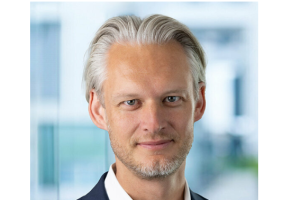
Maximilian Schrems, Managing Director of VTU Engineering AG (Switzerland), brings a distinctive background in architecture and structural engineering to pharmaceutical engineering, an advantage when integrating complex process requirements with advanced facility design. Under his leadership, VTU emphasises operational excellence, high-performance culture, and nearshoring across Europe to ensure project continuity and quality. With a strong presence in the DACH region, VTU positions itself as a trusted partner for pharmaceutical clients seeking faster time-to-market, efficient execution, and long-term collaboration.
Your background in architecture and structural engineering is quite distinctive for someone leading a process-driven pharmaceutical engineering company. How did this unconventional path prepare you for this role?
My career trajectory certainly differs from typical process engineering leaders, but this architectural foundation has proven invaluable. Following my architectural studies, I joined a boutique practice in Zug where we developed the site master plan for Roche Diagnostics in Rotkreuz.. This project, which I developed alongside my supervisor, provided my first exposure to pharmaceutical facility development.
After completing doctoral studies in structural engineering, Stefan Berg (at that time General Manager of NNE Pharmaplan Switzerland) gave me the chance to establish an architectural division within his organisation. I have always been fascinated by the intersection of engineering and architecture, and this represented the perfect entry point into pharmaceutical manufacturing. I developed the architecture, laboratory, and logistics departments, growing the division to nearly forty professionals across multiple sites.
This progression through large capital expenditure projects and eventually managing the entire investment project business area, serving as Stefan Berg’s deputy, provided a comprehensive understanding of both technical and commercial aspects of pharmaceutical engineering. The architectural perspective proves particularly valuable because pharmaceutical facilities require integrating complex process requirements within sophisticated building systems, regulatory compliance frameworks, and long-term operational considerations.
For our international readership, could you introduce VTU Engineering and explain how the company positions itself in the competitive landscape?
VTU has operated for thirty-five years, originating in Austria with a main focus on chemical and pharmaceutical process engineering. We maintain sector discipline and decline usually opportunities outside these domains. Geographic expansion became essential as VTU had already secured a significant market share in Austria, prompting the company to extend its operations to Germany, Italy, Switzerland, Belgium, Poland, and Romania.
Our positioning strategy diverges significantly from competitors, who establish extensive far-shore engineering centres in locations such as India. We believe nearshoring within Europe provides superior value propositions for our predominantly European client base. Our Romanian operation, initially established for oil and gas projects, now functions as our nearshoring hub, combining highly educated professionals in lower-cost European markets with artificial intelligence and intelligent workflow applications developed by our own. We offer blended hourly rates that maintain competitive positioning whilst delivering superior quality and project continuity.
Several factors differentiate our value proposition, which is defined by specialised expertise and deep technical capabilities. We bring advanced knowledge in environmental engineering, robust process competencies in chemical and biotech engineering. Our strengths extend to various niche areas such as peptide manufacturing, MSAT, automation, and more, enabling us to deliver high-value solutions across complex domains. German-language proficiency becomes essential when projects transition to construction phases in DACH markets—few organisations provide this capability at scale. Additionally, larger players typically engage for major investment projects and depart upon completion, whilst clients increasingly expect continuing engineering support for start-up assistance, operational optimisation, and ongoing OPEX facility management.
Switzerland represents a particularly strategic market for pharmaceutical engineering. How does VTU’s Swiss operation fit within the broader European strategy?
We maintain strategic positioning at crucial locations throughout Switzerland: Basel serves the pharmaceutical industry’s primary hub, Winterthur addresses Eastern Switzerland’s chemical and pharmaceutical markets, Zofingen maintains historical connections to Siegfried, and Visp serves that region’s specific requirements.
Switzerland represents critical strategic importance through our cross-border resource deployment model. Our Swiss operation employs approximately eighty professionals, but combined with our 1,100 European colleagues, we possess enormous integrated capability. For example, our current largest project utilises entirely Austrian construction management teams. This collaborative model addresses fundamental engineering consultancy challenges: maintaining comprehensive in-house capabilities versus specialisation.
We generate significant Swiss sales volumes with ambitious growth targets, though we deliberately moderate local workforce expansion. Swiss salary levels create compelling economics for cross-border deployment – Our Swiss junior engineer’s salary approximates senior engineer compensation in other markets. When combined with Switzerland’s reliability premium, stable political circumstances, and current low inflation environment, this creates good conditions for high-value engineering services.
The Swiss pharmaceutical market demonstrates remarkable stability even during global uncertainties. Major investment discussions continue progressing toward realisation because Switzerland attracts investment not for cost advantages, but for reliable outcomes, both technical quality and regulatory predictability. This proximity to decision makers enables direct engagement with major players, facilitating relationship development that proves invaluable in our sector’s small decision-maker community.
What market trends and demand shifts are you observing in pharmaceutical engineering?
Time-to-market acceleration represents the most significant transformation. Timeline pressures have intensified considerably, requiring engineering companies to abandon approaches that succeeded historically but prove inadequate today. We observe increasing Americanisation of project execution methodologies: extensive reporting and project controls that require careful balance between oversight and investment protection.
Personnel volatility has increased across both service providers and client organisations. Project completion with original team composition has become increasingly rare, creating continuity challenges that emphasise the importance of systematic knowledge management and cross-training initiatives.
Regarding technology adoption, pharmaceutical manufacturing rarely drives innovation due to FDA and Swiss Medic approval requirements that prioritise proven technologies over innovative approaches. Data analytics enhances our engineering efficiency and enables process optimisation, generating substantial value through improved batch recording, better generator utilisation, and enhanced automation processes. However, underlying technologies often remain relatively unchanged; we simply operate existing systems more intelligently through enhanced data utilisation.
Energy cost pressures remain moderate compared to traditional chemical industries, where efficiency improvements significantly impact margins. Innovation drivers typically emerge from logistics optimisation and operational efficiency rather than core manufacturing processes, though opportunities certainly exist for energy optimisation applications.
You mentioned transforming the company culture. What leadership philosophy are you implementing?
We are reshaping our organisational culture from the traditional “family” metaphor to a high-performing sports team model. Engineering companies are not families; they are winning teams where success depends on deploying the right individuals in appropriate roles with the capabilities to fulfil their responsibilities.
This requires moving from micromanagement to trust-based delegation, establishing clear responsibility areas where personnel take ownership. When issues arise, we implement countermeasures and evaluate whether individuals suit their assigned roles. If improvement fails to materialise, we need to consider replacing personnel with individuals better suited for specific positions.
My external perspective helps identify situations where long-term relationships may obscure performance evaluation, distinguishing personal affinity from professional effectiveness. Retaining underperforming personnel demotivates high-performing team members who observe inadequate contributions to company efficiency. The most unfair action is covering for ineffective personnel whilst expecting dedicated employees to compensate.
I emphasise individual accountability rather than detailed oversight. Our success depends entirely on trust. Clients must trust that our personnel can deliver required outcomes, whilst our team must trust that we can execute projects successfully. In engineering consultancy, our sole asset comprises our people and their capabilities.
Traditional salary band systems, whilst apparently equitable, fail to reflect individual capabilities. Exceptional young professionals demonstrating strong performance deserve compensation comparable to senior colleagues, even when this contradicts salary band parameters. Conversely, post-peak performance decline requires difficult conversations about role adjustments. Merit-based compensation reflecting actual contribution proves more attractive to newer generations whilst ensuring fairness based on performance rather than tenure.
What strategic objectives are you pursuing for the coming years?
Profitability follows naturally from operational excellence, a fundamental success principle. Whilst I maintain targets from our owners and investors, my primary focus centres on client perception rather than headcount metrics.
My ultimate objective is to achieve recognition where clients consistently express satisfaction with VTU personnel quality. When clients specifically request our support or express a preference for our team involvement, we will have achieved sustainable competitive advantage. I am less concerned with how many people we employ and stay more focused on ensuring that every team member contributes meaningfully. Sustainable success comes from capability and performance, not sheer size.
Success emerges from countless operational details: interpersonal treatment, client engagement, supplier relationships, and internal recognition systems for high-performing individuals. We are implementing clear performance targets whilst carefully managing expansion pace to ensure proper integration and risk management.
The pharmaceutical decision-maker community remains quite small, making reputation preservation paramount. Engineering operates within modest profit margins where single project failures can undermine numerous successful engagements. Five successful projects can be overshadowed by one failure, creating persistent reputation challenges.
How do you want VTU to be perceived in the pharmaceutical marketplace?
Simply stated, as a reliable and highly professional engineering partner. If clients consistently associate VTU with these characteristics, I consider that a complete success.
Trust represents the fundamental requirement: confidence that clients receive superior deliverables consistently. Once excluded from this small decision-maker community, re-establishing credibility proves extremely challenging. This emphasises why operational excellence must precede growth ambitions.
Engineering project success requires three parties working collaboratively: the engineering company, the client, and suppliers. Superior collaboration and mutual respect, combined with trust and professional regard, directly correlate with project success. When these entities align effectively, outcomes consistently exceed expectations.
This collaborative foundation represents the most critical factor in industry achievement and should guide all our professional relationships. Our reputation depends not just on technical capabilities, but on our ability to foster these collaborative relationships that enable exceptional project delivery across the entire pharmaceutical development lifecycle.