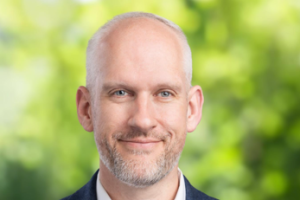
Matthew Brabazon, General Manager of EMEA at SFI Health, a global natural healthcare company, discusses the company's shift towards branded products and its focus on clinically supported products in the areas of cognition and the microbiome sector.
Could you start by introducing SFI Health to our international audience?
SFI Health is a botanical, natural healthcare company. An important part of our activities is to focus on taking botanical natural products and engaging with patients globally through physicians and pharmacists—our shareholder has a vision of development and innovation of natural medicines with emphasis on native Indonesian plants, where he was born and raised. Mr. Eng Liang Tan is also a shareholder in other pharmaceutical and R&D companies located and working in Indonesia and Australia.
SFI Health is a company shaped by a series of acquisitions involving several botanical and natural healthcare companies across the globe. Here in Switzerland, for example, we integrated a company known for its expertise in Panax Ginseng-based research with Ginsana®. In the UK, we expanded through the acquisition of a business specialising in essential fatty acid formulations with our Equazen® brand. In the Americas, our portfolio grew to include a company focused on microbiome-based health solutions with Ther-Biotics from Klaire Labs. In Australia, we incorporated a firm known for its traditional plant-based tonics.
Our corporate headquarters are based in Sydney, Australia. We then operate through regional divisions. I oversee the EMEA region, which includes Europe, the Middle East, and Africa. We also have an APAC division headquartered in Sydney. In Australia rely on a large SFI-branded sales force to grow and establish sales, while in the rest of Asia Pacific, including New Zealand, we follow a distributor-based model. In the Americas, we currently focus on the United States and Canada.
How is SFI currently positioned in the diverse and competitive EMEA market?
We have a multi-faceted approach that I think is quite unique in Europe. First, we operate as a contract manufacturer. We work primarily with Swiss-based companies that are looking for the “Made in Switzerland” label on their packaging. We offer full-service contract development and manufacturing, covering everything from initial formulation to finished goods.
From SFI Health Brands, we distribute our own branded products across the EMEA region. Our product portfolio includes a Panax Ginseng-based product developed at this very facility with Ginsana. We use a unique API in our Ginsana®, the Panax Ginseng extract, G115®, which is well-known globally. Sales of these branded products are driven by longstanding and well-established partnerships with local distributors
However, we have a different approach in South Africa and the UK. There, we lean more towards retail and pharmacies, although not exactly direct-to-consumer. Our products straddle the line between over-the-counter (OTC) and food supplements, and are sold in pharmacies and retail chains such as Boots and Holland & Barrett in the UK, and Clicks and Dis-Chem in South Africa.
We also have a strong regulatory team that supports product registration not only here in Switzerland with Swissmedic, but also internationally.
Our communication approach is grounded in medical science, and we are proud to offer end consumers products supported by extensive clinical evidence. We aim to communicate our message to doctors and physicians, encouraging them to make recommendations to patients, who then find our products available in convenient retail locations.
Could you tell us about your portfolio?
If we focus on the product side, our largest portfolio is Equazen®, an omega-based range supported by 19 clinical trials, including six focused specifically on children and adolescents with ADHD.
The studies demonstrate that our products support a healthy cognitive function, improve focus and attention, and support patients in meaningful aspects of their lives. It is a huge and growing area of interest, particularly today.
Given how different your markets are, what guides your portfolio strategy and product launches in each country?
Our main commercial focus is on Europe and South Africa. That is mostly due to regulatory reasons. The Middle East, for instance, categorises products differently and launching there can be more complex.
In Europe, even though regulatory frameworks vary from country to country, our marketing and medical team spend a lot of time working with our distributors to educate physicians and pharmacists, creating awareness around our products and how they can benefit patients. Our products are then distributed widely through pharmacies and increasingly through e-pharmacies, which are becoming critical for growth. Amazon is also emerging as a crucial sales channel, highlighting both the evolution of consumer purchasing behaviour and the strong trust we have established with our audience.
South Africa operates a bit differently. There, we have a team that meets with physicians to encourage recommendations, but our products are sold through mainstream retail and pharmacy chains. It is a different route to market but remains a strong and growing one.
You have been leading EMEA for nearly three years—what has been your focus so far, and what is your vision going forward?
There are two parts to that. First, we are looking at downsizing on the manufacturing side. That is essential because SFI globally aims to position itself as a branded company rather than a contract manufacturer. We recently announced the closure of the business and are currently undergoing discussions and searching for merger and acquisition opportunities, as we look to exit manufacturing in Switzerland. The facility is simply larger than we need for a branded business.
Secondly, we are shifting our focus to branded growth. For many years, this region has been dominated by contract manufacturing, and I believe our brands have not received the investment or recognition they deserve. By moving out of manufacturing, we can redirect investment into our brands, explore new markets, and create sustainable growth.
At the moment, we are not present in two of the largest markets in Europe—Germany and Italy. We are planning significant investments over the next 24 months in both countries. This includes developing local sales teams to drive growth and partnering with distributors to ensure our products reach consumers.
What is the current dynamic of your branded business, and why make this shift now away from CDMO?
To be honest, it aligns with the group’s overarching strategy. Our shareholders’ vision for the company is for it to be a branded business. At the moment, my time is split between contract manufacturing and brand development. We want global alignment to focus fully on growth.
Also, many of us in the company come from a marketing background. We have a strong desire to take products to market that we have helped develop and to grow them into recognisable brands.
Can you tell us more about your brand recognition and strategic priorities across markets?
When we look at our brands, many of them entered the region through acquisitions. Our omega-based product, for example, is the strongest brand in Poland. This may seem surprising, but our distributors there did an excellent job engaging with ADHD and paediatric networks, obtaining market accreditation, and communicating the benefits of our products. That allowed them to speak more openly about their impact.
As a result, we are seeing sustained double-digit growth in Poland. We are also beginning to see similar trends in other markets like the Czech Republic, Denmark, and the Baltics—where omega products are already well-known, especially those derived from fish oils. The messaging resonates both with consumers and physicians in those regions.
What are your key considerations when deciding whether to go direct or work through partners in a given market?
It all comes down to data. I am a very analytical person, and we have conducted extensive research into different regions to understand where our consumer base lies and who should be selling to them.
We have found that recommendations from physicians and pharmacists are absolutely crucial. We have experimented with direct-to-consumer approaches, especially through e-tailers, but in markets like Italy, where we plan to enter, without those professional recommendations, consumers are less likely to adopt something new.
Our focus, therefore, must be on building our own salesforce to raise awareness among physicians and pharmacists. They are the ones who can effectively recommend our products. That, in turn, drives growth across various channels—be it pharmacy, retail, or e-commerce.
With growing competition in natural health and botanical products, what sets you apart in this space?
It is true that the market is becoming more crowded. But what sets us apart is that all our brands are clinically substantiated. Whether a product is OTC or a food supplement, depending on the country, we make it a point to present clinical trials and white papers to physicians.
We want to be able to walk into a room with healthcare professionals and show them real data—studies about our range of products. That is our real differentiator. The data validates the product, and once a physician or pharmacist sees that, it becomes much easier for them to recommend it.
You mentioned a two-fold strategy: going direct, but also working with partners. What do you look for in the right partner?
Yes, very good point. I would break this down into two key markets to illustrate the approach. In the UK, for instance, we have a healthcare distributor called Robinson and Young. They have very strong sales ties to major retailers such as Holland & Barrett and Boots, larger chain pharmacy companies. What they bring is the ability to go in, meet with buyers, and have open, meaningful discussions. We also work closely with key opinion leaders (KOLs) in the market to help create awareness and educate the consumer, so they know what to look for when they go into these retail locations.
Additionally, many of our publications are used by different organisations. For example, the ADHD Foundation in the UK has utilised our white papers to share with their audience and raise awareness. That level of endorsement helps deepen market penetration and reinforces our scientific credibility.
Can you tell us how you engage with the scientific community and ensure effective collaboration?
Our branded business in EMEA is still small, which means we have a lean team and therefore rely on people in various markets to help share the message.
To that end, we have built an organisation in Switzerland and South Africa, each with strong marketing capabilities, scientific education, and salesforce presence. These teams help us find distributors who can communicate our values effectively. We are very active in developing the science behind our products, which can then be shared with and by these distributors.
Our Regional Science and resides in South Africa. She is outstanding at engaging with distributors and educating them, and that knowledge then cascades through their sales teams. So it becomes something like an extended team. The key distinction, of course, is that they truly understand their market. For me to build up that same level of knowledge in a given market would take years and significant investment. So we leverage local market expertise where we can.
However, over the next few years, I do see us transitioning to establishing our own salesforces in several markets, particularly where we are not yet active. That would allow us to directly control the message and keep our finger on the pulse of what is happening in those countries, where we currently rely on partners to feed us that information.
This requires robust data analytics and supply chain management. Here in Switzerland, we have built an exceptional team. Andrea, our newest hire, brings a strong logistics background. We are now exploring bonded warehouses and third-party logistics providers in the EU to support our expansion more efficiently.
Recruitment must be a major part of this transformation. What are you looking for in new hires?
Since I joined, our hiring philosophy has evolved. I’m personally involved in every job description. We seek individuals with experience in natural healthcare, especially botanical-based medicines, who are motivated, adaptable, and culturally aligned with our team. Given our small size, it’s important to have team-oriented people who are willing to learn new skills. We’re currently hiring for a senior or director-level sales role. The advantages of joining SFI Health at this stage are significant: our offices are in beautiful Ticino, Switzerland, just a short tram ride from Lugano’s central station, making it an ideal place to live and work. We offer competitive benefits, and most importantly, this is a unique opportunity to be part of a company undergoing transformation, blending start-up energy with 60 years of heritage.
How would you describe your personal leadership style, and what values or practices define the way you lead your team?
I am very hands-on. I will never ask an employee to do something I would not do myself. I am also highly data-driven. I work closely with my team to ensure they understand the rationale behind our decisions. We spend a lot of time educating internally, especially around finance, so that everyone can contribute meaningfully. Open dialogue is essential—I value every team member’s perspective.
Looking ahead to 2025–2026, where do you want the business to be?
Our goals are growth and sustainability. We aim for 20% year-over-year growth, driven by strategic investments and careful planning. On the sustainability side, we are making significant strides. We recently achieved bronze status with EcoVadis and ranked in the top 20% globally. Locally, we are innovating our packaging—switching to more sustainable materials without compromising product quality or shelf life.
To conclude, what is your message to our international readers—potential partners, investors, or collaborators—about what SFI Health stands for today and in the future?
SFI Health’s core focus is cognitive health, especially mental clarity, concentration and ADHD. We also lead in microbiome health—prebiotics, probiotics, postbiotics, and the gut-brain axis. Finally, we are investing heavily in women’s health, with several exciting innovations set to launch in the next 12 to 18 months. At our core, we are about clinically-backed innovation, science, and improving lives naturally.