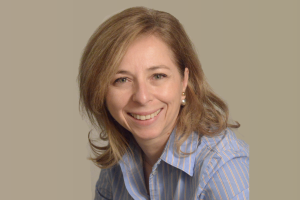
Marie Leblanc brings a distinctive combination of scientific rigor and commercial acumen to her role as Executive Vice President of Life Sciences at Biosynth, drawing from an 18-year tenure at Lonza where she witnessed the evolution of the contract development and manufacturing organisation (CDMO) industry from a traditional service provider to a strategic partner ecosystem. Her unconventional career trajectory, from organic chemistry PhD to sales excellence and ultimately senior executive leadership, reflects a deep understanding of both the technical complexities and commercial dynamics that drive success in pharmaceutical manufacturing partnerships.
With your broad experience across therapeutic modalities and recent move to Biosynth, could you share how your career evolved and what strategic factors shaped your path in the CDMO manufacturing space?
My professional journey began with a PhD in organic chemistry, polymer chemistry, and computational chemistry, sponsored by fine chemicals company Arkema. However, my initial aspiration to pursue an SME career quickly evolved. After six months, I realised this environment was not for me. I was seeking opportunities to engage with diverse challenges and people, rather than becoming highly specialised.
This realisation led to a pivotal career transition when I joined Lonza France in a Sales & Business Development role. I discovered the dynamics of the business environment and was fascinated by the diversity of the challenges —one day you might resolve customs issues, the next one you are negotiating significant contracts or convincing clients to trial new materials.
I was fortunate to be hired by Sophie Langlois, who demonstrated remarkable open-mindedness. Her philosophy was not to seek candidates who simply ticked all the conventional boxes, but rather to identify individuals with potential for growth and adaptation. This approach, I believe, is crucial for creating genuine opportunities in career development.
Your nearly 20-year career at Lonza coincided with major industry changes. How has the CDMO sector evolved, and what key shifts have you seen in market dynamics?
My 18-year tenure at Lonza provided me with a unique perspective on the transformation of the CDMO industry. When I began my career, the sector was characterised by volatility and uncertainty. There was tremendous excitement around the potential of CDMO, but the business model lacked the stability we observe today.
The industry landscape during the 2000s was fundamentally different from today’s ecosystem. Pharmaceutical companies, particularly in Europe, maintained extensive internal manufacturing capabilities and utilised CDMOs primarily for managing volume variability rather than as strategic partners. The biotechnology sector, now a cornerstone of pharmaceutical innovation, was in its infancy with limited presence.
My career at Lonza spanned multiple modalities, including small molecules, peptides, oligonucleotides, monoclonal antibodies, and cell and gene therapies. My early exposure to cell and gene therapy manufacturing—beginning in 2010-2011—positioned me at the forefront of advanced therapeutic development. This breadth of experience was facilitated by then-CEO Stefan Borgas, whose vision was to establish Lonza as the preeminent CDMO across all therapeutic modalities.
How has this shift impacted your commercial relationships, and what does it mean for the role of manufacturing in broader pharma strategies?
The evolution from vendor-customer relationships to strategic partnerships represents one of the most significant transformations I have witnessed. At the beginning, mainly virtual biotechs with no internal capabilities approached CDMOs from a partnership perspective. The real change occurred with mid-sized and large pharmaceutical companies, who historically viewed CDMOs as suppliers for niche requirements or capacity management.
Today’s commercial relationships are characterised by deeper integration and collaborative planning. We discuss governance, forecasts, innovation collaboration, and mutual learning opportunities. The relationship has evolved into a strategic partnership model, though selectivity remains crucial—neither CDMOs nor pharmaceutical companies can maintain these strategic partnerships with every counterpart.
This transformation reflects a fundamental shift in how pharmaceutical companies view manufacturing within their broader strategies. Manufacturing is no longer considered merely a cost centre but rather a critical component of competitive advantage, requiring deep and integrated collaboration with specialised partners who can provide both technical expertise and strategic insights, and will ensure supply continuity.
After your success at Lonza, what strategic factors influenced your move to Biosynth, and how does this privately-owned, mid-sized company align with your vision for the next stage of your career?
My transition to Biosynth was motivated by a desire to join an entrepreneurial environment where individual impact could be more directly realised. After witnessing Lonza’s growth from about 6,000 to 18,500 employees and revenue expansion from CHF 3 billion to 7 billion Swiss francs, I found myself seeking an environment with greater agility and entrepreneurial spirit. Having experienced all major therapeutic modalities and achieved executive-level responsibility, I was ready for a different type of challenge.
Biosynth’s profile as a Swiss-based company under the ownership of KKR and Ampersand Capital provided the confidence and strategic foundation I sought. The company’s recent inorganic growth strategy—9 acquisitions over three years across multiple technology platforms —created a complex but potentially powerful platform requiring integration and strategic focus. This presents exactly the type of transformational challenge that energises me professionally.
How does this multi-modal platform position the company within the competitive CDMO landscape, and what unique value proposition does it offer to pharmaceutical clients?
Biosynth operates as a mid-sized organisation with over 530 employees across 10 main global sites, positioning itself at the intersection of chemistry and biology. The company’s value proposition centres on supply chain security across multiple therapeutic modalities, including small molecules, peptides, and bioconjugates, albeit at scales differentiated from industry giants. There exists a significant market segment that prefers working with small, agile partners who can provide great level of attention and cultural alignment.
Biosynth organises its commercial activities across two primary segments: life sciences and diagnostics. These segments are supported by technology platforms spanning chemistry, peptides, enzymes, bioconjugation, and antibodies. Biosynth operates dual business models, offering both a portfolio of products—from milligrams to tonnes—and customised services including process development, manufacturing, quality control testing and packaging.
Our expertise in carbohydrate chemistry and nucleoside chemistry coupled to our GMP facilities enables participation in high quality bioprocessing reagents, excipients, oligonucleotide supply chains and specialised projects including Pegylation and glycosylation. Recent expansions include a new GMP bioconjugation suite in Berlin, focusing on peptide and oligonucleotide conjugation, vaccines, and pegylated proteins. Our Vienna site specialises in enzymatic engineering and strain development, works closely with our GMP facilities in Berlin and Staad. These collaborations enable us to leverage overlapping expertise across these complementary technology areas.
As you shape Biosynth’s strategy following the recent acquisitions, what are your top priorities for unlocking value from these integrations, and how are you positioning the company to seize current market opportunities?
My mandate involves extracting value from the recent acquisition integrations while establishing a coherent value proposition for pharmaceutical and life sciences clients. The integration has been completed operationally—systems and processes are aligned. Now we are focused on creating the strategic identity that binds these capabilities together.
The initial months of my tenure have been dedicated to understanding each site’s unique expertise and the previous management team’s vision. With Matt Gunnison, who joined as CEO in October 2024, the leadership team is collectively working to position a clear value proposition for our clients alongside life sciences and diagnostics.
The company’s positioning leverages several market trends, including increased regulatory emphasis on supply chain security, quality requirements, and traceability. We are witnessing significant attraction to our Swiss location with GMP capabilities, especially for reagents and intermediates.
With sustainability becoming a key focus in pharma manufacturing, how is Biosynth addressing these challenges, and what role do emerging technologies play in your strategy?
Embracing sustainability is no longer just an ethical imperative; it is now an integral part of strategy for manufacturers to ensure long-term sustainability, drive innovation, and maintain a competitive edge. This shift requires consideration of the environmental impact of the entire product lifecycle, from production to use and disposal, and to adopt greener manufacturing processes throughout the industry. We identify enzyme engineering and biocatalysis as key areas for future development, aligning with industry-wide sustainability initiatives for green chemistry solutions. A key advantage of biocatalysis is its flexibility. It can be seamlessly integrated into existing manufacturing processes to enhance their efficiency and sustainability, or it can be employed in the design of entirely new, streamlined synthesis routes for complex molecules. Additionally, in both chemical and peptide synthesis, we are developing approaches to reduce solvent usage as well initiatives for replacing hazardous solvents with more sustainable or less hazardous alternatives to reduce environmental impact.
What principles guide your approach to building high-performing teams and fostering innovation within a complex organisation?
My leadership approach emphasises transparency, initiative-taking, and constructive challenge. I want people to propose solutions and challenge my perspectives. Leadership does not mean having all the right answers—it means facilitating debate and diverse viewpoints to create optimal solutions.
I believe in creating an open and transparent culture where team members feel empowered to take initiatives and share feedback. I was largely inspired by a brilliant and authentic leader, Olivier Loeillot, early in my career who always knew how to create this safe environment for feedback and challenge.
This philosophy proves particularly relevant in Biosynth’s post-acquisition environment, where integrating diverse cultures and expertise requires collaborative and authentic leadership. Having everyone aligned is beneficial, but it is not how you create genuine value. Value emerges from constructive debate and the synthesis of different perspectives.
Switzerland is known for quality and precision in manufacturing. How does Biosynth leverage this foundation to stay competitive globally?
My emphasis on Swiss-based operations reflects broader strategic considerations about quality, reliability, and market positioning. Swiss quality standards provide inherent commercial advantages. The Swiss quality standard, combined with our strategic geographic locations and focused capabilities, creates a compelling value proposition for clients seeking reliable manufacturing partners. This positioning becomes particularly relevant as pharmaceutical and diagnostics companies increasingly prioritise supply chain security and quality assurance.
Beyond quality considerations, Switzerland offers an exceptional work-life balance for retaining and attracting international talents and serves as a gateway to the broader European and international pharmaceutical ecosystem. Basel, in particular under the lead of Basel Area Business & Innovation, remains one of the most attractive locations for pharmaceutical and healthcare professionals, providing access to a rich network of industry expertise and partnerships.
Biosynth global footprint, spanning from the US to China, provides the geographic presence necessary for modern pharmaceutical supply chains while maintaining the operational flexibility that differentiates us from larger competitors. This combination of Swiss quality heritage and global reach positions Biosynth uniquely in the competitive landscape.
Looking ahead, what strategic goals define success for Biosynth, and how do you see the company contributing to next-generation therapeutic development in the evolving pharma landscape?
Looking forward, I envision Biosynth becoming a recognised name in pharmaceutical and biotechnology industries for specific niche areas around supply chain security and key ingredients in bioprocessing and drug development.
Furthermore, Biosynth highly differentiated drug discovery capabilities for peptides represent an additional competitive advantage in the area of life sciences and diagnostics. The discovery and optimization platform uses the longstanding Chemical LInkage of Peptides onto Scaffold (CLIPS) technology developed at our peptide innovation centre in the Netherlands. This unique platform creates highly constrained, conformationally relevant cyclic and multicyclic peptides, most recently adding tricyclic peptide scaffolds. This unique and proven technology enables Biosynth to deliver bioactive peptide drug candidates that are highly stable, particularly relevant for radiopharmaceuticals. Our integration from discovery through manufacturing creates significant value for our pharmaceutical partners.
This work on next generation targeting moieties ties perfectly into our complementary bioconjugation manufacturing centre in Berlin, Germany which recently underwent a significant expansion to support later phase production projects for GMP bioconjugates and advanced polymers. We see a real need for this integrated service offering for many pharmaceutical/biotech customers who want to simplify their supply chain while still working directly with teams of subject matter experts.