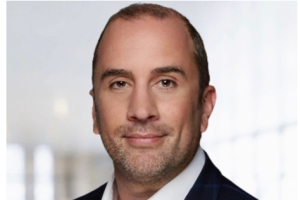
Amid structural reforms and shifting expectations across the Swiss healthcare system, Marco Caruso’s return to Medtronic marks a renewed focus on patient impact, equitable access, and long-term value. Speaking from the intersection of leadership, policy, and innovation, Caruso offers sharp insights into how one of the world’s largest medtech companies is navigating complexity while staying true to its purpose.
What brought you back to Medtronic as Senior Country Manager for Switzerland, and where have you focused your efforts over the past year?
I rejoined Medtronic in May 2024, having previously spent over a decade with the organisation, beginning in 2004. My return coincided with a period of broader engagement across the Swiss healthcare and innovation landscape. In parallel to stepping into this role, I joined the board of Swiss Medtech’s Section Implants and became a member of the British Swiss Chamber of Commerce Life Sciences Task Force. I was also invited to support startup evaluations, contribute to a tech tour, and offer informal advisory support to a private equity fund focused on healthcare investments. These experiences helped reconnect me with the sector from multiple angles and deepened my understanding of emerging needs and opportunities within the Swiss ecosystem.
Ultimately, what drew me back to Medtronic was its clarity of purpose and its ability to drive real, large-scale impact. This is an organisation where the mission – to alleviate pain, restore health, and extend life – is not just a statement on the wall but something truly lived by teams across the business. After years of working in more narrowly focused environments, I saw in Medtronic the scale, expertise, and intent required to deliver patient-centric innovation while contributing meaningfully to the evolution of healthcare systems. Over the past year, my focus has been on reanchoring myself within that mission and working across internal and external networks to ensure we continue to create tangible value for patients, practitioners, and the broader Swiss healthcare community.
What have been the most meaningful lessons from your first year back at Medtronic?
This past year has underscored just how much the healthcare environment continues to evolve, shaped not only by regulatory change in the wake of COVID-19, but also by the broader generational shift across the sector. While regulatory systems are adapting, they are not always doing so at the pace or in the direction that would best support innovation. At the same time, a new generation of healthcare professionals, decision-makers, and influencers is assuming key roles, often bringing different expectations and a more fragmented understanding of how therapies have developed over time.
One of the clearest takeaways for me has been the need to actively engage in closing this emerging knowledge gap. Many stakeholders – whether in government, clinical practice, or industry – are not fully aware of the long journey behind medical technologies or how therapeutic standards evolve. Helping to contextualise that evolution has become an important part of our role. We have a responsibility not only to innovate, but to explain where that innovation comes from, how it fits into clinical practice, and what value it brings. That, in many ways, has been one of the most defining aspects of my return: reconnecting expertise with relevance in an increasingly complex landscape.
How would you describe Medtronic’s footprint in Switzerland, particularly in terms of its manufacturing capabilities and strategic role?
Switzerland has always offered a compelling foundation for Medtronic, not only because of its central position within Europe, which supports efficient logistics and regional access, but also due to the quality of its talent and technical sophistication. From the outset, it was clear that building a production site here made sense. The nature of what we manufacture, particularly in the realm of precision mechanics, demands deep expertise and, in many cases, highly developed manual skills. Switzerland stood out as a location that could support this level of complexity.
Our facility now serves almost all markets outside the United States, including parts of Asia. What distinguishes our operation is its adaptability. We produce largely on demand, often tailoring products to the specific needs of patients or to shifting requirements arising from public tenders. While automation plays a growing role in manufacturing globally, in our context, flexibility and precision are paramount. The variability in product types and the need to rapidly adjust production lines mean that human expertise remains essential. This adaptability is precisely what reinforces Switzerland’s value, not just as a manufacturing base, but as a hub of excellence within Medtronic’s global network.
Which areas of Medtronic’s portfolio are particularly strategic for the Swiss market, and what innovation or growth dynamics have you observed since taking on your role?
Switzerland represents a well-penetrated, high-demand healthcare environment, one where patients and practitioners alike expect a high level of clinical sophistication. This makes it an ideal setting for much of our portfolio. My focus area in particular, which is Cardiac Rhythm Management, Heart Failure, Patient Care Systems and Diagnostics, stands out as a key strategic area, influencing both public and private sector healthcare development. In parallel, we continue to see strong momentum in neuromodulation and spinal and orthopaedic therapies, each supported by a healthcare system that is attentive to evolving patient needs.
While new product launches are not constant, given the longer innovation cycles in medtech, progress often comes through the extension of existing therapies, the development of new indications, or refinements in how treatments are delivered. We are especially proud of the work being done in cardiovascular innovation, where efforts to miniaturise devices and integrate digital and AI-driven functionality are enabling a shift toward more predictive, personalised care models. At the same time, innovation within our manufacturing processes remains a key enabler of responsiveness and quality.
Looking ahead, the trajectory of growth in Switzerland will depend in part on the regulatory environment. Ongoing discussions around reimbursement structures, tariff systems, and compliance frameworks will play a decisive role in shaping both the speed and breadth of access to innovation. Ensuring alignment between clinical progress and governance remains a central focus.
How would you assess Switzerland’s regulatory environment, and what are the key developments currently shaping your approach?
Switzerland is often viewed from the outside as a seamless and attractive healthcare market, and in many respects, that reputation is well earned. However, it is also a highly regulated environment, where every aspect of what we do must align closely with national directives and, increasingly, with European regulatory frameworks. While it is not our role to shape policy directly, we do seek to contribute constructively by bringing forward a patient-centred perspective and engaging in dialogue with the healthcare ecosystem to ensure that innovation remains both meaningful and accessible.
Central to our efforts today is understanding how upcoming structural reforms will affect the healthcare value chain. One of the most significant changes is the shift from the longstanding TARMED billing system to TARDOC, a revised fee-for-service model that will come into effect on 1 January 2026. In parallel, Switzerland is drawing the system closer to the Diagnosis-Related Groups (DRG) model used for inpatient care across much of Europe. These changes aim to enhance cost transparency and better reflect the complexity of modern clinical practice.
Internally, our regulatory and policy teams are assessing the implications of this transition, specifically how it will influence patient access, reimbursement models, and the conditions under which innovation can be introduced. Our priority is to ensure that the system continues to support high standards of care while allowing medtech solutions to remain viable and scalable. Ultimately, the focus remains on sustaining a healthcare environment in which patients benefit from timely access to the best available technologies.
How is Medtronic adapting to the growing emphasis on value-based healthcare, and how does this translate into your operations in Switzerland?
The shift toward value-based healthcare is one we actively embrace. In the past, the impact of a medical device was measured primarily by its ability to address a specific clinical condition. While that remains important, today’s healthcare systems demand more; solutions must also contribute to broader goals such as long-term patient outcomes, system efficiency, and cost sustainability. A product that delivers excellent clinical results may still fall short if it fails to support the full care pathway or align with the economic realities of the health ecosystem.
At Medtronic, we are moving beyond the product alone, focusing on how our technologies integrate into the broader treatment journey. This means ensuring that our devices offer durability, cost-effectiveness, and adaptability, while also incorporating digital and AI-enabled tools that support earlier diagnosis, better decision-making, and improved continuity of care. Increasingly, our role is to contribute meaningfully across the entire value chain, from prevention and intervention to follow-up and system-wide efficiency.
A good illustration of this approach can be seen in the evolution of cardiac care. In the past, patients with heart failure often received cardiac resynchronisation therapy (CRT) at a late stage, after repeated hospitalisations. Although the therapy provided clinical benefit, we came to recognise that the intervention was happening too late. Today, by embedding AI-supported monitoring and earlier screening, we aim to identify these patients before they decompensate. This allows for earlier treatment, better clinical outcomes, and significantly lower costs across the system. This model, where innovation is defined not only by the product but by the value it brings to all stakeholders, is at the heart of how we operate in Switzerland and beyond.
How do you view the role of digital technologies and AI in medtech, and how is Medtronic integrating these tools, particularly within the Swiss context?
There is no shortage of enthusiasm around digital technologies and artificial intelligence, and while their potential is undeniable, the reality in medtech requires a more measured approach. We’ve been working with large volumes of clinical data for decades. What AI offers is the ability to process and analyse this data more quickly and across multiple dimensions. Yet the true value lies not in the scale of data collected, but in the clarity of purpose behind its use. Any data strategy must be aligned with privacy regulations, clinical standards, and ultimately with the goal of improving patient outcomes.
In Switzerland, where expectations for data governance and medical rigour are particularly high, we approach integration carefully. It’s not about technology for technology’s sake. Rather, we look at where digital tools can meaningfully support clinical decision-making. For example, in orthopaedics, digital platforms can track post-operative recovery, offering indicators such as gait progression or changes in mobility. These insights can help inform a clinician’s judgement, but they are not a substitute for it.
What we see is that AI and digital tools serve best when positioned as enablers, augmenting, not replacing, human expertise. Most patients present with more than one condition, and navigating that complexity still requires the contextual understanding that only trained professionals can provide. Technology can guide, surface patterns, and offer new levels of visibility, but the responsibility for interpreting and acting on those signals remains with the practitioner. That distinction is essential to how we think about digital transformation, particularly in a market as sophisticated as Switzerland.
As you look ahead to 2025–2026, what strategic priorities are guiding your efforts, and what outcomes would you like to have achieved by then?
One of my central priorities over the next two years is to advance equitable access to care. Even in a well-functioning healthcare system like Switzerland’s, access is not always as seamless as it should be. Reimbursement frameworks and ongoing negotiations between payers can create delays or inconsistencies, making it difficult for some patients to receive the most appropriate therapy when they need it.
At Medtronic, we are committed not only to developing innovative therapies but also to ensuring that those solutions are available and accessible across the board. That means working constructively with regulators, government agencies, payers, and healthcare providers to identify and address the friction points that limit access. My ambition is to accelerate this process, to contribute to a system where medical innovation translates more directly into patient benefit. If, by the end of 2026, we have made measurable progress in reducing barriers and improving access to appropriate treatment, that will be a meaningful achievement.
Turning to your internal organisation, what are your priorities when it comes to people and talent development at Medtronic Switzerland?
Growth remains a central objective, both in terms of business and people. Attracting and retaining top talent is essential to our continued success. We are committed to making Medtronic a place where people want to work, where they feel challenged, empowered, and part of something meaningful. Bringing in strong profiles is not only about expertise but also about mindset, individuals who can contribute to innovation and actively shape the healthcare value chain.
To support this ambition, we invest significantly in training and development. New team members undergo an extensive onboarding process, which can extend over the course of a year. Given that many of our roles involve close interaction with physicians and other healthcare professionals, it is essential that our teams are equipped with a deep understanding of clinical contexts. This enables them to engage in credible, informed dialogue and contribute meaningfully to treatment decisions. That level of fluency requires rigorous preparation, and we take pride in offering that to every colleague who joins us. It is something we have done well and intend to further strengthen.
On a more personal note, how would you describe your leadership style and the way you aim to foster alignment across the organisation?
If I had to characterise it, I would say my leadership style is adaptive. I adjust to the context and to the people I’m working with. The generational shifts we’re seeing demand that kind of flexibility. I also firmly believe that leadership is not static; there is always room to learn, to listen, and to grow, no matter one’s experience.
One of the things we lost during COVID was real, meaningful conversation. Re-establishing open and honest dialogue, both within the team and externally, is something I value highly. Understanding what is happening in the market, recognising that each country and each setting is different, and responding accordingly are essential to leading responsibly.
Ultimately, success is never the result of one individual. It comes from building high-performing teams, surrounding yourself with capable people, and staying anchored in purpose. For us, that purpose is crystal clear: treating patients and improving lives. It may sound simple, but it drives everything we do, and it’s more than a mission statement on a wall. It is something we live every day.