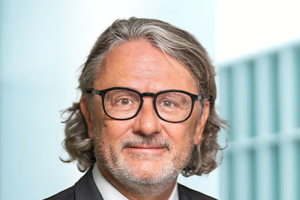
Marcel Imwinkelried, CEO of Siegfried, leads a CDMO specialising in small molecules with comprehensive global manufacturing capabilities. His “Evolve Plus” strategy focuses on operational excellence, selective biologics growth, and disciplined acquisitions to ensure sustainable expansion. Under his leadership, Siegfried prioritises innovation, sustainability, and talent development to deliver lasting value to clients and investors.
Could you outline Siegfried’s positioning within the current CDMO landscape, particularly regarding your focus on small molecules and your strategic rationale for maintaining this emphasis?
Siegfried operates through two principal business clusters that reflect our strategic focus on comprehensive service delivery. Our drug substance division, which represents our foundational competency developed over decades, encompasses seven manufacturing sites specialising in small molecules, with one facility dedicated to large molecule production through our viral vector company, Dynamics, located in Schlieren near Zurich.
Our drug product division comprises five sites specialising in fill-and-finish operations across diverse pharmaceutical forms, including capsules, tablets, sterile injectables such as prefilled syringes, cartridges, vials, and ampoules. We have also developed specialised capabilities in ophthalmic products, including sterile eye drops and ointments, which represent niche but strategically important market segments.
This infrastructure enables us to deliver comprehensive services for small molecules spanning early-phase development through commercial manufacturing, utilising our full spectrum of technological capabilities. For large molecules, our injectable manufacturing capabilities proved instrumental during the COVID-19 pandemic, when we successfully produced products for Novavax and BioNTech.
Your “Evolve Plus” strategy represents a significant strategic evolution. How does this framework address the changing dynamics in pharmaceutical innovation?
The Evolve Plus strategy emerges from our recognition that the pharmaceutical innovation landscape has undergone a fundamental transformation. We are witnessing a paradigm shift similar to what occurred in the information technology sector two decades ago, where innovation increasingly originates from small and mid-sized pharmaceutical companies rather than traditional large pharmaceutical organisations.
Current FDA approval data support this assessment: approximately 80% of novel drug approvals now originate from small and mid-cap companies. While large molecules may command higher individual valuations when they achieve blockbuster status, the numerical reality demonstrates that the majority of novel drug approvals remain small molecules. Given our market leadership position in this segment, we are strategically positioned to capture a significant proportion of these opportunities.
However, we maintain a balanced approach to new modalities, including our expansion into biologics through the Dynamics acquisition. We pursue what I characterise as a conservative growth strategy, ensuring that any acquisitions contribute positively to both revenue growth and profitability. Our guiding principle remains strengthening our core competencies while selectively expanding into complementary areas that enhance our service portfolio.
How has achieving critical scale enabled Siegfried to capture greater value from client relationships, particularly given the cost pressures in manufacturing?
Our expansion of technological capabilities directly addresses the evolving needs of our primary growth market: small and mid-sized pharmaceutical companies. These organisations typically operate as research-focused entities that identify novel molecules but lack the development and commercial infrastructure necessary for market entry. They require CDMO partners capable of providing comprehensive services from discovery through commercialisation.
The COVID-19 pandemic provided a compelling illustration of this dynamic. The companies that successfully brought commercial vaccines to market were research organisations that required development and manufacturing partners to realise their innovations. This trend is accelerating, which is precisely why we have invested extensively in expanding our technological capabilities and service offerings.
Our strategy centres on providing what we term “full service” capabilities, eliminating the need for clients to manage multiple vendor relationships across different development and manufacturing phases. This approach is particularly valuable for smaller companies that lack the resources to coordinate complex multi-vendor supply chains.
How do you manage the inherent risks associated with serving smaller pharmaceutical companies that may have limited financial resources and uncertain funding trajectories?
This concern represents one of the three core dimensions of our Evolve Plus strategy, which we categorise under our “Excellence” framework. The first dimension, Commercial Excellence, specifically addresses the risk profile and go-to-market challenges associated with serving smaller pharmaceutical companies.
We have fundamentally restructured our commercial approach to differentiate between large pharmaceutical companies and smaller entities. This includes developing specialised client assessment capabilities to evaluate funding sustainability, probability of success, and overall risk profiles. We do not pursue every opportunity indiscriminately; instead, we prioritise well-funded companies with promising molecular candidates and strong development prospects.
Our go-to-market strategy has been entirely reconfigured to address the unique requirements and decision-making processes of smaller companies. The commercial dynamics, trust-building processes, and service requirements differ substantially from those of established pharmaceutical companies.
The second dimension, Development Excellence, focuses on leveraging our expertise to accelerate client success. By providing comprehensive end-to-end services, we can compress approval timelines, which extends exclusivity periods and delivers tangible value to our clients. This capability represents a competitive advantage that smaller companies particularly value.
The third dimension, Operational Excellence, emphasises speed, flexibility, and reliability in implementation and product launches. Our modular expansion approach allows us to rapidly scale capacity by utilising existing infrastructure and utilities while adding equipment as needed, enabling us to respond quickly to market opportunities.
How do you view the competitive landscape, particularly regarding companies like WuXi that have demonstrated remarkable speed-to-market capabilities?
We implement similar operational principles, particularly regarding speed and flexibility. Our operational excellence framework emphasises rapid response capabilities and modular infrastructure development. Time-to-market represents a critical competitive factor, and we have structured our operations to minimise implementation timelines while maintaining reliability and quality standards.
Reliability remains paramount for our clients, who have invested substantial resources in research and development throughout clinical phases. When regulatory approval is achieved, products must be immediately available in pharmacies and through wholesaler networks. Any delays can result in significant financial losses for our clients, making operational reliability a non-negotiable requirement.
Regarding strategic partnerships or venture capital involvement, we maintain our focus on our core CDMO competencies rather than pursuing upstream investment strategies. Our approach centres on delivering exceptional manufacturing and development services rather than financial participation in client companies.
What is your outlook for Siegfried’s growth trajectory, and how do geographic considerations influence your expansion strategy?
Our performance must be contextualised within the broader CDMO market dynamics. Our three percent growth rate last year was exceptionally strong relative to competitors, many of whom experienced significant declines following the COVID-19 peak. Siegfried maintained stable performance, positioning us advantageously for continued growth.
We are maintaining our guidance for mid-single-digit growth this year and targeting market outperformance over the medium to long term. Our portfolio analysis indicates market growth of approximately six percent, and we are committed to exceeding this benchmark.
Our geographic diversification strategy provides both operational flexibility and risk mitigation. We operate across multiple jurisdictions: three sites in the United States, one in China, two in Germany, three in Switzerland, two in Spain, one in Malta, and one in France. This distribution reduces our exposure to trade policy uncertainties and tariff impacts while enabling us to serve regional markets efficiently.
Our US manufacturing capabilities allow us to serve American customers directly, while our European and Chinese operations can supply other global markets. This geographic flexibility has proven particularly valuable given current discussions regarding trade policies and tariffs.
How do you view the current acquisition environment, and what role do acquisitions play in your growth strategy?
The CDMO sector remains highly fragmented, and we anticipate continued consolidation over the coming years. We have demonstrated success in both organic growth and strategic acquisitions, and we continue to evaluate opportunities that align with our strategic objectives.
Market activity has increased significantly in recent months, particularly following the post-COVID adjustment period. We are observing increased transaction volume and engagement across the sector. Our approach to acquisitions remains disciplined, focusing on opportunities that enhance our technological capabilities, expand our geographic reach, or strengthen our competitive position.
Valuation dynamics remain complex, but we maintain our commitment to acquisitions that deliver both strategic value and financial returns. Our success in previous acquisitions provides confidence in our ability to identify and integrate complementary businesses effectively.
How do you address labour productivity challenges while maintaining Switzerland as a manufacturing base, particularly given the high labour costs in your primary market?
Our approach to productivity optimisation extends beyond traditional labour cost considerations. We have invested extensively in automation and digitalisation technologies that reduce labour intensity while improving operational efficiency. Modern pharmaceutical manufacturing increasingly relies on highly automated processes and sophisticated equipment that minimise direct labour requirements.
The critical factor is not working hours but rather the quality and capabilities of our workforce. We prioritise curiosity, adaptability, and continuous learning among our employees, recognising that our industry continues to evolve rapidly with new technologies, digitalisation initiatives, and emerging modalities.
Our talent development strategy emphasises building capabilities that transcend traditional geographic boundaries. We develop talent across our global network, enabling cross-functional mobility and knowledge transfer. Our Barcelona facilities, for example, benefit from proximity to nine universities, providing access to exceptional talent pools for development and advancement.
The mindset and ambition of our workforce represent our most critical competitive advantages. We seek individuals who demonstrate hunger for excellence, willingness to embrace change, and commitment to making meaningful contributions to our success.
What value proposition does Siegfried offer to both employees and investors in the current market environment?
For employees, Siegfried offers the opportunity to work at the forefront of pharmaceutical innovation with cutting-edge technologies and systems. We have recently announced significant digitalisation initiatives that position us for future growth and technological advancement.
Our international scale provides employees with opportunities for career development across multiple functions and geographic markets. The diversity of our operations enables individuals to gain experience across different technologies, markets, and organisational roles.
Fundamentally, Siegfried represents a long-term oriented organisation with a 153-year history of success. Our board and management team maintain a strategic focus that extends beyond quarterly performance metrics to sustainable, decade-long growth trajectories. This long-term perspective creates stability and predictability for both employees and investors.
For investors, we offer steady, compound growth with consistent performance over extended periods. While we maintain a dividend policy, we prioritise reinvestment in growth opportunities and capability development. Many of our significant investors have maintained positions for 10-15 years, reflecting confidence in our long-term strategy and execution capabilities.
How do you view environmental sustainability initiatives, particularly regarding their impact on manufacturing operations and costs?
Sustainability represents a core organisational commitment that extends beyond regulatory compliance or market trends. Our board and executive committee have embedded environmental responsibility throughout our operations, independent of shifting political or regulatory environments.
Over the past four years, we have achieved substantial progress in reducing electrical consumption and implementing renewable energy solutions. Solar panel installations are now standard across our facilities, reflecting our commitment to sustainable operations.
Importantly, sustainability initiatives are not contradictory to cost optimisation. We consistently develop business cases that demonstrate both environmental benefits and financial returns. Our investments in energy efficiency and waste reduction generate measurable cost savings while advancing our environmental objectives.
We have achieved recognition as one of the leading CDMOs in sustainability, including Dow Jones Sustainability Index certification. This recognition places us among a select group of companies, predominantly large pharmaceutical organisations, that have demonstrated exceptional environmental performance.
Our commitment to sustainability will continue regardless of changing political priorities or regulatory environments. We anticipate that environmental considerations will regain prominence in the coming years as the fundamental challenges become increasingly apparent.
How are relationships between pharmaceutical companies and CDMO partners evolving, and what does this mean for Siegfried’s client engagement strategy?
We maintain strong, decades-long relationships with major pharmaceutical companies and are committed to strengthening these partnerships through our excellence framework. Our clients should expect and will receive the highest level of service from Siegfried.
Our expanded technology portfolio enables us to provide comprehensive services from early development through final product delivery, consolidating what previously required multiple vendor relationships into a single, integrated partnership. This approach is particularly valuable for smaller companies that lack the resources to manage complex multi-vendor supply chains.
The key challenge for emerging pharmaceutical companies is the complexity of coordinating multiple service providers across different development and manufacturing phases. Companies seeking to shop around for individual services must maintain substantial management resources to coordinate these relationships effectively. By providing integrated services, we eliminate this complexity and enable clients to focus on their core competencies.
What is your final message to the international pharmaceutical community regarding Siegfried’s strategic direction?
Siegfried will continue the strategic trajectory we initiated 15 years ago, pursuing growth across both revenue and profitability dimensions. Our commitment to excellence across commercial, development, and operational areas positions us to capitalise on the evolving pharmaceutical landscape.
Our focus remains on providing exceptional service quality and comprehensive solutions that enable our clients to achieve their development and commercial objectives efficiently and effectively.