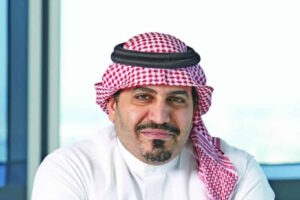
The Batterjee Group evolved from medical distribution in the 1920s to pioneering the first pharmacy chain in Saudi Arabia and establishing the largest private hospital network in the Middle East. They are expanding further into Asia and other regions, diversifying into areas like medical education, fitness, and IT healthcare solutions. Within this Group, as Makarem Sobhi Batterjee explains, Saudi-German Health is pioneering a comprehensive approach to healthcare, focusing not only on treatment but also on prevention, education, and early diagnosis. Batterjee also emphasises the group's emphasis on innovation, particularly in technology and pharmaceuticals, combining strategic business expansion with social responsibility and aiming to bring advanced healthcare technologies and solutions to Saudi Arabia.
Can you provide an overview of your career trajectory and the evolution of the Batterjee Group into a diversified healthcare enterprise?
Batterjee Group has its roots in healthcare dating back to the 1920s, with my family initially involved in medical distribution and later pioneering the first pharmacy chain in Saudi Arabia in the 1950s. In 1988, we ventured into hospitals, introducing a unique concept of bringing top German doctors (my uncle graduated from a German medical school) to Saudi Arabia as visiting specialists. This proved to be instrumental in addressing local healthcare needs and reducing patient exodus abroad. Building on this success, we expanded aggressively across the Middle East and now operate the largest private hospital network in the region. We currently operate 8 hospitals in Saudi Arabia and 5 in the UAE, with additional facilities in Egypt and Yemen. Looking ahead, we are planning to open hospitals in Morocco in the coming years, and we have forthcoming expansion plans for Asia, which we will announce soon.
In 2005, we strategically shifted our focus to become healthcare industrialists, broadening our scope beyond hospitals. This shift led us to establish Batterjee Medical College (BMC), the largest private medical education institution in the Middle East, and venture into fitness with Gold Gym, with 20 branches in Saudi, promoting preventive healthcare. Subsequently, we diversified into hospital construction, private equity in healthcare, and venture capital through companies like Humania Capital. Our commitment to innovation also drove us to launch Megamind, an IT healthcare solutions provider, recognized for its pioneering contributions in the region.
Where does Saudi German Health stand today, particularly focusing on your hospitals’ strengths, specialties, and your ambitions for further development and innovation?
Founded by my father and uncle, I now lead the family’s hospital network, focusing on institutionalizing and modernizing our approach. Over nearly four decades, we have grown significantly, and my role involves enhancing our corporate structure, fostering innovation, and driving strategic growth initiatives. The upcoming 40th anniversary milestone in 2028 symbolizes our commitment to rejuvenating the organization.
Our efforts have revitalized our hospitals with new infrastructure, talent, and operational dynamics, all aimed at delivering exceptional healthcare experiences. Under my leadership as President, supported by my father’s guidance, we have embarked on transformative changes across the group, including an IPO to further expand our presence in Asia while solidifying our leadership in the Middle East and North Africa.
“Doubling down and doubling up,” as I like to phrase it, encapsulates our strategy of intensifying investments in healthcare infrastructure and services. This approach not only strengthens our current operations but also positions us for sustained growth and innovation, reflecting our dedication to advancing healthcare standards regionally and beyond.
Considering the Saudi government’s focus on preventive healthcare, how do you view hospitals’ responsibility for advancing prevention, including early diagnosis and education?
Hospitals traditionally focus on curing illnesses, which is fundamental. However, at Batterjee Group, we have embraced a broader responsibility. We operate not just in cure but also in prevention, promotion through education, and early diagnosis. This holistic approach stems from our ethos of “caring like family,” inspired by a Quranic verse emphasizing the sanctity of saving lives.
This paradigm shift in our mindset since 2005 reflects a deeper commitment beyond profit. For us, it is about making a meaningful impact and addressing societal healthcare needs comprehensively. Our motto changed from “we care” to “caring like family” underscores our dedication to compassionate and sustainable healthcare practices.
Our evolution into healthcare industrialists encompasses diverse initiatives like medical education and innovative healthcare solutions. These endeavours aim not just to treat but to prevent, educate, and enhance overall wellness, echoing our commitment to holistic healthcare for our communities and beyond.
The Batterjee family’s diversification across different healthcare businesses is quite remarkable. What would you attribute as the key factor behind the success of this entrepreneurial journey?
Our family has a long history of entrepreneurship spanning a century, deeply rooted in business acumen and innovation. The key factor driving our success lies in our commitment to innovation. Every venture we embark upon is driven by a passion for innovation in healthcare solutions. This ethos permeates everything we do, from establishing medical colleges to pioneering fitness centres and venturing into pharmaceuticals.
Could you share more about your foundation’s most important milestones and achievements?
One of our significant initiatives is focused on healthcare accessibility for underserved communities. We have pioneered a unique concept called “Hospitals for the Poor.” These hospitals provide essential medical services at low cost, making healthcare more accessible to disadvantaged groups, including low-income families. Currently, we have two such hospitals under construction—Bab el Kheir hospitals, one in Mecca, Saudi Arabia, and another in Alexandria, Egypt.
Another proud achievement is the establishment of the Make-A-Wish Foundation chapter in Saudi Arabia. Make-A-Wish is globally renowned for fulfilling the dreams of critically ill children. We recognized the profound impact of fulfilling these wishes on children’s well-being—it has been documented that fulfilling a wish can significantly improve a child’s health. Since its inception just over a year ago, our chapter has already granted an incredible 200 wishes, bringing immense joy and hope to children facing serious illnesses across the country.
This initiative is deeply personal to me. I first encountered Make-A-Wish in my teenage years through a magazine ad and knew then that I wanted to bring this program to Saudi Arabia. It took three decades to realize this dream, and I am grateful for the opportunity to make a meaningful difference in the lives of these children.
In addition to healthcare-focused foundations, we are also involved in educational initiatives, such as endowment schools, furthering our commitment to holistic community development. These foundations represent our broader mission to not only excel in healthcare but also to actively contribute to society’s well-being through innovative and impactful philanthropy initiatives.
What is the strategic rationale behind expanding into Asia, especially considering your established presence in the Middle East and North Africa regions?
For us, expanding into Asia is a natural progression from our strong presence in the Middle East and North Africa. Interestingly, Saudi Arabia geographically lies in Southwest Asia, which is often overlooked when people think of the Middle East. This positioning makes us inherently connected to the Asian continent.
When Assessing new regions for expansion, culture, Connectivity, risk, Economic stability and growth potential are integral considerations guiding our strategy, helping us navigate complexities and make informed decisions about our international ventures. Our approach combines strategic business considerations with a commitment to social responsibility. While profitability is important for sustaining our operations and expanding our impact, we also prioritize initiatives that contribute positively to the health and well-being of communities, aligning with our mission to deliver compassionate and high-quality healthcare globally.
An important example is Yemen, where our decision to establish healthcare facilities was driven not purely by economic considerations but by the critical healthcare needs of the population. Yemen faced severe healthcare challenges, and our presence there aimed to make a meaningful social impact by providing essential medical services despite the challenging environment.
Education is a significant focus for your group, particularly in the realm of healthcare. Could you elaborate on how initiatives like Batterjee Medical College contribute to advancing knowledge and preparing for the transformations happening in the country?
Education lies at the core of our strategy. We firmly believe that knowledge is paramount—it is what differentiates individuals and drives progress in every sphere. There’s a saying that the first thing that God created was the pen. The pen symbolizes documentation, justification, knowledge, justice, and discipline. It is a metaphorical representation of light and many other virtues. Knowledge truly is power; it endures beyond material wealth.
For us, as healthcare industrialists, investing in education, particularly medical education, is not just a strategic move but a moral obligation. We aim to nurture a robust healthcare workforce in Saudi Arabia. By producing more Saudi doctors, nurses, and healthcare professionals, we are strengthening our industry from within. These individuals are not just practitioners; they are future leaders who will shape the future of healthcare in our country.
When we established Baterjee Medical College over 20 years ago, our goal was to create a center of excellence that would not only educate but also inspire the next generation of healthcare professionals. Our commitment to education is driven by a desire to foster a skilled workforce that can drive our industry forward and contribute meaningfully to the advancement of our society
Technology and digitalization are pivotal in Saudi Arabia, how do you ensure that these innovations truly impact patient care? What’s your approach to leveraging technology for better patient outcomes?
Technology is advancing rapidly, and while some innovations yield great returns, others may not. It is crucial to navigate this landscape carefully. In our group, We operate under two main entities: Megamind, our IT healthcare solution, which oversees IT management and introduces innovative healthcare solutions. On the other hand, Humania, which I lead, serves as our investment arm and has formed a joint venture with San Francisco’s renowned Artis Ventures. Together, we recently launched a fund, with an initial phase of USD 50 million and a second phase, with another USD 50 million to follow. The fund is dedicated to health tech investments and tech transfer, primarily focusing on devices and innovations in America. This initiative involves bringing successful technologies to Saudi Arabia for manufacturing, facilitating significant tech transfer, and fostering innovation within our local ecosystem. Megamind focuses exclusively on software management, while Humania specializes in strategic investments, working closely with the government to advance our healthcare capabilities locally.
Could you highlight a specific initiative within your group that stands out, particularly in terms of its impact and strategic importance?
One of our standout initiatives is our investment in the pharmaceutical sector. This venture is pivotal as it underscores our commitment to enhancing healthcare infrastructure and local manufacturing capabilities in Saudi Arabia. Recently, we have embarked on establishing one of the largest generic injectable solutions plants in Jeddah, with plans for additional investments underway. This reflects our strong dedication to advancing this sector.
Furthermore, we are actively seeking partnerships with international firms to bring in technical expertise and innovative solutions, thereby expanding our pharmaceutical portfolio through joint ventures. Collaboration with global partners is crucial for us as it facilitates knowledge transfer, accelerates growth, and ensures our products meet stringent global standards.
The expansion into pharmaceuticals was a strategic step to enhance our comprehensive healthcare offerings, encompassing prevention, treatment, promotion, investments in manufacturing, and infrastructure development.
Looking ahead to two to three years, what are the major objectives or achievements you envision for the Saudi German Group?
In the next two to three years, my primary goal is to significantly increase the market capitalization of the Saudi German Group to its fullest potential. This financial target is crucial as it will not only strengthen our position in the market but also enable us to expand our impact, alleviating more people’s suffering through enhanced healthcare services. To achieve this, I am focused on institutionalizing and corporatizing our business operations to further our growth trajectory. We are also committed to optimizing every aspect of our business, including operations, finances, strategy, and management processes. With the unwavering support of our group and family, and with the blessings of God, I am confident that we will overcome challenges and achieve our goals.
I am dedicated to expanding and strengthening Batterjee Medical College as a renowned brand and a leading reference in medical education, both regionally and globally. Our ultimate goal is to take the company public.
As a final note, we are actively seeking valuable international partnerships to support this endeavor.