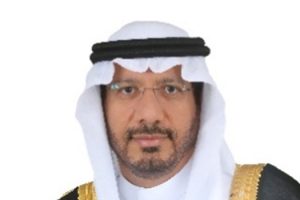
Majid Al Fayyadh, CEO of King Faisal Specialist Hospital and Research Centre (KFSHRC), discusses the hospital’s transformation into a world-class medical and research institution, aligning with Saudi Arabia’s Vision 2030. He shares insights into KFSHRC’s pioneering efforts in oncology, transplantation, genetics, and cutting-edge medical technology, as well as its role in shaping the Kingdom’s biotech revolution. Al Fayyadh also highlights the hospital’s commitment to global healthcare leadership and the future of innovation in Saudi Arabia’s healthcare sector.
Could you share a brief history of KFSHRC and how the hospital has evolved over time?
In the early 1970s, King Faisal recognized that while Saudi Arabia’s wealth grew due to oil revenues, its healthcare system was not keeping pace. Many patients had to travel abroad for medical treatment, which was not only financially and logistically difficult but also emotionally challenging due to cultural and language barriers. Determined to address this gap, King Faisal envisioned a world-class hospital providing top-tier medical care in Saudi Arabia.
His vision was clear and inclusive. He wanted to establish a hospital for everyone living on this land and those around it. He did not specify Saudis, Muslims, or any particular group—his goal was to serve humanity. This level of foresight, inclusivity, and compassion was extraordinary, especially considering this was in the 1970s—long before these concepts became widely discussed in the healthcare industry.
Unfortunately, King Faisal passed away before he could see his vision realized. However, his legacy was carried forward by King Khalid, who inaugurated the hospital in 1975. Today, as we celebrate KFSHRC’s 50th anniversary, we can see how that vision has been fulfilled. The hospital has become a leading medical institution, providing advanced treatments and specialized care previously unavailable in the region.
We now treat the vast majority of complex medical cases domestically, significantly reducing the need for patients to seek care abroad. For example, approximately one-quarter to one-fifth of all oncology patients in the Kingdom receive their treatment at KFSHRC. Additionally, 65% of all organ transplants in Saudi Arabia are performed under this roof. We are also at the forefront of genetic testing and treating rare and complex diseases.
KFSHRC has evolved into a global leader in specialized healthcare, and the work done within these walls continues to honor King Faisal’s vision of ensuring that people in Saudi Arabia and beyond have access to the highest standards of medical care.
What is the scale and scope of KFSHRC today, and what services does it currently provide?
King Faisal Specialist Hospital and Research Centre (KFSHRC) is a leading tertiary care institution. It is recognized for its Centers of Excellence in eight key areas: oncology, organ transplantation, genomic medicine, cardiovascular diseases, pediatrics and women’s health, surgical, medical, and neurosciences.
Cancer treatment is our foremost specialty, with KFSHRC treating approximately one-quarter to one-fifth of all oncology cases in the Kingdom. Next, we perform 65% of all organ transplants in Saudi Arabia, covering everything from kidney and liver transplants to the most complex multi-organ procedures. We have also contributed significantly to genetic research, mainly through the Saudi Human Genome Project, where KFSHRC played a key role in sequencing and analyzing genetic data. Furthermore, we have been at the forefront of innovative cardiac treatments, recently making headlines for performing the first-ever robotic heart transplant led by Dr. Feras Khaliel. Lastly, our expertise in neurosurgery and brain tumor treatment places us among the leading centers globally. We also have the most extensive epilepsy surgery program in the region.
While these five specialties define our core focus, KFSHRC is committed to excellence across all medical disciplines. As the hospital of choice for the most complex and high-risk cases, we provide top-tier care in pediatrics, obstetrics, orthopedics, and more. Additionally, due to our reputation, we are the designated medical facility for high-profile dignitaries, including royal family members, government ministers, and international leaders visiting Saudi Arabia. When global figures such as the presidents of France or the United States visit, their medical teams inspect our hospital in advance, ensuring it meets their highest standards.
KFSHRC operates with over 17,000 employees of 63 different nationalities, reflecting its international standing. We have 2,442 beds across our Riyadh, Jeddah, and Madinah campuses, making us one of the most advanced healthcare institutions in the region.
As part of Vision 2030, we have been tasked with expanding our impact beyond the Kingdom and aiming for global recognition. We aspire to be among the top 10 hospitals worldwide by 2030, aligning our progress with Saudi Arabia’s broader transformation, including hosting the World Expo and World Cup. Our ambition is to match world-class institutions like Mayo Clinic or Johns Hopkins, and become a global leader in medical research, innovation, and patient care.
The hospital recently transitioned from a government-run institution to a nonprofit. Could you elaborate on the motivation behind this transformation and the benefits it aims to bring?
When we were asked, “What do you need to become a world-leading hospital?,” the answer was not funding—it was independence. We needed to make strategic decisions quickly and efficiently without bureaucratic constraints. At the same time, we did not want to become a private hospital focused on profits. We tried to be mission-driven, ensuring every decision aligned with patient care, medical innovation, and societal impact.
To achieve this, KFSHRC transitioned from a government institution to an independent, nonprofit organization. We are not privately owned or publicly traded. Our structure ensures that all revenue is reinvested into the hospital, funding cutting-edge research, expanding our medical services, and continuously improving healthcare delivery.
Currently, KFSHRC is owned by the Royal Commission for Riyadh City. However, it will eventually be wholly owned by a foundation, meaning it will belong to the people and society rather than a corporation or government entity. This ensures long-term sustainability and shields the hospital from external influences that could compromise its mission.
Our model is now serving as a blueprint for other Saudi institutions. King Khaled Eye Specialist Hospital and King Saud University have followed our lead, transitioning to a similar governance model to enhance operational efficiency and strategic impact. By making this shift, we are positioning ourselves as a pioneer in healthcare transformation, ensuring that we continue to lead in innovation, research, and patient-centered care—not just in Saudi Arabia but globally.
Saudi Arabia has been undergoing a significant healthcare transformation, driven by government initiatives. Vision 2030 is leading this transformation. What have you seen of these changes on the Kingdom’s healthcare system?
The transformation of Saudi Arabia’s healthcare over the years has been profound, and I have been fortunate to be directly involved since the beginning. In 2017, the year I became CEO of KFSHRC, I was tasked with leading the hospital’s transition from a government entity to an independent, not-for-profit organization. This was part of a broader effort to redefine the entire healthcare system, and we continue to be on that journey today.
Before these reforms, the Kingdom’s healthcare spending was extremely high—comparable to the total budgets of some smaller countries. It was clear that something had to change for the sector to have a more sustainable future.
The key strategy shift has been moving from a curative care model to a preventative care model. This is an entirely new approach, one that addresses health span challenges and redefines how healthcare institutions operate.
One of the most significant financial reforms has been the introduction of the capitation model, in which hospitals are allocated funding not just for treating patients but also for keeping them healthy. This changes the incentive structure—hospitals now benefit financially from reducing patient admissions rather than increasing them.
Additionally, we have seen significant regulatory changes to improve public health at a societal level. For example, the Saudi FDA now requires transparent nutrition labeling on food products, something that was previously unavailable. This allows consumers to make informed dietary choices, a small but critical step toward preventing lifestyle-related diseases such as diabetes and obesity.
Another key initiative is “Health in All Policies,” a principle that requires all government ministries to consider the impact of their policies on public health. Whether it is infrastructure projects, school curriculum revisions, or urban planning, health outcomes must now be factored into decision-making. This integrated approach ensures that every sector contributes to the well-being of the population.
We are already starting to see results: life expectancy is improving, key health indicators are progressing, and primary and home healthcare services are being strengthened. This transformation is not just about hospitals—it is a cultural shift in how we approach health as a nation. It is a long-term process, but the impact is becoming increasingly visible, and we are confident that Saudi Arabia is on the path to building one of the world’s most advanced and sustainable healthcare systems.
What role do healthcare institutions like KFSHRC play in parallel with the broader healthcare transformation in Saudi Arabia?
As Saudi Arabia strengthens primary care and preventive medicine, King Faisal Specialist Hospital and Research Centre (KFSHRC) plays a vital role in advanced diagnostics, precision medicine, and specialized tertiary care. As the Kingdom’s leader in genetic testing and Whole Genome Sequencing (WGS), we enable early disease detection, risk assessment, and personalized treatment strategies for conditions ranging from prenatal genetic disorders to complex oncological and cardiovascular diseases.
In 2025, we launched an innovative precision medicine program, enabling early detection of 276 genetic disorders, saving the Saudi healthcare system 360 million riyals, and significantly improving prenatal screening and preventative medicine. This initiative reinforces our leadership in genomic research, ensuring earlier interventions and more precise, personalized treatments for patients across Saudi Arabia.
Our expertise in AI-powered diagnostics, novel genomic research, and minimally invasive surgical techniques is setting new global standards. By integrating precision medicine, robotics, and biomanufacturing, we are shaping the future of healthcare, ensuring faster diagnoses, targeted treatments, and better patient outcomes in Saudi Arabia and worldwide.
Our contribution extends beyond clinical care. Through research tailored to the needs of our population, we work closely with biotech companies and manufacturers to advance medical science. Additionally, we play a key role in training the next generation of medical professionals. One of the aspects we take pride in is our willingness to share knowledge. We do not hold onto new innovations just for ourselves. Instead, we adopt cutting-edge technologies early, master them, and then share our expertise with other institutions.
For example, in the early 1990s, we pioneered bone marrow transplants in the country. At the time, very few people knew what a bone marrow transplant was. However, as we developed our expertise, we trained physicians and nurses, many of whom went on to establish bone marrow transplant units in other hospitals. Today, the procedure is widely available across the Kingdom. More recently, we introduced CAR T-cell therapy, an advanced treatment for certain types of cancer. Again, we welcomed professionals from other hospitals, trained them, and supported them in setting up their own CAR T programs.
We do not see ourselves as competing with other hospitals; our competition is with disease itself. Healthcare is not a zero-sum game. It is not about one hospital outperforming another but about working together to improve patient outcomes. I often use the analogy of golf versus tennis. In tennis, one player wins by making the other lose. Everyone plays against the course in golf, trying to achieve their best score. That is how we view healthcare. We are all playing against the same opponent—disease—and if another hospital achieves better survival rates or improves treatment options, that is a win for the entire nation.
At KFSHRC, our transformation was not about changing our mission but improving how we deliver it. Some people were initially concerned that transitioning to an independent, nonprofit model would mean shifting our priorities. However, our board clarified that our core mission remains the same: treating the sickest and most complex cases, driving medical innovation, and delivering world-class care—regardless of cost, nationality, or background. Our transformation was about optimizing our operations while staying true to King Faisal’s original vision.
There was also some speculation that as clusters developed, they might reduce their reliance on KFSHRC. The reality has been the opposite. In 2019, before the cluster formation, we accepted around 22,000 new patients yearly. By 2024, that number had nearly doubled to 42,000. This growth is not just about adding beds or expanding capacity—it is about becoming more efficient and maximizing our impact.
Ultimately, the success of the health sector transformation is not just about KFSHRC or the clusters individually—it is about the entire ecosystem working together. As more clusters develop, they will significantly manage routine care, allowing us to focus on the most complex cases. However, there must be strong integration between primary, secondary, and tertiary care for this to work. That is why we continue to strengthen our partnerships with the clusters, ensuring that once patients complete their specialized treatment at KFSHRC, they return to a healthcare system supporting their long-term recovery.
With KFSHRC being a key contributor to Saudi Arabia’s biotech revolution, how do you see the hospital’s efforts aligning with the Kingdom’s goals of becoming a global biotechnology leader?
While biotechnology is now a major global trend, our focus on it is driven by a clear strategic need. When we analyzed what differentiates a great hospital from a globally top-tier institution, the answer was clear: clinical excellence is essential, but what sets the best hospitals apart is their research output, innovation, and leadership in biotechnology. That is why we have made biotechnology a core focus at KFSHRC.
Saudi Arabia has committed $11.1 billion to biotechnology research and development, positioning the sector to contribute $34.66 billion to the national GDP by 2040, aligning with Vision 2030, which seeks to build a knowledge-based economy driven by biotech innovation.
We have a strong foundation upon which to build. Research is embedded in our identity—we have been producing radiopharmaceuticals using our cyclotrons for over 40 years and have operated a GMP-certified facility for this purpose. However, despite this experience, we knew our contribution to the biotechnology sector needed to be far more significant.
Our primary goal is to bridge the gap between innovation and commercialization—often called the “valley of death,” where great scientific ideas struggle to become real-world treatments. To help overcome this, we are actively contributing to the development of Riyadh Biotech City (RBC), a central biotech hub built next to KFSHRC. This entire area will be dedicated to biotechnology. KFSHRC is a founding member of this initiative, which is being led by His Royal Highness Prince Mohammed bin Salman. This development will be a game-changer—accelerating the translation of scientific breakthroughs into real-world treatments and therapies.
However, we are not waiting for the future; we are already making significant strides. One example is our success in CAR T-cell therapy. Four years ago, we decided that Saudi Arabia must have access to this life-saving therapy. We worked tirelessly to convince pharmaceutical companies to trust us as a treatment center. After extensive due diligence, our plan was approved, and we successfully treated leukemia and lymphoma patients with survival rates as high as 70% in previously terminal cases.
Building on this achievement, we took the next step—local manufacturing of cellular therapy. In 2024, we received approval from the Saudi FDA for our own lab-produced cells, a groundbreaking milestone. We have already submitted our application to begin Phase 1 clinical trials using cells manufactured entirely in Saudi Arabia. This achievement reduces costs by 80% and makes advanced cancer treatments accessible within just 14 days. More importantly, though, it demonstrates that we can manufacture these therapies locally, improving patient outcomes in the Kingdom.
In biomedical research, our scientists developed Saudi Arabia’s first genetically engineered mice using CRISPR-Cas9, enabling more precise disease modelling and advancing drug discovery. Our Oncology Center also transforms cancer care by analyzing 50 genes to improve early detection and survival rates.
Now, the challenge is scaling up. Manufacturing at scale requires dedicated facilities, advanced technology, and strong partnerships. That is why we are actively engaging with universities, industry leaders, and potential collaborators to establish a full-fledged biotech ecosystem. A key part of this strategy is our partnership with the King Abdulaziz City for Science and Technology (KACST) in establishing the National Biotechnology Center, which serves as a hub for commercializing cutting-edge research. Through bio incubators and spin-off companies, we are fostering a thriving biotechnology ecosystem, helping launch new biotech industries that will drive Saudi Arabia’s self-sufficiency. We cannot do it alone—global biotech leaders did not emerge in isolation. They flourished through networks of research institutions, private-sector investment, and government support. We are now building those networks in Saudi Arabia.
As part of this transformation, KFSHRC is also integrating AI and robotics into biotechnology, supporting our vision for a smart hospital model. These technologies are revolutionizing patient care, streamlining precision medicine, and enabling automated diagnostics. The fusion of AI-driven biotech and robotics is projected to generate between $15 billion and $27 billion for Saudi Arabia’s medical sector by 2030, reinforcing the Kingdom’s position as a global leader in medical innovation.
Our focus is clear: we are not here to manufacture generic drugs like aspirin. We are here to pioneer gene and cellular therapies, addressing the high prevalence of genetic diseases due to consanguinity—seven times higher than in Europe. We should not rely on research centers in Boston, Paris, or Tokyo to develop treatments for conditions endemic to our region, such as thalassemia and sickle cell disease.
The Kingdom has the expertise, resources, and vision to lead in biotechnology. With a large population requiring targeted therapies, scientists and physicians trained at the world’s top institutions including Johns Hopkins, Stanford, and Columbia, we are well-positioned to drive innovation in this field. Backed by Vision 2030’s strategic direction and investment, there is no reason the Kingdom cannot be at the lead of global biotechnology.
Can you share more about the hospital’s current research initiatives and what your future ambitions are in this area?
At KFSHRC, research is at the core of our mission to advance precision medicine, biotechnology, and transformative therapies. Our focus is on clinical excellence and pioneering medical breakthroughs that redefine patient care. We actively lead research initiatives in genomics, regenerative medicine, AI-driven healthcare, and next-generation cancer treatments, ensuring our discoveries translate into tangible healthcare solutions.
Much of our research at KFSHRC is focused on genetics and cancer, addressing our region’s most pressing health challenges. In oncology, we have been deeply involved in studying triple-negative breast cancer, one of the most aggressive and difficult-to-treat forms of the disease, to improve targeted therapies and survival rates.
On the genetics side, we have been actively working on rare diseases, identifying mutations and genetic variations prevalent in the Saudi population. Given that genetic disorders are seven times more prevalent in Saudi Arabia than in Western countries, KFSHRC is directing its Research Centre toward pioneering gene therapy solutions that will offer honest, long-term solutions for genetic diseases that currently have no cure. This research is critical in developing targeted therapies for hereditary conditions disproportionately affecting our population.
A key driver of this effort is the Saudi Human Genome Program, a national initiative aimed at identifying genetic mutations specific to the Saudi population. The program enables earlier diagnosis and targeted treatments for hereditary diseases, shifting healthcare toward precision medicine. Our Oncology Research Center is revolutionizing cancer care through tumor profiling, biomarker-driven therapies, and advanced immunotherapy trials, enhancing both survival rates and treatment effectiveness. Meanwhile, our stem cell research and regenerative medicine programs are developing breakthrough treatments for organ failure, degenerative diseases, and blood disorders, aiming to reduce reliance on transplants and lifelong therapies. In AI-driven healthcare, we integrate machine learning algorithms into genomics, radiology, and diagnostics, enhancing early disease detection and improving personalized treatment strategies.
Our ambitions extend beyond treatment innovation—we want to transform medicine itself. Nowhere is this more evident than in our approach to transplant research. While organ transplant volumes continue to rise every year, our accurate measure of success is not just performing more transplants—it is reducing the need for them altogether. We are prioritizing regenerative medicine, drug discovery, and advanced tissue research, aiming to intervene earlier in disease progression to reduce organ failure rates.
Since we perform thousands of transplants, we have a wealth of biological material for research. Studying these organs, we can better understand disease progression and develop new early intervention therapies. While countries like China and South Korea may perform more transplants than us, our goal is not to compete on numbers but to lead in innovation. We want to focus on cutting-edge research that will change the future of medicine.
Looking ahead, we aim to transform KFSHRC into a global research powerhouse, strengthening partnerships with leading biotech firms, academic institutions, and government entities to fast-track discoveries into real-world applications.
We must build the proper infrastructure and expertise to achieve these ambitious goals. We are developing a GMP-certified facility that will allow us to conduct highly specialized research and manufacturing in cell and gene therapy, reducing reliance on pharmaceutical imports. This facility is critical for producing the next generation of treatments, ensuring that Saudi Arabia has self-sufficient capabilities in advanced bio manufacturing. Without this facility, we would remain reliant on external sources for breakthrough therapies; but with it, we are positioning the Kingdom as a global leader in biotech production. This initiative is already in motion, and we are actively recruiting and training the next generation of researchers and scientists who will drive these innovations forward.
Future research will focus on early disease prevention and risk prediction. By leveraging big data analytics and AI-driven health modeling, we aim to develop tools that forecast chronic disease progression before symptoms even arise. This shift from reactive treatment to proactive healthcare will drastically improve long-term health outcomes and reduce the burden of chronic diseases.
What technological advancements in the hospital’s upcoming plans are you most excited about, and how do you see these shaping the future of healthcare at KFSHRC?
What excites me the most is how technological advancements directly improve patient outcomes. As a cardiologist, I have spent years observing the long and challenging recovery process for heart transplant patients. Traditionally, these patients remained hospitalized for weeks or even months, facing complications such as infections, blood transfusions, and prolonged rehabilitation. But recently, a heart transplant patient went home just 14 days after robotic-assisted surgery, a milestone that reflects the transformative power of robotic surgery. This is not just a high-tech tool but a game changer for patient care. Robotic surgery reduces incision sizes, lowers the risk of infection, reduces blood loss, and significantly shortens hospital stays. Robotic surgery enables patients to return to their lives faster and in better health.
At KFSHRC, we lead the world in robotic-assisted transplants and cardiac surgeries. We performed the world’s first fully robotic living donor liver transplant in 2023; and in September 2024, we achieved another milestone—the world’s first fully robotic heart transplant on a 16-year-old patient with end-stage heart failure. This groundbreaking procedure significantly reduced pain, minimized complications, and shortened recovery times, redefining what is possible in cardiac surgery. More recently, in January 2025, our team successfully performed the world’s first robotic-assisted implantation of an artificial heart pump (HeartMate 3) on a 35-year-old patient with advanced heart failure. The results were remarkable: the patient spent only four days in intensive care, compared to the typical 26-day stay with conventional open-heart surgery. These breakthroughs reinforce our confidence in robotic-assisted surgery as the future of complex procedures.
Our vision is to make robotic surgery the default approach for most procedures, reserving open surgery only for necessary cases. To achieve this, we are investing in expanding robotic surgery training for our surgeons and surgical teams and building a dedicated robotic surgery center, where surgeons across the region can train and refine their skills.
However, we do not intend to stop at robotics. AI is the next frontier. If self-driving cars can safely navigate complex city environments, why not train a robotic system to perform surgery with even greater precision than human hands? We are not there yet, but the journey has started.
Many people talk about AI, but seeing AI in action in a hospital setting is what truly excites me. We did not just adopt AI—we built our own Center for Healthcare Intelligence (CHI). We hired a team of specialists, led by an expert we recruited from Minnesota, and gave them one simple directive to walk around the hospital, find real problems, and solve them with AI. This hands-on approach led to real, measurable improvements, with 20 AI applications already live and at least 30 more in development.
One of the most impressive AI-driven innovations has been the Capacity Command Center, which has led to over 170,000 interventions, optimizing patient flow and hospital-wide efficiency. Bed waiting times have dropped from 32 hours to just 6 hours, and emergency department wait times have been cut by 14%. Traditionally, OR scheduling relied on estimates that often led to inefficiencies, causing delays, last-minute cancellations, and underutilized surgical capacity.
Our AI-powered system analyzes accurate data, including procedure type, surgeon’s experience level, patient’s health condition, and historical case durations, to provide highly accurate predictions of surgery duration. The AI-generated system provided more accurate predictions of how long each surgery would take. When we tested it side by side with human schedulers, AI allowed us to predict surgery durations with 90% accuracy and OR productivity increased by 30%, leading to fewer last-minute cancellations and better resource utilization.
What are your expectations for KFSHRC over the next few years?
I want the world to know about King Faisal Specialist Hospital and Research Centre—to see the transformation we are undergoing and to recognize our role as a global leader in healthcare. The journey we are on is not just about growth and innovation; it is about creating meaningful change in the lives of patients, advancing medical research, and setting new standards of excellence.
I consider myself fortunate to witness this transformation firsthand. We are moving from being a leading regional hospital to becoming a recognized global healthcare institution. In the latest Brand Finance rankings, KFSHRC secured 15th place among the world’s top 250 academic medical centers (AMCs) for 2025, a testament to the dedication and expertise of our teams. This milestone reaffirms we are moving in the right direction, solidifying our stand as a world-class healthcare institution.
Through KFSHRC’s robust training programs and global collaborations, we will continue to drive advancements in surgical techniques, transplant medicine, and evidence-based practices.
As we look toward 2040, we recognize the need for continued investment in global innovation and collaboration. We see this as an opportunity to push boundaries, harness scientific breakthroughs, and create a healthier, more sustainable world.