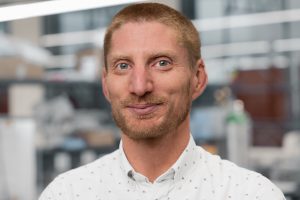
Luc Henry, co-founder and CEO of Limula, speaks about the challenges and opportunities in the field of cell and gene therapy. A chemist by training, Henry’s path from molecular sciences to cancer immunology and ultimately to entrepreneurship reveals how interdisciplinary thinking can catalyse bold innovation. In this conversation, Henry explains how Limula began, what critical gap it seeks to fill, and how its proprietary technology is shaping a new standard for manufacturing personalised cell therapies.
To begin, could you share a bit about your background and how your journey with Limula first began?
As a chemist by training, becoming an entrepreneur in the field of cell and gene therapy was never part of the original plan. My academic path began in organic chemistry, very much rooted in the molecular sciences, but gradually shifted toward human biology. Near the end of my research career, I essentially gave myself a crash course in cancer immunology. I spent a year at the Ludwig Institute in Lausanne, studying the role of macrophages in breast cancer. To contribute meaningfully, I had to learn as much as I could, quickly. I am not afraid of steep learning curves, and I find the challenge of blending disciplines to address complex problems very rewarding.
Limula is an extremely interdisciplinary project. We have engineers who design and build physical devices, and cell biologists who operate those machines to produce cells. As CEO, the main challenge is enabling these two groups to communicate effectively, understand one another, and work towards a shared goal. This is also the part I find most fulfilling. That has been a consistent theme throughout my professional life—creating bridges between people with different expertise, perspectives, and working cultures to tackle a common problem. It is about translation between technical domains. Engineers and biologists often use the same words to mean completely different things. Because I was first trained as a chemist and engineer before immersing myself in biology, I now speak a bit of both languages and can mediate between the two.
Where did the idea for founding Limula first come from?
I have to give full credit to my colleague Yann Pierson (co-founder and CTO) who had the original idea and invented the technology behind the product we want to bring to market. We had worked in the same research laboratory at EPFL back in 2014 and built a few things together over the years. In the summer of 2019, he reached out to me with a vision: to build a fully automated system to produce CAR T-cell therapies at the hospital. At the time, he had more than a sketch on a piece of paper in the form of a patent: he had identified a problem and devised an incredibly simple yet powerful solution. He approached me and said, “We worked well together before. I like to build things, and you see the bigger picture. Let us build a product and a company together.”
We then spent six months evaluating the potential and writing a business plan, and assessed whether our network had the right people to bring this idea to life. Pretty quickly, I realised we did. We contacted Thomas Eaton (co-founder and CFO) who I knew from my time in Oxford when I started my doctoral thesis there and believed could help us build the company. We also reached out to Denis Migliorini who had just returned from the University of Pennsylvania—Novartis had licensed their CAR T technology from this institute—to start his independent research group at the University of Geneva., and he agreed to collaborate. Together, we secured funding from Innosuisse, the Swiss government agency providing financing for innovation projects. That marked the first concrete step towards launching Limula. We began our first proof of concept at the start of 2021—developing the technology further and testing it on human primary T cells.
What is the major gap that you and your co-founders saw, which led you to start this project?
The core issue with cell and gene therapies today is an accessibility gap that is broader than manufacturing alone. The reason behind this gap lies in the very nature of autologous, gene-edited cell therapies. These are fundamentally different from traditional pharmaceuticals in two ways.
First, they do not fit neatly into any pre-existing category. They are ‘living drugs’ and pharma companies initially had no clear regulatory or logistical pathway to bring these treatments to patients. They are made from a patient’s own cells, modified in a laboratory, and have to be swiftly and safely returned to the same patient. This creates a circular value chain—completely different from the linearity in traditional pharmaceutical products.
Second, these treatments are potentially curative. Unlike chronic treatments where the disease returns if the therapy stops, cell and gene therapies are designed as one-time interventions. This changes the conversation around pricing, reimbursement and long-term value.
So when you combine the living nature of the therapy with its curative potential, the entire industry has to rethink value chains. Manufacturing is a critical part of that. Limula specifically addresses the fact that when pharma began exploring scalability ten years ago, no tools existed that were fit for purpose for this new modality. Tool providers had nothing that met the unique requirements of processes where the cells are the product.
This realisation led to a wave of innovation—essentially building new bioprocessing solutions from scratch. Limula is part of that wave, creating tools specifically designed for these advanced therapies instead of repurposing equipment built for traditional biotech or for cell transplantation procedures.
Tell us more about the technology itself. What exactly does it do, and how does it overcome the hurdles you just described?
There are two key aspects our technology needed to have to be fit-for-purpose. We needed the tool to operate at a small scale with extreme precision. Twenty years ago, monoclonal antibody production was all about scaling up—producing thousands of doses in a single large bioreactor. Now it is all about scaling out. When manufacturing therapies based on a patient’s cells, every patient requires a dedicated batch. That is a dramatic shift.
Second, because these are living treatments, they cannot be sterilised at the end of the process like conventional drugs. That means sterility and cell viability must be maintained throughout. We wanted to build a system that is perfectly closed while being able to perform all the steps in a fully automated sequence, leading to less handling, and gentler processing overall.
Yann began by asking, “How can we perform every unit operation in end-to-end cell therapy manufacturing within a single instrument?” Instead of using five different devices to cover ten steps, could we simplify the process and obtain the same performance?
He invented a technology that combines the functionality of a bioreactor, where cells are incubated and grown, with a centrifuge, which concentrates and separates cells. We are the only platform that integrates both into a single system where the cells remain in the same container throughout. No transfers are needed between these critical steps.
LimONE is the first implementation of this technology. We could imagine other variations in future, but our first product is a standalone tabletop system that handles one patient at a time. It is composed of a hardware platform, a fully closed single-use consumable to ensure sterility and prevent cross-contamination between patients, and software that encodes automation protocols.
The idea is to eliminate manual interaction with the cells. Operators use a software interface to instruct the machine, which then executes everything with precision. This reduces human error and risk of contamination.
The less you touch the cells, the healthier they remain. Our platform allows sequential operations to happen in the same container. Rather than moving cells between tools, you bring the reagents to the cells. This helps preserve quality and reduces risk at every stage.
When did you begin working on LimONE, and what milestones are you currently aiming for?
LimONE is a complex product. We were extremely fortunate to be supported with over Euro 10 million in government funding from the European Commission and Swiss authorities to perform the necessary R&D. In the first four years, we split the platform into modular parts to test each unit operation individually. Our goal was to demonstrate that our technology could match or exceed the performance of existing tools for each step.
Earlier this year, we completed a fully functional system. It integrates all unit operations into a single, automated protocol. For the past three months we have been gathering data and the results are very exciting. They confirm that our system performs extremely well across the full manufacturing sequence—actually better than existing equipment for single unit operations.
We are now building a clinical-grade version of the single-use consumables that come into contact with the cells. By next spring, we aim to deliver a product that meets the standards required for clinical trials. That is the major milestone: to show our technology is robust enough for patient use.
In parallel, we are fundraising to produce a fully GMP-compliant version, enabling customers to secure regulatory approval for therapies manufactured using Limula’s system.
How exactly is Limula’s platform classified, and what does the regulatory pathway look like for such a technology?
This has been one of the most confusing aspects of our journey. Advisors, mentors, and consultants have often tried to position our product into a predefined category—most commonly medtech—because they knew a clear regulatory pathway there. But we were not put in the right box. When regulators started to issue guidance and recommendations we could finally clarify that our products are considered laboratory equipment. As such, we are only regulated as any electrical device and not as a medical device – we do not need a clinical trial and an approval to commercialise our technology.
Our customers will need to justify the use of our technology when submitting their own regulatory dossier. Our platform becomes part of the CMC (Chemistry, Manufacturing and Controls) section of their product submission. They will be questioned as to why use this tool over another? Can you prove that it performs as claimed? Is it robust and repeatable? It is our responsibility to provide them with all the necessary documentation and evidence, so that they can satisfy the regulators. While we are just a tool, it is one held to an extremely high standard of quality. We are putting everything in place to thoroughly document every aspect of our work so that our customers can trust the platform entirely.
The reason we fall into the lab equipment category is because of the intended use, our device is never in contact with the patient. In other words, there is no direct risk to the patient from using our technology. The risk falls on the biotech, biopharma, or hospital customer whose product will be administered to the patient. It is quite logical in hindsight, but it took us a while to reach that clarity.
I believe the regulators reached this conclusion for good reasons and are now formalising it into guidance. The FDA, for instance, issued industry guidance for cell and gene therapy manufacturing as far back as March 2022, which has been periodically updated and refined since.
Are you working both at the EU level and also with Swissmedic and the FDA, given your international ambitions?
We address a global market, but our conversations are mainly with our customers. The regulators do not all have a defined track for our kind of platform yet. Swissmedic wants us to go through our customers. We cannot really engage with the EMA because we are not a European entity. As for the FDA, they do have a special track for innovative manufacturing tools, but we have not yet explored it. The reason is simple: we need to consolidate design decision on our product before seeking concrete feedback. If the product is still evolving, then there is little value in premature regulatory consultation. We expect to reach this stage next year.
Could you clarify the next big milestones and when we might expect something commercially available?
We currently have four units of our fully functional system. One is already on-site with a potential customer, and we plan to ship two more this year. In the meantime, our team is using them to generate data internally, on a model CAR T-cell manufacturing process. The goal here is to gather feedback on both design and performance. We want to ensure that our platform meets the needs of our customers in terms of cell product quality and usability.
By this time next year, we will have a clinical-grade version of the consumable. This means customers can start developing processes that are transferable into clinical trials. So, we are aiming to start working next year with selected partners who believe our technology can help them succeed in clinical trials and ultimately in the market.
You spoke about working with selected partners—what is the reasoning behind this approach?
At this stage of development, we need to support a small group of privileged partners as best as we can. Cell and gene therapy demands strong collaboration between tool suppliers and users. The entire ecosystem is beginning to understand that deep co-development is essential to success. We are fortunate to already be working with several organisations such as academic institutions, CDMOs, and biopharma who saw the value of engaging early. They realised that the earlier they help shape our product, the better it will meet their expectations. Many have seen other technologies fail by arriving too late in the hands of the end user.
How has being based in Switzerland, with its strong innovation ecosystem, supported your journey?
We define ourselves as life science tools, and I am a strong advocate for creating a distinct category for such companies. When there is no clear category, people tend to misclassify you as either biotech, medtech, or diagnostics. But we are none of those. Tools are focused on enabling research, therapy development and manufacturing.
In Lausanne, the Biopôle ecosystem recognises that many companies like ours exist, merging precision engineering and life science applications. The infrastructure needs are different to a biotech company. We require both engineering workshops and cell culture or molecular biology laboratories. That combination is hard to find in a single location, but it is beginning to change, and we are contributing to shaping it.
Switzerland has a strong research ecosystem and a long-standing culture of interdisciplinary -particularly in Lausanne and Zurich. The vision of institutions here, even 20 years ago, was to foster convergence between life sciences and engineering. Now we are of course also seeing the inclusion of robotics, computer vision, AI, and other cutting edge technologies. Switzerland has been visionary in this regard, and it is a very supportive environment for innovation in our space.
I learned that you recently raised Euro 6.8 million. Where do things stand now in terms of funding and sustainability?
Because we address a new field that requires significant innovativation, we have benefited from non-dilutive grants—around CHF 10 million to date. But grants alone cannot sustain a business, especially when it comes to product development. You cannot remain in R&D forever. We raised a seed round of CHF 7.2 million last year. That funding was essential to reach clinical-grade consumable readiness and to design a product that meets the quality criteria of our customers and can be manufactured at scale. The prototypes we initially built are not suitable for mass production.
Now, we are looking to raise a Series A round of CHF 20 million. This funding will help us finalise the product, build inventory to generate first sales, and grow a commercial team. It is both a technical and a team-building challenge.
What is the investment climate like for you? Do you find openness in your niche?
There are two elements to this. First, the cell and gene therapy market itself. When we began in 2020, the sector was at the peak of the hype cycle, with heavy investment. But challenges in the value chain soon became evident and the hype waned. In the last two years, I would say market interest has reached a low.
To give you an example, only five to ten percent of eligible patients actually receive a dose of the seven CAR T products on the market. The bottleneck is not clinical efficacy, but manufacturing, reimbursement, and distribution. As an industry, we understand cell therapies much better than a decade ago and can now provide fit-for purpose solutions to make them commercially viable and widely accessible.
Second, as a life science tool company, we are an unusual category for investors. Traditional biotech and medtech investors are used to high-risk, high-reward bets, but they often lack experience with hardware, consumables, and unregulated tools. My job is to find investors who understand our segment and can support us with their relevant expertise.
I am extremely optimistic by nature. When you find the right people, the conversation flows easily. The challenge is convincing those who are not familiar with our product category.
Given that Limula works with very different profiles, how do you ensure the company functions as a single cohesive unit?
Switzerland helps us in this respect, too. We have access to top-tier precision engineers from the medtech industry and experienced scientists from academia and biopharma. Our start up offers them something different.
To ensure collaboration, we have created a space where interaction is seamless. Our engineers build machines in a workshop literally next door to the laboratory where biological samples are processed in the device. When the laboratory technicians have a question or an issue, they can walk next door and speak directly to the engineers. This unique setup fosters constant, easy communication, which is vital.
How do you find people willing to work in such a dynamic, less stable environment than academia or big pharma?
Interestingly, many reach out to us proactively. They want to work in this kind of exciting environment. I am very transparent during interviews. I explain that the thrill, purpose-driven and opportunity for growth working at a startup company also comes with some risks: instability, uncertainty, and the direct link between individual contribution and the company’s survival. Everyone who joins understands our financial situation clearly and knows there will be surprises.
We also build long-term relationships. Some team members we have known for four years before they joined. Others have worked in start-ups before and want to return to that culture after transitioning to a larger company. Lausanne is maturing as an ecosystem. Some companies have been acquired, and early employees now want to return to the small-company culture they enjoyed at the start of the journey. These individuals bring valuable experience as Limula is often their second or third start-up, which complements the perspective of a first-time founder like me.
What message would you share with potential pharma partners or collaborators about why they should engage with Limula?
At Limula, we believe cell and gene therapy can transform the lives of many more patients than those who currently access it. We focus on solving one key bottleneck: scalable manufacturing. Others are tackling reimbursement and accessibility, and together we can bring this vision to life.
We should not give up on the promise of this field simply because the past decade has been difficult. History shows that it often takes twenty years for breakthrough technologies to reach scale. Monoclonal antibodies, for instance, required significant process innovation to increase yields, reduce costs and become the USD 250 billion market we know today from their debut in the late 1990s.
We are seeing extraordinary results in the clinic. Continuing to invest now ensures that more patients will benefit in the future. That is the mission we are committed to at Limula.