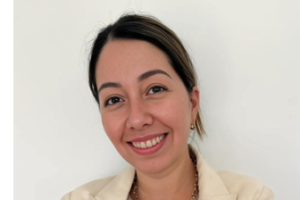
Keila Barral, founder of Cromodata, brings together a personal journey of resilience and a career in technology to address one of Latin America’s biggest healthcare challenges: fragmented patient data. After a seven-year diagnostic odyssey that left her living with lasting health consequences, Barral recognised that the core issue wasn’t only medical, it was the lack of usable, connected data. Today, she leads Cromodata in transforming anonymised health records into a powerful resource for science and innovation, ensuring that Latin American patients are represented in the future of AI-driven medicine.
Could you start by telling us why you founded Cromodata?
Cromodata was born from the convergence of my professional background and my personal journey. I had worked in technology companies for many years, but I also went through a seven-year diagnostic odyssey in my personal life. Despite having access to private healthcare in Buenos Aires – already a privilege compared to much of Latin America – it still took seven years to be diagnosed with two brain tumours.
As a teenager, my symptoms – headaches, nausea, fatigue – were dismissed as isolated issues. No doctor connected the dots. I went from occasional ER visits to weekly emergencies, and eventually every few days. The pain was unbearable, yet the system failed to recognise that there was an underlying problem.
By the time I was diagnosed, the delay had left lasting consequences: I now live with involuntary seizures. My guide dog, Harry, is trained to detect subtle changes in my scent to warn me before a seizure begins. Like many patients, I went through denial and anger before realising that this was not uncommon. For many chronic diseases with no visible external symptoms, patients wait between five and ten years for a diagnosis. Around 30% of Latin Americans with chronic symptoms face this same delay.
For me, it meant completing my entire university career while ill. It shaped my life in every way. Eventually, I realised that the root problem was not just medical, but data-related.
What was the data problem you identified?
In Latin America, patient health data is fragmented. We lack centralised electronic health records. Blood tests done in one lab stay there. Records from ER visits remain siloed. Doctors only see snapshots, never the full picture.
When I compared the situation to the US, Europe, or Asia, I realised the difference was funding and prioritisation. In Latin America, underfunded healthcare systems treat data as an afterthought. At the same time, healthcare has become the world’s most hacked industry. Since 2020, health records have become the most valuable – and therefore the most targeted – data.
Artificial intelligence depends entirely on data. Without it, AI cannot function. And while healthcare generates 30% of all the world’s data – more than banking, retail, or marketing – it is the least prepared industry to make use of it. Other sectors put their data to work and have created booming fintech or e-commerce industries. Meanwhile, in health, we are sitting on a mountain of gold, the “lithium of our era,” and letting it go to waste.
How does Cromodata work?
Cromodata is a marketplace designed to turn health data into an asset instead of a burden. Hospitals, labs, and imaging centres can exchange and monetise anonymised, tokenised health data with those who need it: pharmaceutical companies, tech firms, universities, and research centres.
As long as patient identity is fully protected, this data not only can be shared – it should be shared. Health data must flow to the places where science and technology are being developed.
Currently, Latin America contributes less than one percent of the data used for AI models and genomic medicine worldwide. This means that when these technologies reach our region, they are not tailored to us. For example, one company deployed an AI tool to detect breast cancer in Argentina, but it had been trained exclusively on Asian women’s data. The anatomical differences made the tool far less effective. Instead of closing health gaps, the lack of local data risks widening them.
Cromodata’s mission is to change this dynamic: to make Latin American health data visible and usable globally, ensuring our populations are represented in the development of new technologies and treatments.
How do you ensure data security, transparency, and ethics?
We comply with HIPAA in the US and GDPR in Europe – far stricter than current regulations in most of Latin America, where requirements are minimal. Our model keeps governance with hospitals: Cromodata does not store sensitive data but rather works with metadata, ensuring the data never leaves the control of the originating institution.
We sell time-limited usage licenses, not the data itself. This ensures revenues always flow back to the hospitals, creating incentives for them to generate high-quality, interoperable data.
There is also a cultural component. In Latin America, many patients are fearful of sharing personal health information, particularly older populations. To build trust, we emphasise transparency: patients must know their data is anonymised, tokenised, and cannot be traced back to them. At the same time, we avoid overregulation, as happened in Europe, where restrictive frameworks eventually made it almost impossible to innovate. We need a middle ground: protecting patients while keeping the door open to progress.
What sets Cromodata apart from other companies in this space?
Many startups focus on giving patients direct control of their data through wallets or apps. While important, this is impossible if the original data is of poor quality. Cromodata starts at the source, helping hospitals ensure that data is born usable.
Unlike consultancies that extract and resell data, Cromodata ensures governance remains with the healthcare institution. We provide the security, tokenisation, and logistics, but the ownership and benefits remain with the hospitals themselves. This alignment of incentives is key.
Can you share a real-world example where Cromodata has made a difference?
Yes. We worked with a London-based company training an AI model to detect prostate cancer earlier than the human eye can. Cromodata contributed anonymised imaging data from Latin American hospitals to help train the algorithm. For the first time, Latin American patients were represented in the model development, ensuring the tool would be relevant for our populations.
Scaling a healthtech startup in Latin America is no easy task. How are you financing Cromodata’s growth?
Initially, I bootstrapped the company with my own savings, selling belongings and investing everything into building Cromodata. Later, we secured angel investors from the pharmaceutical sector and a US-based venture fund backed by major global pharma companies. Today, we are in the middle of a USD one million funding round, with already 40% subscribed.
We now work with 47 hospitals in five countries and manage a hub with over 19 million images. There are only a handful of companies worldwide with this business model, but none specialise in Latin American data. With nearly ten percent of the world’s population, this region must be represented.
What challenges do you face working with public vs. private healthcare institutions?
Private hospitals are quicker to adopt. In the public sector, bureaucracy slows things down, even though it stands to benefit the most. For example, 99% of the data shared globally comes from patients at top-tier private hospitals in Latin America’s largest cities. That leaves out the majority – the most vulnerable populations. Closing that gap is critical.
To help, we developed a digital informed consent platform. Many hospitals didn’t have patient consent forms digitised, making their data unusable for research. By providing them with a ready-to-use tool, we make it easier for them to participate and contribute.
Where do you see Cromodata in five years?
We are already tokenising patients across institutions. That means even without a centralised health record, we can link a blood test from Hospital A with an ultrasound from Hospital B, recognising it as the same patient, without knowing their identity. This enables longitudinal studies and, eventually, blockchain-based patient health wallets.
Looking ahead, we see potential in digital twins: testing treatments virtually before applying them to real patients. With our data, Latin America can become not just a user but also a global producer of high-quality health data, contributing to science and innovation worldwide.
As one of the few female founders in Latin American healthtech, what advice would you give to other women entrepreneurs?
Surround yourself with other women who have already paved the way. I have four incredible advisors: Gabriela Pittis, former CEO of Takeda Latin America and now Head of Oncology at Adium; Judith Díaz Bazán, former Minister of Health in Argentina; Emilia Caro, Global President of Women in Global Health; and Carolina Marrocowski, a lawyer based in New York specialising in health data. Their mentorship and networks have been invaluable.
My advice: take up space, ask questions, seek allies, and whenever you can, open doors for other women. That collective strength comes back to you and your company.
Do you have a final message?
Cromodata is not just a business; it is a mission-driven company. We aim to unlock innovation in a region where data is abundant but underutilised. For this, we need the support of hospitals, governments, and pharmaceutical companies willing to trust a disruptive model. With collaboration, we can transform health data from a burden into the fuel for a healthier, more inclusive future.