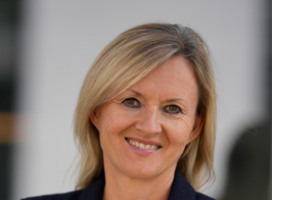
Kasha Witkos, Senior Vice President and Head of International Business at Alnylam Pharmaceuticals, shares her journey from academic researcher to global biotech leader, driven by personal family experience of chronic disease. Witkos highlights Alnylam’s pioneering role in delivering RNA interference (RNAi) technology to patients around the world, the company’s global expansion, and its patient-centric culture grounded in persistence and innovation. Key developments include expanding delivery platforms, targeting broader therapeutic areas such as neurodegeneration, and addressing diagnostic disparities across markets to increase earlier intervention and patient outcomes.
Your career spans academia, research, and now biotechnology leadership across multiple global markets. What drove this evolution from bench scientist to international executive?
My journey was fundamentally shaped by witnessing the impact of chronic disease within my immediate family environment as I was growing up. This exposure to the challenges of chronic ill-health drove my initial desire to pursue medicine and later genetics, and I emigrated from Poland to the United States and joined Northwestern Medical School’s research programmes.
While basic research provided a valuable scientific foundation for me, I found I wanted to have a more meaningful ‘impact’. Academic research, particularly bench work, often lacks visible patient outcomes. You contribute to knowledge advancement without witnessing direct therapeutic benefits. Transitioning into industry offered me the opportunity to translate scientific innovation into meaningful patient interventions.
This personal motivation aligns perfectly with Alnylam’s organisational culture. Alnylam has a genuine obsession with patient-centric innovation, not innovation for technological advancement, but innovation specifically addressing patient needs. Having experienced the direct impact of chronic disease on the broader family rather than just individuals, I understand that therapeutic breakthroughs affect entire support ecosystems.
The international experience I’ve gained across markets from the US to Singapore and Thailand has given me a comparative perspective on healthcare delivery excellence, and in particular, the significant disparities in patient outcomes. A striking example emerged during the COVID-19 pandemic, where death rates varied dramatically between countries, demonstrating in that situation, how healthcare systems and governmental approaches directly impacted patient survival. Switzerland, where I am based today, exemplifies optimal healthcare delivery through an innovation-supportive environment and patient-focused implementation.
How would you describe Alnylam’s position within today’s biotech landscape, particularly regarding RNA interference technology?
Alnylam is a patient-centric biotechnology company founded on the Nobel Prize-winning science of RNAi. Our technology platform enables what I characterise as functional cures, addressing the disease-causing mechanisms rather than managing symptoms downstream.
RNAi targets disease-causing proteins by ‘silencing’ their production upstream. In some conditions, toxic proteins accumulate in the body; if they build up in an individual’s organs, it can progressively reduce organ function, leading to increasing debilitation and ultimately, death. RNA interference uses the body’s own cellular mechanisms within the cytoplasm to stop the production of these toxic proteins.
The technology’s potential extends across multiple therapeutic areas because theoretically, Alnylam can silence any gene within the human genome. Despite this, we maintain a laser-like focus on conditions where we thoroughly understand genetic aetiology and disease mechanisms, which ensures a higher probability of therapeutic success while addressing genuine unmet medical needs.
To date, we have targeted delivery of RNAi to the liver and central nervous system, with ambitious expansion plans to address all major organ systems by 2030. The primary technical challenge involves delivery to ensure precise targeting, which supports sustained safety and multi-year treatment durability. Achieving our first approved medicine took over 16 years of dedicated research and development, during which several major pharmaceutical companies abandoned RNA interference approaches due to the complexity of delivery.
Sixteen years of research and development represent extraordinary persistence. How did Alnylam sustain this commitment when larger companies withdrew from the space?
Our organisational motto embodies this unshakeable persistence and belief: “Challenge Accepted.” When major pharmaceutical companies abandoned RNA interference technology due to delivery system limitations, Alnylam actually acquired some of their assets and continued advancing the science.
The breakthrough required developing sophisticated delivery mechanisms—initially protein encapsulation, then advancing to lipid nanoparticle technology for hepatic targeting. Each delivery system demands precise targeting capabilities, comprehensive safety profiles, and sustained effectiveness over years of treatment administration.
Alnylam’s perseverance stems from understanding the transformative potential for patients facing conditions with limited or no therapeutic options. When you witness individuals deteriorating from progressive protein accumulation diseases, abandoning promising scientific approaches becomes unconscionable. Our research teams begin every progress update with patient videos describing their specific conditions and daily impact—it’s hugely important to everyone at Alnylam that we consistently maintain and focus the connection between scientific advancement and human need.
This persistence has enabled us to establish comprehensive pipelines across cardiovascular, central nervous system, metabolic, and additional therapeutic areas. We are particularly focused on conditions like Alzheimer’s disease and Huntington’s disease, which represent enormous unmet medical needs with significant societal impact and high prevalence rates.
Alnylam’s portfolio spans from rare diseases to potentially large patient populations. How does the company balance focused innovation with broader therapeutic impact?
Our approach differs fundamentally from traditional pharmaceutical companies because we are driven by technical platform capability rather than therapeutic area boundaries. We systematically evaluate where RNAI can address the greatest unmet medical needs while ensuring there is strong genetic validation for progressing a clinical programme
We collaborate extensively with genetic biobanks, including UK Biobank, Our Future Health (UK) and Discover Me (South Africa) and leverage artificial intelligence to understand specific genetic variations, disease presentation patterns, sub-populations, and phenotypic differences. This research-centric methodology ensures we target conditions where our technology can deliver meaningful patient benefits.
We have several approved RNAi Therapeutics, and we continuously investigate and look to develop new solutions that will bring incremental benefit to patients. Our pipeline extends across multiple therapeutic areas, with particular excitement around central nervous system applications, including Alzheimer’s and Huntington’s diseases.
Patients actively track our research progress because our programmes represent hope for conditions lacking effective treatments. This creates purposeful urgency for Alnylam, understanding that time critically impacts patient outcomes and quality of life for individuals and families facing progressive diseases.
Alnylam established international headquarters in Switzerland while maintaining research facilities in the US and additional functional expertise in the UK and the Netherlands. How does your geographical strategy support global expansion?
From inception, Alnylam’s vision has been to have global patient impact rather than focusing on US commercialisation only. The composition of our Board of Directors and our Executive Leadership Teams has always included international representation, particularly from European markets, reinforcing our global commitment.
We initially established regional research and regulatory operations in the UK due to the European Medicines Agency’s proximity, then selected Switzerland for commercial headquarters based on multiple strategic advantages: central European positioning enabling comprehensive time zone coverage, an exceptional talent pool from established biotechnology and pharmaceutical presence, governmental support for innovation, and proximity to strategic partners, including Roche and Novartis.
The international division which I lead, covers markets from Europe to Canada to Japan, focusing on major healthcare systems while partnering with established pharmaceutical companies for broader global access where we lack sufficient commercial infrastructure. We maintain a pragmatic approach, leveraging our research and development strengths while partnering for optimal patient access worldwide.
Switzerland’s innovation-supportive environment, combined with centralised healthcare systems and sophisticated regulatory frameworks, creates the optimal conditions for introducing breakthrough therapies. The talent pool benefits from proximity to major pharmaceutical and biotechnology organisations, while governmental policies support innovative healthcare companies.
Healthcare systems vary dramatically across your international markets. How has market access evolved for RNA interference therapies?
International market access reveals both encouraging recognition of genuine innovation and concerning disparities in innovation support. My experience is that when regulators and payers encounter true breakthrough therapies, they demonstrate remarkable responsiveness—as an example, Alnylam has achieved accelerated approvals in markets including Japan and rapid access agreements across European systems.
However, significant challenges persist in recognising innovation and in securing reimbursement across international markets compared to the US. The US rewards innovation more consistently, while international markets could substantially improve support for innovation. This has created a concerning dependency on the US for funding global therapeutic advancement.
The disparity becomes particularly evident in diagnostic rates across countries for identical conditions. In hereditary transthyretin amyloidosis, for example, France and Belgium demonstrate the highest diagnostic rates globally, while neighbouring countries have much lower diagnostic rates. These differences stem from a number of factors, including healthcare system sophistication, physician education, diagnostic tool availability, and effective referral networks.
Underdiagnosis creates significant hidden healthcare costs through misdiagnosis, delayed treatment, and resource waste. In some rare conditions, patient journey analyses reveal individuals sometimes spend fifteen to twenty years seeking a proper diagnosis while consuming substantial healthcare resources across multiple specialists, diagnostic procedures and ineffective treatment.
Given these diagnostic challenges, how is Alnylam contributing to improved patient identification and care coordination?
As I’ve said, actively partnering across the healthcare ecosystem, whether it’s with genetic biobanks, artificial intelligence companies, medical societies, or patient advocacy to accelerate diagnostic accuracy and reduce patient journey complexity, is critical to how we operate and to our overall success as a business.
International markets possess structural advantages over the US system through centralised healthcare delivery and unified payer systems; however, we are not fully realising these advantages. China and the US are advancing rapidly in healthcare innovation integration and Europe risks losing its historical innovative edge here.
What drives Alnylam’s distinctive organisational culture, and how do you maintain this across international operations?
Our culture stems from authentic mission-driven commitment combined with a “Challenge Accepted” mindset. Our team members demonstrate extraordinary dedication. We maintain a demanding work environment because patient needs create a moral imperative for sustained excellence, but we also cultivate a strong culture of individual accountability that encourages cross-functional collaboration and open communication.
The Alnylam leadership has never been afraid to take bold decisions related to how we are organised and how we operate, and this has created focus and operational excellence supported by authentic leadership commitment. This filters throughout our International operations, ensuring a consistent culture despite geographical diversity.
Looking ahead, what future developments should healthcare leaders look out for from RNAi and Alnylam specifically?
Our primary focus involves expanding and progressing our innovative pipeline and realising the transformative potential of RNA interference technology across multiple therapeutic areas. The ultimate goal involves rewriting medical textbooks for previously intractable conditions, transforming the narrative around a disease from a progressive deterioration to managing or even potentially eliminating a condition.
What message would you share with international healthcare leaders regarding collaboration and innovation advancement?
As I’ve said, I truly believe that genuine partnership across all stakeholders – pharmaceutical companies, healthcare professionals, medical societies, patient organisations, and governmental entities managing public healthcare systems – is the most important factor in advancing patient outcomes. We must not stop asking ourselves the fundamental question: what contributions are we making to advancing patient care and improving society?
COVID-19 provided a powerful demonstration of the potential for rapid innovation when stakeholders collaborate effectively under urgent circumstances. I’d like to see a recurrence of that collaborative intensity and pace to innovate for all healthcare challenges, recognising that patients face life-threatening conditions daily that require immediate attention.
This represents a moral imperative for our industry: leveraging catastrophic moment learnings to approach every disease with similar urgency and partnership commitment. The goal involves sustained collaboration, ensuring therapeutic innovation translates into accessible, impactful patient care across diverse global healthcare systems.
This article was reviewed by Alnylam Switzerland GmbH for compliance with regulations applicable to the pharmaceutical industry only