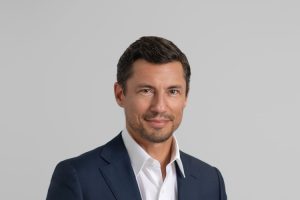
Jérôme Garcin, newly appointed General Manager of Bristol-Myers Squibb (BMS) Switzerland, shares his journey to the role and discusses the strategic importance of the Swiss affiliate within the global BMS network. In this interview, he highlights BMS’s focus on innovation across therapeutic areas such as oncology, hematology, cardiology and neurology, as well as Switzerland’s unique healthcare landscape—including its approach to advanced therapies like CAR-T. Garcin also addresses the challenges of the local healthcare system and his priorities for talent development and future growth within BMS Switzerland.
As a first-time, newly appointed General Manager for BMS Switzerland, can you please begin by briefly introducing yourself.
I like to start with the personal side, as it is very important to me. I am originally from Marseille, France. I am married to a wonderful woman from Marseille and together we have two children, aged 19 and 16.
Growing up, my two parents were deaf, so I helped as much as I could, sometimes taking on bigger responsibilities than a teenager usually would. My parents represent grit and grace, never accepting the status quo, and being kind to everyone around them, regardless of their status. It is a leadership principle that a mentor of mine reminded me of, and that continues to guide me on a daily basis.
After studying pharmacy in Marseille, I moved to Paris for my MBA at HEC. I began my career with five years at Novartis before joining Bristol-Myers Squibb (BMS), where I have worked for the last 18 years. I have been fortunate to hold roles in marketing, sales, and other functions across France, the UK, the US, and now Switzerland.
Having had quite a global trajectory, including significant time spent in the US, how did this European General Manager role come about?
This role has been on my radar for a very long time. Becoming a GM has always been something I aspired to. I was lucky enough early in my career to have mentors who believed in me and gave me confidence I could get to these jobs one day. These senior leaders showed it was about reaching out to have the biggest impact one could, especially for patients and our team.
I could not imagine a better place to make that impact than at BMS in Switzerland. BMS has an incredible history of innovation and impact in areas like HIV and oncology, especially with life-changing treatments. Switzerland, being so advanced, seemed like the ideal setting for this work. When I was approached for the role, I immediately knew it was the perfect opportunity. Of course, moving the family was a journey in itself, but it was definitely the right place and moment for this step.
What have been your observations and learnings during these initial steps of the assignment?
One of the things that really impressed me from the beginning is the highly qualified and passionate people here. BMS in Switzerland has some of the most talented professionals I have met, not just in expertise but as individuals, and that is something I truly value. BMS has always been known for its warm, welcoming, and patient-centric culture, and I have experienced this consistently, especially with the way this team welcomed me.
Another major area of interest has been the Swiss healthcare system, which has such a strong reputation across Europe. When people in Europe struggle to access certain treatments in their own countries, they often look to Switzerland as a place where top-notch care is accessible. It is a privilege to witness how stakeholders in Switzerland are making this possible.
However, it is important for us to stay proactive about future challenges regarding access to medicines. Currently, Switzerland offers very good access to innovative treatments, but we need to ensure that this remains the case over time. Balancing broad and rapid access for patients with fair value for innovation is essential, especially given the large investments made in R&D worldwide and more specifically in Switzerland. Maintaining this balance will require close partnerships between pharma, healthcare systems, policymakers, and payers. I am optimistic that we can work together to keep Switzerland at the forefront of both innovation and accessibility.
What responsibilities do you consider to be key in your new role?
I see this role as having two main focuses: external and internal. Externally, our priority is ensuring that any BMS-approved drugs anywhere in the world can reach Swiss patients as quickly and as broadly as possible. Switzerland has some unique and highly innovative systems, like Article 71, which allows for reimbursement of certain off-label medications if they meet specific criteria, particularly for life-threatening diseases. This is a rare benefit, almost unheard of elsewhere, and it is a tremendous asset for patients. For instance, we recently had a groundbreaking new drug in neuroscience approved in the US after decades of no new treatment options in this setting, and thinking there could be a chance for Swiss patients to have access to it in prime time is extremely exciting.
Internally, my role is to grow our people and create an environment where our team feels extremely confident and comfortable to bring forward their best ideas and be their best selves at work. Recently, I had some truly inspiring discussions with younger team members about using AI, and their insights were mind-blowing. It is all about setting the stage for innovation—encouraging them to share and test new ideas, embracing failure as a learning tool, and moving quickly to adapt and grow what works. If an idea is effective, we expand on it. If not, we move on to the next. This approach is how we ensure we are always evolving and delivering the best we can for patients.
BMS CEO Chris Boerner highlighted strong progress in 2023, extending the company’s leadership across oncology, haematology, and cardiovascular diseases, while growing its presence in both immunology and neurology. Can you tell us more about this portfolio transformation, and what are the key focus areas in Switzerland?
The BMS strategy has always been about making the biggest possible impact for patients, which means focusing on treatments that are either first-in-market or best-in-market. We are not interested in creating “me-too” brands that simply “add to the list”; our focus is on true innovation. It aligns well with Switzerland’s emphasis on pioneering health solutions, so this is an ideal environment for what BMS wants to accomplish.
When our CEO first announced BMS’s expansion into neuroscience, he made a powerful comparison—just as BMS transformed patient outcomes in oncology or HIV, imagine if we could do the same for conditions like schizophrenia, Parkinson’s, or Alzheimer’s. These are areas where patients have seen very few new options in decades. It is incredibly exciting to think about the impact innovative treatments could have on the lives of countless patients and their families and friends.
Here in Switzerland, most of our key portfolio is already available, and our treatments are performing very well in the market. Of course, we do face challenges with some medicines that are not yet accessible here due to the complexities of local regulatory processes. For every treatment we bring to market, our decision-making balances three factors: financial feasibility, strategic importance, and, most critically, clinical benefit for patients. All three need to align. If one factor falls short, we reconsider.
BMS is operating within the potentially revolutionary but complex and expensive CAR-T space. How well set up is the system in Switzerland to absorb these therapies, given the new assessment and payment models they often require?
These therapies are complex, but what truly stands out is their potential as one-time treatments with a long-lasting clinical benefit, that may even eventually lead to a cure.
Currently, CAR-T is mainly focused on certain types of blood cancers, but globally, our R&D teams are deeply invested in exploring how far cell therapy could go in addressing other diseases, for example in the area of auto-immune diseases, which is a tremendously exciting area.
In Switzerland, while administering these therapies is complex, we have made strong progress. There were initial challenges, but now we are in an excellent position where no patient, here or elsewhere, goes without the treatment they need. Switzerland has the infrastructure and advanced healthcare landscape to support these therapies well. There is still work ahead, though, especially to refine logistics, ensure robust regulatory support, and achieve sustainable reimbursement frameworks. Nevertheless, given the landscape here, we are confident in our path forward.
Switzerland is renowned for having one of the world’s top healthcare systems, known for its efficiency and quality. What are your thoughts on the Swiss healthcare landscape?
Switzerland’s healthcare landscape is indeed one of the best in the world, but it’s not without its complexities. While Swissmedic can certainly be fast, it is not always the case and it is also highly cautious and sometimes restrictive. The speed sometimes comes at the cost of broader access in a general sense, not specifically reimbursement.
When we look at the access landscape, I believe the main challenge lies in the future. For instance, the price of medicines in Switzerland has roughly halved over the past 20 years. If this trend continues, more drugs may struggle to launch in Switzerland, which is a scenario we want to avoid. Therefore, as we engage with stakeholders, a key point we make is that it is not enough to focus only on the present; we need to anticipate future needs to ensure that Swiss patients continue to benefit from broad access to new treatments. This responsibility falls on all of us in healthcare—insurers, policymakers, HCPs, and the pharmaceutical industry. It is about forward-thinking and identifying potential challenges early to ensure we continue providing strong healthcare access in Switzerland. Ultimately, a positive climate for innovation and a solid, reliable regulatory and healthcare system is also an essential prerequisite for the well-being of Swiss patients.
Speaking about talent, how do you plan to approach this new leadership role to make sure BMS remains competitive in attracting the best talent in such a competitive environment?
There are two key reasons why I joined BMS 18 years ago, and they are the same reasons I believe others are drawn to us today: the pipeline and the people. Today, we have one of the most impressive pipelines in the industry, with groundbreaking work in areas like hematology, oncology, cardiology, and immunoscience. Now, the idea that we might transform neuroscience in a similar way we transformed the HIV and oncology field in the past, is incredibly exciting. If I were starting out fresh with a background in pharmacy, science, business, or a related field, BMS would absolutely be where I’d want to work.
On the people side, the culture here has always been open, welcoming, and extremely patient-centric. Achieving impactful results while staying grounded and enjoying the work is something we value deeply. We strive to build a team culture that is collaborative, authentic, and purposeful, and I think that is the kind of environment that attracts top talent.
How important is the Swiss affiliate relative to BMS’s global strategy?
BMS has a significant presence in Switzerland, with two major sites in Steinhausen and Boudry. Steinhausen handles commercialization, local clinical trials and regulatory affairs, while Boudry is home to extensive medical, R&D, and manufacturing operations, employing over a thousand people. Switzerland’s importance to BMS extends beyond commercialization; it is a place where we are investing heavily, like in the new manufacturing facility currently being developed in Boudry with a multi-million investment .
The real differentiator here is the depth of knowledge and expertise available. Switzerland stands out among other attractive locations worldwide, not just for its favorable environment but because of its talented workforce. Switzerland is actually a true power house for talents.
What do you see as strategic priorities ahead in the coming few years?
I see three main strategic priorities ahead. First, driving growth here and now. With our impressive portfolio, we aim to achieve strong market growth and brand leadership. The team and I are very competitive, and we want to give our best to ensure this success.
The second priority is advancing our pipeline. We recently discussed our neurology work, and there are more innovations on the way. If the first European patient for our neurology portfolio is treated in Switzerland, I would consider that a big success.
The third priority is developing our people. This means creating opportunities for learning and professional growth so that our team members end each day feeling they have learned something valuable. It also involves positioning Switzerland as a global talent hub for BMS. We want to keep exporting top talent globally—our current GM for Germany, for instance, is from Switzerland. The strength of an organization is reflected in its ability to nurture talent, and I aim to see Switzerland continue to attract and develop some of the best professionals.
What final message would you like to deliver to your globally colleagues and to local stakeholders on behalf of BMS Switzerland?
Rather than focusing solely on BMS Switzerland, I would like to share my wish for the future. My hope is for all key players—politicians, health insurers, healthcare providers, and the pharma industry—to come together to ensure that innovation and the best possible treatments continue to be available for patients in Switzerland. While the system is working well today, we face challenges ahead. If there is one thing that keeps me up at night, it is this. I truly hope we can align to create a sustainable foundation for continued success in Swiss healthcare.