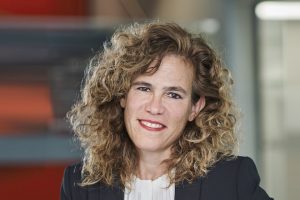
Dr Isabelle Dahinden, General Manager of CSL Behring Switzerland, introduces the company’s unique history and strategic focus on plasma-derived treatments. Dr. Dahinden also discusses CSL Behring’s strong presence in Switzerland, including their extensive R&D, production capabilities, and partnerships, while touching on the challenges of navigating the Swiss healthcare landscape.
Could you begin with a few words about yourself and the career journey which lead you to CSL Behring?
I have a strong foundation in science, beginning with a PhD in biochemistry, and throughout my studies, I made a point to explore practical applications through several internships. One of these was in Verona, Italy, where I worked at GlaxoWellcome’s R&D centre before it became part of GSK.
After completing my PhD, I transitioned into the pharmaceutical industry with Novo Nordisk in diabetes, focusing on marketing and sales. To enhance my understanding of business strategy, I pursued an Executive MBA at the University of St. Gallen, which gave me a broader perspective across various business disciplines.
Following Novo Nordisk, I spent valuable years with GSK, where I delved into multiple therapeutic areas, including respiratory, neurology, gynaecology, and vaccinology. During this time, I held a leadership role in European oncology and haematology, gaining insights into political environments across Europe and experiencing the complexities of various product life cycles. I also had the chance to work in the UK headquarters, supporting the European vaccine launch team, which expanded my expertise in brand management across multiple drug and device categories.
With an extensive set of experiences from GSK, I joined CSL Behring in 2015 as General Manager for Switzerland. Besides that, I am sitting as a board member in the Association of Pharmaceutical Companies Switzerland (VIPS) and the compulsory stock organization of therapeutic products (HELVECURA).
CSL is a global leader in developing innovative therapies for rare and serious diseases. Can you share a few words of introduction about the CSL group?
CSL is unique compared to traditional Big Pharma players. We are a leading global biotechnology company with a dynamic portfolio of lifesaving medicines, including those that treat haemophilia and immune deficiencies, vaccines to prevent influenza, and therapies in iron deficiency, dialysis, and nephrology. Founded over a century ago in Australia in 1916, the company originally aimed to address the healthcare needs of an isolated nation during wartime, particularly by ensuring access to essential medicines like insulin, penicillin, and vaccines for influenza and other infectious diseases. In 1991, CSL Ltd was formally incorporated and listed on the Australian Securities Exchange, paving the way for global expansion.
Today, CSL operates across more than 100 countries with approximately 32,000 employees worldwide and specialises in three business units: CSL Seqirus is among the world’s largest influenza vaccine providers. CSL Vifor is a major player in iron deficiency and nephrology.
CSL Behring, the core of our rare and serious disease portfolio, is a leader in immunology, haematology, and respiratory therapies. CSL Plasma, a subsidiary of CSL Behring, is the foundation of our plasma-derived therapies, managing a global network of over 350 plasma collection centres in the U.S. and Europe.
Our strong R&D pipeline is fueling our business units, utilizing our expertise in plasma protein technology, recombinant protein technology, cell and gene therapy and vaccine technology to develop and deliver innovative medicines that address unmet medical needs or enhance current treatments.
In Switzerland, my focus is on CSL Behring, where we concentrate on three main therapeutic areas: immunology, haemophilia, and respiratory. We currently have 20 registered drugs in Switzerland, underscoring our commitment to providing innovative solutions for patients facing challenging health conditions.
What can you tell us about the key trends around plasma collection, especially as we see a rising demand for plasma-derived therapies?
The plasma collection sector is witnessing significant growth, with a robust annual increase in demand anticipated in the coming years. This demand surge is driven not only by an increase in new patients but also by expanded therapeutic indications for plasma-derived treatments. However, this rising need also presents a substantial challenge—a gap between what the markets require and what the industry is currently able to supply. To bridge this, CSL is heavily focused on optimizing both collection and production efficiency to meet global needs more effectively.
At the core of plasma collection are the donors, who play an indispensable role in making these therapies possible. CSL Plasma has prioritized enhancing the donor experience to encourage participation and ensure retention. Investments have been made to streamline the donor process, integrating digital advancements like mobile apps to improve the overall experience.
To improve collection volumes and address donors’ expenses and inconvenience, virtually all European countries offer a form of donor compensation – monetary (direct and indirect) and/or non-monetary (e.g. time off work). These compensation measures are designed to either minimize or off-set the inconvenience or to reimburse the donor’s out-of-pocket expenses.
What are the key considerations which must be kept in mind in terms of not only collection but processing and manufacturing to meet the growing demand for these medicines?
Meeting the growing demand for plasma-derived therapies involves a multi-layered approach across collection, processing, and manufacturing. Collection capacity is key, and CSL has invested in over 350 collection centres in North America and Europe.
Manufacturing these therapies introduces unique complexities. With each product taking between 7 and 12 months to process, we must continuously plan for the future. This involves analyzing current and projected market needs, disease prevalence and anticipated regulatory approvals to ensure supply stability. Every step, from collection to final product, must be adapted to the anticipated market demand. This could be even as far as several years in advance to meet the needs of expanding indications and patient access in new regions.
CSL’s large-scale manufacturing capabilities include one of the world’s largest plasma manufacturing facilities here in Bern, Switzerland. Over the last few years, CSL has invested millions in new manufacturing facilities at the site in Bern to meet increased global demand, and this makes robust collection and processing essential for the long-term sustainability of plasma-based medicines.
To what extent was your organization affected by the COVID-19 pandemic and supply chain disruption?
It was definitely a challenging time for us, especially with a bit of a delayed effect. Since it takes about seven to twelve months to process plasma, we didn’t feel the shortage immediately when COVID hit and we still had products available. But soon after plasma collections dropped, we saw the impact start to set in. Many donors were hesitant to travel by train or car to reach our centres, so it took a lot of effort and motivation to get them back to pre-pandemic levels.
With a significant part of our capacity based here in Switzerland, though, we’ve been able to keep our supply lines steady. During the pandemic, Swiss patients continued to receive their CSL Behring medicines without interruption. That reliability really reflects the strong partnership and trust we’ve built with our customers—when CSL Behring commits, we deliver.
In Switzerland, there is a large production site in Bern supplying plasma-derived therapies globally and R&D centers situated. Could you give us an overview of CSL Behring’s footprint and operations in Switzerland?
Our presence in Switzerland is comprehensive, with a strong focus on R&D, production, and partnerships. For R&D, we actively collaborate not only with renown local universities and research institutes, but also with biotech startups.
Our Research teams are based at the Swiss Institute for Translational and Entrepreneurial Medicine (sitem-insel) on the campus of the university hospital in Bern, and at the Bio-Technopark in Schlieren, Zurich, where we work closely with other R&D units and academia to foster innovation.
Through partnerships with BaseLaunch, a Swiss-based venture platform for early-stage bio-techs, and Biopôle, one of Europe’s largest life science hubs based in Lausanne, we are very well positioned to work with scientists and entrepreneurs not only throughout Switzerland but across Europe to identify new development opportunities for cutting-edge therapies.
Our production site in Bern is the second largest for CSL worldwide, producing four major brands for the global market. Being based here offers a significant advantage and sends a strong message to our Swiss customers—primarily hospitals and office-based physicians treating patients with our therapies.
Our Swiss base also provides continuity of supply, which our customers rely on. We have a broad portfolio, with 20 plasma products registered here, and we work closely with hospitals, physician groups, and various partners in home care and therapy-specific fields.
And of course, our team is crucial. It’s the commitment and expertise of our people that drive all these efforts. With a strong focus on patients, we’re reminded daily of the impact of our therapies. It’s inspiring to see the difference CSL Behring makes in their lives.
Could you provide insights into the company’s current portfolio focus and any upcoming innovations you are excited to be bringing to the Swiss market?
Two areas come to mind. First, in immunology, we have immunoglobulins to treat a range of serious immunological and neurological conditions, such as primary and secondary immunodeficiencies and chronic inflammatory demyelinating polyneuropathy (CIDP). Patients with these chronic diseases face significant life quality challenges, so these therapies make a real difference for them.
The second area is haemophilia, where we’re excited to bring one of the first gene therapies for haemophilia B to the Swiss market. This therapy, already approved by Swissmedic, represents a huge advancement. Traditionally, haemophilia patients had to undergo frequent infusions or injections—sometimes daily. Over time, we progressed from plasma-based to recombinant factors that required injections only once every two weeks, which was a major improvement.
Now, with gene therapy, a patient can go to the hospital for a one-hour infusion. After that, they may be covered for years with no need for ongoing injections. We already have eight-year study data, and while we’re gathering more, early results are promising.
It’s also worth noting that CSL Behring’s portfolio is diverse. While about 80% of our treatments are plasma-derived, we also offer recombinant products, as well as the just mentioned gene therapy and monoclonal antibodies. Beyond these, CSL’s work includes vaccines, treatments for iron deficiency, and other areas, which allows us to meet a broad range of patient needs across different fields.
CSL Behring’s products are widely used in hospitals. Are there challenges in the hospital setting that you face?
There are definitely challenges, especially with the rising cost pressures on the Swiss healthcare system. Hospitals are feeling the strain, and it’s changing how they make purchasing decisions. We’re seeing hospitals responding by forming larger buying syndicates to consolidate their purchasing power and reduce costs.
This approach has some advantages in terms of efficiency, but it also has drawbacks. The larger these buying groups get, the more they tend to favour a single product for budget reasons, which creates high dependencies and puts patient supply at risk if disruptions in the supply chain occur, which can always happen given the nature of complex manufacturing processes in the biotech industry. Also, it is a risk for the suppliers if their priorities or evaluation criteria change. It’s a complex landscape to navigate, and we need to be very adaptive in our approach.
What leadership values do you use to continuously energize not only yourself, but also your team to achieve impactful wins for patients?
I would say that my leadership style is guided by a clear direction, but it can vary depending on the organization, the team I am leading, and the circumstances we face, such as whether we are going through a transformation or an acquisition. These factors really influence how I lead. In challenging times, you truly experience the value of great leadership. When things are going smoothly, and the brand is performing well, leadership can feel easier. However, leading through tough periods is where the real test of leadership lies.
I believe leading with credibility is crucial, and credibility is built on trust. Trust is the foundation of good leadership—without it, you cannot be an effective leader. Another key element is authenticity. As a leader, you are always being observed, and you must act as a role model. Team members pay attention to how you handle situations, so you must lead by example. Similarly, transparent and open communication is also essential. Even when difficult decisions must be shared, it is important to be honest.
What final message would you like to deliver to global colleagues about your work at CSL Behring in Switzerland?
In Switzerland, we work hard with external decision-makers to ensure the innovative haemophilia B gene therapy finds its way to Swiss patients, and soon, we aim to introduce a monoclonal antibody for the treatment of hereditary angioedema. It is always rewarding to launch new therapies that can help patients.
On a personal note, I am incredibly grateful for the dedication of my team and our team members at the production site. Even during the pandemic, they worked under challenging conditions to ensure that our products reached the patients. CSL Behring holds a strong position in Switzerland, and I am proud of the role we play in improving patient lives.