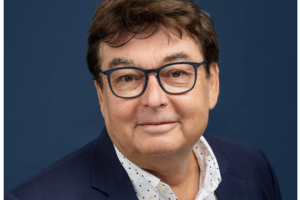
Combining scientific rigour with entrepreneurial instinct, Igor Fisch charts a new path for gene and cell therapy manufacturing at NewBiologix. Focused on addressing the inefficiencies of current production models, the company develops stable platforms designed to lower costs, enhance quality, and expand patient access. With roots in the pioneering success of Selexis, Fisch applies lessons learned over decades to build a new generation of biologics.
How has your scientific background and early entrepreneurial experience shaped the founding of NewBiologix?
My professional journey began with a PhD in Geneva, followed by postdoctoral research at the Medical Research Council in Cambridge under Sir Gregory Winter, who was awarded the Nobel Prize in Chemistry in 2018. Upon returning to Switzerland in the late 1990s, I joined the Swiss Federal Institute of Technology Lausanne (EPFL) as an assistant professor. However, I soon realised that the academic environment did not offer the dynamism or independence I sought. Driven by a desire to move more swiftly and create tangible impact, I left EPFL to found Selexis, a biotechnology company that pioneered cell line development for the production of recombinant proteins, including monoclonal antibodies.
Selexis achieved significant success, with its technologies supporting seven approved products and contributing to more than 130 clinical trials by 2017, the year we completed its sale to a Japanese group. Building on this entrepreneurial foundation, I raised USD 50 million in 2022 to establish NewBiologix, a company dedicated to advancing the production of Advanced Therapy Medicinal Products (ATMPs), particularly Adeno-Associated Virus (AAV) vectors essential for cell and gene therapies.
In parallel with these ventures, I have remained deeply engaged in supporting Switzerland’s innovation ecosystem. As president of the Geneva Foundation for Technological Innovation (FONGIT), I encourage entrepreneurs to transform scientific discoveries into commercially viable enterprises. I also serve as a member of the Swiss Biotech Association, promoting the growth and global positioning of the national biotech sector. While entrepreneurship is seldom straightforward, maintaining a strong focus on scientific excellence and embracing adaptability have been central to navigating the challenges and building lasting success.
What vision guided the creation of NewBiologix, from choosing its name to defining its mission in gene and cell therapy?
When naming NewBiologix we took a different approach than with my previous company, Selexis, whose name naturally reflected my experience in phage display selections. With NewBiologix, we felt that perfectly captured our ambition to pioneer a new generation of biologics in the fields of cell and gene therapy and ATMPs, that shift the industry’s focus from treatment to cure. These emerging therapeutics demand an entirely new biological framework, which NewBiologix aims to build. Essentially, we’re not just advancing gene therapy; we’re redefining how it’s built.
Following my departure from Selexis in 2020, an unexpected opportunity arose during my birthday celebrations in Zermatt the following year, when Marc Funk, then CEO of Lonza, approached me to assist in building a new contract development and manufacturing organisation (CDMO) in Sweden. This conversation rekindled discussions with Nicolas Mermod, co-founder of Selexis, and ultimately led us to found NewBiologix. By 2022, we had secured USD 50 million to develop a platform dedicated to improving the production of AAV particles. Today, the high cost of manufacturing AAV vectors – resulting in treatments priced at over one to two million dollars per patient – limits access to life-saving gene therapies. Our mission is to redefine AAV production to make these therapies more affordable and accessible, much as we contributed to democratising monoclonal antibody production two decades ago.
What are the key structural challenges facing the cell and gene therapy market, and how is NewBiologix seeking to overcome them?
The cell and gene therapy sector is expanding rapidly, with compound annual growth rates projected at around 20 percent until 2030. However, the market faces significant structural challenges. Unlike traditional pharmaceuticals, gene therapies often target rare diseases and are administered through single, curative treatments. This model disrupts the traditional pharmaceutical paradigm based on large patient volumes and recurring treatments, raising questions about commercial sustainability.
A further challenge lies in manufacturing. Current production methods, particularly transient transfection, are costly, inefficient, and inconsistent. Although transient transfection enables gene delivery, it introduces significant batch-to-batch variability, complicating large-scale, clinical-grade manufacturing. These inconsistencies have drawn the attention of regulatory bodies such as FDA, which is increasingly concerned with reproducibility and quality standards.
At NewBiologix, we are developing stable, reproducible production platforms for AAV vectors. By addressing the inefficiencies inherent in current manufacturing techniques, we aim to lower production costs and enhance consistency. In doing so, we hope not only to improve access to existing therapies but also to enable the expansion of gene therapies into broader indications, encouraging greater engagement from the pharmaceutical industry.
How is NewBiologix’s technological approach redefining the production standards for gene and cell therapies?
NewBiologix’s vision extends beyond gene therapy to the future application of cell therapy, particularly the genetic modification of stem cells to treat and cure disease. Recognising the complexity of this endeavour, we began by investing extensively in next-generation sequencing technologies to map and understand the dynamic structure of cellular genomes. Through this work, we established precise guidelines identifying which genomic regions can be safely and predictably modified. These insights formed the foundation for engineering our proprietary HEK293 cell line, optimised for the production of Adeno-Associated Virus AAV vectors, while also laying the groundwork for future applications in cell therapy. Our three integrated platforms – the Xcell Eng-HEK293 Cell Line, the Xcell Genomic Analytical Platform, and the Xcell rAAV Production and Analytics Platform – collectively enable targeted genome engineering, the protection of intellectual property through innovation, and the advancement of next-generation therapeutics.
Today, the reliance on transient transfection presents major inefficiencies, with a single batch of AAV production costing between USD 8 million and USD 12 million, driven by the labour-intensive preparation of plasmid DNA and the inherent variability of the process. By developing stable producer cell lines, we aim to reduce production costs by an order of magnitude while significantly shortening manufacturing timelines. These advances will not only enhance manufacturing efficiency and consistency but will also facilitate the acceleration of gene therapies into clinical development, ultimately broadening patient access to transformative treatments.
Where does NewBiologix currently stand in its commercial development, and what are the company’s strategic priorities moving forward?
Since its establishment in 2022, NewBiologix has made rapid strides towards commercialisation. Having successfully engineered and extensively characterised a proprietary cell line optimised for the production of AAV particles, the company is now licensing this technology to CDMOs to facilitate broader industry adoption. Given that the United States remains the largest and most dynamic market for gene therapies, we have opened a subsidiary there and initiated the recruitment of business development professionals to accelerate our commercial expansion. Europe is also an early priority, with efforts initially centred on providing a robust, high-performing cell line, before progressing to offer a complete production platform.
Following the grand opening of our facilities in 2023 and the successful transition to larger laboratories in March of that year, NewBiologix closed its first commercial agreement in 2025. Thanks to the USD 50 million secured during our 2022 funding round, we are able to advance our commercial ambitions without immediate additional fundraising. Having already entered the commercial phase, we are now focused on consolidating our position, expanding our partnerships, and scaling our impact in the years ahead.
How has your experience influenced your approach to team building at NewBiologix, and what advantages does operating in Switzerland provide?
The formation of the NewBiologix team has been strongly influenced by the success achieved at Selexis, where a culture of innovation and scientific excellence attracted and retained outstanding talent. Many of my former colleagues chose to join NewBiologix, motivated by the opportunity to continue working within an entrepreneurial and dynamic environment. Switzerland’s exceptional academic ecosystem and emphasis on innovation have further supported our efforts. Locating our headquarters at Biopôle in Lausanne has proved particularly advantageous, offering an environment where scientists naturally interact, exchange ideas, and foster collaboration, enhancing both creativity and productivity.
One of the country’s distinguishing features is the loyalty of its workforce; once integrated into an organisation, scientists tend to remain long term, an important advantage given the time and investment required to train highly skilled personnel. Moreover, the Swiss healthcare and life sciences sector offers fertile ground for start-ups, with a strong flow of talent from large pharmaceutical companies to smaller, more agile ventures where scientists often enjoy greater autonomy. Importantly, despite Switzerland’s global reputation, the cost of recruiting PhD-level scientists remains more favourable compared to major US hubs such as Boston, strengthening our ability to attract and retain exceptional talent as we expand.
What are the key principles that have shaped your entrepreneurial journey, and how does your involvement with FONGIT reflect your commitment to innovation?
My entrepreneurial journey has been shaped by a deep conviction that innovation is fundamental to addressing the world’s most urgent challenges. When I founded Selexis in 2001, FONGIT played a crucial role in supporting the company’s early development. Returning as chairman years later felt like a natural extension of my belief in giving back to the innovation ecosystem that had once supported me.
Beyond personal experience, I firmly believe that innovation is essential to solving global issues across healthcare, climate change, social structures, and transportation. Without it, progress risks stagnating. This belief drives my commitment to encouraging entrepreneurs: whenever I meet individuals with the ambition to build innovative ventures, I make it a priority to support and push them forward, knowing that many will go on to create solutions with a meaningful societal impact. Through my role at FONGIT, I aim to promote a strong entrepreneurial culture in Geneva and to help build funding mechanisms that can better support emerging companies, enabling transformative ideas to reach the market and contribute to real-world progress.
How is NewBiologix elevating quality control standards in gene therapy manufacturing, and how has this been received by the industry?
Quality control has become an increasingly critical concern in gene therapy, particularly in the production of AAV vectors, where a substantial proportion of particles may be either empty or packaged with the wrong DNA. At NewBiologix, we have made quality control integral to our manufacturing platform by employing advanced sequencing technologies to characterise each production batch in detail. Our aim is not only to produce AAV particles but to ensure that what is administered to patients consistently meets the highest standards of functional integrity. Traditional methods such as transient transfection frequently result in significant proportions of defective or empty particles, posing serious challenges when administering therapeutic doses that often exceed 10¹⁷ particles total per patient.
By applying Next Generation Sequencing (NGS) technologies and batch characterisation, we can accurately determine the proportion of fully functional viral vectors, significantly enhancing both the safety profile and regulatory compliance of gene therapies. This approach is being increasingly recognised across the industry, with companies engaging our services to validate the quality of their production batches and ensure a higher percentage of functional particles, an essential step towards broader clinical acceptance and patient trust.
What is NewBiologix’s go-to-market strategy, and what final message would you like to share with healthcare decision-makers worldwide?
NewBiologix’s commercialisation strategy is structured around two progressive phases. Initially, we are licensing our proprietary cell line, accompanied by a comprehensive suite of characterisation tools, to CDMOs and production facilities. This phase enables partners to immediately benefit from a reliable, high-quality system for producing AAV vectors. The second phase, which is now advancing, involves offering a full platform that integrates our technologies directly into clients’ production processes, empowering them to generate their own therapies efficiently and consistently. Transitioning from the licensing of cell lines to the deployment of a complete production platform marks a critical evolution in how we support the broader gene therapy ecosystem.
Ultimately, NewBiologix’s mission is to drive a fundamental shift within the pharmaceutical industry. Traditional pharmaceutical models have relied on long-term treatments for large patient populations, but cell and gene therapies offer the possibility of single-administration cures, inherently shrinking the long-term market. Helping the industry navigate this paradigm shift – where success is measured not by the volume of treatments administered, but by the ability to cure – is at the heart of our vision. We are committed to enabling the transition to a future where truly transformative therapies reach patients more efficiently and reshape the economics of healthcare innovation.