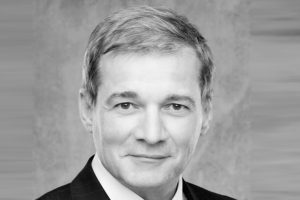
Dr. Helmut M. Schuehsler, CEO of TVM Capital Healthcare, shares insights into the firm’s investment strategy spanning the Middle East and Southeast Asia with a particular focus on Saudi Arabia’s rapidly evolving healthcare landscape. He discusses how TVM Capital Healthcare is driving transformation by scaling healthcare businesses, introducing innovative care models, and aligning investments with Saudi Arabia’s Vision 2030. Schuehsler also explores the opportunities presented by the region’s maturing private equity landscape and the growing IPO market.
Could you begin by briefly introducing yourself and your current role as CEO of TVM Capital Healthcare?
I am an investor and have been a venture capitalist since 1987. I joined TVM in Munich in 1990, and for the past 35 years, I have focused on healthcare and life sciences investments. My career has always been centered around innovation. In the first 20 years, I concentrated primarily on life sciences products, investing in pharmaceutical and medical devices, with a strong emphasis on drug discovery and development. I worked across both Europe and the United States, operating out of TVM’s Munich and Boston offices.
Over the last 15 years, and after a move to Dubai, my focus has shifted to healthcare services, specifically care delivery. This includes investments in single-specialty clinics and healthcare product manufacturing, but not venture-capital style pre-cliical and clinical product development.
Today, TVM Capital Healthcare is a growth capital fund manager operating out of our two hubs, Dubai and Singapore. Two years ago, we expanded into Riyadh, and we also established a satellite office in Ho Chi Minh City, Vietnam. Our primary focus in the last 15 years has been on the Middle East, with a particular emphasis on the UAE and more recently, Saudi Arabia. In 2024, we finalized the closing of a Saudi-focused healthcare growth capital fund and we are now in the process of raising a Southeast Asia-focused fund entity, managed out of Singapore.
As Chairman and CEO of TVM Capital Healthcare, I divide my time between Dubai, Riyadh, Singapore, Jakarta, Kuala Lumpur, Manila, and other key markets—engaging with government officials, regulators, and industry leaders. While I am first and foremost an investor, I am deeply embedded in the healthcare sector. I even ran one of our portfolio companies for more than a year, overseeing a team of 350, providing acute long-term care for ventilated patients. This hands-on experience has shaped my approach, blending investment strategy with operational insight—what we call an “investor-operator” model.
What factors have driven the geographic market decisions for TVM, and how does this influence your investment strategy?
When we first entered the Middle East, we operated under a misconception. We initially believed that investors in the region would be eager to invest in funds dedicated to local opportunities. However, 20 years ago, most Middle Eastern investors primarily focused on private equity and even venture capital in the United States, showing little interest in investing in fund entities within their own region. Instead, when it came to their backyard, they preferred direct deals. That has since most recently changed significantly, but it took quite a lot of time for us to establish our presence as a successful investor-operator, which culminated in the summer of 2024 with the final closing of our oversubscribed healthcare growth capital fund at USD 254 million.
Despite this initial misunderstanding, we correctly identified a major market opportunity. From the outset, our goal was to expand the TVM brand into the Middle East and then further into Asia, particularly Singapore. That was always our two-step strategy, and we have executed it as planned.
One key realization was that we needed to take a much more operational approach than traditional European or U.S. venture capital and private equity firms. This led us to build a strong network of senior managers and partners with deep operational expertise. They assist us not only in due diligence and market research but also in actively developing and even managing companies with our own team. In the Middle East, we often establish businesses from the ground up, investing at an early stage and scaling them to an institutional level.
We see a similar opportunity in Southeast Asia, which is why we expanded our presence there with a focus on Indonesia, Malaysia, the Philippines, Singapore, Thailand and Vietnam. The approach remains the same—identifying relatively young but commercial-stage opportunities, building strong operational foundations, and growing companies into major players within their markets. We do not like binary risks, we stay away from the classical early-stage venture capital type deals.
How did you structure the fund, and what is the profile of the assets you typically target across these geographies?
The formation of our fund was largely driven by a shift in mindset, particularly among Saudi investors, following the announcement of Vision 2030. The key turning point for us as healthcare investors came with the introduction of the Health Sector Transformation Program, which was launched shortly after Vision 2030. This created a completely new investment landscape.
When we talk about the Middle East, we are specifically referring to the Arabian Peninsula—Saudi Arabia, the UAE, Kuwait, Bahrain, Qatar, and Oman. Saudi Arabia alone represents about 60 to 70 percent of this market due to its population size and economic scale. It is, without question, the dominant force in the region.
One of the most significant developments under Vision 2030 is the push to build a strong private healthcare sector. The government wants to diversify healthcare providers, expand insurance coverage, and promote local manufacturing of medical products. This transformation is creating uncertainty but also immense opportunities for investors who can identify and act on them.
Saudi Arabia does not lack banking institutions, consultant reports, or advisory firms pitching opportunities. However, what sets us apart is our ability to move quickly. We conduct our own in-depth research, make decisions in a short time frame, and execute effectively. We are light on consulting and heavy on action, which has been a key factor in our success in the region.
We have built and sold companies in strategic transactions to major players such as Mediclinic MENA, NMC Health, and Aster DM. Our most recent exit was a sale to Amanat, a publicly listed healthcare and education investment platform in Dubai. This cycle—identifying opportunities, investing in or creating companies, scaling them, and exiting successfully—has been the foundation for raising our latest fund, which has now made seven investments in total.
Who are the Limited Partners (LPs) involved in the fund, and what is the profile of these partners? Healthcare investments are known for their long cycle—how do you ensure that LPs understand the metrics involved in such a long-term investment?
One of the key turning points for us was the establishment of JADA, the Public Investment Fund’s (PIF) fund-of-funds company, in 2018. JADA became a significant investor in our fund during our first closing in 2022. This decision by Jada in turn, made us much more attractive to family offices and other institutional investors, as they recognized the alignment of our strategy with Vision 2030.
The level of interest from Saudi investors has been remarkable. We have been operating in and out of the country for the past 10 years, and I can say that the investment landscape has transformed completely. When we launched our first company project in Saudi Arabia in 2016, it was still the “old” Saudi Arabia in many ways—things took a long time, regulatory processes were slow, and setting up a 100% foreign-owned rehabilitation hospital in Dhahran took nearly two years just to obtain a license.
Today, the pace of change is extraordinary. Government and regulatory processes have improved tremendously, and the people in decision-making roles are eager to support private investment. They actively want to help, and they are motivated by the same goal we are—creating value that contributes to Saudi Arabia’s transformation. What strikes me most is how much national pride has grown. People are excited about their country’s future, and that pride translates into support for investments that align with the broader vision of economic diversification and private sector growth.
Our fund has a global reach, but everything we invest in has a direct impact on Saudi Arabia. That is our model. Whether we invest directly in the Kingdom or globally, we ensure that those global investments expand into Saudi Arabia. We bring companies into the market, establish regional headquarters, build manufacturing sites, and develop distribution networks. This is a mandate we set for ourselves when we started funraising for this fund, because we believed it addressed the biggest market opportunity in the region.
In terms of our LPs, about 75% of our capital comes from the Middle East, with Saudi Arabia contributing 90% of that amount. We also have two significant European investors, who are quite large, but the majority of our funding is regionally driven. This structure reflects both the increasing confidence of local investors in domestic opportunities and the role we play in bridging global healthcare innovation with the Saudi market.
You mentioned co-creating businesses that didn’t previously exist, which requires working with entrepreneurs. How do you balance financial resources, identifying the right ideas, and sourcing the right people and infrastructure?
One of our biggest challenges has always been addressing human capital. In the Middle East, healthcare has traditionally relied on an expatriate workforce, with approximately 90% of the sector’s employees being foreigners. This is particularly true for what we call “nurse-led businesses,” which are a significant part of our investment focus.
A major area for us is the continuum of care—everything that happens after an acute medical intervention. This includes step-down units, post-acute care, long-term chronic care, rehabilitation, home care, and chronic disease management. In many emerging markets, including the Middle East and Southeast Asia, there is a lack of diversified healthcare providers who can transition patients through various stages of recovery. In contrast to developed markets, where patients move seamlessly from hospital to post-acute care, rehab, and then home-based care, these services have historically been underdeveloped in the Middle East. Our goal is to build integrated solutions that provide care at every stage of a patient’s recovery journey.
We also focus on bringing entirely new healthcare models to the region. For example, we recently introduced COMSTED, a freestanding infusion center in Saudi Arabia, inspired by highly successful models in the United States. This concept did not exist in Saudi Arabia or anywhere else in the Middle East before we launched it. Similarly, in 2010, we created Provita International Medical Center, which was modeled on a German approach to long-term care. At that time, long-term care facilities simply did not exist in the region, so we effectively started and contributed to building an entire industry segment from scratch. Today, the concepts of long-term care, post-acute care, and rehabilitation are well-established in the UAE and are rapidly gaining traction in Saudi Arabia, where many hospital systems but also family offices are now investing in rehabilitation and post-acute care centers.
While we frequently pioneer new healthcare segments, we also invest in existing businesses when we identify promising market opportunities. In those cases, we actively seek out local players—family-owned businesses, startups, or entrepreneurs who have already developed the initial infrastructure. Whenever possible, we prefer to invest in companies that have already navigated their first few years of growth. This allows us to accelerate expansion, leverage our expertise, and avoid the lengthy setup process that comes with building a business from the ground up. Historically, launching a new healthcare business in Saudi Arabia took two to three years, but today, with the rapid transformation of the business environment, that timeline has been dramatically reduced—sometimes to as little as four weeks.
Saudi Arabia has changed tremendously. The regulatory environment is now much more supportive of entrepreneurship, and government agencies actively help investors navigate the system. The country is by far the largest market in the region, and we expect it to remain the primary focus of our investments in the region for a long-time. From there, our natural expansion strategy is to scale Saudi-based businesses regionally, extending into the other GCC countries such as the UAE, Kuwait, Qatar, Bahrein and Oman. However, the regional market and population dynamics mean that Saudi Arabia will always be the dominant player. For instance, if a company has 10 clinics in Saudi, it might have just one in Qatar or two in Kuwait. The 80-20 rule applies here—Saudi will always be the core market, with regional expansion serving as a complement rather than the primary driver of growth.
How does TVM view the recent surge in hospital investments in Saudi Arabia and the UAE? Is this an opportunity for you and if so, in what way?
When people ask me what we do in the healthcare sector, my answer is always, “Everything except hospitals.” The reason for this is simple: the Saudi government has already built a strong hospital infrastructure, and many of these hospitals are now slated for privatization. At the same time, a handful of private groups, such as Dr. Sulaiman Al Habib Medical Group, have built highly successful hospital networks, taken them public, and turned them into powerhouse operations. These groups have deep expertise in hospital management, and they are very good at what they do. Our strategy is not to compete with them but rather to create attractive acquisition opportunities for them.
Our focus is on specialized healthcare services that complement hospitals. We develop single-specialty clinics, post-acute care facilities, long-term care centers, home care services, and infusion centers. These services form an interconnected ecosystem, with the hospital as the hub and various specialty facilities supporting patients throughout their recovery. From a strategic perspective, hospitals benefit from integrating these services into their networks. If a hospital performs a surgery and then refers the patient to an external rehabilitation center, they risk losing that patient entirely. By acquiring post-acute care and specialty service providers, hospitals can ensure patient continuity within their own ecosystem.
This is where we see our opportunity—building and scaling these specialty providers so that they become natural acquisition targets for hospitals looking to expand their service offerings. In the long run, this model supports a more integrated healthcare system while also creating attractive exit opportunities for us.
Another key exit strategy for us is the stock market. With the continued success and growth of Tadawul, Saudi Arabia’s stock exchange, IPOs are becoming a viable path for our companies. Historically, we focused on strategic exits—selling our businesses to larger hospital groups, healthcare companies or investment firms. However, in the future, we see IPOs as an exciting alternative, allowing us to take companies public and gradually exit by selling shares on the open market.
What is your perspective on the IPO market in the region, particularly in healthcare?
The Saudi IPO market has been exceptionally active in recent years, particularly since the listing of Saudi Aramco about six years ago. Aramco’s IPO was a landmark event that significantly increased global investor attention on Saudi markets. Following its listing, Tadawul was added to the MSCI Emerging Markets Index, which meant that institutional investors and global funds rebalanced and included Saudi-listed stocks in their portfolios. This structural shift automatically increased liquidity in the market, making Saudi Arabia a more attractive destination for capital.
Healthcare, in particular, has been a sector of great interest. Several – but still very few – hospital operators have successfully gone public, and investor appetite for healthcare-related IPOs remains strong. This presents an interesting opportunity for us. Traditionally, Nasdaq and other global exchanges have been open to listing pre-revenue biotech or healthcare companies, but Tadawul operates differently. The main exchange requires companies to have solid financials and significant revenue before going public, with typical IPO valuations ranging from $500 million to $1 billion USD or more.
For smaller companies, Nomu, a parallel market, offers an alternative listing venue with fewer regulatory requirements. However, Nomu has lower liquidity compared to the main exchange, so while it remains an option, our ultimate goal is to list companies on Tadawul’s primary market.
Looking ahead, we see IPOs as a compelling path for growth-stage healthcare businesses, providing both a financing mechanism and a longer-term exit strategy for us as investors. We will continue to evaluate the best paths to market for each of our portfolio companies, whether through strategic acquisitions or public offerings.
What role does private equity play in your strategy, and do you believe investors are accustomed to this type of asset in the region?
There are three main exit strategies: acquisitions by strategic buyers, private equity firms, and the public stock market. However, private equity in the Middle East remains relatively underdeveloped. Historically, there have been very few active PE players in the region, and while this is gradually changing, it will take time before private equity becomes a major force in the market.
Most global PE firms, such as EQT and TPG, do not have dedicated funds for the Middle East. Instead, they would need to allocate capital from their broader global or regional funds to invest here. While this shift is likely in the coming years, at present, private equity investment in the region remains limited.
In contrast, Southeast Asia has a more mature private equity landscape, with firms like TPG and EQT actively deploying capital. For example, EQT recently acquired Baring Private Equity Asia, one of the region’s largest PE firms, signaling growing interest in the region.
Our strategy benefits from cross-regional synergies. What we build in the Middle East often can serve as a blueprint for company formations in Southeast Asia, and vice versa. This allows us to transfer successful business models across both markets, leveraging shared opportunities and best practices.
It is also important to note that investors tend to favor companies with a strong local presence. Over my 30-year career, I have been involved in 50 IPOs across Nasdaq, London, Paris, Frankfurt, Zurich, Vienna, and Amsterdam. One clear pattern has emerged: Germans invest in German companies, Americans invest in American companies, and so on. And the same will be true for Saudi Arabia—Saudis will invest in Saudi companies or at least global companies with a strong Saudi presence, operations and focus.
Simply gaining access to international investors is not enough. If a company is listed in a specific country, it needs a compelling local narrative that resonates with investors. Without strong local engagement, interest in the stock will decline over time, liquidity will suffer, and the listing may become more of a burden than a benefit. This is why we focus on regional stock markets that align with our companies’ core operations and investor base, ensuring long-term stability and growth potential.
With Saudi Arabia’s Vision 2030 in mind and just five years remaining in this cycle, what economic trends are you observing, and how viable do you think the targets are for the next few years?
The decision to diversify Saudi Arabia’s economy away from oil and gas, which historically accounted for 80-85% of GDP, was not only strategic but absolutely necessary. The rise of renewable energy and advancements in nuclear technology and of course political factors could put long-term pressure on oil prices, making economic diversification crucial for sustained growth. However, it is important to acknowledge that oil revenue is still the primary engine funding this transformation. When oil prices drop to $35 per barrel, it creates economic challenges, while prices at $120 per barrel create financial strength. The current pricing sits somewhere in between, allowing for continued investment in the transformation.
Looking at the progress so far, I believe Vision 2030 is on track to deliver most of its objectives, even if not every target is met in full. The sheer pace of development in Saudi Arabia is remarkable when compared to the speed of economic and structural changes in the US and Europe. In 2024, Saudi Arabia was among the fastest-growing economies in the world, with GDP growth rates of 7-8%, similar to what we saw in 2023. This level of expansion, combined with the scale of transformation underway, signals that the country is moving in the right direction.
I fully expect that beyond 2030, there will be an extended Vision 2040, building on the momentum already created. The level of transformation that Saudi Arabia is undertaking is not just a 15-year plan—it is a two-generation project. What has been achieved in just 10 years is extraordinary, especially considering the social, legal, and regulatory changes taking place alongside economic reforms.
One of the most profound shifts in the social fabric of the country has been the role of women in society, which has evolved significantly over the past decade. Additionally, entrepreneurial growth is being actively encouraged, with improved legal frameworks, regulatory efficiency, and access to funding. The government is ensuring that all segments of society can participate in and benefit from economic expansion, making this transformation broad-based and sustainable. It is a massive endeavor, requiring continuous momentum. But from what we see on the ground, the wheels are turning, and they are turning fast.
Looking ahead, what are the next areas of opportunity you are exploring for future investments at TVM Capital Healthcare?
Our next major focus will be expanding our activities in Southeast Asia. Over the next 12 to 24 months, we also anticipate raising our next fund for the Middle East, though the timing will depend on several factors. First, we need to see continued positive market sentiment and economic momentum. Second, we need to demonstrate strong operational progress within our existing portfolio to reinforce investor confidence. The choreography of fundraising requires us to show tangible success, both to encourage existing investors to double down and to attract new investors into the fold.
Right now, we are in a strong position because what we do is fairly unique—we take an institutional approach to company creation and growth in a market that has historically been dominated by family-owned businesses. Families have been shaping Saudi Arabia’s healthcare landscape for decades, particularly in the hospital sector, but we bring something different. As an institutional investor with 35 years of global healthcare experience, we are focusing on areas outside of hospitals, where the market is still nascent and full of opportunity.
This is where our expertise in healthcare operations, financing, and innovation comes into play. Unlike many investment firms, we prioritize operational execution, which is reflected in our team structure—we have twice as many operating professionals as investment professionals. This hands-on approach gives us a distinct competitive advantage, allowing us to build and scale businesses efficiently.
Looking forward, our strategy remains the same— we intend to double down on what is working. We see tremendous value in continuing to align with Vision 2030, which has been the catalyst for transformational change in Saudi Arabia. This economic and regulatory shift has created opportunities that did not exist before, and we believe the next five years will be critical in realizing the full potential of the healthcare sector. By leveraging our operational expertise and market insights, we are well-positioned to drive meaningful impact in both Saudi Arabia and Southeast Asia.
What are your thoughts regarding the future of Saudi Arabia’s healthcare sector and the country itself as a global investment destination?
Saudi Arabia is an exceptionally attractive investment destination, particularly in healthcare, and we have seen great success operating in this space. The fact that so many investors participated in our last fund is largely due to the strong financial returns we have delivered over the past 15 years. Our track record speaks for itself—we are among the very few investors in the Middle East who have consistently generated serious returns for our investors. That combination of strategic vision and financial success has built trust and credibility in the region, and we fully expect to continue on this trajectory as we apply everything we have learned over the years.
There are two key messages I want to highlight. First, we are open for business. We are actively looking for entrepreneurs who want to scale their businesses, whether they have a new idea or a company that needs expansion capital. Our focus is on scaling capital, which means we help businesses grow from $5 million to $50 million, or from $50 million to $300 million. That is what we do best—helping healthcare businesses reach their full potential.
Second, Saudi Arabia offers a highly differentiated investment opportunity, particularly for international investors from the U.S. and Europe. One of the most overlooked aspects of investing in the Middle East out of US dollar denominated funds is currency stability. The Saudi Riyal has been pegged to the U.S. dollar at 3.67 for over 25 years, and the entire GCC region has maintained a stable currency environment. That means investors do not face the currency risk and convertibility challenges seen in other emerging markets like China or Southeast Asia. When I speak to U.S. investors, I often say that investing in Riyadh, Jeddah, or Dubai is financially similar to investing in Houston, Texas, from a weather and oil perspective for sure, but also based on the long-term stability of the currency exchange rates.
Looking ahead, I believe Saudi Arabia will remain the most important market in the Middle East, and its healthcare transformation will continue to drive significant opportunities. The government’s commitment to Vision 2030 has reshaped the investment landscape, making it easier for foreign and local investors to participate in high-growth, high-impact sectors like healthcare. We will continue to be a key player in this transformation, working with entrepreneurs, investors, and policymakers to build the next generation of healthcare businesses in Saudi Arabia and beyond.