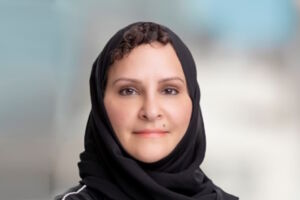
As life expectancy increases, how do we ensure that quality of life does too? That is the conundrum that Saudi Arabia's Hevolution Foundation was set up to help solve. Hevolution invests in extending the healthy human lifespan across the world through research and treatments which target age-related diseases and conditions. HRH Dr Haya Bint Khaled Bin Bandar Al Saud, Hevolution's VP of Research, outlines the Foundation's significant financial commitments to initiatives exploring aging biology and why a multidisciplinary partnership-driven approach that addresses the underlying processes of aging will be crucial to securing medical breakthroughs.
Four years ago, by royal order, Crown Prince Mohammed bin Salman pledged up to a billion dollars a year into research that would extend the healthy human lifespan, which led to the birth of Hevolution Foundation. Why has the Saudi leadership placed such emphasis on healthy aging/healthspan?
While life expectancy has increased, the quality of those added years often falls short. We are living longer, but we are spending more years living with age-related symptoms and diseases, such as cardiovascular disease, cancer, dementia, and frailty. By 2050, the global population over 60 years is set to double to 2 billion.
Saudi Arabia has made remarkable strides in improving average life expectancy, which increased from 46 years in the 1960s to 76 years in 2020. While a longer life expectancy is a positive outcome, it also necessitates addressing health-related issues during the extended lifespan. Saudi Arabia’s current healthy life expectancy (HALE), the average number of years that a person can expect to live in “full health,” is approximately 64 years, reflecting over a decade-long gap between the number of years lived in good health and actual life expectancy. With people expected to live longer than ever before in Saudi Arabia, it is imperative that the country lead the charge in the Gulf to discover how we can be healthy for the longest amount of time.
Also, Saudi Arabia’s population structure is undergoing a transition. While currently favourable—with a large working-age population supporting elders—this balance will not last indefinitely. As the working population ages and retires, and birth rates decline, the ratio of dependents to the working population will increase. Investing in healthy longevity now allows Saudi Arabia to prepare for future demographic challenges.
Saudi Arabia recognises its unique position to lead global and GCC initiatives to catalyse the shift from lifespan to healthspan by incentivising independent research and investing in early-stage biotech companies to bring safe and effective treatments to market, compress the drug development pipeline, and create accessibility for the benefit of all humanity. Addressing the healthspan-lifespan gap at home and then sharing insights globally is crucial for promoting healthier, longer lives for everyone. We believe Saudi Arabia is at a perfect moment in time to outpace future demographic challenges by investing in healthy longevity now.
What tangible impacts do you hope Hevolution’s work will have?
We want to move the needle on extending healthspan. This will not happen overnight, but Hevolution aims to increase the number of safe and effective treatments entering the market targeting the biology of aging, to compress the timeline of drug development for these treatments, and to increase access to therapeutics that extend healthy lifespan. Hevolution was established to convene and catalyse the field by incentivising independent research and entrepreneurship in the emerging field of healthspan science.
Additionally, we want to bring together diverse stakeholders that are or can be active in healthy aging, including governments, non-governmental organisations (NGOs), the scientific community, and the business and investment communities. The Foundation is committed to advancing healthy human lifespan, both globally and regionally. These goals cannot be achieved without cross-industry support and collaboration.
Last year, we hosted the inaugural Global Healthspan Summit (GHS), the largest of its kind worldwide, to bring together the brightest minds in the global longevity space. GHS inspired actionable dialogue and fostered public engagement on healthspan with nearly 120 speakers, 1,500 attendees, and 60+ sessions. The GHS significantly elevated Hevolution’s leadership in healthspan advocacy. At nearly every conference, speaking engagement or meeting since GHS, Hevolution and its Summit are discussed in the spirit of setting the bar of excellence for the healthy longevity field.
Focusing on healthspan/the biology of aging rather than a specific disease implies a broad spectrum of ailments and could lead to some interesting breakthroughs as scientists, investors, regulators, and policymakers from different disciplines come together. What are the benefits of this multidisciplinary approach?
Aging is bigger than any specific disease; it is a universal reality. By not limiting ourselves to any particular disease focus, we are allowing our funding to drive research wherever it is most promising. In a way, a disease focus can be limiting. It is well known that curiosity-led research often breeds breakthroughs in the research community.
We believe that our best chances of reducing the disability that is almost synonymous with aging will come from addressing and preventing the underlying processes that make aging the biggest risk factor for nearly all known diseases. I would not be surprised if focusing on understanding and counteracting the biological aging process could also lead to breakthroughs in treatment for many diseases. But the most effective treatment of all is prevention, and that is the reason Hevolution focuses on the underlying biology of aging.
What kinds of partnerships has the Foundation been able to strike in its three years of existence and how might its partnering strategy evolve in the coming years?
Hevolution looks at partnerships in a few different ways. First, we are creating funding partnerships to build synergies in research and accelerate the science and medicine behind aging, including:
- A USD 2.7 million two-year grant program to create the first cohort of aging researchers in Saudi Arabia, funding 11 grantees from King Faisal Specialist Hospital & Research Center, King Abdullah International Medical Research Center, King Abdullah University of Science and Technology, and other prestigious institutions to explore areas such as the microbiome, aging biomarkers, and senescence.
- USD 8.5 million for a specialised New Investigator Awards program to support early-career researchers through the American Federation for Aging Research (AFAR).
- Over USD 20 million for a program to fund research deemed meritorious by the U.S. National Institute on Aging that failed to secure funds, so far supporting 9 innovative projects in areas such as mitochondrial disfunction, spatial transcriptomics, and epigenetics.
- USD 7 million in matching funds for Impetus Grants, to date supporting 14 innovative academic research projects in healthspan science, from causality of methylation clocks to in-situ genome-scale measurements of aging mechanisms.
- USD 6.75 million for the second cohort of Hevolution and American Federation for Aging Research (AFAR) awards to support research projects in the basic biology of aging or geroscience.
- USD 21 million for a multi-year partnership with The Buck Institute for Research on Aging focused on discovering innovative therapeutic interventions for aging, identifying accurate biomarkers for measuring intervention effectiveness, and understanding environmental and lifestyle influences on healthspan and lifespan, known as the exposome.
- A USD 32.2 million investment with the Albert Einstein College of Medicine to fund efforts in senescence and aging, led by Dr Ana Maria Cuervo of the National Academy of Sciences.
- A USD 20.2 million investment with Northwestern University to support research focused on defining a health proteostatsis and maintaining proteostasis in a robust, resilient state.
- Over USD 5 million over four years into the Hevolution Foundation Postdoctoral Training in Geroscience (HF-PTG) program over four years to identify accomplished PhD and MD/PhD candidates specialising in the biology of aging and/or geroscience.
- USD 25 million to fund projects for the Hevolution Foundation Geroscience Research Opportunities (HF-GRO) in 2024 to fund projects in aging biology or geroscience.
- USD 5 million to fund researchers for the Hevolution Foundation Geroscience in Latin America (HF-GLA), a pilot initiative for projects in Aging Biology or Geroscience with independent investigators conducting biomedical research in Latin America.
We are also working with biotech partners as they work to translate aging research into clinical therapies. Hevolution recently announced an investment of USD 20 million to help Aeovian Pharmaceuticals advance its innovative platform of selective mTORC1 inhibitors which could lead to several promising therapies for disease of aging. Hevolution chose to partner with Aeovian based on the company’s success in drug discovery, its expertise in development, the potential for commercialisation, and its compelling platform for the discovery of selective mTORC1 inhibitors.
We plan for several more biotech partnerships to be announced this year. We see our role as a bridge between basic research and the point where traditional venture capital or large pharmaceutical investors would get involved in shaping a marketable product. We are always looking for those promising early-stage companies that are interesting investments but do not yet have the scale to attract traditional investors. Where we see profits from these investments, we will redirect them back into our foundation to fuel more research and investments.
Finally, and arguably most importantly, we are working with partners to change the face of healthcare globally, as we catalyse a shift from focusing on lifespan to extending healthspan. Hevolution has always made it clear that to achieve our goal of a longer healthspan for everyone, we will need a society-wide approach with contributions from a range of different stakeholders. Many of these partners are within the longevity and health policy communities, individuals and organisations that are joining us in our drive to change the way the world thinks about prevention of aging-related diseases. This transformative movement will require action from governments, the private sector, investors, scientists, and healthcare professionals. We can already see commitments coming from major NGOs and international organisations to large pharmaceutical companies, and we are continuing to pursue partnerships that will further the focus on healthspan.
How important is collaboration with the pharmaceutical industry?
Collaboration with the world’s leading biopharmaceutical innovators is crucial for several reasons. Firstly, sharing scientific knowledge is essential for creating breakthroughs. Pharma companies possess significant strengths in R&D, which are vital for advancing our goals. We believe in leveraging their expertise to drive innovation. Secondly, pharma has the expertise to scale and commercialize with go-to-market capabilities that are – and will continue to be – essential to advancing safe and effective therapeutics and treatments.
Thirdly, collaboration with pharma is not just about formal agreements; it involves knowledge sharing, resource pooling, and joint funding initiatives. By leveraging these areas, we can enhance our capabilities and drive significant advancements in drug development. This multifaceted approach to collaboration ensures that we utilise the strengths of all partners to achieve impactful outcomes.
And can you give some examples of how the Foundation’s grants are helping to move the dial on aging R&D?
Hevolution has invested more than USD 400 million in aging related funding, partnerships and early-stage biotech investments in less than two years. Through our investments in geroscience research labs and establishment of multiple grant programs, many researchers now have the funding to explore the underlying biology and effects of aging. This provides an unprecedented level of energy to the geroscience field, as Hevolution is now the world’s largest philanthropic funder of aging research. In absolute terms, our funding contribution to this field is second only to the U.S. National Institutes of Health.
Funding at this scale has several beneficial effects:
Our funding attracts more researchers to the field. We are encouraging both new and seasoned researchers to focus their attentions on geroscience, which will help to diversify the research being done and increase the rate of progress in understanding aging biology.
Our commitments also draw interest from other funders, since we are undertaking our due diligence and weeding through promising lines of inquiry, making it easier for other funders to spot opportunities to advance the field. We expect our biotech investments in particular to inspire others to invest in healthspan science.
All of that serves the bigger purpose of enabling a broad range of research questions to be explored so we can increase the odds that we’ll see scientific breakthroughs and therapies coming to market. Researchers and entrepreneurs need a consistent and sufficient pool of resources to fuel their research and development, and that is the role we are playing.
Of course, the day-to-day process of R&D is very methodical, and the biggest breakthroughs can often only be recognised years after the fact. With a broad and inclusive strategy for funding R&D, we are backing as many horses as we can so that we have a high chance of spotting a winner (or several). This way, the whole geroscience field can progress more quickly.
The Foundation has already established an international footprint with an operational US hub, what further internationalisation efforts can we expect in the coming years and how do you select focus geographies?
As a global organisation, we are committed to having a worldwide presence, but we approach this expansion strategically. We focus on three key elements when selecting our locations. First, we consider the ecosystem to ensure access to top-notch research opportunities. Second, we look for regions that support strong partnerships, as collaboration is crucial for impactful outcomes. Third, we seek areas with access to talent, which is essential for driving innovation.
Boston was chosen as our first hub because it excels in these areas. Moving forward, we plan to expand into Europe and Asia. We are currently working on establishing these new hubs and hope to announce their locations soon. This strategic approach allows us to maximise our impact and ensure that our efforts in extending healthy lifespans are both local and global.
How intertwined/synergistic are Hevolution’s work and the broader Saudi transformation goals encapsulated in Vision 2030 and the National Biotech Strategy?
The National Biotechnology Strategy aims to position Saudi Arabia as a regional and global biotech hub. Hevolution was created as part of this strategy. Hevolution Foundation was created by a Royal Order with an annual budget of up to USD 1 billion to dedicate to aging-related research, aiming to extend healthspan and improve quality of life.
Hevolution provided vital input to the Kingdom of Saudi Arabia’s recently announced national biotech strategy, and Princess Dr Haya Bint Khaled Bin Bandar Al Saud, Vice President of Research at Hevolution, served as a member of the National Biotech Strategy Advisory Committee at the Strategic Management Office.
Looking forward, Hevolution will continue to play a key role in seeing this strategy through as the world’s largest philanthropic investor in groundbreaking research to advance the science of healthy aging.
Do you have a final message to share?
In closing, Hevolution is committed to advancing efforts to extend healthy lifespans for the benefit of all. Our mission hinges on fostering increased collaboration and building strong partnerships. Tackling this global challenge requires a multidisciplinary approach and the combined efforts of many. I would like to invite all interested stakeholders to attend our GHS 2025 event on February 4-5. We believe that through the power of collaboration, networking, and convening, we can collectively address the challenges of healthy aging and push the field forward. Your participation and contributions are crucial in this journey toward a healthier future.