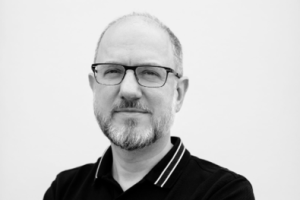
Hanns-Christian Mahler, founder and CEO of Swiss-based CDMO ten23 health, outlines his vision for a next-generation contract development and manufacturing organisation. With a career spanning Merck, Roche, and Lonza, he emphasises expertise-driven partnerships, agile decision-making, and sustainability as core differentiators. Since its 2021 launch, ten23 health has rapidly scaled its sterile injectable capabilities, leveraging private equity backing and a non-hierarchical organisational model to challenge industry conventions.
To begin, could you share what led you to establish ten23 health after your distinguished career at Merck, Roche, and Lonza?
After obtaining my pharmacy degree and PhD in Germany, I joined Merck, where I had the opportunity to support the commercialisation of their first biotech R&D programme and oversee the construction of a new sterile manufacturing facility. This pattern continued at Roche in Switzerland, where I was tasked with building their European biotech capabilities for sterile drug product, at a time when they were still focusing on small-molecule R&D. Later at Lonza, I established their drug product business unit while also being tasked to help shape a new corporate culture.
When I left Lonza in early 2021, I dedicated time to studying organisational development and completing a sustainability programme at Cambridge University. It was during this period that private equity investors approached me with the proposition of founding a new company, which ultimately became ten23 health. Interestingly, this reversed the traditional start-up dynamic where founders typically seek out investors rather than being approached by them.
What specific gaps in the contract development and manufacturing sector were you aiming to address with ten23 health?
Having spent two decades working on both sides of the sponsor-CMO relationship, I identified several critical shortcomings in the traditional model. Most contract manufacturers operated purely as executional partners – clients would provide specifications, the CMO would execute the work, submit invoices, and report problems, but rarely offer strategic solutions or scientific insight. This paradoxically required pharmaceutical companies to maintain substantial in-house expertise simply to manage their external partners, undermining many of the potential benefits of outsourcing.
Additionally, I observed how decision-making paralysis in large organisations may frequently delay critical projects. Excessive governance layers meant decisions were either deferred indefinitely or made by individuals without adequate overall technical context. There was also a noticeable lack of psychological safety – team members were often reluctant to make decisions for fear of reprisal if outcomes weren’t perfect.
With ten23 health, I set out to create a different kind of partner – one that combined deep technical expertise with agile decision-making and a culture that genuinely empowered employees at all levels.
How would you describe your company’s positioning and core focus to an international audience, and why did you choose to specialise in the complex field of injectables?
ten23health is a contract development and manufacturing organisation – a CDMO – operating as a B2B service provider to both pharmaceutical and biotech clients, ranging from small start-ups to large multinational companies.
Our core focus is on parenteral dosage forms – that is, sterile products intended for injection or infusion. We offer an integrated service platform covering development, manufacturing, and testing (including quality control) for these products. What differentiates us is, first, the deep expertise we bring to the table, enabling us to seamlessly combine development and manufacturing activities.
Second, we specialise in areas that are technically challenging and often beyond the capabilities of more traditional CDMOs. For instance, we work extensively on subcutaneous delivery systems, which we see as the future of injectable therapies. These allow patients to self-administer treatments, including complex biologics such as oncology drugs, outside of a hospital setting. This requires highly concentrated, often viscous formulations to be delivered via pre-filled syringes or cartridges, integrated into drug-device combination products such as auto injectors or pens or on-body injectors (OBIs). Our advanced capabilities enable us to support clients from development through to manufacturing of such systems, always with the end-user in mind.
Another area of expertise is intravitreal injections – products administered into the back of the eye. These require extremely small-volume, highly concentrated, and often viscous formulations. Here, precision is critical – for example, filling syringes without any headspace or air bubbles, which requires highly specialised handling. This is an area where we excel.
We deliberately chose to specialise in injectables because we saw an opportunity to bring real differentiation in a space that demands both technical precision and innovation. While many CDMOs focus on oral solid dosage forms, where the market is crowded and competition tends to revolve around price or geographic proximity, we believed our strengths and ambitions aligned better with a more specialised, high-value offering.
Being based in Switzerland has also been a strategic advantage. Despite the location, many of our clients are global – including from the US – and seek us out specifically for our capabilities, not just convenience. That level of trust and reach speaks to the quality and uniqueness of the services we provide.
The company’s growth since its 2021 founding has been remarkable. Could you describe that expansion trajectory?
Our growth has certainly been rapid, though always according to a deliberate strategic plan. Just one month after our official launch in September 2021, we completed our first acquisition – a sterile filling operation that formed the foundation of our manufacturing capabilities.
Since that initial acquisition, we have systematically expanded our operations and services. This has included significant enhancements to our GMP manufacturing infrastructure in Visp, increasing throughput capacity on our initial filling line (VIVA1), and constructing an entirely new facility we called VIVA2, that will house two additional state-of-the-art sterile filling lines. We have also established and licensed quality control laboratories in both Basel and Visp to support our growing operations. Today, we employ more than 240 professionals across our two Swiss locations.
What is particularly noteworthy is that we committed to major infrastructure investments – including ordering specialised filling machines and building the VIVA2 building – before generating any revenue. This ambitious approach was only possible because of our investors’ shared long-term vision and their willingness to support this build-out strategy.
Speaking of investors, how would you characterise your relationship with 3i and your overall approach to financing?
Our partnership with 3i has been fundamental to our growth strategy. Their long-term investment horizon allowed us to make those early infrastructure commitments that most start-ups couldn’t contemplate. In many companies, investor relations consumes substantial management time, either through constant fundraising efforts or managing competing priorities among different investor groups. We have been fortunate to work with a single, aligned investor that functions more as a strategic partner than simply a source of capital.
We operate with clearly defined key performance indicators across both financial and operational dimensions that we monitor rigorously. This disciplined approach helps ensure we remain focused on creating sustainable value for all stakeholders.
Building credibility with clients, particularly large pharmaceutical companies, must have presented challenges as a new market entrant. How did you approach this?
Establishing trust did indeed require time and consistent execution, though we benefited from certain advantages. For biotechnology clients, many were already familiar with my work from other contexts, and we actually signed our first client just two weeks after launching. These early adopters demonstrated remarkable confidence in entrusting us with their most important development programmes.
With large pharmaceutical companies, the process was necessarily more gradual. Even when their technical teams recognised our capabilities, their procurement processes and governance requirements demanded evidence of operational stability and long-term viability. After four years of consistent execution, we are now proud to count multiple top-20 pharmaceutical companies among our clients, but this required patiently demonstrating our ability to deliver on increasingly complex projects.
You work with both large pharmaceutical companies and smaller biotech firms. How do you manage the differing needs between the two?
The needs and expectations vary significantly. Large pharmaceutical companies typically come with clear specifications, defined processes, and detailed requirements. Their engagement is usually very structured and formalised.
In contrast, smaller biotech companies often seek broader support. They may still be shaping their product profile and require guidance on formulation, delivery formats, and manufacturing options. We work closely with them to develop flexible solutions aligned with their evolving science and clinical strategy.
Some clients engage us from start to finish – from development and testing to manufacturing. Others come to us with specific technical challenges or for troubleshooting. Our model is built to accommodate both.
We also prioritise speed and agility. Our team is structured to respond quickly, initiate collaboration efficiently, and provide timely support, even on short notice.
While we operate with a full production schedule, we aim to maintain flexibility to onboard new projects where expert input is urgently needed. Regardless of company size, our focus remains on being a responsive, reliable partner.
Where do you see the main areas of growth and future investment for the company?
Having recently completed several key investments, including in quality control and with our “Line 0” filling line, the immediate priority is to consolidate and scale the capabilities we have already established. As a relatively young company, it is also important to mature existing operations before expanding further too quickly.
That said, we are actively evaluating adjacent opportunities that build on our core in sterile injectables. One such area is device assembly, which complements our filling capabilities. For example, we are in the process of setting up operations to assemble drug-device combination products — taking filled cartridges or syringes, and integrating them into delivery systems such as autoinjectors.
This approach reflects a strategic shift from simply filling to supporting more integrated, ready-to-use formats. While we don’t currently handle secondary packaging or labelling, our goal is to expand thoughtfully, focusing on areas that add value and align closely with client needs.
Collaborative partnerships play a role here as well. For instance, we have teamed up very closely with device and primary packaging manufacturers and disposable suppliers to jointly deliver better, more integrated solutions. These alliances enable us to offer clients a more streamlined path from development through to assembly, without overstretching our core focus.
Sustainability appears central to ten23 health’s philosophy. Could you elaborate on how this commitment manifests in your operations?
Sustainability has been integral to ten23 health since the very beginning. It was one of the core motivations for establishing the company, based on the belief that the pharmaceutical sector has historically been behind the curve in this area. The industry tends to be cautious and risk-averse, often relying on the argument that change is difficult due to regulatory complexity. But we believe there is a different way forward.
We embedded sustainability into our business model from day one — our second hire was a Head of Sustainability. In 2024, we became a certified B Corporation, and we have since achieved further recognition through EcoVadis ratings and Science-Based Targets initiative (SBTi) validation. From an operational perspective, we are ‘carbon-neutral’ (even slightly carbon-positive). Since inception, we use 100% renewable electricity and have placed a focus on absolute energy reduction through actions such as optimising HVAC systems, automation & heating shut-downs over holiday periods. In addition, we offset our unavoidable operational GHG emissions (Scope 1, Scope 2, and Scope 3 from fuel and energy-related activities, waste generated in operations, business travel, and employee commuting) through offset programmes such as afforestation, marshland restoration, mangrove projects, and partnerships with innovators like the B Corp and Furthr. These actions allowed us to reduce our Scope 1 and 2 GHG emissions by revenue compared to our 2021 baseline by 57%- exceeding our 2025 goal 1 year in advance.
But sustainability for us is more than just carbon. We are also tackling materials use, supply chain impact and product design. For instance, we are working with a start-up called Elio to co-develop an AI-powered platform that helps us choose lab and process materials based not only on performance or price, but also on environmental impact. We are also exploring recycling solutions for bioprocess materials — a topic most pharma companies avoid due to perceived regulatory risk. But someone has to lead that conversation, and we are willing to do so.
In terms of industry response, it is mixed. Internally, our team is motivated and proud to work for an organisation making a tangible impact. Many of our employees actively value the fact that we are part of a solution. On the customer side, engagement varies. Smaller biotechs are understandably more focused on product development than ESG compliance, and large corporates often express interest — particularly at the C-suite or ESG leadership level — but some operational functions like procurement may not yet be fully aligned.
That said, we believe sustainability should not be viewed as a cost, but as a smart, long-term investment, just like quality. If built in from the start, it doesn’t need to be expensive or burdensome. It becomes part of the business DNA. Ultimately, we see it as a right to operate, and one that will only become more important with time.
Your organisational structure represents a radical departure from traditional pharmaceutical industry norms. Could you explain the thinking behind your “loop” model?
Traditional corporate hierarchies, with their rigid reporting structures and annual reorganisation cycles, tend to generate inefficiencies while stifling innovation and rapid decision-making. Our model synthesises elements of holacracy, nonviolent communication techniques, and strength-based role assignment to create a more dynamic and responsive organisation.
The “loop” approach rests on several key principles. Rather than fixed job titles, team members take on roles that align with their specific strengths and expertise. Governance changes can be implemented in weeks rather than months through our iterative processes. Perhaps most importantly, we are working deliberately to create an environment of psychological safety where employees feel genuinely empowered to make decisions without fear of undue criticism for imperfect outcomes.
Implementing this model requires significant cultural adaptation, particularly for professionals joining us from more traditional pharmaceutical backgrounds. We invest substantially in onboarding and continuous training to help all team members thrive within this innovative structure.
Our hiring process is rigorous in conveying our values and organisational model so candidates can assess cultural fit from the start. We offer comprehensive onboarding, which helps build alignment and supports people in thriving within our model.
Looking to the future, what is your vision for ten23 health over the coming years?
The pharma and CDMO markets have been full of surprises recently—COVID, regulatory changes, acquisitions, tariffs—all shifting the landscape. For ten23, our focus is on operationalising and scaling our new offerings and new fill and finish lines, growing our quality control services, and expanding assembly operations.
We’ll continue to explore strategic and opportunistic growth opportunities. In three years, I hope to look back with pride at how the team has advanced our mission and contributed to shaping the CDMO and pharma sectors and has made a significant impact for our Customers’ Patients. That sense of accomplishment and impact will be the real measure of success.