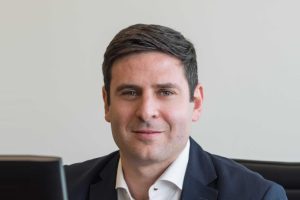
Giuseppe Grossi, General Manager of Daiichi Sankyo Switzerland, delves into the company’s strategic growth in cardiovascular and oncology, its commitment to innovation, and its dedication to making a meaningful impact in the Swiss healthcare landscape. Grossi highlights the importance of talent development, adaptability, and a focus on both local and global collaboration as drivers of success.
Could you briefly share your background and career path in the pharmaceutical industry?
My name is Giuseppe Grossi, originally from Italy, where I studied industrial engineering. My entry into the pharmaceutical industry was somewhat unexpected; initially, I aimed for a career in investment banking, but the pharmaceutical sector presented an opportunity, and I embarked on a path with Roche in Italy. I progressed through roles in sales analytics, market research, and marketing, primarily focusing on oncology, with some experience in immunology.
I was later selected for an international leadership acceleration program that emphasized developing expertise in emerging markets. This program gathered ten participants—five from mature markets and five from emerging markets—enabling a valuable exchange of perspectives. Through this, I assumed the role of access manager for oncology in Mexico, which gave me direct exposure to the Latin American healthcare environment.
After my experience in Latin America, I returned to Roche’s headquarters in Basel, Switzerland, as the regional launch lead for a breast cancer product, overseeing markets across the Middle East, Africa, Turkey, Russia, and parts of Eastern Europe. I briefly returned to Italy to head Roche’s breast cancer franchise before deciding to explore opportunities outside the company. This led me to Daiichi Sankyo, where my first discussions with the company took place during a major congress in the U.S., following the presentation of DS late-stage oncology data—a pivotal moment for me. I joined Daiichi Sankyo as Head of the Breast Cancer Franchise for Europe, based in Munich, and since October 2022, I have served as General Manager for Switzerland.
How does Daiichi Sankyo’s global vision of becoming a sustainable leader in pharmaceutical innovation translate to its operations in Switzerland?
Daiichi Sankyo’s strategy centers on two key pillars: a commitment to innovation and a global approach, both of which are integral to our operations in Switzerland. With over 120 years of history grounded in innovation, we dedicated nearly a quarter of our revenue to research and development in fiscal year 2023, positioning ourselves among the industry leaders. Initially focused on cardiovascular care, our portfolio has since expanded to oncology, which is a major area of growth. In Switzerland, this dual focus is fully reflected, and our operations encompass both cardiovascular and oncology treatments, with further advancements anticipated.
Our global strategy also tailors its approach based on divisional needs. In cardiovascular, we traditionally operate independently, drawing on a network of external partners to distribute our products in regions where we have no direct presence. In oncology, however, speed and scale are critical, which led us to form strategic alliances. We are currently partnered with AstraZeneca for our first two oncology products and more recently with MSD for three other oncology assets. This structure is mirrored in Switzerland, where we work autonomously in cardiovascular while collaborating in alliance for oncology.
Switzerland is important for Daiichi Sankyo in Europe, where we’ve maintained a presence since 1998. Its importance is amplified by its role as a hub for prominent scientific institutions and organizations. Switzerland’s status as an early-launch market for oncology is particularly valuable, enabling us to provide rapid patient access while gathering insights to inform our global strategy. This strategic relevance is further strengthened by Switzerland’s alignment with our strong regional base in Germany and the cultural affinity within the region, ensuring that Switzerland remains highly visible and central to our European operations.
As a non-Swiss executive, what are your observations of the Swiss market?
Switzerland offers a distinctive business environment with several unique cultural and operational characteristics. From my experience, while the country is generally welcoming to pharmaceutical investment, accessing customers and engaging with the healthcare system can be more challenging as direct interaction with HCPs is comparatively limited than in other neighbouring countries. Therefore, a very strong emphasis must be placed on relationship- and trust-building. These connections may prove essential for creating a robust professional network, generating partnerships and eventually, being successful in business.
The Swiss healthcare system is also notably fragmented, which presents both opportunities and complexities. This fragmentation opens doors for innovative public-private partnerships but requires careful coordination among diverse stakeholders. Building a collaborative environment where all parties work toward shared goals—despite the plurality of interests—can lead to a more integrated healthcare landscape. In such a context, our focus on establishing trusted relationships and aligning stakeholders toward common objectives has been crucial to navigating this multifaceted market effectively.
What impact is Daiichi Sankyo making in the field of oncology, and how has your experience been in bringing these innovations to Switzerland?
Daiichi Sankyo’s journey in oncology exemplifies resilience and dedication. Although our initial attempts to enter the oncology field over a decade ago were challenging, the Japanese concept of “Ikigai”—resilience with a sense of purpose—has guided us. This persistence led to the development of our innovative ADC (antibody-drug conjugate) technology.
In Switzerland, our oncology operations began in 2018, initially with one employee. Since then, we’ve grown steadily, and in 2022, we launched our first oncology product in collaboration with AstraZeneca. This partnership with AstraZeneca, a well-established player in Swiss oncology, allowed us to expand swiftly in other indications such as gastric cancer and to accelerate our impact. To date, we’re proud to have made a difference in the lives of over 1,500 Swiss patients, underscoring our commitment to making a meaningful difference.
The access framework in Switzerland has been supportive. Many of our products have received Breakthrough Therapy Designations from the U.S. FDA, supported by extensive data, which has facilitated robust access pathways. Additionally, we have benefited from accelerated regulatory processes for specific indications in Switzerland. While future revisions to Swiss healthcare legislation, such as the KVG revision and changes to Article 71 KVV, may alter the landscape, our experience so far has been highly positive, enabling patients to obtain rapid access to vital therapies. The actual implementation at the ordinance level will be decisive for patient care with innovative therapies, which is why we will be keeping a close eye on this revision.
What strategy did Daiichi Sankyo use to educate healthcare professionals in Switzerland about its technology, and how was it received?
Switzerland’s strong foundation in medical education was advantageous as we introduced our ADC (antibody-drug conjugate) technology. After launch, we partnered with a variety of medical education providers to offer wide-reaching outreach, delivering essential information to a broader network of healthcare professionals who could access it as needed. National platforms like the Swiss Oncology and Hematology Congress (SOHC) were instrumental, offering valuable opportunities to share insights and engage directly with key stakeholders in oncology.
Our approach to education was often personalized, working with institutions on an account-by-account basis to meet their specific needs. Additionally, we received many clinical enquiries and requests for medical information and education, which we provided as and when requested. All in all, the response from healthcare professionals has been highly positive, highlighting Switzerland’s openness to advanced oncology solutions that demonstrate clear patient benefit.
What does Daiichi Sankyo’s vision of “Healthcare as a Service” represent, especially within the Swiss market, and how is it being implemented?
Daiichi Sankyo’s “Healthcare as a Service” vision aligns with our 2030 goal to evolve into a global healthcare company that contributes meaningfully to society’s sustainable development. This approach goes beyond traditional pharmaceutical offerings, focusing on complementing our portfolio to meet specific patient needs in oncology and cardiovascular care.
In Switzerland, one notable example is a collaboration of Daiichi Sankyo, AstraZeneca and the Berlin-based HealthTech startup Mika to improve breast cancer treatment. Since April 2024, the UNITE pilot project (UNlocking digital therapeutics for Improved ThErapy outcomes in breast cancer) has been running in Switzerland, demonstrating how digital solutions and pharmaceutical developments can work together to improve patients’ lives. The Mika app supports patients through daily symptom monitoring, psychologically oriented coaching courses, and AI-driven personalized recommendations, helping those affected to actively participate in their treatment and regain a better quality of life.
Beyond Switzerland, Daiichi Sankyo is investing in advanced analytics and generative AI (GenAI) to enhance how we support healthcare professionals (HCPs). As HCPs face increasing patient loads and limited time, our goal is to make our communications more precise and relevant, helping them access vital insights efficiently. Currently, these initiatives are in pilot stages across Europe, but they hold the potential to bring data-driven, patient-centred solutions that could transform healthcare delivery.
Our affiliate’s strategy emphasizes partnering with experienced organizations to enhance our services, rather than developing tools independently in areas outside our expertise. This collaborative approach enables us to remain focused on providing impactful support to patients and HCPs alike, whether through digital therapeutics like Mika Health or by leveraging analytics and AI in partnership with established healthcare leaders.
Daiichi Sankyo has demonstrated impressive growth, particularly in oncology. How is this momentum reflected in Switzerland, and what key initiatives are driving it?
Our growth in Switzerland has been extraordinary, closely reflecting Daiichi Sankyo’s global expansion. Over the past three years, we’ve tripled our business size, establishing ourselves as one of the fastest-growing pharmaceutical companies in the country. In 2018, we began with just one employee in oncology. Today, we’ve expanded our Swiss workforce by nearly 50%, prompting the need for larger office spaces to support our growing team. Initially, we focused on strengthening our commercial and medical functions, but we’ve since broadened our investment to reinforce essential areas such as access and regulatory affairs. By internalizing regulatory and quality management functions, which were previously outsourced, we’re well-prepared for the increasingly complex product launches ahead.
Moreover, we have bolstered foundational departments like HR and finance to support sustainable growth. All of these roles are based in Switzerland, contributing not only to our company’s success but also to the local economy. Looking forward, we remain dedicated to continuing this momentum, further strengthening our impact on Switzerland’s healthcare landscape and creating more employment opportunities within the country.
With innovation being central to Daiichi Sankyo and Switzerland recognized as a hub for cutting-edge research, how is Daiichi Sankyo contributing to the Swiss research landscape, particularly in clinical trials?
Innovation is indeed at the heart of Daiichi Sankyo, and Switzerland’s strong reputation for high-quality research makes it an invaluable partner in our work. We have several phase III clinical trials underway in Switzerland, and we have established collaboration with the country’s leading cancer research organizations. Our partnerships here also extend to independent research initiatives, allowing us to remain agile and responsive to new research opportunities.
Switzerland’s healthcare system, along with the expertise of its medical professionals, brings significant value to our global research efforts. Although global competition in clinical trials is intense, often driven by cost considerations, we believe that quality must remain the priority. Switzerland offers a depth of research expertise that is essential for advancing high standards in clinical innovation, and we are committed to bringing this to the global stage. The support from Swiss regulatory bodies and institutions further strengthens Switzerland’s position as a competitive and highly attractive environment for clinical research, enabling us to push the boundaries of innovation effectively.
In a highly competitive talent market like Switzerland, how does Daiichi Sankyo attract and retain top talent?
At Daiichi Sankyo, we aim to be an employer where people feel proud to work and inspired to make a meaningful impact. To achieve this, we combine a competitive offering with a strong cultural identity, which we believe sets us apart in the market. Our strategy is grounded in our company’s core behaviours: “Develop and Grow,” “Collaborate and Trust,” and “Be inclusive and embrace diversity,” each of which informs our approach to talent management.
As part of “develop and grow,” we prioritize opportunities for career progression. We carefully evaluate internal talent for open roles, enabling us to promote from within and offer employees clear pathways for advancement. We also provide comprehensive development programs tailored to different career stages—from mentorship for younger employees to leadership training for executives—nurturing a culture of continuous learning.
In terms of “collaborate and trust,” we support flexibility and work-life balance through a range of initiatives. Our remote work policies allow employees to manage both personal and professional commitments effectively. For global or regional positions, we provide flexibility for employees to stay based in Switzerland, allowing them to contribute to our wider organization without the need to relocate.
We are also deeply committed to well-being and sustainability. We offer training in stress management and actively promote mental health awareness. Our sustainability initiatives include incentives for train travel, the transition to an electric vehicle fleet, and support for gender equality initiatives through free memberships in relevant associations. Additionally, we participate in environmental and community efforts, such as tree planting and cleanup events, demonstrating our commitment to social responsibility.
Finally, Daiichi Sankyo fosters an entrepreneurial spirit within a flat hierarchy and open-door policy. We encourage employees to share ideas, take initiative, and have a direct impact on the company’s direction. This supportive environment makes Daiichi Sankyo a place where individuals can grow, innovate, and contribute meaningfully, backed by a culture that values their well-being and professional development.
What are your key priorities for Daiichi Sankyo in Switzerland moving forward?
One of our primary goals is to further strengthen and expand our footprint in cardiovascular care, an area deeply rooted in our identity and representing a significant part of our workforce. With new research and upcoming opportunities, we’re committed to building on this legacy and advancing our impact. At the same time, oncology is expected to remain the main driver of our growth as we work to establish a solid, lasting presence for Daiichi Sankyo in this critical area.
Beyond growth, a key priority is to deepen our standing within the Swiss market. Currently, we are among the top 30 pharmaceutical companies here, and moving up is not simply a marker of business success—it’s a testament to the collective dedication and achievements of our team. This shared purpose and sense of belonging are fundamental to our vision, and I’m focused on nurturing this strong identity within our organization. Ultimately, I hope to leave a legacy of growth, unity and shared success that enables Daiichi Sankyo to continue thriving well into the future.