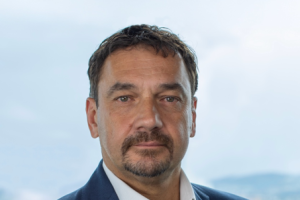
Giancarlo Benelli, SVP, Head of Europe at BeOne Medicines (BeOne), draws on nearly three decades of pharmaceutical leadership to drive the company’s rapid growth in oncology and haematology in Europe, with flagship assets like zanubrutinib and tislelizumab. Over the last few years, BeOne has greatly expanded its clinical trials in Europe, strengthened its Basel hub, and achieved strong levels of market access across 25 EU countries. Under Giancarlo’s leadership, priorities centre on leading the European organisation, being laser-focused on patient access, and contributing to building BeOne into a global leader by leading the way in innovation and collaboration.
Before we explore the company’s trajectory, could you share your professional background and what led you to BeOne?
My pharmaceutical journey spans more than 28 years, beginning with a deeply personal motivation rooted in patient care. At age five, my mother, who suffered from diabetes mellitus, taught me to administer insulin injections, explaining that I might need to save her life during a crisis. This formative experience instilled in me an unwavering sense of purpose centred on patients—an ambition to contribute meaningfully to healthcare solutions that extend beyond individual circumstances to benefit all patients facing disease.
My career progression has been deliberately designed to expand my breadth of experience across diverse pharmaceutical functions. I began in technical roles encompassing regulatory affairs, health economics, and pricing strategies, subsequently advancing through various companies, including Menarini, Schering-Plough, and Novartis. Since 2014, I have held general management positions across different geographies and cultures, each providing valuable insights into market dynamics and operational excellence.
Joining BeOne officially on January 1st this year represents what I consider a natural evolutionary step—each career transition appeared logical in its moment, yet collectively they constitute a significant transformation. The decision was driven by two primary factors: my enduring passion for patient care and the opportunity to serve the maximum number of patients possible. Oncology remains one of medicine’s most critical focus areas, as cancer continues to be a leading cause of death with substantial unmet medical needs affecting countless patients daily. Unfortunately, each of us has been touched by cancer through personal experience.
BeOne’s strategic focus aligns perfectly with these priorities, concentrating on oncology and haematology where the greatest medical unmet needs exist, while striving to deliver innovation faster and to patients who need it. Leading the European organisation, which now encompasses nearly 1,000 personnel, provides me with the opportunity to influence meaningfully how the company evolves within these critical therapeutic segments.
Your ascension to the top 50 pharmaceutical executive rankings is indeed impressive for a company of BeOne’s age. What factors contributed to this remarkable trajectory?
Our foundation rests upon genuine medical need identification and focused execution. Our backbone therapy in haematology—zanubrutinib, a best-in-class BTK inhibitor—which has demonstrated rapid patient adoption across virtually all European markets following rapid 5 European regulatory approvals in multiple indications. This success stems from our ability to offer patients appropriate treatment options as fast as possible.
The results speak to our execution capabilities: in Q2 2025, we announced 87% year-over-year revenue growth in Europe. Such achievements require seamless cross-functional collaboration spanning clinical operations through commercial operations and all supporting functions.
Additionally, we are launching a major asset in solid tumour oncology—tislelizumab, a PD-1 checkpoint inhibitor. We have successfully launched in eight markets with continued market expansion planned. While we are launching in highly competitive therapeutic areas, we maintain confidence in our product’s clinical differentiation across a range of tumour types.
Both tislelizumab and zanubrutinib operate in crowded therapeutic markets. What constitutes your true value proposition relative to existing treatment options?
In oncology and haematology, physicians require multiple therapeutic options to achieve increasingly personalised medicine approaches. Additional treatment alternatives represent opportunities rather than constraints, enabling physicians to select optimal therapies for specific patient profiles.
Unfortunately, we have not yet achieved cures for diseases such as lung cancer or gastric cancer, meaning patients inevitably experience disease progression. Having additional therapeutic options helps combat treatment resistance while providing patients with extended survival opportunities. Our anti-PD-1consistently demonstrated its ability to deliver clinically meaningful improvements in survival and quality of life with a positive benefit-risk balance.
Furthermore, oncology increasingly emphasises combination therapies, where checkpoint inhibitors serve as backbones for current immuno-oncology approaches. This creates opportunities not only for current market patients but also within our development programmes, where we can combine our compounds with other pipeline assets to offer enhanced treatment possibilities.
From your European headquarters, what does this region represent for BeOne strategically? Why has the company chosen to invest significantly in Europe?
In 2018, three colleagues in Basel, Switzerland, laid the first stone of what is today our European headquarters. Earlier this year, we made a strategic decision to redomicile the parent company (in Basel) to establish ourselves as a truly global company. Basel represents an impressive biotechnology hub with more than 32,000 life-science professionals within the canton. This positioning provides access to exceptional talents, infrastructure, networks, and partnership opportunities essential for business and pipeline development.
Clinical operations represent our second strategic European priority. We have strategically internalised the vast majority of clinical operations activities from Phase I through Phase IIIb development. This decision delivers dual advantages: we operate approximately 30% faster than industry norms with significant cost advantages. This approach enables speed and cost optimisation while retaining critical know-how internally. It also allows us to move more quickly and get submissions in sooner — which is an advantage in Europe, where payers value strong evidence and patients are in urgent need of faster access to innovation.
Consequently, we have increased our clinical trial footprint in Europe by almost 50% in the past 4 years, while industry averages show a decline over the years.
This commitment reflects our conviction that Europe possesses the necessary expertise, with healthcare professionals representing global research leadership and trend-setting capabilities across diverse technologies.
What conditions would enhance Europe’s attractiveness for research and development investments?
Europe requires two fundamental elements: legislative stability providing clear, consistent rules for multi-year planning periods, as frequent regulatory changes prevent proper activity planning; and comprehensive research and development incentivisation covering clinical operations and all related activities.
Maintaining European competitiveness requires attention to cost factors beyond salary considerations, particularly approval speed metrics. When protocol approvals require months rather than weeks—as achieved in other regions—time represents direct cost expenditure. Recent commitments, such as the UK government’s initiative to expedite protocol approvals to weeks rather than months, represent critical developments that must achieve execution excellence.
These initiatives maintain quality standards while enhancing speed and centre engagement capabilities without compromising assessment integrity.
How do you respond to the perception that focusing on the US might be simpler than navigating Europe’s 27 member states?
Throughout my 28-year career, I have witnessed significant European regulatory evolution. Initially, we operated under decentralised registration procedures across 15 member states, attempting to negotiate unified drug approval standards. Today, we operate under fully centralised European Medicines Agency approval processes.
This year marks the beginning of Joint Clinical Assessment implementation, representing another centralisation step for new drug and evidence evaluation. I encourage accelerating this harmonisation process while ensuring these evolutionary steps do not create additional patient access barriers to new medicines.
Europe continues learning collaborative approaches, creating substantial opportunities. We have increased our European trial portfolio by 50% in the past years, enrolling nearly 5,000 patients across more than 50 oncology trials—impressive metrics for a company of our scale.
What matters most is running broad, fast late-stage trials so doctors gain early experience with new medicines, while regulators streamline approvals to keep Europe competitive globally.
Your company motto states “Cancer has no borders,” yet Europe maintains distinct systems, infrastructures, and access timelines. How do you navigate these complexities while balancing zanubrutinib expansion with new product launches?
We have achieved considerable success in securing access for our BTKi zanubrutinib, launching faster than industry averages across European markets. We successfully launched in 25 European Union countries ahead of typical timelines across most markets.
This success stems from establishing health economics dominance through superior efficacy and equal or superior value propositions—positions that facilitate clear regulatory decision pathways and expedite authority processes despite inter-country variations. We understand disparities across European countries and are open to finding solutions for patients to have fast and broad access to innovative medicines.
Our motto reflects our commitment to sustainability—for patients, authorities, and our organisation. Without sustainable approaches, we cannot continue research and development investments.
Our commitment to innovation is demonstrated through our workforce composition: of our more than 11,000 global employees, more than 3,700 work in research and development and medical affairs —a ratio significantly exceeding most multinational companies. This investment sustains our development capabilities, producing a pipeline recognised as among the industry’s finest.
Could you elaborate on the challenges of evidence assessment variability?
Unfortunately, clinical evidence assessment and clinical data utilisation often lack consistency across regulatory and HTA (Health Technology Assessment) processes.
For example, regulatory authorities and some HTA bodies may grant approval based on open-label single-arm trials, especially in areas with high unmet medical need, whilst other HTA bodies require randomised, double-blind superiority trials to provide a positive reimbursement decision. To enable a fair and timely evaluation of the clinical data package, there is a need for clearer guidance at the EU level on the evidence required.
Drug development requires more than 10 years and billions of dollars in investments and decisions made at risk, years before knowing whether compounds will succeed. When evaluation rules change multiple times during development periods, whether for regulatory approval or HTA purposes, adaptation becomes impossible, creating unsustainable industry risks. An early, open partnership across Health Technology Developers, Regulatory and HTA bodies and reimbursement authorities would lead to a clearer and more efficient evaluation of medicines and would improve their availability to European patients.
Consider this technical example: in oncology, OS (overall survival) represents the ultimate endpoint, yet surrogate endpoints like PFS (progression-free survival) or patient-relevant endpoints like QoL (quality of life) enjoy broad key opinion leaders’ recognition globally and are considered relevant by some HTA bodies, but not by others. Why do we see these disparities? OS data often requires years of follow-up or very large sample sizes, which is particularly challenging for less commonly diagnosed oncological diseases. Not recognising endpoints such as PFS or QoL as sufficiently relevant endpoints when OS data are still immature, the assessment may underestimate the true efficacy of a drug and its benefit for patients.
Ethical considerations further complicate this dynamic. When comparing two drugs, clinical trial protocols typically permit crossover from the experimental treatment to the control arm after progression when the difference in efficacy becomes evident, thus significantly reducing the power to detect OS statistical differences between the two treatment arms. This issue often leads to inaccurate conclusions about a drug’s benefit and hinders the ability to provide solid OS data needed for regulatory approvals and HTAs.
Trials where cross-over is allowed should be considered positively from my perspective because they reflect physicians’ confidence in investigational arms, suggesting better drug performance and ethical treatment obligations. However, the formal evaluation of clinical trials with crossover requires a collaborative dialogue between Health Technology Developers, Regulatory agencies and HTA bodies and need to be embedded in the development of optimal drug assessment methods, in a context of incremental, but constant innovation brought into the markets.
True breakthrough innovations remain rare; typically, we achieve incremental innovation steps that collectively produce remarkable results. Diseases once fatal, such as chronic lymphocytic leukaemia, where we operate with zanubrutinib, now enable patients to remain on treatment for years without side effects or progression—achieved through accumulated incremental innovations rather than overnight miracles.
How do you prepare your teams internally for upcoming launches and ensure proper strategic implementation?
Teamwork represents our fundamental principle—no achievement occurs through individual or single-group efforts. We foster comprehensive cross-functional collaboration encompassing not only traditional medical and commercial functions but also legal, compliance, and human resources teams, among others.
Building teams with curiosity for experimentation, courage for calculated risk-taking, and confidence for innovative thinking requires collaborative engagement across all functions. We maintain our nearly 1,000-person European organisation while preserving our founding biotechnology spirit, where every individual contributes actively.
The challenge lies in maintaining this entrepreneurial spirit as we scale, ensuring our teams retain their common passion for optimal patient service. Shared purpose enables proper organisational direction and sustainable growth.
How do you balance the intense work culture often associated with Chinese and American business practices with European work-life balance expectations?
The critical element is accountability. We maintain a high regard for work-life balance and strive to create exceptional workplace environments with comprehensive employee consideration. However, we emphasise personal accountability as a counterbalance to matrix complexity risks common in large multinational organisations.
In complex matrix structures, decision-making often requires extensive consensus-building through multiple conversations and meetings before action. While consensus-building has value, personal accountability remains essential—the responsibility to evaluate relevant elements, consult appropriate stakeholders, and then take ownership of forward progress.
Maintaining accountability prevents bureaucratic drift and complexity increases that occur when full consensus becomes a prerequisite for action. Sometimes, courage to accept potential mistakes is necessary—not reckless errors, but calculated risks that enable learning and maintain accountability while driving simplicity and effectiveness.
Nine months into your European leadership role, what are your non-negotiable strategic priorities for BeOne in Europe over the next three years?
My primary objective is to establish recognition as a global oncology leader, with universal acknowledgement of BeOne’s efforts in providing innovative medicines and hope to patients around the world.
Achieving this requires continued effectiveness improvements through enhanced cross-functional collaboration and strengthened accountability culture, while successfully launching new pipeline assets. We have two critical haematology assets advancing rapidly: a BCL-2 inhibitor to be first launched for mantle cell lymphoma with planned indication expansion and our BTK-inhibitor combination potential; and a BTK degrader representing innovative technology advancement.
BeOne’s technological breadth deserves emphasis—we produce both small molecules and biologics while developing other advanced technologies and modalities. This aligns with my career philosophy of expanding breadth, as BeOne embraces diverse technological approaches, including targeted protein degraders affecting both solid tumour and haematology diseases, plus antibody-drug conjugates representing our expanding molecular pipeline.
We welcome competitive environments because physician choice remains paramount. When inhibitors cease effectiveness, degraders may provide additional patient hope through technological diversification.
With 13 new molecules entering development last year and 40+ currently in the pipeline, with approximately 10 annual additions projected, how does this impact commercial strategies?
We actively pursue strategic partnerships, recognising that comprehensive asset commercialisation across all markets may exceed our capabilities. For instance, in Central and Eastern European countries, we have decided to partner with distributors for our portfolio commercialisation. Successful partnerships require aligned values, behaviours, and purposes.
We maintain clear strategic commitments: leadership in haematology and strong oncology positioning. These positions remain non-negotiable as we continue building strength in both therapeutic areas.