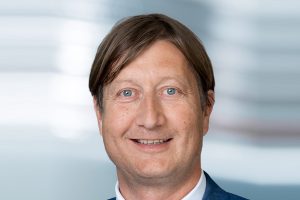
Dr Frank Ruhli discusses the importance of attracting top talent and fostering academic freedom as key factors in achieving research excellence. Ruhli highlights his collaborative leadership style, significant achievements like establishing the One Health Institute, the value of international partnerships in advancing interdisciplinary medical research, and some of the key challenges facing academic medicine today.
Could you share a bit about yourself, as you seem to wear many hats and hold multiple roles?
I serve as the Dean of the Medical Faculty at the University of Zurich. Additionally, I am a full professor and head of the Institute of Evolutionary Medicine, which is part of the Medical Faculty. Beyond academia, I am also involved in public service as a member of the local parliament and hold other responsibilities, such as being the co-head of the Center for Crisis Competence at the University of Zurich.
How do you see all these roles complementing each other?
The concept of complementarity is key here. I dedicate roughly 80 to 85% of my time to academia, but my other commitments—such as my role in politics, various board positions, and participation in different societies—enhance my understanding of medicine’s impact on society. This connection is increasingly important. We cannot remain isolated in an ivory tower, particularly in the field of medicine. It is crucial to address societal needs and fulfill the expectations of the public. In Switzerland, where we have a robust system of direct democracy, it is vital to understand the perspectives of the populace and the politicians who represent them. These experiences help me build a network and a deeper understanding that benefits both my academic pursuits and my external engagements.
What impact do you hope to have as a member of the Parliament?
This is a part-time position, my parliament committee memberships involves overseeing the health system and addressing environmental concerns within the context of Zurich’s city politics. This is particularly relevant as the University of Zurich is located in the city, allowing for a significant overlap. My focus is primarily on healthcare, where I engage in political supervision of the city’s main hospital, which is separate from our university hospital. Understanding the unique challenges faced by both institutions is invaluable.
Can you elaborate on your work at the Crisis Competence Center?
I initiated this network during the Swiss lockdown, recognising that the expertise of our university’s professors—over 800 specialists—was to my opinion not being fully leveraged during crises, whether they are health-related, energy crises, or others. This network fosters interdisciplinary collaboration across all seven faculties, encompassing diverse fields from theology to veterinary sciences. For instance, the pandemic illustrated the importance of looking beyond medical crises to address various societal aspects. Currently, we are working on a major project aimed at enhancing urban resilience in collaboration with the city of Zurich. This initiative pairs academics with city officials to tackle urban challenges, demonstrating the university’s commitment to supporting local needs through an interdisciplinary approach. It is not just healthcare; it could be for instance about how urban resilience can address various crises, exemplary from climate challenges to IT issues, where urban populations are more vulnerable.
The medical faculty at UZH is quite an impressive establishment, ranking in the top 100 globally and among the top 10 medical faculties in Europe. Could you give us a brief introduction?
The Medical Faculty at the University of Zurich has a rich history, founded in 1833, and is now the largest faculty within the university. It’s often ranked as Switzerland’s top medical faculty. With around 230 professors, we have a comprehensive structure, including clinical services and an academically strong basic research division. Our key focus is integrating these different aspects of medicine, and we benefit from being part of a full university with interdisciplinary collaborations across faculties, including dual professorships, where fields like spiritual care and biomedicine research overlap. We also partner with four major university hospitals and ETH Zurich, forming a strategic medical hub in a very concentrated and well-coordinated environment.
What do you believe are the key factors contributing to academic and research excellence at the University of Zurich?
There are certainly multiple factors at play, but I would highlight two main interconnected elements: talent acquisition and academic freedom. At the heart of any successful institution are its people. While we can discuss cultural and structural aspects, it is ultimately the individuals who drive progress.
To attract the best talent, we need to ensure not only well-funded positions but also a conducive environment that promotes freedom in academic pursuits. In Switzerland, we benefit from a unique combination of financial resources and a high degree of academic freedom. Unlike some other regions where there may be more top-down control, we emphasize autonomy, allowing researchers to pursue their interests without overly prescriptive guidance.
This approach can lead to less strategic decision-making at the top, but it fosters a dynamic and innovative research environment. Many who join us cite the appealing atmosphere and the freedom to explore diverse research areas as significant draws to Zurich. Ultimately, this culture of independence supports the university’s overall excellence in research and education.
What would you say were your most significant achievements during your tenure so far? Looking forward, what are your top priorities?
I became Dean around three years ago, and I think the role of a dean at Zurich differs from that in other places. Here, we prioritize teamwork; decisions are rarely made in isolation. I often collaborate with my deputy and the director of University Medicine Zurich, leading to what I like to call a “six eyes” decision-making process. This collaborative approach has its advantages and challenges, making it hard to pinpoint my specific contributions.
However, my main focus has been to change the culture within the faculty. I aim to create an environment where everyone feels welcome, has the freedom to participate, and can interact more effectively. Many faculty members might not even realize that a specialist is working just next door, and I believe we can do better at fostering these connections.
I see myself as an enabler in this environment. There are many constraints—political, healthcare-related, and clinical—that limit the degree of creativity a dean can bring. Therefore, I focus on connecting people and leveraging the momentum we have. We have launched initiatives in collaboration with other fields to start new areas of research, such as gender medicine and One Health, which I believe are increasingly relevant.
Can you tell us more about the One Health Institute and what you aim to achieve with it?
The One Health concept has been a strategic goal for the university for quite some time. It emphasizes the interconnection between human health, animal health, and environmental health. Essentially, to achieve optimal health, we need to consider all three pillars.
We recognized that much of the work on One Health was already being done at the veterinary school, and we wanted to consolidate these efforts. Supported by internal grant funding, we established this institute as a hub to bring together various experts working in this interdisciplinary space. The goal is to create a collaborative environment where we can address the complexities of health from multiple angles, combining expertise from veterinary sciences, medicine, and the natural sciences. This collaborative approach is crucial to understanding and addressing health challenges that span these interconnected domains.
How does UZH embody this interdisciplinary approach, especially considering the variety of areas within the university?
UZH is indeed very committed to supporting interdisciplinary research. One of the core aspects of this commitment is our open-minded culture, which encourages faculty and researchers to break out of their silos. If individuals want to pursue work beyond their core competencies or initial appointments, we wholeheartedly support that. This degree of academic freedom is essential for fostering personal and professional development.
Additionally, there are top-down initiatives specifically designed to promote interdisciplinarity. For example, we have appointed a select number of dual professors who hold positions in different faculties. While this can be personally challenging for them, it serves to connect various fields and stimulate collaborative research.
We have also introduced funding mechanisms specifically aimed at interdisciplinary projects within the University Medicine Zurich. For instance, researchers from one university hospital need to partner with colleagues from another University Medicine Zurich institution to apply for grants. This encourages collaboration across institutions and fields, fostering a more integrated research environment.
Can you highlight some key collaborations you have initiated at the university, particularly on an international level?
The One Health initiative is a prime example of our international collaborations. We are actively working with partners from Sub-Saharan Africa and India to promote One Health academically. The University of Zurich has a Global Affairs Office that facilitates international relationships through memoranda of understanding (MOUs) with various institutes. Much of this collaboration occurs at an individual level, where faculty members hold honorary professorships and engage in exchange programs.
I also serve as the European leader of an association of academic health centers, which aims to connect leaders from these centers to share ideas and best practices. We recently hosted a conference in Zurich fostering valuable discussions and exchanges.
As dean, I see it as part of my role to promote this international exchange. We frequently host visitors from abroad, and I have several initiatives on my desk awaiting approval, including new MOUs. I believe there is much to learn from one another, especially by looking to our peers at similar or higher standards. This exchange enriches both our scientific endeavors and governance practices.
Do you have any final thoughts on the future of academic medicine?
Academic medicine is an incredibly challenging field that requires strong governance and a deep understanding of the diverse disciplines that it encompasses. Being part of a comprehensive university provides us with significant advantages in this regard.
Personally, I am passionate about evolutionary medicine, which allows me to view the big picture—both historically and in terms of how humanity responds to ongoing challenges. Understanding our past and the evolutionary factors that shape us is crucial as we confront the enormous challenges ahead in medicine, from funding issues to societal changes.
This is indeed a disruptive time, but I want to emphasize that disruption can also serve as an enabler rather than just a danger. I believe that the role of medicine will only grow in importance, both within universities and in society at large, especially in light of lessons learned from the pandemic.