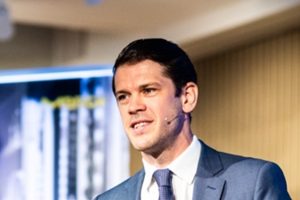
Florian Schick of Merck Switzerland reflects on his career journey and the unique challenges and opportunities within the Swiss healthcare landscape. He highlights Merck’s commitment to innovation the importance of collaboration to drive positive change in the industry and what’s needed to tackle infertility in Switzerland.
What has been your career journey leading to your current role as General Manager of Merck Switzerland?
I have had the privilege of serving as General Manager for Merck’s Swiss affiliate for just over two years. My journey in the pharmaceutical industry has been quite diverse, encompassing roles at Merck, McKinsey, and Pfizer across several countries, including the U.S., Spain, Belgium, Switzerland, and Germany. These experiences, both at the global and local levels, have given me a deep understanding of the industry. For instance, leading our Multiple Sclerosis (MS) brands globally helped shape my perspective on global launches and lifecycle management, while my General Manager role allows me to focus on local profit and loss (P&L) responsibilities and contributing to shaping the Swiss healthcare system as Board member of Interpharma.
Switzerland holds a unique position in healthcare, known for its high-quality system, a wealth of talent, and the presence of key industry players. Many global and regional offices are based here, along with top-tier universities and a significant number of international Key Opinion Leaders (KOLs). This creates a thriving environment with enormous potential for the industry moving forward. However, with such strengths comes the risk of complacency. The healthcare system enjoys strong public confidence, but the strategic decisions made today will be crucial in determining its future over the next five years.
How has your role as General Manager of Merck Switzerland shaped your leadership experience and how is it contributing to your career development?
This role has been incredibly transformative for me so far, both personally and professionally. The most rewarding aspect is the direct connection to the people our work impacts patients, caregivers and healthcare providers. Being on the ground in Switzerland allows me to witness first-hand the tangible effects of our contributions at Merck. Conversations with nurses, physicians, and healthcare professionals underscore the significance of what we do, and it’s both energizing and deeply fulfilling.
Leadership in this position is about fostering a high impact culture within my team every day to shape the Swiss healthcare industry and bring innovations to patients.
What is the significance of Merck’s presence in Switzerland, particularly as the company marks its 95th anniversary here?
Switzerland is a critical hub for Merck, and as we celebrate 95 years of presence here, we take pride in our legacy. Our impact in Switzerland goes far beyond our size. With 2,600 employees across nine locations, including six development and production sites—three in healthcare and three in life sciences—we are among the top five players in the sector in terms of employment size. This combination of healthcare and life sciences allows us to cover the entire value chain.
Our deep connection to science and technology as well as the expertise available here are why we have invested over CHF 1 billion in Switzerland over the past ten years, mainly in development and production. This is a long-term commitment to the country—investing in production signifies that we plan to stay and grow in Switzerland. Beyond that, our Swiss operations also play a global role. For example, our office in Eysins leads Merck’s global health efforts, focusing on providing access to treatments for neglected tropical diseases such as schistosomiasis and malaria. Additionally, our global digital health and global clinical operations teams are also based in Eysins. Our large presence across five Cantons allows us to stay deeply connected with our stakeholders, including customers, healthcare providers, regulatory bodies like Swissmedic, and policymakers.
A key part of my role as General Manager is to advocate for the future of healthcare in Switzerland, ensuring that we contribute to making the system more sustainable and innovative. A clear indicator of our impact is our export volume—Merck Switzerland exports to over 140 markets globally. This shows the critical role Merck plays, not just in the Swiss healthcare sector but in the broader global market as well.
How does Merck’s headquarters view Switzerland, and what role does it play in the company’s global strategy?
Switzerland is of tremendous strategic importance to Merck and has high visibility at the headquarters level. A clear demonstration of this is the recent establishment of our Biotech Development Center, a cutting-edge development facility built with an investment of over CHF 250 million. This state-of-the-art center is set to accelerate the journey from research and development to commercialization across our large molecules R&D portfolio, such as recombinant proteins, monoclonal antibodies, fusion proteins, antibody-drug conjugates, and more, making it a cornerstone of our global operations. The facility is designed not only with advanced technology but also with sustainability and employee well-being in mind. For example, the building features smart windows from our electronics business sector, that control light and temperature. The building is designed to combine a highly technological environment with human centricity, with plenty of open and inspiring workspaces enabling collaboration, creativity and innovation (including an abundance of natural light and generous volumes – e.g., high ceiling in the atrium – that have been shown to stimulate creativity).
The decision to place this facility here is a deep commitment to Switzerland.
Our production sites in Vevey and Aubonne cover a substantial part of our global biotech operations. Our Life Science Operations sites in Buchs, Schaffhausen and Altdorf serve customers in the pharmaceutical and biopharmaceutical industry with everything they need from the discovery of new drug substances to the manufacturing of finished drug products such as APIs (Active Pharmaceutical Ingredients). In many respects, Switzerland has become a global hub for our biotech production, further solidifying its essential role in Merck’s international strategy.
What does Merck’s diverse portfolio look like in Switzerland, and what are the key drivers of growth within it?
Merck’s portfolio in Switzerland is comprehensive, covering all our therapeutic areas in Neurology, Fertility & Endocrinology, Oncology and General Medicine. What sets us apart is the balance between long-standing expertise and emerging innovation. In areas like fertility, where we are a global leader, and multiple sclerosis, where we were pioneers over two decades, we remain focused on introducing new innovations.
In recent years, oncology has become a major growth area for us, with significant advancements in treatments for colorectal, head and neck, bladder, and lung cancers. This is a key part of our future pipeline. Additionally, through strategic partnerships with companies like Heng Rui, Abisko Therapeutics, and Inspirna, we’re expanding our capabilities and bringing more cutting-edge therapies to patients, both globally and here in Switzerland.
Merck’s 356-year legacy is a testament to our ability to stay ahead of the curve. Longevity like ours is only possible through relentless innovation. We’ve thrived by consistently leading with science and technology, ensuring that we remain at the forefront of the healthcare industry.
Merck operates across healthcare, life sciences, and electronics. How does this multi-sector approach benefit the company compared to a typical pharmaceutical business?
Merck’s unique combination of healthcare, life sciences, and electronics is a powerful driver of innovation. This integrated approach allows us to leverage synergies across sectors in ways that single-focus companies cannot. A prime example is our life sciences division’s critical role during the COVID-19 pandemic, particularly in supporting the development of mRNA vaccines through lipid production. This expertise not only strengthened our life sciences operations but also enabled us to harness new technologies, such as mRNA, for our healthcare pipeline.
Having multiple sectors also provides resilience and strategic flexibility. Ultimately, what ties these diverse sectors together is our unwavering focus on being a leader in science and technology. Our vision “Sparking Discovery, Elevating Humanity” guides us in everything we do.
What challenges have you encountered regarding Swissmedic approvals and patient access to treatments in Switzerland, particularly in terms of regulatory and reimbursement processes?
In Switzerland, there is a pressing need to modernize our regulatory and reimbursement systems to ensure a sustainable solution. The ultimate aim is to provide equal and timely access to innovative treatments for all patients who can benefit from them. Unfortunately, the current system poses significant challenges.
On the regulatory side, we are experiencing delays, particularly when compared to other regulatory authorities. In critical areas like oncology, even a small delay can mean patients are left waiting for life-saving treatments. This is not just an administrative issue—it has serious implications for patient outcomes.
Similarly, on the reimbursement side, there are also delays in securing approval for innovative therapies. This creates barriers to patient access, slowing down the availability of new treatments even after they have been approved by Swissmedic. Such delays hinder the swift introduction of medical innovations to the market.
Along with Interpharma’s efforts, we believe in the concept of “day-zero access,” where patients can access new treatments immediately after regulatory approval. This approach would ensure that Swiss patients are not left waiting and can benefit from cutting-edge innovations as soon as they become available. By addressing these systemic delays, we can ensure that the Swiss healthcare system remains at the forefront of delivering timely, advanced care to patients.
As a recently appointed member of the Interpharma board, what impact do you aim to achieve in collaboration with other stakeholders?
Transforming a healthcare system is never straightforward, and Switzerland faces its own set of challenges, especially due to its fragmentation and subsidiarity. The key to future success lies in creating a system where innovation can reach patients more efficiently and delivers tangible value. While the pharmaceutical industry, alongside associations like Interpharma, plays an important role, it’s clear that the solution requires broader collaboration across all levels. Industry alone cannot drive the necessary changes—it must involve all stakeholders, including the government, policymakers, and the scientific community, working together towards common goals.
One of my concerns is the risk of complacency in a country like Switzerland, where many things function exceptionally well. There’s a danger of missing the moment to implement vital reforms. Often, the negative impact of inaction might only become evident years later. That’s why it’s crucial to address the delays and complexities within the system now and collectively propose the right solutions for the future.
Additionally, Switzerland faces global competition, not only in healthcare but also in attracting investments. Our domestic market will never be a decisive factor in these choices due to its small size. However, Switzerland’s strength lies in its exceptional talent, its deep-rooted legacy of innovation, its world-class scientific ecosystem as well as economic and political stability. If we leverage these strengths, we can maintain Switzerland’s position as a global leader in healthcare innovation.
Moreover, regulatory harmonization between Swissmedic, the European Medicines Agency (EMA), and the U.S. Food and Drug Administration (FDA) would be extremely beneficial. The approval processes across these agencies require similar efforts, yet Swissmedic serves a much smaller population. For smaller companies, this can present a significant challenge. Swissmedic’s reputation is outstanding, but harmonizing these processes would allow for faster approval of new medicines and, ultimately, accelerated access to treatments for more patients. Ensuring timely access to innovation must be a priority, and harmonization is essential to achieving this goal.
Switzerland has been slower in adopting digitalization than some other nations, especially in healthcare. Given your experience across different countries, what challenges and opportunities do you see for Switzerland’s digital transformation?
It’s undeniable that Switzerland lags behind in healthcare digitalization, but there are encouraging signs of progress. Public sector investments and recent decisions are aimed at accelerating this shift, which is critical. The cost of not advancing in digital maturity is substantial, particularly as digitalization would contribute to decreased healthcare expenses. For example, when patients visit multiple physicians, they often have to repeat the same tests because there’s no streamlined sharing of medical records. This not only wastes resources but also drives up costs without adding value.
A well-structured digital infrastructure could eliminate such inefficiencies, leading to more coordinated, cost-effective, sustainable and safer care. Currently, patients are expected to track their own medical histories, from medications to treatments received, which should ideally be managed through a unified digital system. With the right digital backbone, we could deliver higher-quality care at reduced costs, improving both patient outcomes and system efficiency.
At Merck, we recognize the transformative potential of digitalization, especially through the integration of artificial intelligence (AI). AI promises to revolutionize healthcare by streamlining the discovery of new treatments and accelerating their time-to-market. By using AI, we can enhance decision-making, increase the success rate of research and development, and bring innovations to patients faster and more cost-effectively. We are already embedding AI into key areas—R&D, manufacturing, commercial operations, medical affairs, and market access—and I firmly believe this will reshape the future of healthcare, offering immense benefits for both the industry and patients.
What legacy do you hope to leave with your team at Merck in Switzerland?
I take great pride in being part of Merck, a company where culture is truly valued and nurtured. As a 356-year-old family-owned company, Merck’s commitment to fostering a strong and genuine culture is not just superficial—it’s deeply embedded in everything we do. I see it as my responsibility to build on this legacy, leading my team in a way that further strengthens these values.
One of the initiatives I’m especially proud of is the fertility benefit we introduced in Switzerland in October last year. This benefit, which provides substantial financial support for employees and their partners – regardless of sexual orientation – undergoing fertility treatments, is a pioneering effort in Switzerland. It’s available from the first day of employment and covers a meaningful amount. The process is completely anonymous. More than just financial support, this initiative reflects Merck’s long-standing expertise in fertility treatments and our understanding of the challenges employees face when balancing family planning and career. In Switzerland, access to treatments like IVF is limited, often requiring out-of-pocket payments or travel abroad. By offering this benefit, we aim to support our employees in a way that truly makes a difference in their lives.
The feedback has been incredibly positive, with many colleagues already benefiting from this program. But beyond that, the message we are sending is that Merck is committed to creating a work environment where employees—both men and women—can pursue their careers and have the flexibility to start a family if they choose. At Merck we invest in supporting a family-friendly environment which is also supported by a generous, prolonged gender-neutral parental leave. This is how I believe we can drive cultural change within the company. I’m confident that in the near future, this kind of support will become standard across many organizations, and I’m proud that Merck is at the forefront of this shift.
Moreover, we’ve launched the “Family Forward” initiative in collaboration with several partners, aiming to raise awareness about fertility, family planning, and how these can coexist with a successful career. The response has been very encouraging, not only from employees but also from industry peers, politicians, and other stakeholders. I believe this initiative can inspire real change, both within Merck and across the broader industry.