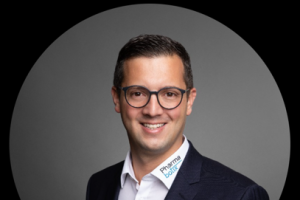
Fabien Stutz, Co-Founder and CEO of Pharmabotix, leads a new wave of pharma-tech entrepreneurs combining engineering expertise with cutting-edge automation. He has helped grow the Swiss-based company into a globally recognised firm, delivering bespoke systems to major clients across Europe and North America, while retaining the agility of a boutique provider.
Could you provide insight into your professional background and the genesis of Pharmabotix?
My professional trajectory exemplifies the Swiss educational system’s capacity for career mobility. Beginning with foundational training in the craft sector, I subsequently pursued commercial education, completing a bachelor’s degree in business administration around 2010. A pivotal exchange semester in Hong Kong exposed me to international business practices and connected me with professionals in the machinery sector.
My entry into industrial automation occurred in 2014 when I encountered my first industrial robot, leading to a sales assistant position in 2015. I progressed to deputy CEO at a robotics integration firm focused on general industry applications. However, I identified a significant market opportunity within the pharmaceutical sector—a traditionally conservative industry with substantial automation potential yet limited current implementation.
The pharmaceutical industry presents a compelling value proposition: stable market dynamics with consistent growth trajectories, combined with a notable automation gap compared to sectors such as automotive manufacturing. While automotive facilities operate with minimal human intervention, pharmaceutical processes retain significant manual components, creating substantial opportunities for technological advancement.
Pharmabotix remains relatively unknown to many industry observers. How do you position the company within the pharmaceutical automation landscape?
Pharmabotix operates as a specialised engineering and manufacturing provider, functioning as a classical machine builder with a focus on customised solutions. Our core competency lies in addressing complex automation challenges that fall outside the standard offerings of established industry leaders.
Traditional pharmaceutical equipment manufacturers excel at producing standardised production lines, but gaps exist in addressing unique process requirements. Our strategic positioning targets these market interstices, providing highly customised solutions.
Our competitive advantage stems from organisational agility and complete solution customisation. Every system we deliver is precisely calibrated to customer specifications, reflecting our commitment to addressing exact operational requirements rather than forcing adaptations to standardised platforms.
A notable example of our market entry strategy involved developing a settle shell air sampler —a device that, while not representing traditional machine building or robotics, served as our introduction to major pharmaceutical companies. This project, presented at an ISPE Event by Roche in late 2021, established our credibility within the industry and demonstrated our capability to deliver innovative solutions regardless of conventional categorisation.
Our approach consistently involves working with standardised components while ensuring that all process-specific elements remain fully customised – where needed. Recent projects include developing segmented needle holders for compliance with Annexe 1 requirements, enabling proper sterilisation protocols that were previously impossible with single-piece designs, to the manufacturing of two highly automated packaging lines with 6 Robots
Our strategic evolution involves balancing customisation with standardisation. While pursuing standard solutions for broader market application—which provides operational cash flow stability—we remain committed to maintaining the agility that enables responsive customer adaptation.
Customised machinery inherently carries execution risks, similar to developing any new product. However, despite experiencing robust growth, we prioritise preserving our organisational flexibility to continuously address end-user requirements with precision.
After four years of operation, what trends have you observed in market demand, particularly regarding Advanced Therapy Medicinal Products (ATMPs) and increasing automation sophistication?
Market awareness of robotics capabilities has expanded significantly, though this evolution presents both opportunities and challenges. Customers often develop unrealistic expectations based on popular media portrayals, requiring careful education regarding regulatory constraints and practical limitations within pharmaceutical manufacturing.
Our primary challenge involves assessing the technical sophistication of prospective clients. Solutions must balance innovation with regulatory compliance—sometimes our proposals appear too advanced for conservative decision-makers, while other clients possess sufficient experience to appreciate sophisticated automation approaches.
The ATMP sector generates substantial inquiry volume, reflecting growing interest in process automation. However, ATMP applications present unique standardisation challenges: while fundamental processes remain consistent across organisations, subtle variations and specific requirements complicate the development of broadly applicable solutions.
ATMP market dynamics are further complicated by the prevalence of early-stage companies with ambitious automation goals but limited capital resources. These organisations often initiate manual processes that prove extremely difficult to automate retrospectively, as human-designed workflows rarely translate effectively to automated systems.
Our traditional Swiss client base spans robotised solutions for packaging, filling, lab automation and quality inspection applications, representing a diverse and stable market foundation.
How do you approach the integration of digital tools and digitalisation within your automation solutions?
Our digital integration strategy operates on two distinct levels. At the machine level, we employ standardised Siemens PLC architecture with sophisticated human-machine interfaces (HMIs) that prioritise user accessibility—a significant differentiator in our market experience.
Our systems provide comprehensive data transparency, delivering all relevant data points to customers for independent analysis and cloud-based processing. Rather than constraining clients to proprietary analytics platforms, we enable complete data ownership and processing flexibility.
System integration involves orchestrating diverse technological components—robotic systems, filling pumps, closing mechanisms—into cohesive, optimised solutions. Our expertise lies in seamlessly integrating these varied interfaces into unified, efficiently operating systems.
Could you elaborate on your partnership strategy and growth approach?
Our supplier relationships are characterised by trust-based collaboration rather than purely transactional interactions. While we maintain standardised supplier portfolios with appropriate redundancy measures, our fundamental approach prioritises long-term partnership development with both suppliers and customers.
This trust-centric model extends throughout our organisational ecosystem, forming the foundation for sustainable growth and reliable service delivery.
How does sustainability factor into your operational strategy?
Sustainability principles are integrated into our operational framework through practical measures, including local sourcing—maintaining suppliers within a 15-20 kilometre radius to minimise transportation impact—and comprehensive waste segregation protocols.
We complete environmental impact assessments for customer projects and maintain sustainable practices within our operational capabilities. While we have not designated specialised sustainability personnel, these principles guide our decision-making processes across procurement, operations, and service delivery.
What is your current international operational scope?
Our international expansion began with an unexpected but significant project delivery to Hillsboro in 2022. This engagement required comprehensive re-engineering to meet UL certification standards for the American market, including complete electronics redesign with enhanced safety features—a substantial undertaking accomplished within six months from order to delivery.
Currently, our largest project represents a €1.7 million engagement for two machines destined for Germany, reflecting market-driven international expansion rather than proactive geographic targeting.
International operations present significant service challenges: while Switzerland enables three-hour response times to any location, German operations require seven-hour transit times, consuming entire service days. We have addressed this through substantial infrastructure investment, including two specially equipped service vehicles and expanded technical support capabilities.
What is your long-term vision for Pharmabotix’s development?
Our strategic planning reflects the dynamic nature of our market environment—we revise our business plan twice annually to accommodate rapid change. Our current facility, initially projected to accommodate three to four years of growth, will reach capacity within weeks, necessitating immediate expansion considerations.
Our growth trajectory targets reaching 50 employees within three to four years, while maintaining uncompromising quality standards. The pharmaceutical industry’s interconnected nature means reputation damage spreads rapidly across major players, making quality maintenance essential for sustained success.
Currently, we benefit from positive industry recognition, receiving unsolicited requests for proposals based on referrals from existing clients. This organic growth mechanism reflects four years of intensive effort, beginning with four team members and expanding to our current 15-person organisation.
The evolution from our initial door-opening project to winning Roche’s ISPE Robotics of the Year Award 2024 demonstrates our progression toward industry recognition and credibility within Good Manufacturing Practice (GMP) environments.
Which product segments present the greatest growth potential?
Packaging applications represent our most significant opportunity due to high-volume requirements and repetitive operational characteristics that optimise return on investment calculations. These applications align with our capabilities while providing the scale necessary for sustainable growth.
For the first time this year, our export revenue has exceeded domestic Swiss business, reflecting substantial international project scales that surpass typical Swiss market opportunities. While Switzerland maintains significant pharmaceutical operations, the scale of international investments creates opportunities unavailable in our domestic market.
How do you approach team development and organisational scaling?
Our founding strategy involved three complementary competencies: I handle administrative, sales, marketing, and financial functions; Luca Glanzmann manages engineering and manufacturing operations; Jeremias Bürgin oversees software development. This structure enabled machine production without significant personnel investment during our capital-intensive start-up phase.
We maintained complete self-financing without external investment, enabling rapid decision-making and direct customer engagement without investor consultation—a significant competitive advantage in responsive customer service.
Personnel expansion relies heavily on professional networks and referral systems, addressing the challenge of securing qualified personnel in competitive markets. Our organisational culture emphasises employee autonomy within established standards, providing freedom to operate while maintaining quality and delivery commitments.
Rather than adopting traditional hierarchical leadership models, I function as a team coordinator—analogous to a Formula 1 team principal—focusing on collective success and optimal machine delivery rather than authoritative management approaches.
What are your primary objectives for the next two to three years?
Our immediate priorities include scaling to 50 employees with infrastructure capable of supporting multiple concurrent projects. Long-term aspirations include constructing a purpose-built facility to house our expanding operations—a natural progression for our growing organisation.
Any final insights you would like to share?
For entrepreneurs considering similar ventures, I emphasise the critical importance of comprehensive financial planning alongside innovative concepts. Success requires securing appropriate talent and maintaining commitment to execution excellence.