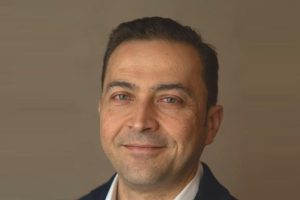
Emanuele Ostuni, CEO of ARTBIO, delves into the company’s innovative approach to radioligand therapies, focusing on its potential to replace chemotherapy and provide more effective treatment options for patients. Ostuni emphasizes the company's commitment to precision oncology, with a strong team spread across Switzerland, Norway, USA, and the UK.
What motivated your transition from large corporations to a startup like ARTBIO?
My career has always been rooted in the world of small companies. After completing my PhD, I worked in a small company, improving on the intellectual property that I developed in my PhD lab. Following that, I learned a lot about business at McKinsey before returning to the startup world, where I led Business Development for one company and later founded another biotech venture. While I spent time at Novartis to deepen my knowledge in development, manufacturing, and marketing, I realized that smaller, more agile environments aligned better with my passions and my nature.
My work at Novartis, particularly with the first CAR-T therapy, Kymriah, was groundbreaking. The experience was transformative, and although it was incredibly rewarding, it also reinforced my desire to return to early-stage companies. The transition to ARTBIO was a natural one for me, although rife with its own new challenges. Moving from a leadership role overseeing 120 people to becoming the first employee and CEO of ARTBIO was a significant shift, but it felt like the right step. I’ve always thrived in fast-paced environments where I can take full ownership of outcomes—both successes and challenges. While I never set out to be a CEO, the timing and the opportunity aligned well with my skills and aspirations. I also recognized that, as a first-time CEO, there was much more for me to learn – something I relish.
What is the core focus of ARTBIO’s research, particularly in the context of radioligand therapy, and how did it develop?
ARTBIO’s foundation lies in a pioneering innovation by our founder, Roy Larsen, which was then translated with the support of the Radium Hospital in Oslo. This platform is proprietary and focuses on advancing the field of radiopharmaceuticals. What sets ARTBIO apart is our commitment to prioritizing therapeutic outcomes for patients above all else, while many in the industry focus on streamlining manufacturing processes. Our approach is driven by the understanding that patients care most about healing, not the logistics of the supply chain. While the supply chain is undeniably complex, our belief is that the efficacy of treatment must be our primary concern before addressing manufacturing challenges created by the potential new therapies.
How do you assess the current state of European innovation in comparison to the U.S. and China, and what challenges do you see in translating academic research into successful biotech ventures?
Having moved to Europe from Boston over 12 years ago, I’ve been able to observe the evolution of biotech ecosystems in both regions. Boston remains one of the most dynamic biotech hubs globally, but I’ve witnessed substantial growth in Europe since my arrival. While I can’t provide specific statistics, the increase in biotech company formation is palpable. Additionally, there’s been a notable rise in European investors who are actively deploying capital into this high-risk sector.
That said, Europe still faces challenges in fully realizing its potential. While academic science here is of the highest quality, the infrastructure to translate discoveries from the lab into biotech companies is still developing. Over the years, I’ve seen improvements, but more work is needed. A successful biotech ecosystem hinges on several factors: first, access to risk capital; second, an entrepreneurial culture that thrives in small, high-risk ventures rather than large corporate environments; and third, an academic ecosystem that not only produces groundbreaking research but also fosters the mindset that fundamental discoveries can be applied in real-world contexts. In Boston, technology transfer offices played a key role in bridging this gap by protecting intellectual property and facilitating the transition from academia to commercial enterprises. While there are pockets of excellence in Europe, the region still has significant room for improvement in this area to create a more robust and sustainable biotech ecosystem.
What makes radioligand therapy particularly effective for solid tumors, and why has ARTBIO chosen prostate cancer as its initial focus?
The simplicity of radioligand therapy lies in its mechanism of action. By designing a molecule that specifically targets a tumor and attaching a radioactive payload, we can deliver therapeutic radiation directly to the cancer. This approach is grounded in the principles of precision oncology and is arguably simpler than other therapies such as antibody-drug conjugates (ADCs) or CAR-T therapies. ADCs, for example, require complex linkers and payloads to minimize toxicity to healthy tissues, while CAR-T therapies demand intricate cell engineering and immune system activation. In contrast, radioligand therapy offers a more straightforward solution. However, despite its mechanistic simplicity, delivering this therapy to hospitals requires substantial infrastructure.
At ARTBIO, we are focusing on alpha radioligand therapy, which we believe has a distinct advantage in terms of efficacy. While existing treatments use beta-emitting payloads, we see greater potential in alpha-based payloads. Our company is pioneering the use of Lead-212 (Pb-212) payloads, a short-lived isotope with a half-life of just 10.6 hours. This shorter half-life allows for a more precise and controlled delivery of radiation to the tumor before the molecule is cleared from the body. By aligning the kinetics of the molecule with the payload’s decay, we aim to optimize the therapeutic effect. Early clinical results support this strategy.
To bring this vision to life, we are developing proprietary technology for the production of Pb-212 and implementing a distributed manufacturing model. This will involve smaller production hubs in both the U.S. and Europe, ensuring timely delivery of the therapy to hospitals within a given delivery radius from the hubs.
As for why we have chosen prostate cancer as our starting point, despite the availability of many approved and experimental therapies, the reality is that patients often run out of viable treatment options relatively quickly. Current radioligand therapies in prostate cancer offer limited survival benefits, with the leading program providing four additional months of survival. While this is certainly valuable for some patients, it does not address the needs of all. Our goal is to offer a more substantial impact on patient survival, inspired by the long-term benefits I witnessed during my work with CAR-T therapies. Prostate cancer is a well-established and validated space in the radiopharmaceutical field, making it an ideal entry point for our technology. While many companies are targeting PSMA, we believe our approach is uniquely differentiated and will continue to deliver distinct advantages.
What is ARTBIO’s strategy for licensing and commercialization, and how does the company approach building its platform across multiple tumor indications?
Our approach to licensing and commercialization is highly adaptable and depends on the specific program and tumor indication. We are not committed to out-licensing everything we develop; rather, we evaluate each program based on its commercial needs. Some indications can be managed with small teams, while others require much larger efforts. Therefore, we don’t have a one-size-fits-all approach.
Our broader ambition is to target multiple indications, many of which are pioneering within radiopharmaceuticals, with no other companies currently focusing on these areas. We actively seek opportunities to bring promising technologies in-house, either for further development or to initiate early-stage discovery. We believe the potential is substantial, and to realize this potential, a sophisticated and involved manufacturing strategy is necessary. It’s much more efficient to apply this comprehensive approach across several programs, rather than limiting it to a single program. This is why we continue to expand and develop our platform, enabling us to support a range of high-potential programs simultaneously.
How do you evaluate the readiness and ability of clinicians worldwide to participate in clinical trials for radioligand therapies?
If we can demonstrate first-in-class efficacy, the short answer is that clinicians will be highly receptive to these therapies. Physicians are fundamentally driven by data and the potential to improve patient outcomes. However, there are certain challenges within the field of nuclear medicine, which is crucial for radioligand therapies. This discipline is currently growing, and the successful administration of these treatments requires a collaborative effort between nuclear medicine physicians and oncologists.
Oncologists are deeply familiar with the patient’s medical history and oversee day-to-day care, while nuclear medicine physicians are responsible for administering the therapy, conducting tests, and visualizing results. After the treatment, patients typically return to their oncologists for follow-up care. Historically, these two specialties have not needed to collaborate extensively. However, the advent of radioligand therapies is encouraging a necessary partnership between them. This transition presents a learning curve for both groups, and cultivating effective collaboration is essential for advancing these therapies in clinical trials.
How do varying regulations across countries affect patient access to radioligand therapies, and how do you see this evolving?
In the short term, there will likely be challenges due to the differing regulatory frameworks for radioactive materials across countries. Each nation has its own set of laws, and it will take time for many to adapt. Some countries may be quicker to adopt new technologies—whether by design or coincidence—while others may take longer to catch up.
However, in the long run, data will drive change. If radioligand therapies demonstrate strong efficacy, patient demand will grow, and access will improve. I witnessed something similar during my time working with CAR-T therapies. We frequently received requests from patients in countries where CAR-T was not yet available, asking to travel abroad for treatment. While this was not a practical solution for everyone—since it was often the wealthier patients who had the means to travel—it highlighted how quickly the word spreads once a validated, effective treatment becomes known. Over time, governments and healthcare systems will adjust. For CAR-T, we worked with several governments to modify legislation and make the therapy accessible, and I expect we will see similar progress with radioligand therapies, which may already be undergoing such changes in some regions.
How did you approach the fundraising process, and how has it been deployed?
The fundraising journey has evolved significantly since early 2022. At that time, while radiopharmaceuticals were gaining traction, they weren’t yet as high-profile as they are today. As in any successful fundraising effort, having a well-defined plan, a clear thesis, realistic projections, and a proven ability to deliver results are fundamental to attracting investors. These principles remain constant, regardless of the market’s shifting dynamics.
We were fortunate that the radiopharmaceutical space saw substantial growth, particularly after a wave of mergers and acquisitions that sparked increased investor interest. This made our fundraising efforts somewhat easier, as there was already inherent enthusiasm around the field. However, at its core, success still hinges on the fundamentals. We needed a sound manufacturing strategy, a robust development and research approach, and most importantly, alignment with investors who shared our long-term vision. Not all investors are aligned in terms of their expectations and investment timelines, so finding those who resonate with our goals was crucial.
The $90 million in funding in our second round has enabled us to significantly expand our team, bringing in top-tier talent with extensive experience in manufacturing and quality control. While we have patents, funding, and state-of-the-art labs, the true differentiators are the people executing the work. We understood early on that we needed to attract highly experienced leaders who could bring the vision to life. I’m proud that we’ve been able to bring in senior executives from leading companies in radiopharma like Novartis, Bayer, and others, who collectively bring decades of experience in radiopharmaceuticals. These leaders shared our vision from the outset, and their ability to execute and drive our efforts forward has been instrumental in our success.
As for our most recent fundraising round, we made a deliberate decision not to over-invest in capital expenditures (CapEx) early on, despite the capital-intensive nature of the business. Instead, we chose to partner with Contract Development and Manufacturing Organizations (CDMOs), enabling us to transition from diagnostics to therapeutics. This strategy allowed us to access established manufacturing facilities and secure exclusive rights to them, without the need to build our own sites from the ground up. By leveraging the capabilities of these CDMOs, we gained the expertise and infrastructure needed to advance our clinical trials, while avoiding the substantial costs associated with building new facilities. This approach offered us a balanced mix of access and expertise, allowing us to maintain focus on our core mission without being burdened by excessive CapEx.
What are your long-term goals for radioligand therapies, and how confident are you that they can become first- or second-line treatments?
At ARTBIO, we are committed to the belief that alpha radioligand therapies, specifically those utilizing Lead-212 (Pb-212), have the potential to create new standards of care that could replace chemotherapy. Chemotherapy, while effective, is often a blunt instrument, with side effects that can significantly diminish a patient’s quality of life. I’ve personally known individuals who chose to discontinue chemotherapy, preferring to spend their remaining time in a more manageable way. Our goal is to offer a more precise and effective therapy that provides patients with better treatment options earlier in their disease progression.
I’m confident in the potential of radioligand therapies, but I also understand that the journey won’t be easy. Our vision is to position these therapies as viable first- and second-line treatment options, moving beyond their current use in end-of-life care. While palliative care is necessary at some point, our aim is to extend the period before patients need to transition to such treatments, offering them more effective options and better quality of life earlier on.
What makes Switzerland an ideal base for ARTBIO, and how does the company manage its operations across its global hubs?
Switzerland has been instrumental in ARTBIO’s success, and I believe I could not have assembled this team anywhere else. The unique expertise we’ve been able to attract here is incredibly rare. From the outset, I made the decision to prioritize building a team I was truly excited about, even if it meant more travel and logistical challenges. Ultimately, the strength of the team is the most important factor.
Switzerland’s robust radiopharmaceutical ecosystem is a key reason we chose it as our base. However, ARTBIO’s team spans multiple locations globally to take advantage of other specialized areas. In Oslo, we have a large team focused on radiopharmaceuticals, in vivo physiology, engineering, and isotope isolation. In Boston, Cambridge specifically, we benefit from outstanding chemistry and biology expertise, areas where Boston leads globally. Over time, we’ve been expanding our radiopharmaceuticals capabilities there. Additionally, our clinical development team is based in the UK, where we started with a small, highly experienced group. Given our clinical trials in both the U.S. and Europe, having experts familiar with both regions is crucial.
That said, we are not looking to constantly expand our number of hubs. With the critical mass we now have, it’s more important for our hubs to connect deeply around specific areas of expertise. This allows us to maintain strong collaboration across geographies while ensuring efficiency and focus in each location.