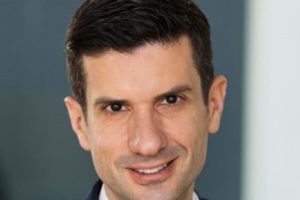
Dimitri Gitas, Managing Director of MSD Switzerland, discusses the strategic importance of Switzerland, not only as a management hub for the company, but as a manufacturing location and clinical research centre where its clinical trials have grown to over 60 per year. Gitas also shares MSD's key focus areas in the country – oncology, vaccines and cardiovascular –, comments on the challenges posed by Switzerland's complex reimbursement processes, and remarks on digitalization and talent acquisition.
How has your career evolved over 20 years at MSD, and what has shaped your international journey?
I began my career in the pharmaceutical industry in Canada, where I studied biochemistry. Twenty years ago, I joined MSD, and since then, I have had the privilege of working in various leadership roles across five different countries. My journey started in Canada, and soon after, I transitioned to our global headquarters in the US. Following my time there, I took on a leadership role in Greece, where I oversaw one of our divisions. I then moved to Poland as Managing Director, and for the past year and a half, I have been based in Switzerland.
This international experience has not only enriched my professional perspective but also shaped my personal life. My wife and our two children have accompanied me throughout these relocations. Our family has become truly international. Each country we have lived in has offered unique opportunities for growth and cultural immersion, allowing us to embrace the diversity of different regions.
What can you tell us about MSD’s presence in Switzerland and how it has evolved over time?
Last year, we celebrated a significant milestone—MSD’s 60th anniversary in Switzerland. Over these decades, our presence has expanded considerably, and today, Switzerland serves as our international headquarters for all operations outside the US. This underscores the strategic importance of Switzerland within our global network. Our Executive Vice President is based here, along with a substantial portion of the senior management team.
Currently, we have over 1,000 employees spread across five different sites in Switzerland. Four of these sites are located in the Lucerne region, while our research and innovation hub is situated in Zurich right by the airport. What sets our operations in Switzerland apart is that 25 percent of our workforce here is in higher management roles, reflecting the key role this location plays in our broader strategy.
In terms of operations, we have a manufacturing facility that produces clinical supplies, which are distributed to over 50 countries, benefiting more than 60,000 patients involved in clinical trials globally. Looking ahead, by 2026, we will be consolidating three of our Lucerne sites into a new state-of-the-art building, covering 15,000 square meters and accommodating 850 employees. This investment reflects our long-term commitment to Switzerland as a critical hub for our global operations.
What factors have driven MSD’s decision to make such significant investments in Switzerland?
There are several compelling reasons behind our continued investment in Switzerland. Firstly, the country offers a highly stable economic environment, which is critical for long-term planning and investment. However, perhaps even more important is Switzerland’s commitment to innovation. It is a country that prioritizes innovation, which aligns perfectly with our focus on research and development.
Switzerland also plays a pivotal role in our clinical research activities. MSD is heavily invested in running clinical trials here, and the country’s infrastructure and regulatory framework provide strong support for this work. These factors—the pro-innovation environment and robust support for R&D—are key reasons why Switzerland remains such a vital part of MSD’s global strategy. Our continued investment reflects the significant role this country plays in our future growth.
What are the primary growth drivers for MSD’s portfolio in Switzerland, particularly in oncology and vaccines?
Oncology plays a central role in our portfolio. Our leading immuno-oncology therapy has had a profound impact, with over 7,000 cancer patients in Switzerland benefiting from it each year. In 2024 alone, we are launching 10 new oncology indications, reflecting our ongoing commitment to innovation in this field. These include new indications for lung, kidney, and bladder cancers. Additionally, we have introduced a treatment for Von Hippel-Lindau (VHL) disease, a rare genetic disorder, and are continuing to explore its potential in treating kidney cancer and other conditions.
Another key area for us is prevention through vaccination. Every year, approximately 250,000 people in Switzerland are vaccinated with MSD products, which range from pediatric and pneumococcal vaccines to our HPV vaccine. Preventing cancer is as crucial to us as treating it, and our goal is to one day eliminate HPV-related cancers in Switzerland—a vision that guides our continued investment in this field. And the next wave is the build-up of adult vaccination programs, ensuring that there is a focus on prevention not only in childhood but through the entire life of a human being.
Beyond oncology and vaccines, cardiovascular care is also a priority. We are launching a new treatment for Pulmonary Arterial Hypertension (PAH), a condition with significant unmet needs, and expect this to have a meaningful impact on patients. On a broader scale, our research and development efforts extend beyond oncology and vaccines. We are deeply invested in areas such as infectious diseases, including HIV, as well as immunology and neuroscience. Our overarching strategy is to focus on addressing critical unmet medical needs, with the ultimate goal of tackling some of the most pressing global health challenges.
What has been your experience with Switzerland’s market access framework, and how does it compare to other countries? What improvements could be made to enhance patient access?
Our ultimate goal is to ensure that the innovative medicines and vaccines we develop reach the patients who need them across Switzerland. Achieving this requires two essential steps: regulatory approval and reimbursement. Firstly, in terms of regulatory approval, we work closely with Swissmedic. In recent years, however, the process has taken longer compared to other major regulatory agencies, such as the FDA in the US or the EMA in Europe. The timelines have been less predictable, and the communication has not always been optimal, which has presented challenges on our side. That said, there has been positive progress over the past year, with improved dialogue between Swissmedic and the industry, and I’m confident we’re moving in the right direction to align more closely with global standards in terms of approval timelines.
The second step of providing access to patients is navigating the reimbursement process with the Federal Office of Public Health. This process can be challenging and requires constructive dialogue to ensure broad and rapid access is achieved for patients in Switzerland. In recent years several cost containment measures were implemented, and the next package is already in discussion and may be introduced within the next one or two years.
What we need is a modernized pricing system that balances the need for affordability with the importance of supporting innovation and ensuring patient access to breakthrough therapies. The industry association has put forward a proposal in this regard, and I believe it is crucial to take the time to develop a thoughtful, long-term solution rather than rushing into decisions that could have unintended consequences on patient access and the country’s standing as a leader in healthcare innovation. Maintaining a strong pro-innovation environment in Switzerland is important not only for early and broad access to new treatments, but also for continued R&D investment in the country.
How do you view the current landscape of clinical trials in Switzerland, and what improvements are needed to strengthen the country’s leadership in this field?
While the overall number of clinical trials in Switzerland has been declining, MSD’s clinical research presence has grown significantly. Ten years ago, we conducted 17 trials annually in the country; today, that number exceeds 60. This increase makes MSD one of the top contributors to clinical research in Switzerland.
However, maintaining and enhancing Switzerland’s status as a leader in clinical trials requires addressing several key factors. First, the regulatory process needs to be efficient. Swissmedic’s ability to approve clinical trials swiftly is critical for companies to start their research in a timely manner, which is essential in such a competitive field. Second, clinical trial sites, particularly academic centers, must be adequately resourced. This means ensuring they have the necessary funding and infrastructure to manage trials effectively and maintain high standards of quality. Without sufficient resources, it becomes challenging to conduct trials efficiently.
Third, patient recruitment is a crucial element. Having a centralized, digital healthcare system would greatly enhance the ability to identify and enroll patients more rapidly. Such a system would allow clinical trial teams to quickly locate eligible participants, ensuring that trials can progress without delays. Digitalization is a key area where Switzerland can improve to ensure it remains competitive in the global clinical research arena.
How would you describe MSD’s company culture in Switzerland, and what values guide your approach to supporting a diverse workforce?
At MSD, we see our people as our most valuable asset, and we are deeply committed to fostering their development and well-being. Our team in Switzerland is exceptionally diverse, with more than 1,000 employees representing over 56 nationalities. Diversity and inclusion are not just buzzwords for us—they form the foundation of the culture we aim to build.
One of our key aspirations is to make MSD the best place to work in Switzerland. Diversity and inclusion play a central role in this vision. Over 50 percent of our employees are women, and women also represent 50 percent of our leadership team. This balance is something we actively work toward, as we believe it is essential to creating a vibrant and innovative workplace.
To further support this commitment, we have established seven employee business resource groups, which represent various communities within the company. These groups help raise awareness, build allyship, and foster a more inclusive environment. Psychological safety is another area we emphasize, ensuring that all employees feel secure and supported, allowing them to fully engage in their roles.
From an HR perspective, we focus on creating equitable practices that not only ensure diversity but also promote professional growth. Our goal is to empower our people to pursue their passions while providing them with opportunities to grow and thrive within the organization. Building a strong, inclusive community where everyone feels they belong is fundamental to our success, and it’s something we continually invest in.
What are the main talent challenges MSD faces in Switzerland, given the highly competitive nature of the local HR market, and how are you addressing these trends?
One of the most critical aspects of our recruitment strategy is attracting individuals who are deeply driven by a sense of purpose. At MSD, our mission is to save and improve lives, and we find that those who join our organization share this strong commitment. This sense of purpose is key to ensuring that the people we bring on board are aligned with our values and goals.
In addition to attracting purpose-driven individuals, it is equally important to cultivate an environment where employees can develop both professionally and personally. We are dedicated to offering opportunities that allow our people to grow while also enabling them to contribute meaningfully to society. This combination of professional development and social impact is crucial to both attracting new talent and retaining our current employees. When people feel they are growing and making a difference, they are more likely to stay and thrive within the organization.
The Swiss healthcare sector is highly competitive, particularly in terms of attracting and retaining talent. However, we believe that by focusing on purpose, providing opportunities for growth, and fostering a culture of contribution, we can maintain our status as an employer of choice. Additionally, the diversity of roles across our five sites in Switzerland provides a range of career paths for our employees. This variety allows people to explore different areas of the business, enhancing their career development and strengthening our ability to stay competitive in this dynamic market.
How do you see MSD contributing to the digitalization of Switzerland’s healthcare system, and why is this critical for the country’s future?
Digitalization is essential for Switzerland to maintain its leadership in healthcare. While Switzerland currently has one of the best healthcare systems in the world, there are areas that require improvement to keep it competitive—particularly in the realm of digitalization.
One of the biggest challenges stems from Switzerland’s federal structure. With 26 cantons, each operating its own healthcare system, there is a lack of integration and consistency across the country. This fragmentation makes it difficult to build a unified, digitally advanced healthcare ecosystem that can enhance patient care and streamline processes.
We see a tremendous opportunity to accelerate digitalization in Switzerland, but the pace of progress needs to increase. The Federal Office of Public Health has recognized this as a priority, but more needs to be done to move things forward. At MSD, we view ourselves as key partners in this effort. We are eager to work with the government, industry, and other stakeholders to help create a more interconnected, efficient healthcare system. By advancing digitalization, we can improve patient outcomes, increase access to care, and optimize the use of resources across the healthcare landscape.
As the head of MSD Switzerland, what are your top priorities for the next few years?
Our primary goal over the next few years is to ensure that we bring our innovations to as many patients in Switzerland as quickly as possible. We have had several exciting launches of new treatments this year, and it’s critical that these advancements reach those who can benefit from them.
To achieve this, we need to collaborate closely with industry, government, and academia. One key focus is improving the reimbursement process to ensure that new treatments are approved and made accessible more efficiently. We also need to continue working with Swissmedic to accelerate the review and approval of new innovations, ensuring that Swiss patients have timely access to cutting-edge therapies.
Ultimately, our goal is to ensure that the groundbreaking innovations we’re developing globally can improve the lives of people in Switzerland. We have a strong pipeline, and we’re eager to bring these advancements to market, ensuring that those who need them most can benefit from them in the near future.