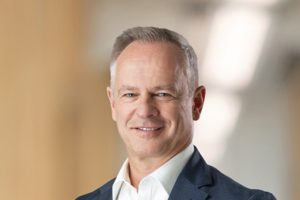
David Veitch, the CEO of Basilea Pharmaceutica, shares his insights into the company's strategic vision to become a global leader in the antifungal and antibacterial space. Veitch discusses the unique challenges faced by companies navigating the anti-infectives space, the importance of public funding from partnerships with governmental organizations like BARDA, and the strategies behind Basilea’s success in such a competitive area.
Basilea has managed to thrive in the anti-infectives space where many others struggle, particularly in terms of profitability and innovation. What do you see as the key challenges in this therapeutic area?
Antibacterials are one of the most cost-effective medicines available to health systems. Their usage is widespread, for example, in prophylactic use for surgical operations. They are typically used for just a few days, with many being old and cheap, such as vancomycin, penicillins and Augmentin. These have been around for decades and work in many cases. However, their low cost and good effectiveness present a significant challenge for companies trying to innovate in this space.
In 2000, Basilea was spun out of Roche when the company, like many other Big Pharma, largely stepped away from antibacterial R&D. The financial returns simply could not compare to those in chronic disease areas like cancer or cardiovascular diseases. In those areas, treatments are long-term, sometimes even lifelong, which means higher returns. Antibacterials, on the other hand, are for acute treatment—patients are often cured quickly, and then the treatment ends.
So, the issue really comes down to economics in this therapy area. However, there is still an important unmet medical need in this space, that is for new treatments that work when existing treatments do not, or when patients are not optimally treated with current treatments.
With the UN General Assembly High-Level Meeting on antimicrobial resistance (AMR) recently taking place, AMR is once again in the spotlight as one of the most pressing global health threats. How do you view the significance of this issue?
AMR is constantly in the news—everyone is talking about it. I do believe that AMR is important today, but the bigger issue is what could happen in the future. The COVID pandemic gave us a clear example of what can happen when a new pathogen emerges, that cannot be effectively treated by existing treatments. Although COVID was a virus, the principle is the same: imagine a bacteria emerging that is resistant to all available antibiotics.
Currently, we still have many older antibiotics that work effectively in many patients. The issue is the remaining instances when these treatments fail, which is increasing as bacterial resistance increases. Bacteria adapt quickly, and if they become resistant to our existing treatments, we could face a similar situation to COVID.
Although there are a lot of discussions about AMR, there is still not enough concrete action. We need to focus on real steps and meaningful incentives to encourage more companies to invest in this area generating more innovation.
In such a specialized niche, what are the key factors that make a company successful? How has Basilea managed to excel where others have faced difficulties?
For us, we believe focusing on an area of unmet medical need is the critical start point for a biotech company strategy. We work in the area of serious hospital-based infections, caused by bacteria or fungi. For example, in such diseases as bloodstream infections, invasive aspergillosis, and candidiasis, where the medical need is clear.
Existing treatments often have high toxicity and the mortality rates can be as high as 20% for bacterial infections and 50% for invasive fungal infections. There are opportunities to improve efficacy, reduce toxicity, address gaps in the spectrum of activity of current treatments or introduce new dosage forms.
In today’s market, antifungals can generate peak year global sales of up to $1 billion, this is not large enough for Big Pharma. These companies need drugs that bring in $5 to 10 billion a year to offset their significant costs and to handle future patent cliffs. Basilea, on the other hand, operates with a much smaller cost base, with a team of around 170 people. So an antifungal product bringing in $800 to $900 million in peak sales is highly attractive. Antibacterials too, while not generally as profitable as antifungals, can still generate peak sales of up to $500 million if they have a clear value proposition and are differentiated.
What makes Basilea unique is that we do not rely on a platform technology for our research. Much of our success comes from in-licensing or acquiring assets. This gives us the flexibility to look externally for the most promising opportunities, rather than being tied to a specific platform, and we have the important advantage that we are not competing for these assets with Big Pharma.
In the anti-infectives space, we see ourselves as a big fish in a small pond. So we are aware of the most exciting assets and companies see us as an attractive partner of choice in this area. In just over a year, we have acquired four new assets in the antifungal and antibacterial space, which is a good reflection of our strategy working. The acquisition costs and terms of the agreements we have made have also been manageable for us.
Basilea has chosen to develop its products through to commercialisation but then partner with other companies for commercial operations. Can you expand on this?
We target in-licensing or acquiring assets from late stage preclinical to end of phase 2. We source our products from a wide range of partners, for example, we acquired a late-stage preclinical antibacterial program from a Swiss-based company called Spexis. We also partnered with a Korean company that developed a novel antibacterial called an endolysin, which is not a conventional antibiotic, but rather an enzyme from bacteriophages that target bacteria. These two antibacterials are examples of how we seek out innovative, first-in-class treatments.
On the antifungal side, we acquired one asset from Pfizer, and this has just recently entered Phase III trials. Another antifungal acquired was from a US biotech and both these antifungals are from new novel classes of drugs, different from existing treatments on the market today.
It is not enough just to acquire great assets; we must be able to take them all the way through development and onto the market. We have demonstrated that capability with two commercial-stage products which are currently generating growing revenues.
We work with CMOs in the manufacturing of our assets and we have the expertise to manage this process effectively. Our teams can handle the complete development of assets from research through to commercialisation.
The final piece of our model is that we commercialize the products through the optimal commercial partners. Our current lead commercial product, the antifungal, Cresemba, is sold in over 70 countries, generating more than half a billion dollars in sales through partnerships with companies such as Pfizer, Astellas, and many smaller companies. By selecting the right partners, those with the capability to effectively commercialize our antifungals and antibacterials, we maximize our reach without taking on the heavy costs associated with a large sales force and commercial organisation.
Once our partners begin selling, our costs remain very low. We have a small alliance management group that coordinates with our partners in such areas as spreading best practices and ensuring our partners are supplied with product. A substantial portion of our revenues drop straight to our bottom line because we incur minimal ongoing operating expenses. The commercial assets fund the development and advancement of our pipeline.
Given the pricing pressures and the comparison to generic antibiotics, how does Basilea balance the need for compelling, unmet medical solutions with commercial viability?
This is a major challenge for antibacterials and antifungals, especially when it comes to antibacterials, which face a higher threshold for unmet medical need than antifungals. To put it simply, if you are working with inexpensive antibiotics that are already 80 to 90% effective, it becomes incredibly difficult to demonstrate a cost-benefit advantage.
Traditionally, antibacterial companies have conducted non-inferiority studies where the goal is to show that the new drug is at least as effective as the old one. However, from a market access and commercial perspective, this is not a very viable strategy. Competing against generic antibiotics with non-inferior drugs creates a pricing problem—why would anyone pay a premium for something that performs the same as a drug that costs next to nothing?
Our approach is different. We believe that for our antibacterial pipeline to succeed commercially, we must demonstrate some form of superiority versus existing treatments. In this way healthcare systems would then pay a premium for the new agent. That could mean for example, showing that our drug works faster, has less toxicities, reduces the number of hospital days, or that it has a clear advantage in a specific subset of patients. However, trying to show superiority comes with a higher development risk compared to simply showing non-inferiority.
Traditionally small biotech companies have opted for the path of least resistance, pursuing a non-inferiority study, getting a positive result, i.e. avoiding missing the bar, and then trying to sell the company based on that data. But Basilea is different. We have been around for 24 years now, we are generating revenues, and our investors are looking for a sustainable future growth story.
Unlike other sectors in pharma, AMR requires that antibiotics not be overused, leading to a commercial model where volume is not necessarily beneficial. How can commercial incentives be re-imagined to encourage more companies to invest in developing innovative anti-infectives like Basilea?
Governments around the world are starting to recognize the unique challenges in the antibacterial area. That is, with new antibiotics you do not want them widely used, because overuse would accelerate resistance development. The goal is to reserve these drugs for cases where older, cheaper drugs fail, or are not appropriate. However, reserving these new drugs means revenues will be limited, especially in the early launch years. So how are antibacterial developers therefore incentivized to bring new drugs to the market?
The UK is already implementing a type of subscription model, which I believe is one of the best global examples of a so-called PULL incentive, that can help companies once they get the new drugs to market. The UK has applied this model so far to two drugs, from Pfizer and Shionogi, guaranteeing these companies around GBP 20 million annually, independent of the volume of product used. This approach promotes good medical practice, by keeping the drugs usage for appropriate patients, but incentivizes companies to continue investing in antibiotic development, knowing that they will receive a predictable fair return on their efforts. This kind of innovative commercial model is essential to ensure that we have the treatments we need, without overusing them and driving resistance.
Earlier this year, Basilea secured a potential USD 268 million contract with BARDA, which will fund approximately 60 percent of your development costs moving forward. Could you elaborate on the significance and specifics of this deal?
In addition to the PULL incentive described above, the other types of incentives available to antimicrobial developers are so-called PUSH incentives. These are incentives supporting companies developing antimicrobials to get the drug to an approval. There are several sources of PUSH incentives, one of the most significant currently available is non-dilutive funding from the US government’s Biomedical Advanced Research and Development Authority (BARDA). This type of funding provides financial support, without requiring companies to give up equity, which is extremely valuable for firms like ours, that are focused on bringing new antibacterial and antifungal products to market.
BARDA tends to fund later-stage clinical assets, whilst earlier-stage projects can receive funding through CARB-X, a consortium managed by Boston University. CARB-X is backed by multiple funders like BARDA, the Wellcome Foundation, and the governments of Germany and the UK.
We have successfully secured CARB-X funding for one of our research stage assets and we have recently announced a significant agreement with BARDA for our antifungal and antibacterial clinical stage portfolio.
With the BARDA agreement, we are expecting to have around 60% of the development costs funded by BARDA, with the company covering the remaining costs, ensuring we have a meaningful financial stake. It is not as simple as filling out a form and getting the money. The process is rigorous, with the assets in the portfolio needing to meet clear criteria and the company having the capabilities to deliver the programs, technically and financially. The initial funding for our two antifungals; Fosmanogepix and BAL2062 is for $29 million and this funding can increase for our antibacterial and antifungal portfolio up to $268 million, only if certain development milestones are met. Interestingly BARDA has historically only funded antibacterials, but now, for the first time, they are funding antifungal development, which speaks to the confidence they have in our specific portfolio.
How does Basilea’s business model, particularly with the support from partnerships like BARDA, resonate with the stock market? Do financial stakeholders see value in what some may perceive as subsidized initiatives?
As antibacterials in particular, for the reasons I have outlined, have not created significant revenues in recent years, then I think Basilea`s share price has been affected, as other companies, by this. I think though that our unique business model is proving that we can create meaningful revenues and profit as an anti-infectives company. The recent news around the funding of the R&D portfolio will start now to be reflected in our company`s results, so I am hopeful that investors will increasingly see the value of Basilea over the coming months and years.
Our financials are though already showing a strong picture —with both revenue and profit showing significant growth.
Could you share your perspective on the growth potential of your two key products in the hospital setting and their trajectory in the global marketplace?
Our antifungal product Cresemba has significant potential. Its sales are tracking towards the higher end of historic antifungal sales, in the range of $700 to $900 million in peak annual sales. It has already achieved over $500 million dollars of global in-market sales, and we expect it to continue growing until at least the end of 2027.
Interestingly, while the US is important, it only represents about a quarter of the global market potential for antifungals. Europe also accounts for a about a quarter, with China, Japan, and the rest of the world covering the remaining half. Cresemba is available in more than 70 countries and continues to grow significantly on a global basis. Whilst it is a higher price than older generic treatments, it has an attractive product profile in invasive fungal infections, which generally occur in immunocompromised patients. So, healthcare systems are willing to pay a premium for our treatment with its advantages versus older treatments.
These immunocompromised patients usually have an underlying disease such as hematological cancer or they have had an organ transplant. These patients are already facing significant healthcare costs, so a $10,000 treatment course for an invasive fungal infection is seen as worthwhile, when compared to the significant costs for their underlying disease treatment.
For our antibiotic, Zevtera, the situation is different. It has a broad spectrum of activity, amongst which it targets a specific pathogen, MRSA (methicillin-resistant Staphylococcus aureus). The MRSA market is much more concentrated in the US, with about 80 to 90% of the market located there. This is largely due to the higher prevalence of MRSA in the US, which is due in part to the more extensive use of antibiotics in the US. Around 50% of Staphylococcus aureus cases in the US hospitals are MRSA, which is more difficult to treat than methicillin-sensitive strains (MSSA). In many other developed countries, the MRSA rate is much lower.
Our antibiotic was only just approved this year in the US and we have 10 years of market exclusivity in the US. This is a major future revenue opportunity for us, especially given the sales of our antifungal Cresemba will probably start to decline from 2028.
Basilea seems poised to become a global leader in antifungals and antibacterials. How conducive is Switzerland as a base to achieve this vision?
Switzerland is an excellent base for us, and one of its main advantages is its well-established pharma market. Here in Basel, we are surrounded by major players like Roche and Novartis, alongside a variety of other life science companies. There are also key institutions like the Swiss Tropical and Public Health Institute and the University of Basel, including its Innovation Office. This creates a real focus on fostering a vibrant life science hub.
This concentrated life science area setup is very similar to what you might see in the US or the UK, where certain regions become hubs for particular industries. For me, one of the biggest benefits is access to talent. Thanks to the presence of companies from big pharma to startups, there is a strong and diverse talent pool. As we continue to grow at Basilea, particularly with our pipeline expanding, we need more people in R&D, manufacturing, and other technical areas. Fortunately, it has been relatively easy to date to find people who understand the intricacies of pharma and biotech, from research and development to commercial and all the support functions. This abundance of quality talent has been one key factor in our ability to grow and meet the demands of our expanding operations.
In terms of how Basilea contributes to Switzerland, our success plays a role in bolstering the country’s biotech sector. Every country needs success stories, and while we have had our ups and downs, as most biotechs do, I believe we are now in a strong position. With a clear and focused anti-infectives strategy, we are delivering growth and have a bright future.
To become a global leader in this therapy area, what are the next steps that Basilea needs to take?
We believe we have the potential to be the leader in the anti-infectives area, but the key is knowing where to focus. I often get asked why we are not in antivirals, especially after the attention they received during COVID. But antiviral markets, like those for Hepatitis C and HIV, have become quite commoditized. Big players dominate these areas, so entering that space would mean competing directly with bigger companies than us.
We know our strengths lie in the antibacterial and antifungal areas. We have the expertise, the infrastructure, and the right people in place. We have dedicated labs—one for antifungals and one for antibacterials—since these are distinct areas that require specialized capabilities. We have experts in both fields who are focused on getting the profiles of these drugs right, ensuring that when we take them to the clinic, we are conducting the correct studies and hitting the right endpoints. This focus combined with our business model allows us to confidently say we have the potential to be a leader in this field.
We are working now to progress two antifungal and two antibacterial assets through development to the market. Unlike a startup or a company with just one product, Basilea has a portfolio and strong revenue streams, putting us in a unique position.
I think one future significant turning point will come when more external PULL incentives come into play, like those we see already in action in the UK, or those being discussed in the US or Europe. If the market becomes more attractive due to these additional incentives, Basilea is well-positioned to take advantage. Our task now is to help investors realize that there is real money to be made in this space if you have the right products, the right capabilities, and the right business model. We believe our model fits this market perfectly.
The trick lies in repeating our current strategy—identifying the best assets, securing non-dilutive funding for development, being smart about how we handle risks to get the best product labels, and partnering with capable anti-infective commercial partners like Pfizer and Astellas. This is exactly what we have done with our current assets, and my plan is to continue replicating this model over and over again.
When I took over as CEO in 2018, the company was coming off a time when people still believed antibacterials could reach $2-3 billion in peak-year sales. That hope did not materialize, and many investors lost money, leading to a decline in antibacterial-focused companies’ stock prices. We have stabilized since then, and now we need to move beyond stability and into growth. I believe we have all the pieces in place to achieve this, and once we do, we will truly be seen as a leader in this space.
As CEO, do you have any guiding principles or philosophies that shape how you lead the company?
As CEO, my leadership is built around three main principles of focus, teamwork, and performance.
Firstly, for us to be successful, we must focus on what we are good at and delivering on our strategy, do not get side-tracked away from this. This flows through to wherever possible ensuring we have dedicated teams working on specific projects.
In terms of teamwork, effective collaboration is crucial. That is why we recently moved to an office and lab space where everyone is for the first time in one building and on one floor—R&D, commercial, manufacturing and all the support functions. Previously, we were in two separate buildings. Now, everyone can work closely together, which helps foster better communication and integration across teams and functions.
Finally, performance is part of who I am; I am motivated by seeing measurably improving results, which is why I enjoy running Basilea. We have been growing and improving our results year after year and in our business that means more and more patients in need are being treated, which gives me and my team a great feeling.
One of the great advantages of leading a company our size is that we can be very agile. When we need to make a decision about a project, I can gather the key people—heads of the various functions around a table and we can have a discussion and decide what to do quickly. In bigger companies, these decisions are often much more complex and slower. The speed at which we can operate is a big benefit of working in biotech and our agility will continue to be a key factor of success for Basilea as we move forwards.