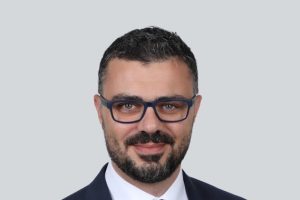
Daniel Vella Friggieri, Regional CEO for Europe and the Middle East at Aspen Pharmacare, discusses the company’s growth trajectory over the past 18 months, highlighting the decision to merge the Middle East and European regions into one unit. He reflects on Aspen’s evolving approach in Saudi Arabia, covering localization, talent development, and mutual goal setting under Vision 2030. Vella Friggieri also shares insights into Aspen’s broader regional strategy, emphasizing key therapeutic areas and strategic partnerships.
Since our last interview in 2023, how have things evolved at Aspen? What key milestones over the past 1.5 years have had the most significant impact on Aspen’s trajectory across the Middle East?
The past year and a half has been both dynamic and highly productive journey for Aspen across the Middle East and Europe. We have achieved significant growth, both organically and inorganically, while solidifying our position as a leading specialty pharmaceutical company. If I had to highlight key milestones, a few stand out as particularly impactful.
First, the merger of the European and Middle Eastern operations was a strategic success. Retaining two regional head offices, one in Dubai and one in Dublin, proved to be a fruitful decision. This structure has allowed us to maximize operational efficiencies while also attracting top talent in both locations. Each market presents unique opportunities and having a presence in these key regions has strengthened our ability to scale effectively.
From an organic growth perspective, we made substantial investments in our key therapeutic areas, leading to above-market growth across Europe and the Middle East. This shift in strategy was recognized at a group level, further reinforcing our market leadership. Additionally, we expanded our portfolio through new partnerships in specialized areas such as dermatology and local anesthesia, women’s health, general anesthesia, and oncology. These collaborations have translated into exciting results with the successful launch of approximately 20 SKUs across the region in just 18 months.
Beyond portfolio expansion, we have also focused on adapting to the evolving healthcare landscape by enhancing patient awareness and engagement. For example, in women’s health and local anesthesia, we introduced targeted initiatives to improve patient accessibility and education. This direct-to-patient communication approach has strengthened our market presence and impact.
Lastly, localization has been a key priority, particularly in Saudi Arabia. Over the past year and a half, we have made substantial progress in expanding our local operations and aligning with the Kingdom’s broader healthcare transformation goals. This remains a critical focus for us moving forward as we continue to build on our success in the region.
Could you provide an update on your current portfolio focus in the region and highlight the therapeutic areas that are prioritized for Aspen in Europe and the Middle East?
Aspen’s global strategy remains focused on providing high-quality pharmaceuticals to patients, and this commitment drives our approach in Europe and the Middle East. Within these regions, we have prioritized key therapeutic areas that align with both patient needs and market demand.
Our primary focus areas in Europe and the Middle East include women’s and men’s health, local anesthesia, dermatology, and hospital anesthesia. In the Middle East specifically, we have also placed significant emphasis on thrombosis and pain management, given their importance in the regional healthcare landscape.
Looking forward, we are actively building our portfolio and expanding our product range within these core therapeutic areas. Our approach to growth is centered on strategic launches, partnerships, and localization efforts that enhance accessibility and impact. In addition to expanding treatment options, we are also committed to increasing patient awareness, as education plays a critical role in healthcare outcomes.
One recent milestone has been the launch of Aspen’s first emergency contraceptive in the Middle East. It has performed exceptionally well in the UAE and is now being introduced in Saudi Arabia. Given the sensitivity of the topic, patient awareness initiatives are crucial. Therefore, we are actively working to ensure that the necessary support and information is available. This launch marks an exciting step forward to addressing important unmet needs in the region.
With the ongoing transformation under Vision 2030, how has this affected the way Aspen operates and engages with the healthcare system in the region?
Being such a dynamic change in the healthcare landscape, it is of course creating both opportunities and challenges for the pharmaceutical industry. One of the key drivers of change is the increasing expatriate population which is expanding the overall demand for healthcare services. At the same time, the Kingdom’s focus on localization and accessibility is reshaping how companies operate, ensuring that more pharmaceutical products are manufactured within Saudi Arabia.
This evolving environment requires the industry to adapt quickly. We are seeing a stronger emphasis on public-private partnerships which are becoming a major force in shaping healthcare delivery. Additionally, with the growing population, there is a natural increase in demand for pharmaceutical products. However, alongside these opportunities, there are also evolving regulatory requirements, cost pressures, and tender conditions that are influencing how companies approach the market.
At Aspen, we view these changes as an opportunity rather than a barrier. Our strategy is centered on localization, ensuring that we align with the Kingdom’s objectives by strengthening our local presence. While some companies may see localization requirements such as the need for local headquarters or manufacturing facilities, as a challenge, we see them as a way to enhance market access and expand our footprint in Saudi Arabia. By adapting to these shifts, we are hoping to closely support the country’s healthcare transformation.
Can you elaborate on your strategy, operational model, and approach in Saudi Arabia? How have localization efforts contributed to improving accessibility in this market?
Our strategy in Saudi Arabia is built around three key pillars: talent development, localization, and partnerships. These areas are central to our approach as we expand our footprint and enhance accessibility in the market.
The first pillar is talent development. In August 2024, we took a major step by opening our regional headquarters in Saudi Arabia, where we have employed 15 Saudi personnel. Still, our focus goes beyond hiring, it is about equipping our local talent with the expertise needed to excel in the pharmaceutical and healthcare industry. We are committed to building capabilities that align with Aspen’s global strategy while ensuring that our Saudi team members gain valuable industry experience.
The second pillar is localization, particularly in terms of our product portfolio. Our goal is to expand our offerings in Saudi Arabia while balancing products that are both strategic for Aspen and aligned with the Kingdom’s healthcare priorities. When engaging with authorities on localization efforts, we carefully select products that bring value to the local market while also maintaining a strong alignment with Aspen’s long-term business strategy. Given that Aspen specializes in complex-to-manufacture pharmaceuticals, our approach to localization is unique. Technology transfer in Saudi Arabia is challenging, and due to the diverse nature of our product lines, a single manufacturing partner would not be sufficient. Instead, we are developing a network of CMOs to support the localization of our portfolio.
We see that Saudi Arabia has the potential to become a regional manufacturing and distribution hub. When transferring products into the Kingdom, achieving economies of scale is crucial to remaining competitive in both the GCC and the broader Middle East. Our ambition is to evolve our local entity in Saudi Arabia as a Marketing Authorization Holder, to not only serve the local market but also to become a key exporter to regional and, eventually, global markets.
Finally, our third pillar, partnerships, plays a critical role in our strategy. We work closely with local manufacturers, CMOs, and regulatory bodies, including the Saudi FDA, the Ministry of Investment, and local content authorities. Our goal is to maintain an open dialogue with these stakeholders to ensure that Aspen’s strategy aligns with the Kingdom’s vision.
Saudi’s FDA recently achieved maturity level four (ML4) from the WHO, the highest classification. What was your experience working with the SFDA to bring your portfolio to market?
I can certainly say that my experience with the SFDA has been extremely positive. I have been with Aspen for nine years now, and throughout this time, I have worked closely with the SFDA, as well as in previous roles with other companies. From the very beginning, I have found the SFDA to be open to discussion, highly collaborative, and always willing to engage with industry stakeholders to find solutions that improve access to medicines. My team and I have consistently experienced a regulatory body that listens, understands the needs of pharmaceutical companies, and works towards pragmatic solutions.
Over the years, I have witnessed significant growth in the SFDA’s technical expertise, and this has been recognized not just by us at Aspen, but also at a global level. Within Aspen Group, we have discussed how the SFDA has continuously strengthened its regulatory capabilities, reinforcing its role as a leading authority in the region. This progress is extremely encouraging because, as a multinational company, we want to work with regulators that have clear requirements, a well-defined strategy, and a deep understanding of both multinational and local industry’s needs. This is a major achievement for the SFDA, and we are excited to continue working alongside them to bring innovative medicines to the Kingdom.
Africa and the Middle East have been top regions for Aspen, with the company experiencing double-digit growth in 2024. What role does Saudi Arabia play in this success, and what are your goals for the company in the Kingdom moving forward?
If we look at the Europe and Middle East region as a whole, 2024 was an exceptional year of growth. Both regions delivered strong performance, further solidifying their contribution to Aspen Group. In Africa and the Middle East, we achieved approximately 11% growth, while the Middle East alone grew around 9%, which is a remarkable achievement. This demonstrates the increasing significance of the Middle East in Aspen’s overall success.
Europe, which is reported together with the Commonwealth of Independent States, showed overall stability in the last year. However, if we isolate Europe alone, it grew by 7% compared to the previous year. For a mature market, this is an impressive accomplishment and a testament to the resilience and dedication of our team, enabling us to achieve significant growth.
Regarding Saudi Arabia, it is one of the top five markets within our Europe and Middle East region. In fact, one of our key brands in Saudi Arabia ranks among our top five brands across the entire region, despite only being available in the Kingdom. This underscores the scale and strategic importance of Saudi Arabia for Aspen. As the largest market in the Middle East, it naturally receives a high level of focus, with numerous product launches and strategic projects specifically tailored for the Kingdom. Additionally, the greater Aspen Group has identified some of our Saudi-based initiatives as high-priority strategic projects, further reinforcing our commitment to this market.
Reflecting on the transition and merger of two distinct regions, what key insights or lessons can you share about this process, and how have these experiences shaped your approach to the region?
From my perspective, and that of the leadership team for Europe and the Middle East, the most important pillar in our strategic priorities are people and culture. Successfully implementing an organization’s strategy requires a motivated team, one that understands the culture, aligns with the vision, and is fully engaged in executing strategic priorities. This is why we have placed significant focus on fostering a strong, unified culture across our expanded region.
One of our key talent initiatives has been identifying and developing high-potential individuals within the organization. Retaining and nurturing top talent is a priority, and we have implemented a variety of talent management programs to support this. These include mentorship opportunities with senior leaders from our team, other regions, and the broader Aspen Group, as well as structured development programs to equip individuals with the skills they need to grow. Our ultimate goal is to build the next generation of leaders within Aspen, ensuring clear career paths and long-term opportunities for our employees.
Beyond talent development, we also place strong emphasis on ensuring that employees understand how their work directly contributes to Aspen’s overarching strategy, both at the regional level and globally. By creating this alignment, we empower our teams to see the impact of their roles and how they contribute to the organization’s long-term success.
To foster an open and collaborative culture, we actively encourage employees to share their expertise and insights. We are a project-driven organization, and we involve our teams in key initiatives to ensure their voices are heard. Regular town halls, monthly check-ins, annual meetings, and dedicated project teams provide platforms for employees to engage, contribute, and feel valued. We also believe in recognizing and celebrating all our successes on a regular basis, whether quarterly or annually, as this helps sustain motivation and reinforces our shared vision.
Over the past two years, these initiatives have helped us cultivate a strong, united culture across the organization. Our annual kick-off meetings have reinforced the message that we are one organization, thinking as one, acting as one, and delivering as one. This alignment has been instrumental in ensuring a smooth and effective transition following the regional merger.
In your previous interview, you mentioned a strategy focused on developing or finding R&D partners. Where does Aspen stand in this area now, and is this still a critical component of the local strategy?
Partnering with companies remains one of our key strategic pillars, particularly under what we call ‘value creation.’ Business development takes many forms, whether through licensing agreements, distribution partnerships, or collaborating with R&D companies that lack a marketing arm. In many cases, we work with these partners to bring their products to market, either under joint agreements or with Aspen as the sole marketing authorization holder.
We have made strong progress in this area and continue to explore promising opportunities on the horizon. Our focus remains firmly on key therapeutic areas, particularly women’s and men’s health, local anesthesia, dermatology, and hospital anesthesia. These are the segments where we see the most potential for impact and sustainable growth. As we move forward, our goal is to deepen our partnerships in these areas, ensuring that we bring innovative and high-quality products to patients in the region.
You also mentioned the importance of awareness for the new contraceptive launch, especially in collaboration with healthcare professionals and patients. Can you share more about the initiatives and actions taken to raise awareness in the region?
Women’s health is a major focus for Aspen and one of our biggest brands globally addresses vaginal atrophy in menopausal women. In Europe, we launched an awareness initiative around menopause to educate patients on symptoms and treatment options. Often, discussions around women’s health, including menopause and contraception, remain sensitive or even considered taboo. Our goal is to break down these barriers and empower women with the information they need to seek appropriate care.
By increasing awareness, we are also improving accessibility. Many women may experience symptoms but hesitate to consult a doctor or pharmacist. By normalizing conversations around these conditions, we encourage more women to take proactive steps toward managing their health. This extends to emergency contraception as well. This is an integral part of our commitment to public health and patient well-being for everyone in the Kingdom, especially women in this instance.
What are Aspen’s strategic priorities and executive vision for the next two years in the Middle East and Saudi Arabia, and what specific goals do you aim to achieve during this period?
Aspen’s strategic priorities for the Middle East and Saudi Arabia over the next two years are built around four key pillars: people and culture, execution, innovation, and value creation. These priorities guide our approach to growth, localization, and operational excellence in the region.
The first pillar is people and culture. Talent management, retention, and development are critical to Aspen’s success. We place strong emphasis on ensuring that our employees have the right expertise and growth opportunities to contribute meaningfully to our long-term strategy.
Next, we have execution. This is centered on implementing our marketing strategy to drive organic growth. We have clearly defined our key therapeutic areas, and our investments are focused on ensuring that Aspen remains competitive and well-positioned to meet evolving healthcare needs. Our team is fully aligned on regional priorities, and our efforts are concentrated on maximizing the impact of our core brands.
Our third key pillar is innovation. This involves continuous improvement, process and portfolio optimization. It also includes enabling local product transfers, which is a major focus in Saudi Arabia. We are actively working on localizing a shortlist of strategic products that align with the Kingdom’s goals and Aspen’s broader regional strategy.
The final pillar is value creation. This is driven by business development, including local initiatives leveraging Aspen’s global expertise in acquisitions and partnerships. We continue to explore opportunities that will strengthen our presence and enhance our product offerings in the region.
Furthermore, we have a primary focus on localization in Saudi Arabia. We are in active discussions with multiple contract manufacturers, partners, and authorities to bring key products to the Kingdom, not just for local use, but also for potential exports to the wider region. This aligns with Aspen’s long-term vision of building a strong, sustainable footprint in Saudi Arabia and the Middle East.
What message would you like to convey to the international community on behalf of Aspen?
Aspen has built strong capabilities across Europe and the Middle East, with an efficient distribution network, operational excellence, and a highly skilled team. As we continue to grow, both organically and through strategic partnerships, we are committed to expanding our reach and enhancing patient access to high-quality pharmaceuticals.
I would like to conclude by saying that Aspen is the ideal partner for companies seeking to establish or strengthen their presence in Europe and the Middle East. We offer deep market expertise, a strong regional footprint, and the ability to effectively bring innovative and essential healthcare solutions to patients. Our goal is to collaborate with organizations that share our vision and are striving to make a significant impact in the region.