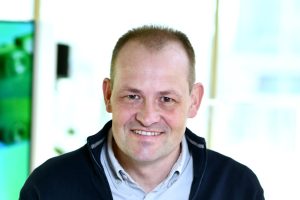
Christof Kloepper delves into the Basel Area’s positioning as a leading hub for life sciences and biotech innovation. Kloepper emphasizes the region's commitment to attracting global companies, nurturing startups, and building a strong ecosystem of talent, research, and infrastructure. He draws a comparison to Boston and highlights the Basel Area’s growing stature in the field, noting, “While Zurich might be about finance, Basel is about ideas.”
What is the origin and purpose of Basel Area Business & Innovation, and how has it evolved?
Basel Area Business & Innovation was established with a unique vision to promote innovation in the Basel region. The idea emerged in 2012 when I, alongside an IT entrepreneur and some further supporters, recognized that traditional state-driven approaches to innovation were often slow and inefficient. We decided to take a different route, focusing on a network-based model that emphasized communication and collaboration. Initially, the organization operated under a different name and our fresh approach quickly gained traction.
By 2016, the cantons—the regional governing bodies in Switzerland— recognized the potential for synergies and increased impact by merging two independent organizations. One organization focused on innovation activation, while the other focused on investment attraction. The decision to merge these organizations proved to be successful, as it created a unique set-up in Switzerland. In 2018, the organization’s scope was further expanded to include the management of large laboratory infrastructure projects. An example of such a project is the Switzerland Innovation Park Basel Area – Main Campus. In 2018, we further broadened our scope by managing large laboratory infrastructure projects, such as the one we’re currently in.
While we work closely with the state, our organization remains distinct by maintaining a significant level of independence. We are positioned between government and industry, which allows us to move quickly and respond to market needs. Our team is composed primarily of experts from the pharmaceutical, biotech and healthtech sectors, which helps us communicate effectively with industry leaders and understand their needs. This balance between public and private expertise is critical in fostering the region’s growth and ensuring that we remain agile and aligned with the industries we serve.
What are the core services offered by Basel Area Business & Innovation, and how do they support companies?
Our organization is structured around three key pillars. The first is investment promotion, which is aimed at attracting international companies to Switzerland, particularly to the Basel region. We assist these companies in finding the right location for their European operations, and in many cases, Basel Area proves to be an ideal choice. We have both a local team based in Basel and an international team, with representatives in strategic locations like Boston. This has enabled us to successfully bring in significant companies, including names like Moderna, Regeneron, and BeiGene. These companies, among others, have chosen the Basel Area region as their European hub, thanks to our guidance and support.
The second pillar focuses on innovation, where we actively support startups. We recognize that a substantial portion of industry innovation is driven by these emerging companies. To foster this, we offer a variety of services, many of which are funded by large private investors. Our flagship program is BaseLaunch, which is one of the largest biotech incubators, particularly in terms of the funding invested in the startups we nurture. We support companies in several sectors, including biotech, digital healthcare, and even Industry 4.0, which focuses on industrial transformation beyond the pharmaceutical industry.
The third pillar is innovation space, where we collaborate with private partners to provide state-of-the-art infrastructure tailored to the needs of life sciences companies. This includes lab spaces, as well as spaces designed for digital healthcare companies, such as those located on the Novartis Campus. By ensuring that companies have access to the right facilities, we help them grow and scale within the region.
Why do companies choose the Basel Area over other regions in Switzerland, and what advantages does it offer them?
In earlier years, Switzerland’s attractiveness was primarily built on its strong framework conditions, such as competitive tax rates and flexible labor markets—factors that are still crucial today and can be found throughout the country. However, the landscape has shifted. Companies no longer just look for favorable economic conditions; they seek a robust ecosystem that fosters collaboration and growth. They want to be part of a community where they are not isolated, but rather surrounded by a network of talent and research institutions.
The Basel Area is the leading hub for life sciences in Switzerland, offering a rich ecosystem of research and innovation. Institutes provide invaluable connections to cutting-edge research and development. While other regions, like Zurich, excel in fields such as engineering and drone development, Basel’s strength lies in its life sciences ecosystem, which is unmatched in scale and depth.
A key factor that attracts companies to the Basel Area is the availability of talent. When companies bring in employees from abroad, particularly from the U.S., these individuals want to know that there will be future opportunities for them in the area, even if they decide to move on from their current employer. This security, knowing there are other companies within the region to turn to, makes the Basel Area highly attractive for both businesses and their employees.
What do you see as the most promising opportunities for future investments in the Basel Area, particularly within the healthcare and life sciences sectors?
The healthcare and life sciences industries are undergoing significant changes, especially in drug development and the growing role of digitalization. While pharmaceuticals, biopharma, and medical technology remain central, the most exciting opportunities lie in the integration of digital technologies into drug development processes. It’s not just about the next app in digital health, but rather the use of advanced algorithms and data-driven approaches that are transforming how new therapies are discovered and developed.
The Basel Area is particularly well-positioned to capitalize on this trend. A key strength in the region is the ETH Zurich Department of Biosystems Science and Engineering (D-BSSE), which operates at the intersection of biology and digital technologies. This department is already attracting companies looking for specialized talent in these fields. Another promising development is the recently announced Botnar Institute for Immune Engineering (BIIE), which focuses on combining biology and digital innovation and received an investment of USD one billion across a period of 15 years. This will create even more opportunities for research collaborations and groundbreaking advancements. I believe this convergence of biology and digital technologies will be a major growth area, further cementing the region’s position as a leading hub for life sciences innovation.
How is the Basel Area positioning itself as a hub for digital health and drug development, and what role do biotech companies play in this evolving ecosystem?
The Basel Area has firmly established itself as a global leader in drug development, with a unique ecosystem that few regions can rival—perhaps only Boston comes close. The region excels in integrating digital technologies into the drug development process, not just in creating health apps but in using sophisticated algorithms and data-driven approaches to revolutionize how therapies are developed. This digital shift is attracting a growing number of companies, particularly those working at the intersection of pharma and digital health.
However, when it comes to more consumer-facing digital health products, such as app development, Basel may not always be the first choice. For cost-sensitive projects, companies often look to near-shore or off-shore options in regions like Vietnam or Serbia. Instead, Basel’s strength lies in high-end, cutting-edge work in life sciences, where proximity to leading pharma and biotech companies is essential.
We’re also seeing a significant expansion in biotech, particularly with innovations in small molecules and new therapies. What’s noteworthy is the evolving role of small biotech companies. In the past, these firms were often acquired and integrated into larger pharmaceutical companies. Today, the trend is shifting towards partnerships, where big pharma collaborates with biotech firms while allowing them to retain their structure and independence. This shift reflects the growing recognition of biotech companies as vital players in the life sciences ecosystem, and we expect their role to become even more prominent in the future.
How would you characterize the startup ecosystem in the Basel Area, especially in the biotech sector?
The term ecosystem is often overused, but it genuinely reflects what the Basel Area has become. In the past, we referred to the region as a life sciences cluster, but today it has transformed into a dynamic, interconnected environment where companies, research institutions, and other key players collaborate and influence each other. This evolution has been vital to the Basel Area’s strength as a leading hub for biotech innovation.
In terms of biotech startups, there are two primary sources of growth. First, there are the homegrown companies emerging from renowned institutions like the ETH Zurich Department of Biosystems Science and Engineering (D-BSSE) and the University of Basel. These universities consistently produce innovative spin-offs, creating a robust pipeline of new biotech ventures that enhance the region’s ecosystem.
Equally important is the influx of biotech companies from outside the region. For example, a biotech firm based in Strasbourg might struggle to find the necessary resources and ecosystem for growth. The Basel Area offers precisely what these companies need to scale, providing access to not only scientific expertise but also commercial and drug development talent, which is critical for success.
In addition to this talent pool, the region has strong access to venture capital, with many local and international investors operating in the region. This makes it easier for startups to secure funding. The Basel Area also offers excellent infrastructure. For instance, its tech parks allow companies to start small, perhaps by renting a single lab bench, and gradually expand as they grow. Some, like Idorsia, have even reached the point where they’ve built their own facilities. This flexibility, combined with access to critical resources, makes this region an ideal place for biotech startups to flourish.
With BaseLaunch accelerator, focused on biotech, we offer promising founders one of the leading incubators in Europe, offering the opportunity to become deeply embedded within our ecosystem.
How would you describe the availability of talent in the Basel Area, and how does the region continue to attract top-tier talent in life sciences despite being in a small country?
Despite Switzerland’s relatively small size, the talent pool in the region is substantial, particularly in the life sciences sector. The city itself boasts around 33,000 professionals in this field, a number that owes much to the presence of major global companies like Roche and Novartis, which continually attract and develop skilled individuals who often go on to enrich other organizations in the region. In addition, Basel benefits from being situated in a tri-national region, where the labor markets of France, Germany, and Switzerland overlap. This creates a broader pool of talent, as professionals can live in France or Germany and work in the Basel Area, enjoying the advantages of all three countries’ systems.
Switzerland is also highly attractive to international talent. The country’s favorable immigration policies for skilled workers, along with its high quality of life, competitive wages, and excellent educational options, including English-speaking schools, make it an appealing destination. Many professionals come to the region on short-term assignments, typically for three years, but we’ve observed that a significant number choose to stay longer due to the high standard of living and professional opportunities. As an organization, we focus on bringing more innovative companies to the region that create compelling opportunities for talent. These companies, in turn, draw top-tier professionals to the region. Switzerland’s strong framework conditions and high quality of life do much of the work in attracting talent, while the companies themselves enrich the local labor market.
What message would you like to convey to international companies and stakeholders regarding the Basel Area’s role in life sciences innovation?
For any company aiming to establish a foothold in Europe, particularly within the life sciences sector, the Basel Area offers an exceptional ecosystem that provides access to both the European market and a thriving research and development environment. Similar to Boston, being located in the Basel Area allows companies to immerse themselves in a network where innovation happens continuously. Even a small presence can open doors to invaluable connections, collaborations, and cutting-edge developments. The region is increasingly recognized by global players as a hub for life sciences, with many large companies already setting up operations here to benefit from the region’s expertise and infrastructure.
At Basel Area Business & Innovation, we support companies in integrating into this ecosystem, which has a strong foundation of talent, infrastructure, and innovation. While Boston has long been an established leader in life sciences, the Basel Area is fast approaching a similar level, with significant potential for deeper collaboration between the two cities—particularly in research and development. A unique strength of the Basel Area lies in its focus on ideas and turning those ideas into reality, whether it’s for clients or patients. As a recent observation put it, Zurich might be about finance, but Basel is about ideas. Here, the entire ecosystem—ranging from biotech startups to global headquarters—has the ingredients for sustained success, making the region a prime destination for companies looking to innovate and grow in the life sciences sector.