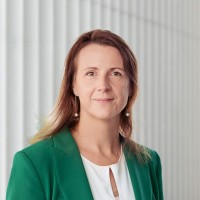
Catherine Pickering, CEO of iOnctura, explains how her agile Swiss biotech is pioneering precision small-molecule therapies to overcome tumour resistance, with a focus on lead asset - roginolisib and a pipeline built on novel scientific mechanisms. She discusses the company’s evolution from seed funding through Series B and the role of strategic partnerships to a lean operating model that supports parallel Phase II trials. Pickering also outlines iOnctura’s roadmap toward pivotal studies in metastatic uveal melanoma and engagement with pharmaceutical industry partners over the coming years.
Can you start by introducing yourself and share how iOnctura’s journey started.
I have been passionate about oncology from the very start of my career. I earned my PhD in antisense chemistry at the Institute of Cancer Research in London, which is closely affiliated with the Royal Marsden Hospital. Walking through the hospital canteen every day, seeing children on drips and patients undergoing treatment, gave my work immediate purpose. It made academic research feel real, and that is where my commitment to cancer therapeutics began.
After completing my PhD, I returned to the Institute of Cancer Research to join its newly created enterprise unit as employee number two. Over five years, I helped build a technology‐transfer group responsible for protecting intellectual property, commercializing discoveries, and guiding research toward patient benefit. I learned how to translate scientific advances into real‐world applications and how to work with leading scientists to broaden their view beyond publication.
Eager to move deeper into the biotech world, I then joined Antisoma, a small public company in London, as an alliance manager and business‐development lead. After four years there, I accepted a position at Merck in Darmstadt, Germany. My goal was to understand how a large pharmaceutical company operates. Over the next ten years, I led the search, evaluation, and transaction side of the oncology licensing function, working closely with the senior leadership team across commercial research, medical affairs, and business development. I also led due‐diligence efforts, giving me insight into clinical development, manufacturing, and every aspect of the drug‐development lifecycle. By the end of that period, I had a broad understanding of the business and felt ready to take on a CEO role.
While exploring CEO positions through M Ventures, Merck’s venture‐capital arm, I found that none quite matched my personal vision. Around the same time, I was leading the out-licensing deal for Merck’s checkpoint inhibitor Bavencio with Pfizer. This programme and its future combination potential revealed an opportunity to create a spinout so I decided that, rather than joining another company, I would build my own.
The idea for iOnctura took shape over a lunch at ASCO with Merck’s global CEO, who was supportive and later helped secure board approval for a spin‐out. Over the following year, I negotiated the transfer of deprioritised research and a clinical‐stage asset from Merck, brought in two promising molecules from Cancer Research UK, and arranged seed financing, while still leading the oncology‐licensing team. It was a challenging year, but every stakeholder I engaged with was enthusiastic about our vision.
That effort culminated in the launch of iOnctura, where we are now advancing novel cancer therapies with the same purpose that first drew me to this field.
The name iOnctura, where does it come from?
The name iOnctura comes from the Latin word ionctur, meaning “to combine.” When we founded the company, I wanted a name that captured our vision: to combine multiple tumour resistance mechanisms and target them together. Our goal has always been to overcome cancer by inhibiting several survival pathways at once. That idea of combination, of uniting mechanisms to create more effective treatments, is at the heart of what iOnctura stands for.
Can you explain the unmet medical need that your company and technology addresses?
When I founded iOnctura, I saw that checkpoint-inhibitor immunotherapies, despite their promise, left many patients either unresponsive or rapidly resistant. Tumors were using multiple escape pathways to evade immune attack. I started iOnctura to develop highly selective small-molecule inhibitors aimed precisely at those mechanisms of immune and tumor resistance.
Our lead asset, roginolisib targets the PI3K delta pathway. Merck originally advanced this compound through animal studies for lupus before shelving it due to a safety signal in preclinical models. A pivotal 2014 Nature paper then revealed that PI3K delta is crucial for regulatory T cells function, cells that tumors exploit to suppress the local immune response. Because roginolisib is highly selective for PI3K delta, we recognized its potential to reprogram the tumor microenvironment and chose it as the cornerstone of our pipeline.
Together with my co-founder, Lars van der Veen, who also comes from a kinase background, we have built the rest of our pipeline on the same precision ethos. Our second clinical candidate is an autotaxin inhibitor licensed from Cancer Research UK, and our third is a selective TGF-beta pathway inhibitor. Each molecule is differentiated from earlier generations of inhibitors and address distinct tumor-resistance pathway while exerting immune-modulatory effects. This focused, small-molecule approach defines iOnctura’s mission to overcome resistance and improve outcomes in oncology.
What is the significance that you see that it can truly have for patients?
In my view, the true significance for patients is that they can receive effective cancer therapy without excessive toxicity. Our guiding principle is that cancer drugs need not be toxic to work, so safety is at the heart of everything we do. From the very beginning of roginolisib’s development, we insisted on strict dosing studies to ensure on-target activity with no off-target inhibition and clean, drug-like properties.
In later-line, drug resistance settings, patients have limited time. We do not want to extend their lives only to burden them with severe side effects or hospital stays. Instead, our aim is to give patients more time with their loved ones and maintain their quality of life by minimizing additional toxicity. While cures remain elusive in these settings, improving both the quantity and quality of life is our primary goal.
Could you elaborate on how your clinical pipeline has evolved, particularly focusing on the progress of your lead assets, roginolisib and cambritaxestat?
Our clinical‐development program began with roginolisib in indications known for high PI3K-delta expression and profound immunosuppression, specifically uveal melanoma – a rare cancer of the eye, cutaneous melanoma, and mesothelioma. We first evaluated roginolisib in a dose-escalation study and saw encouraging signals even in very late-line patients. Some patients remained on treatment for five to eight months with stable disease, and we confirmed on-target activity by tracking immune- and tumor-cell biomarkers in their blood.
Given those early signs of both clinical benefit and proof of mechanism of action from roginolisib, we opened a Phase 1b expansion in metastatic uveal melanoma. We have today treated around 30 patients and observed an over doubling of overall survival compared to historic controls, along with clear proof of mechanism of action.
I have even received emails and calls from patients asking, “Can we join your study?” For me, that was a defining moment, I realized we had succeeded as a company in delivering something patients understand and truly value. Of course, we cannot confirm efficacy until our randomized trials are complete, but the signal is very encouraging.
What makes these results even more meaningful is that we add no extra toxicity. Roginolisib is a once-daily oral tablet with minimal off-target effects, so patients can take it at home without a significant treatment burden. They do not have to be in a hospital setting to take the medicine.
This promising data enabled us to secure additional financing and advance directly into a randomized Phase 2 trial, which we plan to expand into a registration-enabling Phase 3 study, retaining commercial rights so we can bring roginolisib to patients ourselves.
Our second lead asset, cambritaxestat, is a highly selective, potent autotaxin (ATX) inhibitor – currently, it is the only ATX inhibitor in development for cancer. We have completed a Phase 1 study in metastatic pancreatic cancer and are now expanding into further GI tumors. Again, this is a precision small oral molecule.
This multi-asset strategy reflects our commitment to precision small-molecule approaches that overcome tumor resistance while preserving patient quality of life.
Could you walk us through how investors responded at each stage of iOnctura’s growth.
When we founded iOnctura in 2017, the environment, both internally and externally, was challenging. At the beginning, we knew we had a very special drug in our hands, roginolisib. We also have two other promising compounds, but for this conversation, I will focus on roginolisib. This molecule targets PI3K-delta, widely known as a lymphoma target. First-generation inhibitors of this pathway had significant dosing and toxicity issues, including severe side effects, which created a lot of scepticism of the ability to safely inhibit the target in the field.
At that time, we did not know those concerns were perhaps based on a misconception. Our view was that if we could deliver the right dose—precisely hitting the target y, we could manage the risk-benefit profile. But convincing others was not easy. We heard, “Oh, not another PI3K delta inhibitor,” and had to explain that ours was different. Roginolisib is an allosteric modulator, it inhibits the enzyme in a completely different way, by stabilising its inactive form. We knew the chemistry was distinct, and we had a solid hypothesis. Investors were intrigued. They said, “Interesting hypothesis, nice preclinical data, where is your clinical data?”
We understood their concerns. They were not being unreasonable. They just needed more evidence. We raised our seed round from M Ventures based on our preclinical data, which showed clear differences in immune cell behaviour and mechanism compared to first-generation inhibitors. That funding helped us continue preclinical work and prepare for the next step.
With that foundation, we raised our Series A. We launched our dose escalation study, and – then we dosed our first patients. The very clean safety profile slightly surprised us, in a good way. We were hitting the target, with 90 percent inhibition, but without the toxicities seen in earlier drugs. We saw no diarrhoea, no liver issues, no immune-related toxicities.
Then the COVID-19 pandemic hit in early 2020, which was a difficult time.
Following that, biotech markets surged for a while, and we rode that wave. But then the US Food and Drug Administration (FDA) introduced very strict guidelines on the PI3K-delta class, based on the toxicities of first-generation inhibitors in haematology.
That was another tough moment.
In some ways, it helped define us. We had always said that you needed precise dosing, you could not overdose a PI3K-delta inhibitor. You had to understand exactly what the drug was doing in the body and keep the profile clean. When those FDA guidelines came out, we were able to say, “We told you so.” And importantly, we had the data to back it up, showing that our dosing strategy was the right one.
Then last year, we closed our Series B funding round. By that point, we had dosed more than 50 patients with roginolisib across haematological and solid tumours, including around 30 patients in uveal melanoma. That clinical experience, combined with the differentiated safety profile and patient demand, helped us secure the next phase of funding.
Could you describe iOnctura’s operating model and how partnerships support your team?
We are now a team of around 20, having brought in key personnel following our Series B raise, including commercial expertise to ensure our Phase 2 trials are designed with appropriate endpoints that consider pricing and market access. We aim to stay ahead by thinking strategically about future needs, early on.
Despite our size, we are a close-knit group of experts, which allows us to leverage collaborations effectively. We work with academic and clinical partners across Switzerland, Europe, and the US. Locally, we collaborate with the University of Geneva and the Institute of Oncology in Bellinzona. We also have valuable partnerships in the Netherlands.
We carefully select our service providers. For instance, our clinical research organization, Simbec-Orion, manages all our roginolisib trials. This strong relationship has enabled us to initiate three Phase 2 studies in parallel over the past four months. Their support has been invaluable to our operations.
What are the next milestones for iOnctura?
Our next major milestone is receiving the randomized Phase 2 data in metastatic uveal melanoma, which we expect early next year. In parallel, we are also initiating a Phase 2 study in lung cancer and a separate Phase 1 / 2 study in myelofibrosis. What we are aiming to show in these studies is that the mechanism of action we have seen in uveal melanoma is consistent across these larger tumour types. We are not redefining the mechanism for each indication. Instead, the same underlying biology applies, and we expect to see it translate across all of them.
In terms of the funding stage, what are you looking at next or moving forward?
We are keeping our options open and preparing for different potential funding paths, depending on how the external financing environment evolves. That could mean public markets, private markets, collaborations, or a blend of all three. Our goal is to build the pipeline and company in a way that makes us ready for any of these routes.
We already have strong collaborations in place. One of them is with GSK, which is a drug supply deal structured at arm’s length, but we maintain a close relationship. We meet regularly and have a joint steering committee, which is very valuable. As an agile company, it is important for us to stay connected to external expertise and to listen to different perspectives.
What are your expectations for the next few years?
Over the next few years, I expect we will be initiating the pivotal part of our study for roginolisib in metastatic uveal melanoma. We will likely also be preparing to expand into larger phase 2/3 studies in one or two additional solid tumour indications. I believe this mechanism of action is starting to gain traction, and the pharmaceutical industry is beginning to see that PI3K-delta can be inhibited safely. We plan to spend a lot of time engaging with pharma partners to share our data and discuss the potential of this approach. At that stage, all going well, we will also be preparing for the launch of roginolisib in uveal melanoma. It is entirely possible to do that as a mid-sized company.
Any final message that you would like to finalise the interview with our audience?
I think it is great that you are speaking with biotech companies like ours. It has been a winding and challenging road, but we have stayed positive, strong and resilient. We are working in a field defined by resistance, both biologically and in terms of the hurdles that biotech and pharma face. Resilience and creativity in problem-solving are at the heart of what we do, and I believe iOnctura will continue to be successful as we navigate the next part of our journey.