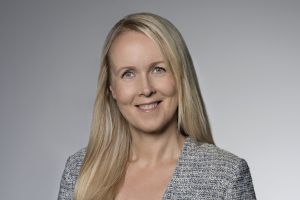
Bairbre Hickie, General Manager at Takeda, discusses the company's strategic priorities in Switzerland, focusing on its commitment to bringing innovative treatments to patients and its role in advancing the life sciences ecosystem. In this interview, Hickie explores Takeda’s approach to partnerships, its focus on rare diseases and oncology, and how the company is navigating the evolving regulatory and market dynamics in Europe.
Could you start by introducing yourself to our audience?
I began my career as a nurse, specialising in intensive care. This experience remains a significant part of who I am. The patient perspective has stayed with me throughout my career, and it continues to influence how I approach my work today. I try to bring that perspective into everything we do, ensuring that we always keep the patient at the heart of our decision-making.
I never imagined I would move into the pharmaceutical industry. I always thought I would be a nurse, as I loved it. However, an opportunity came up to join a pharmaceutical company as a clinical nurse advisor, which still allowed me to be involved in patient education. This role gave me my first exposure to the industry, and I realised that I could still make a significant impact on patients’ lives in a different way than I had in the healthcare system.
I worked at Fresenius Kabi for nearly 12 years in a variety of marketing roles, which gave me a wealth of experience. I even had a brief stint as interim general manager, which sparked my interest in leadership roles. After that, I was approached by what was then Shire, and I moved to Switzerland about seven years ago, just before the company was acquired by Takeda.
It was a period of significant change for the company as we went through the integration process, but it was also an exciting time. Over the years, I took on several roles, from global operations to regional franchise roles, focusing on product-specific work and launch excellence. Takeda offers a lot of opportunities, and I was fortunate to be able to take advantage of them.
About a year and a half ago, I took on the role of leading the Swiss affiliate. It felt like a logical next step for me, especially since my family and I had been living in Switzerland for several years and we had settled in well. My children are attending local schools, and Switzerland truly feels like home.
Leading the Swiss market is an honor. It’s a dynamic and exciting market with many opportunities, and I feel very fortunate to be in this position. I’m passionate about this country and the work we do here at Takeda.
What have been your main priorities since you took over your role, and what has kept you most busy?
At the start, I spent a significant amount of time focusing inward, trying to learn more about the Swiss market and understand the complexities and challenges within the organisation. Like most companies, we have many opportunities, so the key challenge has been deciding where to prioritise our efforts. We can only do so much, so it is important to focus on the activities that will have the greatest impact.
Part of my role has been guiding the organisation in making tough decisions about what we need to deprioritise. This is never easy, but it is essential to ensure we are staying true to our values.
At the same time, I have focused on ensuring that we have the right skills and capabilities to meet future needs, a key focus area has been on data, digital, and technology (DD&T). We cannot afford to fall behind in these areas. Our CEO’s vision is for Takeda to become the most trusted digital biopharmaceutical company in the world, which will require significant investment in people and change management.
Since I joined Takeda, I have spent a lot of time focused on these areas, while also getting to know the people within the company. Building trust as a leader is a significant part of this. It is important to get people behind the direction we are moving in and to make sure that we enjoy the journey. This balance between leadership, trust, and having fun along the way is very important to me.
Could you walk us through the company’s portfolio here in Switzerland?
We are fortunate here in the Swiss affiliate to have almost our entire portfolio available. Historically, gastroenterology has been a key strength for us, and it continues to be a major focus in our portfolio. However, our focus has now expanded to include what we refer to as our inflammation portfolio. We are moving into new areas of inflammation, such as psoriasis in the dermatology space.
Neuroscience is another core area for us here in Switzerland. We are continuing to address the unmet needs in areas like ADHD. While awareness of ADHD in Switzerland is growing, there is still work to be done, and we are very proud of the progress we have made in this space. Combining our passion for neuroscience and our continued commitment to the rare disease community we will also expand into the new area of narcolepsy.
Another important therapeutic area here in Switzerland is plasma-derived therapies. These therapies have been around for a long time and are complex to manufacture. It can take up to a year from start to finish to produce the final product, which adds complexity to the value chain. Despite the long-standing nature of this portfolio, we continue to innovate within the plasma-derived therapy space, with new indications aimed at addressing unmet patient needs.
It is always a fine balance in terms of balancing our existing portfolio while also positioning ourselves for success in these newer therapy areas, however, we are excited by the opportunity to explore them and drive progress in these areas as well.
Takeda has undergone major changes in recent years, including a refocused pipeline, restructuring, and cost controls. How have these changes affected the Swiss affiliate?
The changes Takeda has undergone in recent years feel very real here in Switzerland. When the members of the leadership team talk about the company’s ambition, it is our responsibility to translate that vision into actionable steps locally. At times, this can be challenging, especially when it comes to aligning with the specific environment in Switzerland.
For example, when we discuss DD&T, we have to consider the local ecosystem in Switzerland. While there are great initiatives, such as the Health 2030 strategy and DigiSanté, the truth is that Switzerland could invest more in digitalisation. These initiatives are important, but the pace of change is not fast enough to ensure we can make the desired impact. To successfully implement our strategies with partners, we need the right frameworks and connected ecosystems, and we are still far from achieving that.
It is essential for us to understand what is realistically achievable in the short term here, while also keeping an eye on our longer-term ambitions. While the global leadership team may discuss goals that are further down the road, we need to break these down and assess what they mean for us in the short, mid, and long term within the context of the Swiss market.
Where does Switzerland stand today in terms of both its strengths and the areas that still require improvement?
I come from a two-tier healthcare system in Ireland, where access to therapies highly depends on whether you have private health insurance. Those with private insurance can access therapies much earlier than those who cannot afford it. What I appreciate about Switzerland is that we do not have that approach. We have universal healthcare with mandatory insurance for everyone, which ensures that the majority of people can access the therapies they need. This is a key strength.
Another example of one of the positive aspects of the healthcare system here is the patient-first approach, which is something I truly value. A good example of this is Article 71, a mechanism that allows patients to access therapies early, under certain criteria, in specific locations. This is something not seen in many other countries across Europe.
That being said, there are growing challenges in getting therapies onto the Swiss drug list. The wait times for many innovative treatments are increasing year by year, and I believe the majority of the Swiss population is unaware of this. Despite paying high premiums for insurance, people do not realise that the wait for some treatments is longer in Switzerland compared to neighboring countries.
We understand the need for cost containment, especially given the growing and aging population, which will place additional pressure on the healthcare system. However, we must consider the broader implications of these measures. For example, the Federal Office of Public Health reduces the cost of patented medicines by around 1.5 billion each year. But focusing solely on reducing the cost of pharmaceutical therapies will not solve our problems. In fact, it risks undermining innovation. We need a more sustainable and holistic approach to the pricing and reimbursement model in Switzerland—one that does not jeopardise the value of the pharmaceutical industry, which contributes significantly to the economy and provides employment for over 450,000 people.
Given the current external pressures on trade, it is even more important to support innovation within Switzerland so that patients can continue to access the therapies they need. While Switzerland’s healthcare system has many strengths, there are some signals of concern that we need to address in order to maintain a sustainable and innovative healthcare environment.
What role do you see yourself playing in the broader healthcare ecosystem?
If we step back and look at Takeda as a company, we have a long history and a strong focus on our core values, which guide how we operate. We refer to this as “Takeda-ism,” which is based on integrity, fairness, and honesty, with integrity at the core.
Our main goal is to ensure that our actions align with these values. We use a framework called PTRB—patient, trust, reputation, and business—to guide our decision-making. This framework ensures that everything we do is centered around what benefits the patient, but also focuses on building trust with society and protecting Takeda’s reputation. We are here for the long term; after all, we have been around for 244 years this year.
While the patient comes first, we also need to make sure that our actions are right for the business. This balance is key. When engaging in discussions with the Federal Office of Public Health, we use this framework to assess if our decisions align with patient needs, help build trust, and protect our reputation, while also being feasible for the business. This approach is one of the reasons why people join Takeda and stay with us—our values are not just words; they are truly lived within the company.
In addition, our collaboration with Interpharma plays an important role. We are part of broader industry discussions aimed at finding solutions to the challenges we face, including HTA value recognizing issues. While we already have a significant impact, we believe more needs to be done. We are advocating for a recognition of the full value of pharmaceuticals, which goes beyond just pricing. This is a long-term objective that we are committed to pursuing.
What steps is Takeda taking to address the challenges in healthcare digitalisation and align with your vision of becoming the most trusted digital pharmaceutical company globally?
Addressing the challenges of healthcare digitalisation and data sharing in Switzerland requires significant investment, especially in terms of change management and understanding what is possible now and what needs to happen in the future. Recently, we had a customer from a hospital in Basel speak with our leadership team. He had a clinical background but later transitioned into IT. He shared the difficulties they face internally within their hospital, where information is siloed across many different departments, let alone across the entire canton or clinic centers.
Our approach is to partner with customers to understand the reality of hospital operations in relation to data exchange. If we want to share data with authorities to demonstrate the value our products deliver, we need to tackle the infrastructure challenges. While we cannot solve the entire internal infrastructure issue within the Swiss healthcare system, we can provide solutions and offer suggestions to help improve the situation.
In terms of investments, we are focusing on value-based partnerships. These include initiatives like building apps to monitor patients’ quality of life, with the goal of using that data to demonstrate value to stakeholders and payers. However, the current challenge is that payers generally do not validate or use this type of data, which makes it difficult to share effectively.
For us, internally, the challenge is also related to the broader cost-containment pressures facing the industry. In Switzerland, our goal is to bring our products to market more quickly. This includes speeding up aspects of our R&D process, which our global teams are actively working on. Locally, our focus is on building data that supports value demonstration for our products and developing solutions that improve patients’ quality of life. Digital tools like apps, which track the patient journey and highlight the impact of their disease, are part of this strategy.
How do you stay focused and adopt the right market approach when managing priorities across multiple innovative areas?
Managing priorities across multiple innovative areas can be challenging, but I focus on understanding the patient needs first. I ask myself: Can we address this need? Do we have the ability to bring value to this area? If not, we evaluate other areas where we believe we can make a greater impact and focus our efforts there.
It is also about how we engage. For example, when we discussed digital earlier, we recognise that engagement models are changing. We may need to adopt a more digital approach to communicate about our therapies and engage with a broader range of stakeholders. Not everything needs to be in person. While in-person meetings will always be important, we look at ways to complement that with digital methods, which helps us leverage resources across the organisation.
Additionally, we use agile methodologies to manage some of our business processes, which helps us remain flexible and responsive. Of course, we must make trade-offs, as that is the reality for any business. However, my top priority is always ensuring that we meet the needs of patients with the therapies we have. That is what drives me.
Can you share what diversity and inclusion mean for Takeda and for you personally?
Diversity, Equity, and Inclusion (DEI) are extremely important topics, and they are something we are very committed to here at Takeda. We hear a lot of discussions about it, but at Takeda, it is not just talk; it is something we actively focus on.
For us, an inclusive workforce means ensuring that everyone feels they belong. One of the ways we foster this sense of belonging is through our Takeda Resource Groups (TRGs). These groups bring together like-minded individuals who share a common interest or goal. You do not have to identify with a specific community to join these groups. They are designed to encourage allyship and create a supportive network within the organisation, we currently have nine TRG’s in total.
For example, our Disability TRG focuses on disability-related issues, which also helps when we want to think about making our workspaces as accessible as possible for those with disabilities and raising awareness about both visible and invisible disabilities.
These types of resource groups are important not only for our colleagues working within Takeda but also for those who may want to join our organisation. Many people are interested in working for companies that prioritise diversity and inclusion and create an environment where everyone feels accepted and valued.
For me personally, DEI brings a strong sense of purpose. It is not just about making the workplace better for employees, but also about creating a culture that attracts people who share these values. This sense of belonging at Takeda is something that is really important to me.
What is your approach to building strong teams, recruiting the right talent, and ensuring that Takeda remains a place where people are motivated to stay and grow?
Talent acquisition is not a problem for us, especially because Switzerland offers a wealth of talent. Being part of a larger organisation also helps, as it increases our reach and makes it clear that joining Takeda offers career paths across various parts of the organisation, which is very appealing to candidates.
We attract a wide range of talented individuals, from newly graduated students from ETH and other universities around Switzerland to highly skilled professionals who are eager to learn and make an impact. We are fortunate in this regard. Additionally, being part of the Zurich site co-location allows us to bring in talent from other parts of the organisation, which helps to diversify the profiles within our teams.
Retaining this talent is just as important to us. As I mentioned earlier, focusing on DEI is crucial, but we also place a strong emphasis on employee well-being. We offer programs like employee assistance programs, running clubs, yoga sessions, and flexible maternity and paternity leave policies. Flexible working hours are also part of the package, ensuring that our employees feel supported both personally and professionally.
However, one of the biggest reasons people stay at Takeda is because they align with our values. When people join us, they often stay because they find a sense of purpose within the company. This is something I am very proud of.
A good example of watching strong Swiss talent development is our new EUCAN—Europe, Canada—Regional President, Jean Luc Delay. He has had an incredible journey with Takeda and has come back after a time away. His story is a shining example for others in my organisation, showing how Swiss talent can grow and thrive at Takeda.
What aspects of your leadership style do you aim to instill within your team, and what legacy do you hope to leave as you guide the company to its next stage of growth?
When reflecting on my leadership style, I would describe myself as pragmatic and empowering. I want my team to feel confident in making decisions that they believe are the right choices, decisions that ultimately make a positive impact on patients’ lives. While it may sound cliché, this is the core reason we are all here in the pharmaceutical industry. It is also important to me that do this while keeping the values of Takeda alive.
One of the things I truly appreciate about our Swiss affiliate is the strong sense of community. It is a close-knit environment where people can rely on one another, and that is something I deeply value. As I mentioned earlier, having fun along the way is essential. We spend a lot of time at work, and I believe it is important that people not only feel the work is purposeful but also feel energised and enjoy what they do. Life is short, and we want to make sure that work brings both fulfillment and enjoyment.
What are the key milestones and priorities you are focusing on for the year and looking ahead to 2026?
For us, the focus this year is on execution, particularly as we prepare to ramp up for the launch of our upcoming assets over the coming years. This is a significant year for Takeda, as we will be reading out results from three of our Phase 3 assets. From an affiliate perspective, it is crucial that we look to the future while also ensuring that our current efforts are aligned with what truly matters now.
Our priority is to be the partner of choice, working closely with our providers and patients to co-create solutions that bring real value. We aim to do this while embedding a data-driven culture within the organisation. This will help us remain future-focused and make the most of the balance between our in-line products and pipeline assets moving forward.