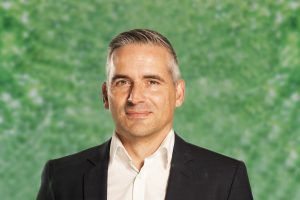
In a health and wellness landscape crowded with disputable claims and flash-in-thepan trends, A.Vogel stands out for its quiet consistency and scientific conviction. Over the past five years, the Swiss-based natural health company has doubled down on quality, transparency, and long-term vision; from scaling up GMP-certified production and running clinical trials, to expanding its international footprint with care and intention. At the helm, CEO Andy Suter reflects on what sets A.Vogel apart.
How has A.Vogel evolved over the past five years, and what have been the most impactful developments during this period?
Over the past five years, we have focused on strengthening both the foundation and future direction of A.Vogel, balancing commercial momentum with long-term operational resilience. One of the most defining developments was the exceptional rise in demand for Echinaforce, our flagship product made from Echinacea purpurea, which was used to treat common colds and viral upper respiratory tract infections during the COVID-19 pandemic. This spike was especially pronounced in Switzerland and, while demand has since returned to more typical levels, the period significantly reinforced brand visibility and deepened consumer trust, effects that continue to benefit us today.
Our efforts have also been directed towards modernising and consolidating production. Despite external pressures – notably the appreciation of the Swiss franc, which has posed challenges for exports – we remain firmly committed to producing in Switzerland. This is not only a matter of heritage, but a deliberate choice to maintain full control over the quality and integrity of our products. We have invested around CHF 35 million in enhancing our manufacturing capabilities, including the construction of a new GMP-certified facility and the installation of two new high-performance filling lines. For a medium-sized company, this level of investment is considerable, but it reflects our conviction that hands-on, locally anchored production is essential to what we stand for.
Another important step has been the consolidation of our manufacturing footprint. Around 15 years ago, we acquired a partner company in the Netherlands that maintained its own production site. Over time, the rationale for running two parallel facilities diminished, particularly given the increasing investment required to maintain both at the standards we demand. Shifting all production to Switzerland allows us to streamline operations, strengthen internal collaboration, and maintain direct oversight.
What trends are you seeing in the global appetite for natural healthcare, and how is A.Vogel positioning itself in this space?
There is clear and growing demand for natural healthcare solutions across our markets, both in Switzerland and internationally. Consumers increasingly favour plant-based products, especially for everyday use within families, where safety, accessibility, and trust are critical. In our case, approximately 80 percent of users are women, a demographic that often turns to natural options as a first step for managing a range of health concerns before considering synthetic alternatives.
That said, while the market continues to expand, it is also highly fragmented and saturated with products of widely varying quality. At A.Vogel, we have always sought to set ourselves apart by maintaining the highest possible standards, not only in how we manufacture, but in how we substantiate the efficacy of what we offer. Our aim is to meet the same expectations of scientific robustness that apply to conventional pharmaceuticals, particularly for our core products.
Many players in this space rely on established European monographs, which allow companies to market herbal products based on historical use and general literature. While this is legally acceptable, it does not replace true evidence generation. We follow a more rigorous path. For our leading products, we conduct controlled clinical trials and collaborate with academic institutions to understand each product’s mode of action, how its active compounds work within the body and what makes them effective. This not only demonstrates efficacy but also deepens our understanding of the mechanisms involved.
Of course, not every product in our portfolio has the same level of supporting data, particularly those with a long-standing presence in the market. However, for our most important and newly developed products, this approach is systematic. Our internal medical department oversees the research, often running studies themselves, and this continuous investment in evidence is fundamental to who we are. In a sector where trust is both critical and fragile, scientific credibility remains one of our most important assets.
Which therapeutic areas are currently guiding your product development efforts, and what factors are shaping that focus?
Our core therapeutic focus remains centred on four key areas: cold and flu, women’s health, men’s health, and sleep and stress. Echinaforce, our lead product for respiratory infections, continues to serve as a cornerstone, not only commercially but also scientifically. Backed by substantial clinical data, it remains the subject of ongoing research as we explore new mechanisms of action and broader applications that could enhance its value to patients.
Women’s health is another area gaining strategic importance. While we already offer an effective solution for menopausal symptoms such as hot flashes and night sweats, the wider physiological and emotional landscape of menopause presents numerous opportunities for further innovation, from addressing sleep disturbances and anxiety to more holistic support. Compared to men, women tend to approach health transitions more actively, creating a highly engaged and responsive audience. Male health, by contrast, often receives less attention unless symptoms become acute. This behavioural gap continues to shape our product development priorities.
Sleep and stress, meanwhile, have become increasingly prominent. Unlike seasonal products such as Echinaforce, this is a category that sees consistent, year-round demand. The pace of global change, from digital overload and media saturation to ongoing geopolitical instability, has created a heightened baseline of stress for many people. What we are witnessing is not merely a trend, but a structural shift in public health needs. I was recently speaking with colleagues from Nigeria and Pakistan and the energy and ambition they projected was striking. It highlighted a contrast with the mood across much of Europe, where there is growing uncertainty about our place in a rapidly shifting world. For us, acknowledging this broader context is essential. It shapes not only the relevance of our portfolio, but also how we orient our R&D with the ambition to remain aligned with the evolving rhythm of global health.
How would you describe A.Vogel’s current international footprint, and what markets or channels are being prioritised for future expansion?
Our core markets remain Switzerland and the Netherlands, followed by the UK and Canada, with a broader footprint across Western Europe. In these regions, our strategy has primarily focused on organic growth, and we continue to see encouraging momentum, particularly in the UK, where our presence is still modest but expanding rapidly.
Looking to the medium term, we recognise the need to diversify beyond our traditional European base. The Middle East is becoming an area of growing interest, with Saudi Arabia standing out as a particularly compelling opportunity. The country is undergoing a period of rapid transformation, opening its doors to new categories, including natural health, in ways that are both promising and timely. While we are still in the early phases of assessing the right entry strategy, the region features prominently in our expansion outlook. Not every market calls for the same approach; some may be best served through distribution partnerships, while others might lend themselves to models like extract licensing. We will define the most appropriate path forward in the months ahead.
At the same time, we remain clear-eyed about the current realities within Europe. Although purchasing power remains relatively strong, the region is experiencing stagnation in terms of economic dynamism. This underlines the importance of identifying more vibrant, fast-moving markets elsewhere. Alongside the UK, Canada is performing very well, and South Africa – despite its volatility – represents a market with long-term potential. In France, we’ve made a deliberate shift from our origins as a health food store brand to establishing a stronger presence in pharmacies, a channel we believe offers a higher degree of trust and influence.
Pharmacies are increasingly central to our go-to-market model. While we maintain visibility in health food retail, pharmacies provide a level of credibility that is difficult to replicate. Pharmacists consistently rank among the most trusted professionals across Europe, and their recommendations carry weight with consumers. A good example is Greece, where our products are priced nearly on par with the Swiss market. Despite income disparities, they perform strongly because pharmacists believe in their value and actively recommend them. This trust-based model is one we intend to scale, as we continue to expand A.Vogel’s international reach with care and intention.
How would you characterise the regulatory environment for herbal medicines in Europe, and what changes are needed to better support innovation and quality?
The European framework for herbal medicines is governed by the Herbal Medicinal Products Directive and overseen by the Committee on Herbal Medicinal Products (HMPC). Under this structure, certain plants are supported by official monographs that specify their recognised uses, dosages, and preparations. Products that fully adhere to these guidelines, and are manufactured under pharmaceutical-grade conditions, can be registered as traditional herbal medicines. However, this process requires substantial infrastructure, a certified production environment, and a highly specialised regulatory function. At A.Vogel, we employ a team of 30 to 40 professionals dedicated entirely to regulatory and quality affairs, and even with such resources, a full registration dossier can take more than a year to complete.
This level of investment is simply unfeasible for most companies, which explains why very few still follow the medicinal pathway. A small number of us, including Zeller, continue to uphold this standard, while the majority have shifted toward the production of food supplements. These products can contain minimal amounts of botanical ingredients, often combined with a vitamin or mineral to make a legally acceptable claim, while avoiding the burden of medicinal registration. On the shelf, they may appear comparable to a consumer, but in reality, the level of rigour behind them differs greatly. The current regulatory system makes little distinction between the two, effectively penalising those of us who invest in clinical validation and high manufacturing standards.
What is missing is a framework that rewards evidence-based innovation. If a product has undergone clinical trials and meets pharmaceutical standards, there should be clearer pathways to recognition, whether through privileged access to pharmacy channels or regulatory flexibility that allows for expanded indications when new data emerges. Unfortunately, such progress remains limited. In Germany, for example, agencies such as BfArM (Federal Institute for Drugs and Medical Devices) take a rigid position, requiring full alignment with existing monographs regardless of new scientific findings. This leaves no space for innovation, even when well-substantiated.
Our hope is that regulatory authorities across Europe begin to acknowledge and support companies that choose to invest in research. Switzerland, for instance, has shown a more progressive stance, where regulators are open to reviewing clinical studies and, in some cases, discussing indication extensions. But broadly across Europe, the regulatory mindset remains cautious and inflexible, focused more on preservation than advancement. This, to me, is one of the most pressing challenges. If we are serious about supporting safe, effective, and scientifically validated natural medicines, the system must evolve to encourage innovation, not discourage it.
How is R&D embedded in A.Vogel’s approach, and how do you identify promising new directions within your portfolio?
R&D is fundamental to how we operate, not just structurally but culturally. Each year, we typically conduct one or two clinical trials, either to broaden our understanding of an established product or to assess the viability of a new concept. While sleep and stress have been recent focus areas, our approach in this space is deliberately differentiated. Rather than relying on familiar and widely used plants, we actively seek out lesser-known botanical species that offer both therapeutic potential and untapped market relevance.
A recent example is our sleep product based on wild lettuce, a plant with a long but largely forgotten history of use. Unlike more conventional sleep-support ingredients such as valerian, hops, or lemon balm (Melissa officinalis), wild lettuce has not been widely commercialised in modern formulations. When allowed to fully mature, it produces a white, milky sap with natural sedative properties. Because its traditional use is no longer broadly documented, we introduced it as a food supplement, rather than registering it immediately as a herbal medicine. Still, the rationale was clear, the product filled a genuine gap and brought something novel to consumers.
Part of what makes this development so compelling is the story it carries. The idea that a salad plant could support restful sleep is unexpected and memorable. It captures attention in a way that clinical data alone often cannot. This narrative resonance is not only useful in consumer communication, but also energises our sales and medical teams, offering them a tangible, relatable entry point to explain the science behind the product. For me, this kind of innovation where botanical tradition, pharmacological insight, and human storytelling intersect reflects the essence of our biotherapeutic philosophy.
How has the perception of natural health products evolved among healthcare professionals?
We have seen a clear shift in mindset, particularly among younger healthcare professionals who are more open to alternative approaches and more responsive to patient demand. Today’s doctors and pharmacists increasingly recognise that natural health products are not just a passing trend, but a response to growing consumer interest in preventive, holistic care. Social media has certainly amplified the visibility of “natural” solutions, but with that visibility has come a desire for substance, for products backed by quality, clinical research, and proven efficacy.
In that context, we find that engaging with the medical and regulatory community through a transparent, evidence-based approach is not only effective but essential. When we present robust data and adhere to high quality standards, we are met with genuine interest, even among those trained within a more conventional pharmaceutical framework.
Of course, receptivity varies by market. But overall, there is growing acceptance that natural health products, when responsibly developed and scientifically validated, represent a legitimate complement to mainstream medicine. For us, the key is not to rely on volume or hype, but to differentiate through credibility and quality. In an increasingly crowded space, those values are what resonate with both consumers and healthcare professionals.
What impact has A.Vogel’s recent brand refresh had on recognition and trust across your key markets?
We have seen strong and growing brand recognition, particularly in the markets where we maintain consistent visibility. Trust in the A.Vogel name remains high, and the comprehensive brand refresh we undertook five years ago that has played a meaningful role in reinforcing that trust. It was more than a visual redesign; it was about ensuring that every touchpoint with the brand clearly communicates our values and commitment to natural health.
That consistency is essential. Branding is not a one-off campaign, it requires ongoing deliberate effort. Whether through product packaging, communications, or in-person experiences, every interaction with our consumers is an opportunity to build or reinforce the brand. Done right and consistently, these moments create a lasting distinction in a crowded market.
This approach is also reflected in how we present ourselves physically. Visitors to our headquarters immediately sense the care and attention invested in the environment, not just inside the building but across the entire setting. We have cultivated a biodiversity hub around the site, rich with flowers and wildlife, as part of our commitment to nature. Just recently, two professional wildlife photographers spent time documenting the species that inhabit our grounds. It was a powerful reminder that if we draw from nature, we must also respect it and create space to give something back.
Looking ahead, what are the main priorities guiding A.Vogel’s direction over the next two years?
One of the most significant priorities for us at the moment, although not necessarily visible to the outside world, is the ongoing transfer and consolidation of our production facilities. This operational transformation is a major internal undertaking and will be fundamental to strengthening our long-term capabilities.
Looking ahead, our overarching objective is to drive consistent and sustainable growth. We want to ensure the company remains on a solid foundation and well-positioned for the future. A.Vogel is entirely self-financed, with no bank debt, which allows us to shape our path independently and with a clear long-term vision.
This autonomy is made possible by our ownership structure: the Alfred Vogel Foundation holds the vast majority of shares. It is an arrangement that provides both stability and entrepreneurial freedom, something increasingly uncommon in today’s industry landscape. While we enjoy a degree of independence that is rare among similar businesses, we remain highly aware of the need to stay agile, alert, and responsive to future opportunities and challenges.