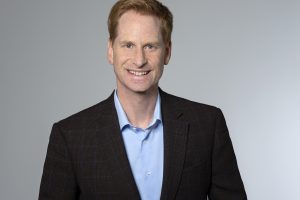
Alexander Salzmann with nearly a decade at Sandoz, reflects on the company’s transition from a Novartis division to an independent, Swiss-listed entity. In this interview, Salzmann discusses the challenges and opportunities of operating a business in the company’s home market Switzerland, and the Sandoz ambition to lead the generics and biosimilars market.
What made Basel the strategic choice for Sandoz new global headquarters, and how does this relocation fuel your ambitions?
In total, nearly 400 people are employed by Sandoz in Switzerland. Our presence in Switzerland is twofold: approximately 250 at the global headquarters in Basel and we have 130 colleagues in the country organisation, based in Rotkreuz. Basel was selected as the location for our headquarters for several compelling reasons. First and foremost, it reflects our deep commitment to our legacy as Sandoz was founded here in 1886. Following the spin-off, we made a conscious decision to remain in Switzerland. This decision was not only symbolic but also pragmatic: Switzerland provides a stable tax, legal, and regulatory framework, all of which are vital for sustaining a global pharmaceutical enterprise.
Furthermore, Basel is an internationally recognised hub for healthcare, rich in talent, innovation, and collaboration. It offers an environment conducive to attracting the best minds in the industry, an essential factor given our Vision to be the world´s leading and most valued generics and biosimilars company. This Vision entails far more than market share or commercial success. It means being the most respected and admired company in our field. We already deliver more than 900 million patient treatments annually, a figure that illustrates the scale and importance of our work. Our medicines meet the needs of a vast and diverse patient population. Around 70 percent of the medicines dispensed in Europe are generic medicines. Indeed, many families depend on Sandoz products.
Leadership in this context demands flawless execution. Our objective is to launch generic alternatives for 80 percent of originator medicines that lose exclusivity, as well as to develop biosimilars wherever feasible. This requires an unwavering commitment to our principles of quality, accessibility, and reliability.
As a Swiss-headquartered company, what unique challenges and opportunities does this present for Sandoz operations?
The opportunities far outweigh the challenges. Switzerland’s patients, healthcare professionals, and regulators trust the Sandoz brand, which is synonymous with high-quality medicines. Our Swiss listing also keeps us in the public eye, strengthening brand recognition.
Could you elaborate on what it means for the company to be listed in Switzerland specifically, and how that aligns with your overarching corporate values?
Being Swiss-listed represents both a practical commitment and a symbolic one. Practically, it demonstrates our dedication to Switzerland. We consciously chose to establish our headquarters in Basel after the spin-off. Symbolically, it connects us to 139 years of Swiss heritage, as Sandoz was founded here in 1886.
Our Swiss identity informs several core values: quality and reliability. More than 80 percent of our shareholders are Swiss, creating an important connection to local investors. Moreover, Switzerland remains a top 10 market for us globally, making this relationship mutually important.
Having transitioned from a Novartis division to an independent, Swiss-listed company, how has this shift impacted Sandoz internal operations, corporate culture, and overall organisational structure?
The spin-off has been a transformative moment for Sandoz, allowing us to fully embrace our identity as the leading generics and biosimilars company. Operationally, this independence has enabled us to tailor our processes such as intellectual property strategy and supply chain efficiency specifically to our business needs.
Equally significant is the cultural shift that accompanies this operational change. While Sandoz already in the past had a distinct, purpose-driven, fast-moving, and cohesive culture even as a Novartis division, becoming an independent, Swiss-listed company has amplified these traits. The transition unleashed more of this mindset and everyone at Sandoz stepped up and took on a higher level of responsibility. While ensuring supply and patient access remains fundamental, we now think much more in terms of investor expectations and financial consistency.
Structurally, the changes have also been profound. As a division, we relied heavily on shared systems and resources. Independence meant building standalone capabilities, particularly in IT infrastructure and specific development functions. Additionally, we have optimised our country organisations to be future-ready, ensuring their structure aligns with current and emerging market needs rather than legacy arrangements.
Overall, the spin-off has empowered us to act with greater agility and clarity, fully aligning our operations and culture with the unique demands and opportunities of the generics and biosimilars industry.
How have key stakeholders, such as healthcare professionals, responded to Sandoz independence, and how has this affected brand perception?
The change has been remarkably positive. We track brand recognition and sentiment regularly among both patients and healthcare professionals, and we have seen significant improvement since becoming independent. This acceleration in 2024 was particularly notable. I believe several factors contribute to this: our increased media presence, the pride associated with being a Swiss-listed company, and the clarity of our purpose as a standalone entity. There is a tangible sense that stakeholders appreciate dealing directly with Sandoz rather than through a larger pharmaceutical conglomerate.
Sandoz has seen strong global growth, while the Swiss market remains stable. How do you plan to bring that global momentum to Switzerland? And how do you position your strategy and portfolio here?
The Swiss market is actually more dynamic than it might initially seem. In 2024, we outperformed global growth locally, largely thanks to regulatory reforms such as the 40 percent co-pay rule and the equal margin system, which have effectively helped to level the playing field for generics. These changes drove generic penetration from 64 percent to 69 percent within a few months. Since then, we have returned to a more typical long-term growth rate of around one to two percentage points annually.
As for our positioning, Sandoz is proud to be the second-largest pharmaceutical company in Switzerland across all categories, not only in generics and biosimilars. This strong foothold reflects our ambition to be the most attractive partner across all channels, including pharmacies, self-dispensing doctors, and hospitals. To put this into perspective, one in every eight medicine packs dispensed in Switzerland comes from Sandoz.
Our strategy centres on maintaining an exceptionally broad portfolio, effectively becoming a one-stop shop for our partners. We are heavily investing in our pipeline, aiming to launch generic versions of approximately 80 percent of originator small molecule products losing exclusivity, alongside biosimilars where feasible. This demands meticulous supply chain management. For example, we maintain fully integrated penicillin production in Austria, and for biosimilars, we are building manufacturing capacity in Slovenia, where we are investing nearly EUR 500 million. The majority of our active pharmaceutical ingredients and bulk production are European-based, providing us with a substantial degree of control to ensure supply reliability.
Furthermore, we are significantly investing in advertising to raise awareness of generics and build brand trust. At the same time, we support healthcare professionals with medical education and value-added services that guide prescribing decisions, thereby driving sustainable growth through a strong portfolio and strategic partnerships.
With rising pricing pressures and supply challenges for essential medicines, how is Sandoz navigating these dynamics?
This is indeed a complex issue that requires careful balancing. While recent regulatory changes like the equal margin system have helped generics compete more fairly, we have simultaneously seen increased price pressure through mechanisms like higher price intervals versus originator products which were introduced in early 2024.
Our philosophy is that price and supply reliability must be balanced, particularly for low-cost generics with ex-factory prices below CHF 20 where we see most supply shortages occur. The good news is that regulators now recognise this challenge. The Swiss government is working on measures to allow the exemption of this segment from three-year price reviews and potentially even allow modest price increases.
A telling example is antibiotics like amoxicillin, which is priced extremely low yet is absolutely vital for public health. We need to ensure the market properly values these essential medicines while maintaining accessibility.
Could you explain the significance of biosimilar substitution in Switzerland and its implications for the market?
Biosimilar penetration in Switzerland remains relatively low at about 37 percent, despite their proven efficacy and safety. The 2024 regulatory change allowing substitution at pharmacy level represents a major opportunity to improve this. Essentially, pharmacists in Switzerland can now propose a biosimilar even when the prescription specifies the originator.
However, implementation requires careful handling. These are complex medicines often used for serious conditions, so we are investing heavily in pharmacist education to address concerns about devices, administration, and patient communication. Some pharmacists see this as a cost-saving opportunity, while others are more cautious. Our role as market leaders is to ensure this transition benefits the entire healthcare system.
We firmly believe that as pioneers in the field of biosimilars, it is both our responsibility and ambition to lead the way in shaping and advancing biosimilar substitution in Switzerland.
How does Sandoz balance its production and supply chain between its Austrian and Slovenian facilities?
Our production strategy reflects the different needs of our product categories. In Kundl, Austria, we maintain Europe’s last fully integrated penicillin production site, which is a facility we are particularly proud of. It is theoretically capable of supplying the entire continent, transforming raw materials into finished products like the amoxicillin packs used in Swiss pharmacies.
For biosimilars we are investing heavily in a new EUR 500 million greenfield facility in Slovenia to gain complete control over production. This complements our biosimilar development centre in Holzkirchen, Germany.
With your expanded regional role, what are your key priorities for Sandoz in Switzerland and Europe moving forward?
At the end of this month, I will hand over the operational leadership of the Swiss commercial organisation. However, I will continue in my role as Country President for Switzerland. Beginning 1 July, I will assume responsibility for the European retail business, specifically focusing on small molecules. It is a substantial portfolio generating close to EUR four billion in annual sales and accounting for nearly 500 million patient treatments each year. This includes essential medicines such as penicillin, which are fundamental to public health across the continent.
Together with my team and the country organizations, we will be shaping the small molecule strategy for Europe, making key decisions on the portfolio, ensuring a robust pipeline, and working to ensure sustainable pricing. This is especially critical given the pressures facing low-cost generics. The challenge is to strike the right balance between affordability and long-term viability.
Despite stepping back from day-to-day operations in Switzerland, I will remain actively involved in shaping policy. This means working towards a more supportive framework for generics and ensuring that Sandoz continues to operate effectively and responsibly in the Swiss context. The reputation and public perception of Sandoz in Switzerland is something I remain deeply committed to.
In practical terms, I will also ensure close coordination between our two Swiss sites in Basel and Rotkreuz across multiple strategic and operational dimensions.
As for local priorities, my successor will of course define her own focus areas, but from my perspective, three remain critical. First, we have several important launches ahead in small molecules and biosimilars, so it is vital that we remain top-of-mind among prescribers and healthcare providers.
Second, the recent regulatory change permitting biosimilar substitution in pharmacies presents both opportunities and challenges. We must play an active role in supporting pharmacists with training and guidance to ensure smooth implementation.
Third, we need to continue working on broader regulatory reforms. This includes shifting the focus away from price alone when evaluating low-cost generics, advocating for more pragmatic cross-border collaboration in the event of shortages, and improving supply chain resilience. Simplification also plays a role. For example, questioning the need to match every single pack size offered by originators, or promoting the adoption of electronic leaflets to streamline packaging and reduce lead times.
As a leader, what qualities do you prioritise when building and developing teams across Sandoz’s European operations?
Two qualities are absolutely essential: motivation and learning agility. With these fundamentals, individuals can adapt to any challenge and drive the organisation forward. My leadership philosophy centres on building teams that ultimately make the operational aspects of my role redundant – by developing talent that can take on increasing responsibility while maintaining our culture of ownership and enterprise thinking.
What final message would you like to convey to international readers about Sandoz’s role in global healthcare?
Sandoz occupies a unique position in global healthcare. With 1,300 products across more than 100 countries, we provide more than 900 million patient treatments annually, leading to USD 19 billion savings per year for healthcare systems in Europe and the US alone, and generating a total social impact estimated at USD 400 billion annually. While we may not always make headlines for breakthrough innovations, our work has a profound impact of improving health outcomes and generating significant healthcare savings worldwide, all while ensuring access to essential medicines. In an era of growing emphasis on healthcare sustainability, our Purpose, pioneering access to for patients, has never been more relevant.