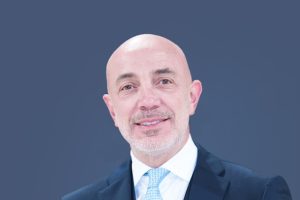
Leading through transformation requires more than strategic clarity - it demands cultural fluency, consistency of purpose, and the trust of an entire ecosystem. Abed Sabra has spent over 25 years at Roche embodying those principles, guiding the company’s evolution in Saudi Arabia at a time when healthcare is becoming a pillar of national ambition.
What has motivated you to remain with Roche for over 25 years, and how has this long-term alignment shaped your professional journey?
When I joined Roche in the early 2000s, I did not foresee that the role would evolve into a long-term commitment. Having worked at two other companies beforehand, I was still in the early stages of exploring where I could establish a meaningful and lasting career. What immediately set Roche apart was its forward-looking pipeline, particularly in oncology – a field that, at the time, remained relatively underdeveloped in Lebanon and across the region. Very few professionals were working in this area, and the opportunity to contribute to something both specialized and underrepresented was compelling. I found myself drawn to the scientific complexity of oncology and the profound impact it could have on patients’ lives.
It is important to mention as well that beyond oncology, Roche’s portfolio spans multiple therapeutic areas (TAs), including rare diseases, neurology, ophthalmology, and hematology – each playing a crucial role in improving patient lives
Soon after I joined, Roche launched one of the first monoclonal antibodies to reach the market. The experience of participating in such a transformative milestone – and witnessing first-hand the tangible difference it made for patients – gave my work an extraordinary sense of purpose. It was a defining moment that deepened my conviction that this was more than a job; it was a mission I could stand behind. Unlike other therapeutic areas, which may require different types of patient engagement models, oncology provided me with a unique firsthand experience of how scientific advancement directly translates into patient outcomes. And this principle applies across all of Roche’s therapeutic areas, where we strive to bridge the gap between innovation and real-world patient needs.
Equally important was Roche’s culture. From the outset, I was impressed by the company’s commitment to innovation, integrity, and long-term thinking. Over the years, I was given the opportunity to grow, take on diverse roles, and expand my perspective – all within a framework that consistently aligned with my personal and professional values. I never felt the need to look elsewhere for new challenges or greater purpose; everything I was seeking in a career — impact, growth, recognition, and alignment – I found within Roche. In time, this alignment deepened into a sense of identity. I became known not just as someone working at Roche, but as someone shaped by and committed to its values. The continuity of purpose, the evolving challenges, and the enduring cultural fit have made staying not only a logical choice but a deeply fulfilling one.
How has Roche Saudi Arabia evolved under your leadership, and what distinguishes its role in the Kingdom’s evolving healthcare ecosystem?
Since assuming leadership nearly seven years ago, my focus has been on establishing a distinct and purpose-driven identity for Roche in Saudi Arabia – one that reflects the company’s global values while being firmly rooted in the local context. I have always believed that differentiation must go beyond products; it must be reflected in the way we operate, the culture we foster, and the value we bring to both the healthcare system and society at large.
Internally, we worked to build a culture grounded in fairness, inclusion, and empowerment, offering equal opportunities to Saudi and non-Saudi colleagues, regardless of gender. I’ve placed strong emphasis on developing local talent, guided by a belief in the capabilities and potential of Saudi professionals. Over time, this approach has not only shaped a strong internal culture but also enhanced our reputation – with many candidates expressing their desire to join Roche based on the values and leadership they see in action.
Our progress has been the result of strong collective effort. I’ve had the privilege of working alongside dedicated leaders who have contributed significantly to strengthening our public presence, position in the market, relationship with our stakeholders, all geared towards ensuring that the patients in The Kingdom can access the innovation that Roche can provide to the Healthcare system. At the same time, we benefited from the strategic support of Roche’s global organization, whose transformation toward a more value-driven, patient-focused business model gave us the tools and flexibility to lead locally with purpose and clarity. Today, Roche Saudi Arabia is recognized not only for the innovation it delivers, but for the way it engages — as a trusted healthcare partner committed to impact, integrity, and the long-term advancement of the Kingdom’s healthcare ecosystem.
How is Roche contributing to Saudi Arabia’s healthcare transformation beyond its medicines, particularly in line with Vision 2030’s collaborative, cross-sector goals?
Roche’s role in Saudi Arabia has evolved in step with the Kingdom’s ambitious Vision 2030 reforms. From the outset, our intention was to move beyond transactional engagement and become a true partner in shaping the healthcare landscape. What sets this environment apart is the openness across both public and private sectors to collaborate and co-create, recognizing that no single entity can drive systemic change in isolation.
A few years ago, we helped initiate a cross-sector partnership involving six private companies in fields such as digital health, data, and distribution. The goal was to approach government stakeholders with a unified and multidimensional proposal, backed by a Memorandum of Understanding (MOU). While the initiative eventually concluded, it served as a valuable pilot – demonstrating how diverse players, often with different business models and cultures, could work toward a shared vision. It also helped lay the foundation for more effective and credible engagement with public institutions.
Our commitment to impact also extends into areas not traditionally associated with pharmaceutical companies. For example, we’ve supported initiatives aimed at improving the quality of medical journalism in the region, recognizing that accurate and accessible health information plays a critical role in raising awareness and improving outcomes. This kind of systemic thinking – from scientific innovation to information integrity – is essential to building a stronger, more informed healthcare ecosystem.
At the institutional level, our close partnership with the Ministry of Investment has been instrumental. Unlike traditional market approaches focused solely on the Ministry of Health, in Saudi Arabia we’re encouraged to engage with a range of government entities, especially those supporting localization and industry development. This model has proven highly effective, with ministries actively working alongside companies to identify and resolve barriers to progress.
This evolving landscape also reflects a new national mindset: one that values local capacity, accountability, and execution. International consulting firms that once operated remotely are now expected to localize, adapt, and align with Saudization goals. This mirrors the pharmaceutical industry’s earlier shift, where companies were compelled to invest in national talent or risk losing relevance. The emergence of local consulting firms, while still in its early stages, signals a broader commitment to self-sufficiency and capability-building.
Today, progress is measured with clear KPIs and timelines, and while the system may not yet be perfect, there is a refreshing emphasis on moving forward – on launching, learning, and iterating. It’s a pragmatic, agile approach that Roche embraces fully. Our contribution to healthcare in the Kingdom is no longer limited to innovative medicines; it is increasingly about enabling transformation through partnerships, trust, and shared ambition.
How would you evaluate the current landscape for Saudi talent in the pharmaceutical sector, and what challenges exist around attracting and retaining top performers?
Saudi Arabia today offers a growing pool of capable pharmaceutical talent, especially as a result of the government’s Saudization efforts in recent years. What was once a surplus of unemployed pharmacists has shifted toward full absorption, with the majority of this talent now actively engaged across the sector. However, as junior professionals gain experience, they naturally become attractive to competing companies, often prompting a cycle of movement driven by incremental salary increases and rapid career progression.
While this trend has introduced short-term challenges in retention, it is also a sign of progress. Companies that were early to invest in local talent are now seeing the results – highly competent professionals who are agile, ambitious, and in demand. At the same time, the government has recognized the need for greater regulation, introducing mechanisms to limit excessive movement between institutions and promote long-term professional stability. It’s important to acknowledge that part of today’s talent pressure stems from missed opportunities in the past.
Despite this, the outlook remains positive. With continued investment in capability-building and a more structured employment environment, the current volatility is likely to settle. The government has also maintained flexibility by allowing skilled foreign professionals to support the system where needed. Most notably, the ambition and commitment shown by young Saudis today is striking – a new generation of professionals eager to lead, contribute, and shape the future of healthcare in the Kingdom. This evolving mindset will be one of the most valuable assets for the sector in the years to come.
At Roche, we are committed to empowering Saudi talent; this is one of our key priorities. 65 percent of our employees in Roche KSA are Saudi nationals, and we are investing in developing the next generation of healthcare professionals.
How has the regulatory landscape in Saudi Arabia evolved in recent years, and how is Roche ensuring timely access to its latest innovations in this changing environment?
Over the past six years, Saudi Arabia has undergone a meaningful transformation in the way it approaches healthcare regulation, shaped by its broader ambition to position itself as a regional hub for clinical research and medical tourism. This shift has brought about a more progressive and collaborative regulatory environment – one that increasingly prioritizes innovation, access, and structured engagement with multinational pharmaceutical companies. We now see clearer regulatory pathways, more consistent dialogue, and a genuine willingness to address access-related challenges in partnership with the industry.
These changes have not only strengthened trust but have also encouraged companies like Roche to invest more proactively in the Kingdom. With the global pipeline expanding rapidly in areas such as oncology, rare diseases, and high-impact therapeutics, timely access has become essential; not only from a business perspective but from a humanitarian one. Regulatory openness has allowed us to introduce more advanced therapies faster, while also ensuring that dialogue around pricing and reimbursement remains grounded in long-term value creation. Ultimately, our responsibility extends beyond innovation itself. At Roche, we believe that if we have a therapy that can transform lives, and patients who need it, it is our duty to bring the two together as efficiently as possible. The evolving regulatory landscape in Saudi Arabia is helping to make that possible, aligning more closely than ever with the shared goal of improving patient outcomes through access to innovation.
How is Roche contributing to the advancement of clinical trials in Saudi Arabia, and how would you assess the country’s progress toward becoming a regional research hub?
Clinical trials have become a vital pillar of Saudi Arabia’s healthcare transformation strategy, and Roche is playing an active role in supporting this evolution. While the national objective of becoming a regional hub by 2030 – and a global one by 2040 – may appear aspirational, meaningful progress is already underway. One of the most important enablers has been the shift in societal and institutional mindset. Where once there was considerable hesitancy toward investigational treatments, there is now a broader understanding of their value, not only in expanding patient access but in elevating the overall healthcare system.
This change is particularly evident among healthcare professionals. Today, the majority of treating physicians are Saudi nationals, many of whom have trained in leading international institutions and bring with them a strong appreciation for the role of clinical research. Their openness to early access and investigational therapies is helping normalise participation in trials and improve community trust. At the same time, government stakeholders increasingly view clinical trials as an essential lever for improving healthcare outcomes, accelerating innovation, building national expertise, and reinforcing the Kingdom’s global reputation in life sciences.
Roche, with its global heritage in clinical development, is contributing on multiple levels. We are actively collaborating with the Ministry of Health, Ministry of Investment, the Saudi Food and Drug Authority (SFDA), and the National Institute of Health (NIH) to develop the capabilities required for a sustainable clinical research ecosystem. These efforts reflect a shared commitment to shaping a forward-looking environment where innovation can reach patients more rapidly and where Saudi Arabia can realize its full potential as a regional leader in clinical science.
When the time eventually comes to pass on your role at Roche Saudi Arabia, what legacy would you hope to leave, and what would you want your successor to inherit?
I’ve always believed there is no better time to be in Saudi Arabia than now – a moment defined by opportunity, momentum, and national transformation. If and when the time comes for me to step away, I would hope to leave behind an organization that is not only structurally sound but strategically positioned for continued growth, with a culture rooted in clarity, integrity, and ambition. More than anything, I would want my successor to inherit the reputation we’ve carefully built – a reputation not measured solely by performance, but by trust. That trust, earned over time through consistency, transparency, and partnership, is what allows Roche to be seen not just as a pharmaceutical company, but as a reliable contributor to the country’s healthcare vision. In a market like Saudi Arabia, reputation is more than a strength — it is a key that opens doors, enables collaboration, and sustains long-term impact. That is the legacy I would be most proud to leave behind.