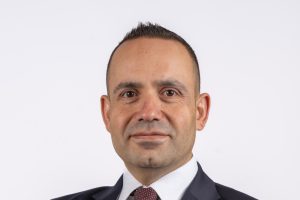
With a presence in the region spanning over six decades, Boehringer Ingelheim is entering a new chapter – one defined by deeper partnerships, accelerated innovation, and a broader role in shaping healthcare systems. At the center of this evolution is Abdallah Hamed, leading operations across Saudi Arabia, Gulf, and East Africa. In his first months at the helm, he reflects on aligning with national transformation priorities, expanding access, and cultivating the talent needed for what lies ahead.
What motivated your decision to join Boehringer Ingelheim, and how have you approached your first months leading the Saudi Arabia, Gulf, and East Africa region?
I assumed the role of General Manager for Saudi Arabia, Gulf, and East Africa (SAGEA) at Boehringer Ingelheim in October 2024, building on two decades of experience within the pharmaceutical industry across the GCC region. What compelled me to join the company was its profound and authentic commitment to improving patients’ lives – a purpose that resonates deeply with my own values and has guided my professional journey. From the very beginning, I was struck by the way this mission is embedded not only in the company’s strategic direction but in its culture and daily operations.
Over the past several months, now moving into my sixth, I have concentrated on establishing a strong foundation through meaningful engagement, both within the organization and across the broader healthcare ecosystem. Internally, I’ve connected with colleagues throughout the SAGEA region and the wider global structure, aligning with teams to ensure clarity of purpose and cohesion in execution. Externally, I’ve had the opportunity to engage with government authorities, regulatory stakeholders, and strategic partners – interactions that have been instrumental in shaping a nuanced understanding of the region’s evolving healthcare landscape.
What has been particularly striking is the depth of expertise that exists within Boehringer Ingelheim, and perhaps even more so, the strength and longevity of the company’s relationships with institutional stakeholders across the region. These partnerships, cultivated over decades, represent a strategic foundation that we are well-positioned to build upon. As we move forward, nurturing and expanding these alliances will be essential to advancing access, accelerating innovation, and delivering meaningful, sustainable impact for the patients and communities we serve.
What therapeutic areas are driving Boehringer Ingelheim’s growth across such a diverse region, and how are portfolio priorities tailored to local healthcare needs?
In a region as multifaceted as Saudi Arabia, the Gulf, and East Africa – where population diversity, healthcare maturity, and system challenges vary significantly – our portfolio strategy is shaped by a clear ambition: to address the most urgent and underserved medical needs. While our approach aligns with Boehringer Ingelheim’s global priorities, it is also deeply rooted in the realities of the local context.
A principal area of focus is the management of cardiovascular, renal, and metabolic (CRM) diseases, whose interlinked nature and rising prevalence position them as a central pillar of our growth strategy. These conditions remain a major public health concern, and we are committed to offering integrated, science-driven solutions that can transform outcomes. Stroke care is another area of longstanding engagement, and one that remains close to my heart. Boehringer Ingelheim has made substantial contributions in this field over the years, and we continue to work across the region to strengthen early intervention and access to effective therapies.
In parallel, we are expanding our efforts in respiratory care, particularly around interstitial lung disease (ILD), where therapeutic options are still limited and the need for innovation remains high. Ultimately, our goal is not only to broaden the availability of innovative treatments but to do so in a way that reinforces healthcare systems and improves patient outcomes across the region.
How would you describe the current regulatory environment in Saudi Arabia, and what progress have you seen in accelerating access to innovation?
Saudi Arabia is undergoing a profound and ambitious transformation, and there could hardly be a more compelling time to engage with its healthcare sector. Central to this change is the Healthcare Transformation Program (HTP), a core pillar of the Kingdom’s Vision 2030, which aims to build a healthcare system that is not only inclusive and sustainable but also prepared for the demands of the future. As this program progresses, we are seeing the rise of new regulatory bodies, emerging health authorities, and diverse ecosystem stakeholders – all of which are reshaping the way healthcare is structured and delivered.
What is particularly striking is the Kingdom’s intent to build a healthcare system not just fit for today, but designed to meet the evolving needs of tomorrow. The commitment to inclusivity – ensuring broad, equitable access to innovative therapies – combined with a future-oriented regulatory approach, positions Saudi Arabia as a regional frontrunner in healthcare modernization and a strategically vital market for global life science companies.
How is Boehringer Ingelheim contributing to Saudi Arabia’s healthcare transformation under Vision 2030, particularly in terms of localization, innovation, and partnerships?
With more than sixty years of presence in Saudi Arabia and the region, Boehringer Ingelheim has consistently worked in partnership with national stakeholders to improve health outcomes and expand access to care. Today, as the Kingdom advances its Vision 2030 ambitions, our contribution is shaped around three interconnected priorities: accelerating innovation, supporting localization, and nurturing the next generation of healthcare talent.
In line with the national objective of increasing local content, we recently partnered with Alpha Pharma to fully transfer the technology required to manufacture one of our key diabetes treatments within Saudi Arabia. This initiative reflects a broader effort to localize our portfolio – ranging from secondary and primary packaging to full-scale production – and underscores our commitment to advancing self-sufficiency in managing chronic diseases. At the same time, we are working closely with government authorities to align on unmet needs and explore new opportunities to strengthen the country’s pharmaceutical capabilities.
Innovation remains at the core of our strategy. We are actively expanding our clinical footprint in Saudi Arabia by leveraging new regulatory frameworks – such as those introduced by the Saudi Food and Drug Authority (SFDA) – which incentivize local clinical trials through accelerated pathways for access. These developments have created a more agile, responsive environment that allows us to bring new therapies to patients more efficiently.
Equally important is our investment in people. Internally, we have launched structured development programs to cultivate leadership within our organization. Externally, we have built long-term partnerships with universities across the Kingdom to identify and support emerging talent early on. This dual focus ensures that we are not only contributing to the healthcare ecosystem through products and innovation, but also helping to shape the human capital that will lead it into the future.
What does it mean for Boehringer Ingelheim to evolve into a healthcare company in the Saudi context, and how is this reflected in your public health engagement?
Boehringer Ingelheim’s evolution from a pharmaceutical company into a broader healthcare partner is especially meaningful within the context of Saudi Arabia’s Vision 2030 and its Health Sector Transformation Program (HSTP). The Kingdom’s healthcare strategy places strong emphasis on prevention, long-term sustainability, mental well-being, and public awareness – all areas that resonate closely with our own mission to improve health beyond the delivery of medicines. This alignment has enabled us to engage in a series of impactful partnerships that reflect what it truly means to operate as a healthcare company. One example is our collaboration with the Ministry of Health to raise awareness about the interconnectivity of cardiovascular, renal, and metabolic diseases – three of the most prevalent and pressing health challenges in the region. By supporting early intervention and education, we aim to contribute meaningfully to healthier communities.
In the area of mental healthcare, we have partnered with the Saudi Health Council (SHC) to support the development of national policies – an initiative that signals both the government’s openness to public-private collaboration and the growing recognition of mental health as a national priority. Meanwhile, our commitment to stroke care continues through the expansion of telestroke services via the Seha Virtual Hospital (SVH), helping ensure access to timely care in more remote or underserved areas. Each of these efforts illustrates the depth of our engagement in Saudi Arabia – not only in advancing innovation and access, but in contributing to the structural transformation of healthcare. By supporting public health goals and aligning closely with national strategy, we are proud to play a role in shaping a system designed to serve future generations.
How are you approaching talent development across the region, and what leadership culture are you aiming to cultivate within Boehringer Ingelheim?
At Boehringer Ingelheim, talent is not viewed simply as a resource, but as a long-term strategic asset fundamental to fulfilling our purpose. In Saudi Arabia and across the broader region, we are actively building a regional hub for talent – one grounded in a culture that values inclusion, clarity of purpose, innovation, and empowerment. This culture is designed not only to support individual growth, but to enable our people to contribute meaningfully to healthcare transformation, with the patient always at the center.
Central to this effort is our commitment to early talent development. We collaborate closely with universities across the Kingdom to identify promising individuals at the start of their journey, integrating them into structured internship and entry-level programs that build both technical and leadership capabilities. These efforts are complemented by tailored development tracks for existing colleagues, focused on cultivating the skills required to lead in an increasingly complex and fast-evolving healthcare environment.
Personally, I view purpose as the foundation of effective leadership. When individuals understand the “why” behind their work – when they realize that their daily contributions can help a patient access treatment, improve health outcomes, or even save a life – it fosters genuine engagement and collective ambition. My role is to reinforce that connection, to lead with authenticity, and to ensure that our teams remain inspired by the impact they create. As the healthcare sector in Saudi Arabia undergoes rapid transformation, the ability to anticipate change and prepare for the future is critical. That is why our focus extends beyond current competencies – we are building capabilities not only for today, but for the healthcare system of tomorrow.
What are your strategic priorities for the coming years, and is there a message you would like to share with the broader international community?
As I approach the close of my sixth month at Boehringer Ingelheim, our strategic roadmap for 2025 and beyond has taken clear shape, grounded in a singular purpose: to transform lives for generations. Our foremost priority is expanding access to our innovative therapies across Saudi Arabia and the broader SAGEA region (Saudi Arabia, Gulf, and East Africa), ensuring that patients benefit fully from the scientific progress we bring to market.
Alongside access, accelerating the introduction of innovation remains critical. We are strengthening partnerships with government entities, regulatory authorities, and healthcare stakeholders to advance our clinical trial footprint and contribute to the evolving regulatory landscape. This integrated model is helping us shorten timelines while increasing the value we deliver to patients and systems alike. Equally important is talent. We are committed to positioning SAGEA as a regional center of excellence – one that attracts, develops, and retains exceptional people capable of leading healthcare into the future. Building these capabilities is essential to sustaining long-term impact.
To the international community, I would emphasize that Boehringer Ingelheim, as a family-owned company with nearly 140 years of heritage, remains steadfast in its purpose. Across more than 53,000 employees globally, there is a shared belief that every action – every decision, every collaboration – should move us closer to a healthier, more hopeful future. It is this quiet consistency, grounded in purpose and powered by science, that defines who we are. And I am proud to contribute to that mission every day.