
Will a new ‘Critical Medicines Act’ go far enough to ensure Europe’s resilience to future health crises?
A Continent at Risk
The COVID-19 pandemic exposed serious vulnerabilities in the European medicine supply chain. EU countries suddenly found themselves competing for limited supplies of sedatives and antibiotics for ICU care, while in late 2022 national health systems struggled to obtain basic antibiotics like amoxicillin due to a surge in global demand and limited suppliers.
This is an issue decades in the making. In the years leading up to COVID Europe became increasingly reliant on low-cost Asian destinations like India and China for the production of everyday medicines and their ingredients.
With few incentives to keep low-margin generic, antibiotic, and active pharmaceutical ingredient (API) production within Europe, over 80 percent of the APIs used in Europe were being imported from just five countries by 2021, with China alone supplying about 45 percent.
This concentration of production outside of Europe’s borders meant that any disruption in Asia – whether from factory shutdowns, export restrictions or geopolitical tensions – could trigger medicine shortages in Europe. Something needed to be done.
Coordinating a Response
Responding to this threat, EU policymakers began calling for ‘open strategic autonomy’ in European healthcare. 23 EU member states then issued a joint call to strengthen the pharmaceutical supply chain which coalesced into a ‘Critical Medicines Alliance’ in January 2024.
This Alliance of national authorities, the pharmaceutical industry, health professionals, patients, and regulators was tasked with analysing supply chain weaknesses. A ‘Critical Medicines Act’ based on its recommendations is set to be presented by the European Commission before March 11th.
The proposal aims to fortify the entire supply chain through a combination of regulatory requirements, incentives, and coordination mechanisms: from the upstream production of ingredients to procurement and stockpiling practices downstream, all the way through to the regulatory and financial environment that underpins the system.
It builds on measures already in place, including the European Medicines Agency (EMA)’s EU-wide shortages monitoring system (created in 2022) and its Executive Steering Group on Shortages (MSSG which identifies “critical medicines” and issues early warnings.
Additionally, the EU created a list of “essential” medicines and vaccines back in 2023. The list comprises over 300 widely used, often off-patent medicines that have few or no alternatives and that are used to treat serious or common conditions. Key products include first-line antibiotics, painkillers like paracetamol, insulin for diabetes patients, and vaccines for measles, hepatitis B, and tetanus.
Manufacturing
The Act aims to incentivise investment in European-based manufacturing, supporting both the expansion of existing sites and the development of new facilities. However, it is not as simple as reshoring everything that was previously manufactured in Asia.
“That would be misguided and practically not possible,” says Stephan Eder, executive vice president for Western Europe and Germany at the German generics giant STADA. Eder is also the newly minted president of Medicines for Europe, an organisation at the forefront of the Critical Medicines Alliance as the leading European-level lobbying group for the generics, biosimilars, and value-added medicines industry.
“It is about striking a balance and having robust and diverse supply chains both in and outside of Europe,” adds Eder. In practice, this could see the EU providing incentives for non-EU manufacturers to establish backup production in Europe or diversify their manufacturing footprint.
He also warns that such a manufacturing push cannot be done on the cheap in Europe and that the focus should instead be on higher value investments. “Given Europe’s higher regulatory and environmental costs, investment in advanced technologies, digitalisation, and sustainable production processes will be critical to ensuring competitiveness,” he states.
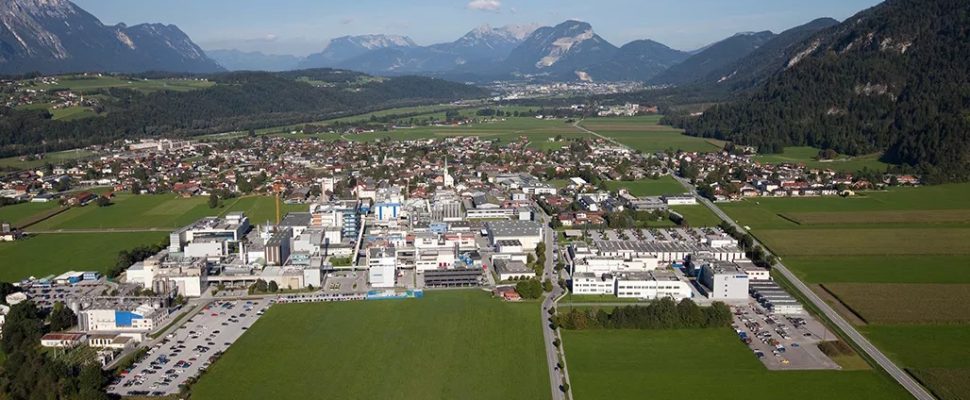
Some companies have already taken advantage of a more supportive policy environment to invest in European essential medicine manufacturing. For example, in 2020, Sandoz – formerly part of Novartis but now an independent entity – announced a major EUR 150 million investment to modernise and expand its Austrian antibiotic manufacturing facilities. EUR 50 million of that total was co-funded by the Austrian government. Stakeholders will be hoping that a robust Critical Medicines Act leads to more such companies following suit.
Procurement
A long-held bugbear of the European generics industry is the continent’s procurement practices. Currently, many generic medicine tenders rely on a lowest-price, single-winner system. While cost-effective, this increases the risk of shortages if the sole supplier encounters production challenges.
“The Act proposes a transition to multi-supplier contracts, ensuring a more diversified and stable supply,” says Eder. “While procurement remains a national responsibility, establishing harmonised guidelines across the EU will be crucial for long-term sustainability.”
The Act could, however, empower the European Commission to coordinate joint procurements of certain drugs in emergencies (in a similar vein to how the EU jointly purchased vaccines against COVID-19), if it helps guarantee supply.
Stockpiling
The third and perhaps most complex issue is national stockpiling policies. Rather than each country hoarding its own reserves (which can lead to imbalances), the Act would promote coordinated contingency stocks that can be shared. This might involve requiring pharmaceutical companies to hold minimum buffer stocks of critical medicines and creating EU or regional stockpiles managed jointly
“Countries such as France and Germany have imposed extensive stockpiling requirements, with Germany alone mandating a six-month reserve, equivalent to the annual consumption of ten smaller nations in the vicinity of Germany,” explains Eder. “If more large economies implement similar policies, it could destabilise supply chains for smaller countries.”
Broad Support & Notes of Caution
While the full provisions of the Act are still unclear, there has been broad cross-sector support of the need to reset Europe’s relationship with essential medicines and thereby ensure its “health sovereignty.”
The European Commission sees the Act as a safeguard against any individual country having to go it alone in tackling drug shortages, while the generics industry perceives it as a win-win, helping patients by stabilising supply, at the same time as potentially boosting their bottom line.
For the EMA, the Act can be seen as a proactive regulatory upgrade that moves the EU from a reactive stance (simply managing shortages when they happen) to a preventive stance (ensuring supply robustness so that shortages are far less likely to occur).
Healthcare professionals too have come out in support. “The Critical Medicines Act represents a decisive moment to strengthen Europe’s pharmaceutical resilience,” said the European Society for Medical Oncology (ESMO) in its February 2025 policy statement. “Cancer patients cannot afford delays and action is needed to ensure continued access to life-saving treatments,”
There have been notes of caution, however. The American Chamber of Commerce in Europe warns that “While ensuring security of supply is critical, localisation may not improve resilience or access. Instead, global interconnectedness, collaboration and regulatory harmonisation are essential to ensuring reliable access to medicines and medical products across Europe.”
There is also concern from the innovation-based pharmaceutical industry that too much focus on off-patent drugs may threaten Europe’s already flagging reputation and output as an innovation hub.
“To secure supply in Europe in the long term, we must remember that the medicines under development today will be the critical medicines of the future,” says Lars Fruergaard Jørgensen, CEO of Novo Nordisk and president of the European Federation of Pharmaceutical Industries and Associations (EFPIA).
“When Europe is seeking open strategic autonomy, it needs to be a competitive place to research, develop and manufacture medicines, from the most innovative to the most familiar.”
Image: Sandoz Kundl manufacturing site in Austria (source: Sandoz)