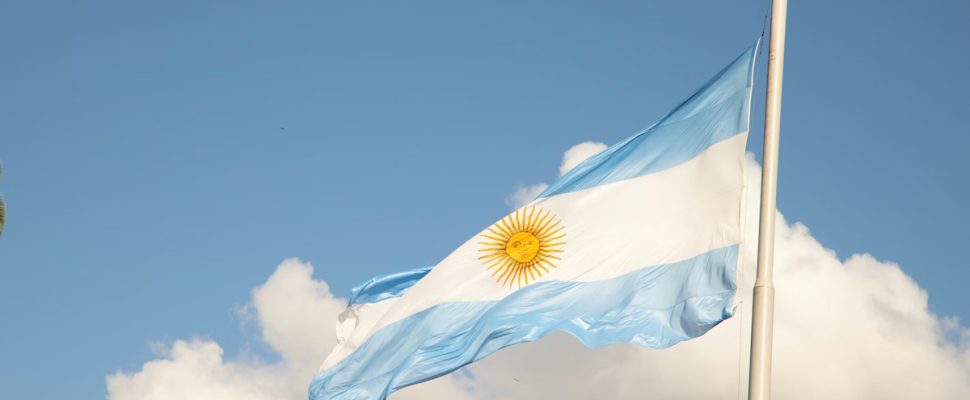

Has Argentina, for years one of the economic basket cases of Latin America, finally turned a corner? And is its pharma industry set for a bounce back?
Firebrand TV pundit-turned politician Javier Milei was elected President in late 2023 on a promise to slash public spending and state intervention. The country was in a dire economic position in the years leading-up to the election, as Gala Díaz Langou, a senior analyst and executive director at leading Argentine think tank CIPPEC, explains.
“Argentina experienced economic stagnation for over four decades, failed to generate formal employment for more than a decade, and had persistently high poverty rates throughout, which deteriorated even further during crisis periods,” she notes, outlining why Milei’s confrontational ‘rip it up and start again’ messaging won through with the electorate.
Since then, it has not all been plain sailing for the Argentine economy, and Milei remains a polarising figure, but inflation has dropped significantly from its previously sky-high levels. Moreover, Argentina reached its first fiscal surplus in years, potentially representing a new era of relative stability and investability for LatAm’s second-largest country.
A Resilient Local Industry
This has particular relevance for Argentina’s well-established pharma industry, which managed to thrive even in the most challenging economic circumstances. “Argentina is a compelling example of how strong productive capacity, high scientific standards, and a robust regulatory framework can support the development of the pharmaceutical sector,” says Mauricio Claverí, chief economist at industry association CILFA, which represents large-scale domestic players.
“Today, the industry accounts for nearly five percent of Argentina’s total industrial value added, generates over USD one billion in annual exports, and employs over 43,000 people, many of whom are highly trained professionals,” he continues.
With a more secure economic footing, domestic companies – which dominate the local market, supplying between 65 and 75 percent of both volume and value according to CILFA data – can make longer-term bets on Argentina. As Gustavo Pelizzari, CEO of Elea, Argentina’s largest pharmaceutical company by sales volume, explains, “Argentina is gradually shifting toward a more stable and predictable economic environment, which is critical for any long-term strategy.”
He continues, “For years, companies had to navigate wide discrepancies between their internal projections and actual macroeconomic outcomes – particularly around currency devaluation – making planning extremely difficult. Today, the gap between forecasts and reality is narrowing, giving businesses the confidence to make longer-term commitments.”
Manufacturing
One of the most significant of these long-term commitments being undertaken by the Argentinian industry is manufacturing, with the country able to produce products at an almost unmatched level of complexity within its region.
“Argentina now hosts three vaccine production plants, placing the country among a select group worldwide with this level of manufacturing capacity,” notes Claverí. As discussed elsewhere in this report, Argentina’s government recently signed a groundbreaking deal with Pfizer and local laboratory Sinergium for technology transfer to produce a new pneumococcal conjugate vaccine locally.
But Argentina’s manufacturing capabilities are not limited to vaccines. “We are also seeing growth in the production of active pharmaceutical ingredients (APIs) – some of which are already being exported to Europe – and rapid progress in the development of complex biosimilars,” exclaims Claverí. Exports were up 20 percent in the first half of 2025, driven by growing regional and global demand for Argentina’s affordable, high quality biosimilars.
Digital Health Start-Ups
Argentina also boasts a promising digital health sector, with several start-ups emerging to support health systems at home and abroad.
Big Pharma is taking note. As Sarah Aiosa, SVP and president for Latin America at MSD, explains. “Harnessing digital technologies and data more effectively is one of our three key priorities for the region, and our company deeply believes in the potential of the artificial intelligence revolution,” she says. “For this reason, we invested in Mamotest, an Argentina-based company that leverages telehealth to provide breast cancer mammography and diagnosis, thereby improving diagnostic rates.
Aiosa continues, “Currently, patient data portability remains a challenge – a patient treated at one hospital may find their data unavailable at another facility. Integrating digital health data systems represents a significant opportunity for Latin America.”
Better health data integration was also the jumping-off point for Cromodata. This Argentinian start-up aims to collect and compile health data from Latin America – much of which is currently siloed and underutilised – to drive better diagnosis and treatment.
“Currently, Latin America contributes less than one percent of the data used for AI models and genomic medicine worldwide,” explains Founder and CEO Keila Barral, whose background in tech combined with a long diagnostic journey to get a diagnosis for two brain tumours led to her starting the company.
“This means that when these technologies reach our region, they are not tailored to us. For example, one company deployed an AI tool to detect breast cancer in Argentina, but it had been trained exclusively on Asian women’s data. The anatomical differences made the tool far less effective. Instead of closing health gaps, the lack of local data risks widening them.”
She adds, “Cromodata’s mission is to change this dynamic: to make Latin American health data visible and usable globally, ensuring our populations are represented in the development of new technologies and treatments.”
Clinical Trials
Of more relevance to multinational pharma companies, opportunities in the Argentinian clinical research space are also opening up. “Argentina was one of four countries where we tested our COVID-19 vaccine at unprecedented speed,” outlines Pfizer LatAm Cluster President Sinan Atlig, whose firm also leaned on Argentina for testing its recently launched RSV vaccine.
“Argentina’s reputation as a regional benchmark for clinical trials stems from a combination of factors, including a strong hospital infrastructure, highly trained healthcare professionals, and competitive costs,” explains Claverí. “Many clinical centres integrate patient care with research activities, which has helped reinforce the ecosystem.”
Moreover – according to Mitchell Parish, CEO and co-founder of LatAm-focused decentralised clinical trial specialist H-Clinical – these fundamentals are being bolstered by the current administration. “Argentina has moved quickly following recent administrative changes,” he says. “We have seen a clear uptick in the ability to run decentralised trials as well as a strong desire to support the industry, reflecting a more enabling regulatory environment.”
Mixed Signals
While the positives for Argentinian healthcare and pharma are apparent, there are still numerous issues for the country to resolve if it is to become a competitive international investment destination. “The pharmaceutical sector in Argentina faces several key challenges,” says Juan Jose Marconi, executive director of COOPERALA, another association of local pharma companies. “Chief among them is the need for better financing to support R&D and investment. Public policies that recognise the pharmaceutical industry as strategic to the national economy are also needed. Finally, tax reform is crucial to ease the burden at the national, provincial, and municipal levels.”
CILFA’s Claverí agrees. “Despite the current government’s strong reformist and deregulatory approach, the tax burden on the formal industrial productive sector in Argentina remains one of the highest in the world. This burden must be reduced to make local production competitive and to encourage investment.”