
Korea, already one of the world’s top clinical research destinations, is looking to boost the efficiency of its clinical trial processes even further by launching K-CThub, a one-stop digital platform for trial sponsors.*
The explosion in popularity of Korean culture over the last two decades has catapulted Korea into the global consciousness. While young people across the world have been eagerly consuming the latest K-pop and K-drama, another story has been quietly brewing – Korea’s emergence as a preeminent global biomedical research hub.
The statistics are compelling. Korea ranks among the world’s top leading countries in the global clinical development pipeline, accounting for 14.2 percent of the international total in 2024 with an astonishing 3,386 drugs in development, according to Citeline’s Pharma R&D Annual Review 2025.
Moreover, a full 3.46 percent of all clinical trials conducted last year took place in Korea, putting the east Asian nation of just 51.7 million in sixth place globally, ahead of heavyweights like the UK, Canada, Japan, Italy, and France. On a city level, the data is even more striking, with the concentration of expertise in Korea’s capital Seoul almost unmatched; Seoul placed second globally as one of the world’s most active cities for industry-sponsored clinical trials.
Why Korea for Clinical Trials?
Why are both global and domestic sponsors choosing to locate their trials in Korea? One key factor is the country’s world-class infrastructure: there are more than 200 qualified clinical trial institutions in Korea, it sits among the world’s top ten countries for operational readiness and patient availability, and its trial sites are regularly inspected and approved by leading global regulatory bodies.
Then there is Korea’s population, which is ageing rapidly with disease patterns closely aligned with those of Western countries, (including a preponderance of cancer, which accounted for 41.9 percent of deaths among the top 10 causes in 2023). This makes clinical research conducted in Korea extremely relevant globally. Koreans have a high level of accessibility to medical services, with virtually the entire population covered by National Health Insurance (NHI), and there is a good level of public understanding of the value of participation in clinical research.
On the regulatory front, the Ministry of Food and Drug Safety (MFDS) offers fast-track approval processes for medicines that tackle serious public health threats as well as pre-submission consultation and a ‘navigator’ programme for certain innovative medicines.
K-CThub – The Next Chapter
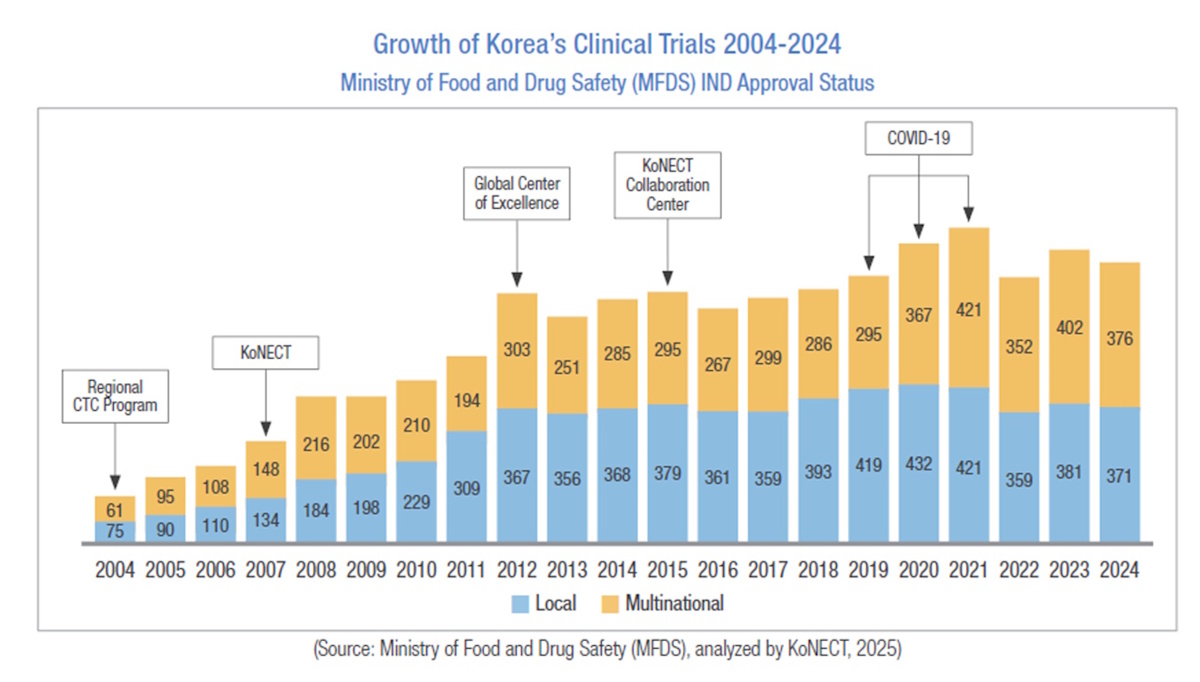
Clinical trial numbers in Korea have more than tripled since the establishment of the Korea National Enterprise for Clinical Trials (KoNECT) – the national affiliated organisation dedicated to strengthening Korea’s clinical-trial ecosystem by coordinating sites, investigators, infrastructure, and policy support – back in 2007 (see below chart).
Sponsors are demanding more than ever of trial host countries as drug development costs, time and complexity increase, and Korea’s currently fragmented clinical trial information – spread across multiple institutions – is hampering the data collection efforts of both companies and researchers.
This fragmentation is putting a ceiling on Korea’s attractiveness to potential clinical trial sponsors; a ceiling that KoNECT is aiming to smash through with a new initiative, the Korea Clinical Trials Hub (K-CThub). K-CThub aims to smooth the information gathering process for sponsors and increase the efficiency and ease of conducting clinical research in Korea.
Perhaps the closest international equivalents are ‘Trial Nation’ in Denmark (Europe’s leading country for clinical trials on a per capita basis) and the Clinical Research Delivery Network in the UK (currently the world’s seventh most significant country for clinical trials, just behind Korea). However, K-CThub differs by offering a comprehensive, unified, and technology-assisted service.
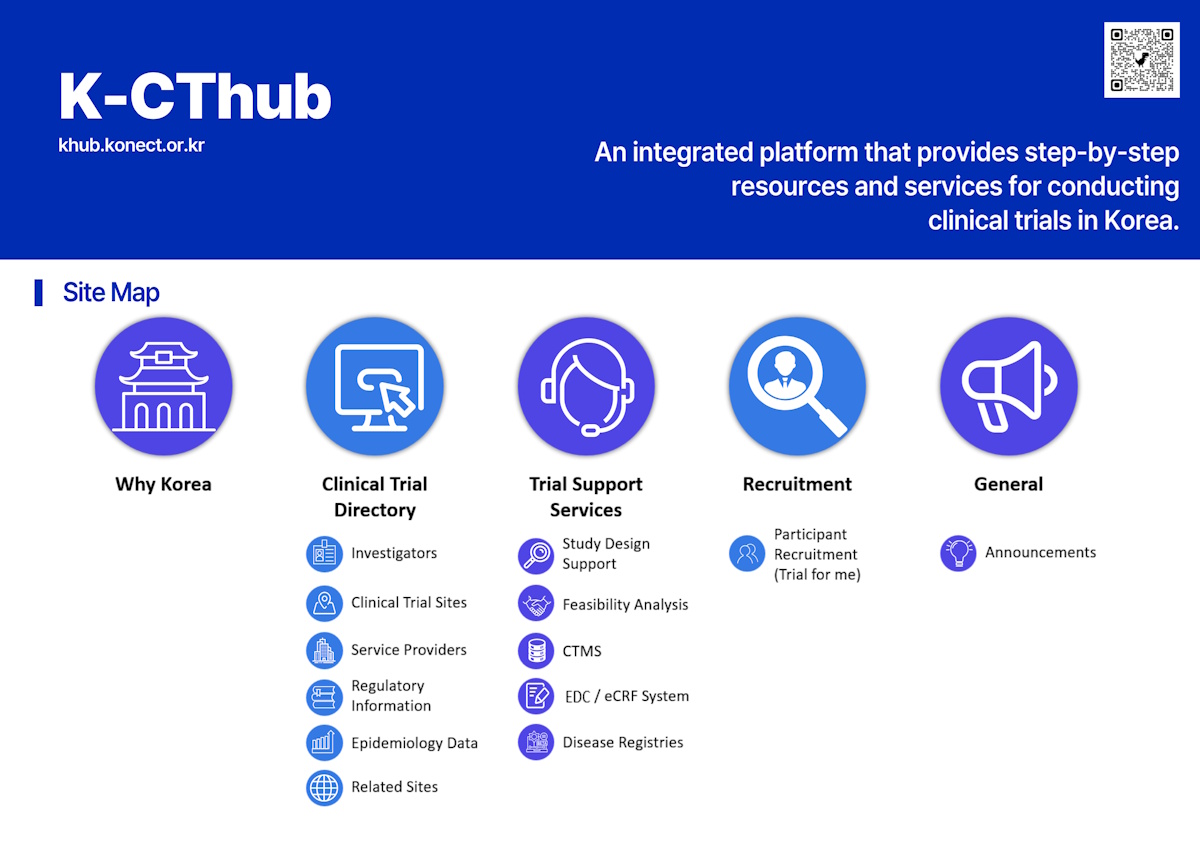
Available in both Korean and English, and connected to leading international biomedical literature database PubMed, K-CThub brings together Korea’s full clinical-trial landscape in one place. Its searchable national resource databases cover all aspects of the clinical research ecosystem, from investigators to clinical trial sites, service providers, regulatory information, epidemiology data, and related sites.
In terms of service providers specifically, K-CThub provides information on various clinical trial vendors in Korea, including clinical and non-clinical contract research organisations (CROs) and decentralised clinical trial (DCT) companies, to support the identification of collaboration partners and the development of business strategies.
At the same time, K-CThub’s AI-driven design tools help sponsors optimise protocols and improve feasibility from the outset. The platform also integrates participant-recruitment support and a dedicated feasibility service, utilising feasibility and epidemiology data to explore the potential for various types of clinical trials in Korea. This helps reduce the friction that previously came from sponsors having to navigate fragmented systems.
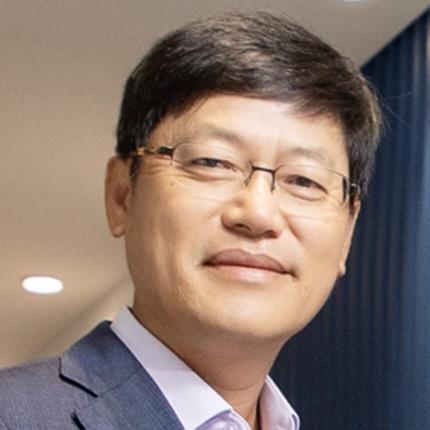
Dr In-seok Park, KoNECT’s president (pictured) explains the organisation’s hopes for K-CThub’s impact on Korean clinical trials: “Our intention is to make K-CThub the official portal for planning and executing clinical trials in Korea,” he says. “By integrating regulatory information, investigator data, feasibility resources, and AI-driven support, we want to give global sponsors the clarity and efficiency they need to run trials with confidence.”
KoNECT’s stated hope is that “every clinical journey in Korea begins with K-CThub.” If this new platform takes off and makes the process even more efficient, there could be many more such journeys in Korea in the coming years. Global stakeholders will be watching closely to see whether Korean clinical research can maintain, and even grow, its outsized impact on global and local health.
* This article was produced in collaboration with KoNECT