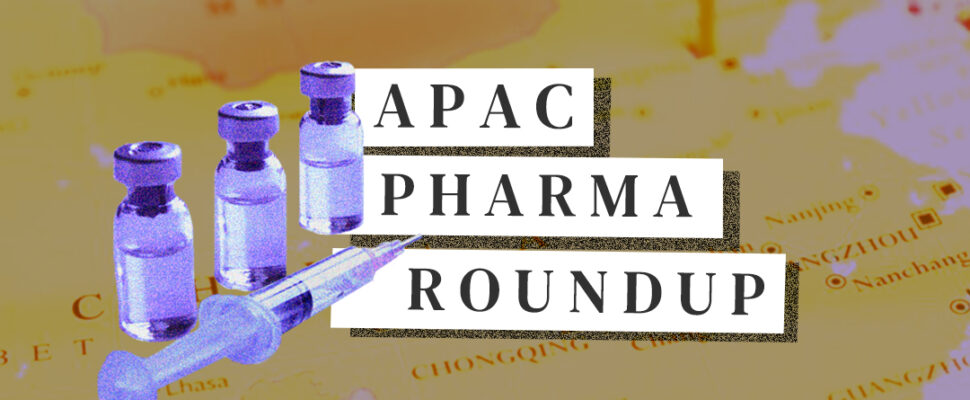

A run-through of some of the most striking recent stories from pharma in the dynamic Asia-Pacific region, including Japan’s attempts to bring back Big Pharma investment; UCB’s decision to divest its China neurology and allergy business for USD 680 million; and Pfizer, AstraZeneca and Novartis investing in Singaporean manufacturing.
Japan tries to win back Big Pharma (swissinfo.ch)
Japan is the world’s third-largest pharmaceutical market, but it is increasingly being overlooked by international drugmakers amid stringent price controls that have stymied the launch of new medicines and stifled innovation. Now, the government is fighting back.
Belgium’s UCB to sell China neurology, allergy business for $680 mln (Reuters)
UCB, a Belgian biopharmaceutical firm, said on Monday it would sell its Chinese neurology and allergy business to Singapore-based asset management group CBC and Abu Dhabi sovereign investor Mubadala for $680 million.
The deal includes UCB’s neurology portfolio comprising drugs like Keppra, Vimpat and Neupro, and anti-allergy medicines Zyrtec and Xyzal, commonly used to treat watery eyes and runny noses.
The Brussels-listed firm will also sell a manufacturing site in Zhuhai city.
Singapore gets Big Pharma rush to invest in plants for aging region (Nikkei Asia)
Large investments from some of the world’s biggest drugmakers are pouring into Singapore as companies seek to expand production in the city-state and access broader Asia, one of the fastest-growing markets with a rapidly aging population.
Last month, the U.S. drug giant Pfizer opened a 1 billion Singapore dollar ($740 million) facility to produce key ingredients for oncology medicines and others. In May, AstraZeneca pledged $1.5 billion to build its first Singapore site producing targeted chemotherapy drugs.
Earlier this year, Swiss company Novartis announced it would invest $256 million to expand a biopharmaceutical plant to bolster its supply chain across Asia.
Amid GLP-1 boom, Novo Nordisk strikes up insulin partnership in Indonesia (Fierce Pharma)
While much of the attention on Novo Nordisk these days revolves around the company’s wildly popular GLP-1 drugs Ozempic and Wegovy, insulin remains a critical backbone for the drugmaker.
Now, as the company steadily ups its commitments in Asia, Novo is teaming up with Indonesia’s state-owned pharmaceutical firm Bio Farma to bolster insulin packaging in the southeast Asian nation.
Under a memorandum of understanding to collaborate on production of diabetes drugs, Novo will bring in its know-how in diabetes care and insulin manufacturing while Bio Farma will contribute its local facilities, the Indonesian company said in a Tuesday press release.
At least 17 killed in blast at pharma factory in India (Aljazeera)
Officials in Andhra Pradesh state say many of 40 people injured suffered extensive chemical burns.
An explosion at a pharmaceutical plant in India’s southern state of Andhra Pradesh has killed at least 17 people, according to a government official.
Nearly 40 people were injured, state’s Industries Secretary N Yuvaraj told the Reuters news agency on Thursday, adding the rescue operation was completed.
A fire broke out following the blast on Wednesday at the privately held Escientia Advanced Sciences’s 40-acre (16-hectare) manufacturing unit in the Anakapalli district.
The incident took place during lunchtime at the factory, which began operating in 2019, said District Collector Vijaya Krishnan. Some 380 employees work two shifts at the plant. Many workers escaped unhurt because they were on lunch break.
The company manufactures intermediate chemicals and active pharmaceutical ingredients, local media reports said.