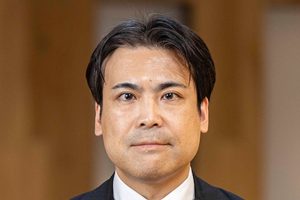
Asia is emerging as a critical frontier in oncology research, yet much of global drug development continues to overlook the region’s specific clinical needs. At the National Cancer Center Japan, Kenichi Nakamura is working to change that dynamic through ATLAS, a pan-Asian clinical trial network designed to enable more coordinated, regionally relevant studies, alongside ENSEMBLExJ, a national platform aimed at attracting global biopharma innovation into Japan. Together, these initiatives reflect a more integrated approach to clinical development, bridging fragmented systems and expanding access to new therapies across Asia.
What led you to establish the ATLAS initiative, and how does it build on your experience in Japan’s clinical research ecosystem?
I am based at the National Cancer Center Hospital in Tokyo, part of the National Cancer Center Japan, one of the country’s leading oncology institutions. I serve as Director of the Department of International Clinical Development and lead the ATLAS initiative. I originally trained as a gastrointestinal surgeon, but around two decades ago I moved into clinical trial operations, methodology, and regulatory science, where my work has since focused on strengthening academic and cooperative oncology research in Japan, particularly through the Japan Clinical Oncology Group (JCOG).
Through that experience, I came to recognise both the strengths and the limitations of Japan’s clinical research system. JCOG has built a strong academic track record, delivering large multi-centre studies and contributing to leading international journals, but it remains largely focused on domestic trials. ATLAS was therefore established to extend this capability beyond Japan and create a more integrated, pan-Asian framework for cancer clinical research and drug development.
We launched ATLAS in 2020 as the Asian clinical TriaLs network for cAncerS. What began as a network of around 15 institutions has since expanded to more than 40 sites across 10 countries and regions, including South Korea, Taiwan, Singapore, Malaysia, Thailand, Vietnam, the Philippines, Indonesia, and Hong Kong. The objective is to build clinical trial infrastructure across Asia, support early drug development, and advance genomic medicine through closer regional collaboration.
This effort reflects a broader shift in how we view the region. While Japan remains an important market, its population is declining and growth in pharmaceutical development has slowed. At the same time, Asia represents a large and increasingly important patient population, with a high burden of cancers such as head and neck, gastric, biliary tract, and cervical cancers, which are less prominent in Western drug development and therefore often receive lower priority from global pharmaceutical companies. ATLAS was created to address this gap and to position Asia more clearly within the global oncology research landscape.
How is ATLAS structured in practice, and what differentiates its approach to clinical development across the region?
ATLAS is designed as a collaborative platform that brings together complementary strengths across the region. More developed markets such as Singapore, South Korea, Taiwan, and Malaysia provide well-established clinical research infrastructure, experienced investigators, and regulatory systems aligned with international standards, making them well suited to later-phase and registration-directed trials. In parallel, emerging markets such as Vietnam, the Philippines, and Indonesia offer access to larger untreated patient populations and can support faster recruitment, particularly for observational studies and broader data generation. This role sharing is just an example. In practice, we tailor the network to the requirements of each study, combining these strengths to optimise both scientific and operational outcomes.
Beyond trial execution, ATLAS also serves as a capacity-building platform. We run training programmes, workshops, and regular webinars to support investigators and research staff across Asia, with the aim of raising standards collectively and enabling wider participation in multinational clinical research.
Since its launch, ATLAS has enrolled more than 2,900 patients and now supports a range of studies, from observational and registry-based programmes to interventional multicountry trials. A defining feature of the platform is its emphasis on investigator-initiated, registration-directed studies. The PATHWAY trial illustrates this approach: a randomised, double-blind phase III study in hormone receptor-positive, HER2-negative advanced breast cancer evaluating palbociclib in combination with endocrine therapy. While Pfizer provided the study drug and funding, we led the design and execution of the trial. This model allows us to generate evidence in areas that may not be prioritised by industry alone. The study completed enrolment ahead of schedule and supported the expansion of palbociclib’s indication in Japan following discussions with the Pharmaceuticals and Medical Devices Agency (PMDA).
Another key programme is MASTER KEY, a platform focused on rare cancers that integrates a prospective registry with multiple linked clinical trials. In Japan, it has enrolled over 5,000 patients and conducted more than 30 registration-directed trials, and it has since been expanded into MASTER KEY Asia. This regional platform enables the collection of clinical and genomic data, supports biomarker-driven trials, and provides a robust reference dataset that can be used in regulatory discussions, particularly where randomised studies are not feasible.
ATLAS also supports innovation beyond drug development. Project CAD, for example, is a multicountry randomised trial evaluating an artificial intelligence-based system for colonoscopy to improve lesion detection rates. Organisationally, ATLAS operates as a regional collaboration rather than a Japan-led initiative, with leadership rotating across participating countries and governance shared among institutions. We have also established disease-specific groups in areas such as head and neck cancer, sarcoma and rare cancers, hepatobiliary and pancreatic cancers, and paediatric oncology, with additional groups in development.
To support these activities, we have strengthened our internal research infrastructure at the NCC while establishing a regional operational presence in Bangkok to coordinate activities across Southeast Asia. This allows us to combine central oversight with regional execution, improving efficiency while reducing reliance on external contract research organisations. Overall, ATLAS functions as a long-term platform to support multinational clinical trials, build research capacity, and generate evidence that reflects the specific needs of Asian patients, while also creating opportunities for closer collaboration with global pharmaceutical partners.
What are the main operational and regulatory challenges in conducting multinational clinical trials across Asia, and how is ATLAS positioned to address them?
One of the key challenges in Asia is the absence of a harmonised regulatory framework across countries. Unlike Europe, where the EU Clinical Trials Regulation enables a single submission and coordinated review through a centralised system, regulatory requirements in Asia continue to differ from one jurisdiction to another. This creates complexity in both timelines and execution, as sponsors must navigate distinct approval processes, documentation standards, and regulatory expectations in each country.
In practice, this variation can have a direct impact on trial timelines. In Vietnam, for example, the approval process remains relatively. Clinical trial applications require ethics review at the grassroots/institutional level, national ethics approval, and final Ministry of Health approval. Because these steps are not always conducted in parallel, timelines can be longer and execution more complex than in more harmonised regions. For multicentre studies, participating trial centres must also submit documentation confirming site participation.
At the same time, the situation is gradually improving. Regulatory authorities across Asia are strengthening collaboration and working towards greater alignment. Japan’s PMDA, for instance, established an overseas office in Bangkok in 2024 to enhance coordination with Asian regional regulators. The aim is to improve information exchange, build regulatory capacity, and ultimately support more efficient multinational trials.
From our perspective, the key has been to build a detailed understanding of these country-specific processes. Over time, we have accumulated practical regulatory knowledge across the region, which allows us to coordinate trials more effectively than in the past. In this context, ATLAS serves as a platform that helps reduce fragmentation by supporting feasibility assessments, identifying appropriate sites, and guiding sponsors through the operational and regulatory landscape across Asia.
How does ATLAS engage with industry sponsors, and what factors shape its operating model across the region?
ATLAS is primarily focused on phase II and phase III clinical trials, particularly those aimed at expanding drug indications and generating registration-relevant evidence across multiple countries. Early-phase studies, such as first-in-human or phase I trials, are typically conducted by pharmaceutical companies at specialised centres and therefore our commitment to phase I trials mainly focuses on educational collaboration.
Our approach is centred on IITs, in which we take responsibility for study design, regulatory submissions, and overall execution, while industry partners provide study drugs and financial support. This allows us to address clinical questions that may not be prioritised within traditional industry-led programmes, while still generating data that can support regulatory decision-making. At the same time, we are seeing increasing interest from international companies, including emerging biopharma players, that are looking to use the ATLAS network to conduct multinational studies. These collaborations often follow a hybrid model, combining academic leadership with industry support.
There are, however, structural constraints that shape how the network operates. China is a clear example. While it is a major and rapidly evolving clinical trial market, regulatory and policy restrictions limit cross-border collaboration. In particular, constraints on exporting biological samples and clinical data, as well as limitations on transferring research funding, make it difficult to integrate Chinese sites into multinational trials coordinated outside the country. As a result, despite ongoing dialogue with stakeholders, mainland China has not yet been involved in the ATLAS network. Instead, companies often conduct domestic trials first before expanding into Japan and other Asian markets, where ATLAS can serve as a regional platform outside mainland China.
From a partnership perspective, collaborations are formalised through standard clinical trial agreements, with additional confidentiality arrangements where needed. While we work closely with industry partners, we retain academic leadership of the studies, ensuring scientific independence while enabling structured and effective collaboration.
What is the rationale behind the ENSEMBLExJ initiative, and how does it complement ATLAS in engaging global biopharma companies?
In parallel with ATLAS, we have recently launched the ENSEMBLExJ project, a national initiative led by the NCC in collaboration with the Ministry of Health, Labour and Welfare, the PMDA, and other stakeholders. While ATLAS is focused on investigator-initiated, multinational trials across Asia, ENSEMBLExJ has been designed specifically to support industry-sponsored clinical development in Japan, particularly for global biopharma companies that do not yet have an established presence in the country.
The initiative responds to what we describe as “drug lag/loss”, a situation in which innovative therapies approved in the United States or Europe reach Japan later, or are not developed there at all. This reflects a broader shift in the industry, where an increasing share of innovation is coming from emerging biopharma and startup companies, many of which do not have the local infrastructure or regulatory familiarity required to enter the Japanese market. As a result, promising therapies are not always prioritised for development in Japan despite clear clinical need.
ENSEMBLExJ was therefore established as a one-stop service platform to reduce these barriers and make Japan more accessible. We provide structured support across clinical development and regulatory strategy, including advice on trial feasibility, regulatory pathways, and market positioning, while also connecting companies with clinical trial sites, contract research organisations, key opinion leaders, and potential partners within Japan. The objective is not only to facilitate individual studies, but to create a clearer and more navigable pathway for companies looking to establish a presence in the market.
In that sense, ENSEMBLExJ is comparable to initiatives such as Korea’s KoNECT, which offer integrated support for global sponsors. At the same time, it reflects a broader effort to reposition Japan as an attractive destination for clinical development. Many companies continue to perceive Japan as complex or slow, often based on outdated assumptions, and part of our role is to provide more accurate information alongside practical, hands-on support.
Although the platform is still at an early stage, we have begun engaging with international companies and plan to expand our outreach through global conferences and partnerships. Over time, ENSEMBLExJ is intended to work alongside ATLAS as a complementary pillar, strengthening Japan’s role as an entry point for clinical development while enabling successful programmes to expand more efficiently into the wider Asian region.
What are your key priorities over the next three to five years in advancing clinical research and collaboration across Asia?
Asia accounts for more than half of the global cancer burden, yet much of oncology drug development continues to be led from the United States and Europe. This means that cancers more prevalent in Asian populations are not always prioritised, creating a gap between clinical need and research focus that we need to address.
Looking ahead, our priority is to strengthen Asia’s role in both the development and the delivery of innovative therapies. This starts with attracting more pharmaceutical and biotechnology companies to engage with Japan as a development partner, supported through initiatives such as ENSEMBLExJ. Where therapies demonstrate clear clinical value, we then aim to extend development across the region through the ATLAS network, enabling broader and more timely access for patients across Asia.
At the same time, this is inherently a collaborative effort. It cannot be driven by Japan alone, and depends on close coordination with investigators, institutions, and stakeholders across the region. By continuing to build these partnerships and increasing the number of multinational studies, our aim is to establish a more integrated clinical research environment in which Asia plays a more active and influential role in global oncology development.