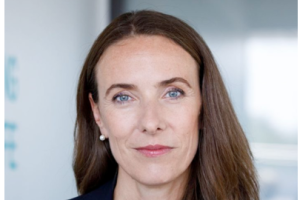
Chantal Friebertshäuser, SVP Europe & Middle East, is spearheading Moderna's ambitious expansion beyond COVID-19 vaccines, leveraging mRNA technology to target cancers and latent viruses across diverse markets. She champions a hyper-localised strategy to navigate Europe and the Middle East's complex healthcare landscapes. Her vision positions Moderna not as a pandemic player, but as a diversified innovator poised to redefine medicine.
Could you begin by sharing your professional background and what led you to Moderna?
My professional trajectory represents what one might characterise as a traditional industry progression. My initial attraction to pharmaceuticals stemmed from a fundamental desire to contribute meaningfully to global health outcomes – to secure even a modest portion of transformational impact on a worldwide scale. This motivation naturally led me toward international business within the sector, enabling broader influence across diverse markets and populations.
What ultimately drew me to Moderna was this same imperative for meaningful impact. While I was not actively seeking new opportunities, I became convinced that mRNA technology will fundamentally revolutionise the discovery, development, and global delivery of vaccines and therapeutics. Moderna stands at the vanguard of this transformation. I recognised that it represented an unprecedented opportunity to contribute to building something with potentially unparalleled global impact. The timing felt both strategic and essential.
You joined at a pivotal time, following the peak of the COVID period. What have been your key strategic priorities over the last two years to steer Moderna into its next chapter?
Moderna demonstrated remarkable leadership during the pandemic, delivering unprecedented impact while simultaneously validating that mRNA technology could perform exactly as theorised, adapting vaccines with extraordinary agility to emerging needs. The achievement of vaccine development within less than 50 days remains remarkable and exemplifies the inherent advantages of this technology platform.
Critically, this capability persists as we continuously adapt vaccines to new variants annually, providing ongoing validation of the platform’s efficacy. However, the pandemic represented a singular historical moment of responsibility. Now, with proven efficacy and safety established, we are witnessing the platform’s broader potential realised through an extensively diversified pipeline in four therapeutic areas: respiratory, rare diseases, oncology and latent viruses.
We have evolved beyond a single-product organisation. Three products now carry regulatory approval, with continuous COVID-19 variant adaptations. We’ve had two phase III readouts in respiratory vaccines. We’ve engaged regulators on filings for the standalone flu vaccine, and we plan to resubmit the flu/COVID combination BLA after adding efficacy data. We are targeting up to 10 potential approvals through 2028. This period has witnessed unprecedented pipeline advancement, with the platform demonstrating a higher probability of success – the fundamental promise of genuine platform technology. Importantly, this success spans diversified therapeutic areas rather than concentrating in a single domain.
Can you outline your current pipeline across different therapeutic areas?
Our respiratory virus vaccine portfolio represents the initial commercial focus, encompassing our three approved products: COVID-19, next-generation COVID-19, and RSV vaccination for adults. Our flu and combination flu + COVID products also concentrate in this space. Vaccination coverage rates across Europe remain problematically low, particularly in many countries. If we take the example of influenza, Europe still hasn’t met the long-standing 75% target for older adults, with only two EU/EEA countries having reached it in 2023/24. That’s a critical gap heading into winter. In this context, our combined flu/COVID-19 vaccine, by simplifying the act of vaccination, should support healthcare professionals in their daily work and contribute to improving vaccination coverage.
We are also expecting phase three results in latent virus vaccines, specifically cytomegalovirus (CMV) and norovirus, both addressing substantial unmet medical needs. CMV represents a major cause of hearing loss and other childhood disabilities, while norovirus, beyond its widely recognised discomfort, poses serious risks to vulnerable populations, including the elderly and those with compromised health conditions.
Success in these areas would yield the first vaccines in this therapeutic space, truly ground-breaking achievements emerging from our latent virus pipeline. Simultaneously, we are advancing products in rare diseases and oncology, with results anticipated in the near term.
Given the significant challenge of navigating the vastly different healthcare systems of Europe and the Middle East, what overarching strategy have you implemented to ensure successful market access?
The regional diversity represents both a challenge and an opportunity that I find professionally stimulating. My fundamental approach to managing this complexity emphasises localisation: working directly with in-country partners, governments, and scientific communities to ensure we address specific regional needs while providing science-based responses to relevant decision-making criteria.
Most countries across the region share similar fundamental challenges, particularly within the European Union. We face an ageing population where approximately 20% of citizens exceed 65 years of age – by definition, a high-risk demographic. This population continues expanding, yet most countries, with notable exceptions in the Nordic region, inadequately protect their adult populations through vaccination.
Post-pandemic, we have observed declining vaccination coverage rates not only for COVID-19 but also for influenza and other preventable diseases. This trend is both concerning from a public health perspective and economically problematic, creating a substantial burden on hospitalisation systems already facing healthcare worker shortages and budget constraints across the region.
Consider RSV as an illustrative example: Europe experiences approximately three million cases annually – likely underestimated due to measurement limitations – resulting in more than 150,000 hospitalisations and 20,000 preventable deaths annually, and we know that those numbers are underestimated. Combined with influenza and COVID-19, the preventable disease burden represents substantial costs that vaccination could address.
Our regional priority focuses on collaborative engagement with regulatory agencies, scientific communities, government payers, and other stakeholders to establish common approaches and objectives for population protection. This represents both our immediate mission and long-term strategic foundation.
With an unprecedented eight to ten potential launches in the near future, how are you structuring and preparing your commercial teams for this rapid scaling across diverse therapeutic areas?
Our approach emphasises strategic staging and focused execution. Initially, we concentrate on respiratory virus vaccines to establish foundational capabilities and stakeholder relationships. This focus enables us to generate appropriate data for market access across different countries before progressing to full commercialisation, which varies significantly by market.
In Germany, for example, for the moment, general practitioners predominantly manage vaccination, requiring targeted scientific community engagement to ensure appropriate provider education about vaccination protocols and population protection strategies. We have designed all products with pre-filled syringes, considering commercialisation requirements from the outset to facilitate easier administration for vaccinators like pharmacists and physicians.
During the pandemic, multi-dose vials were appropriate for rapid, high-volume deployment. Currently, we adapt to customer needs and market requirements. This staged approach will expand as we launch additional products, requiring broader access across more countries and engagement with diverse stakeholders for different therapeutic areas.
The advantage of operating as a start-up within Moderna provides exceptional agility. Unlike traditional pharmaceutical companies with long-established structures, our unique way of working gives us the freedom to adapt quickly, experiment, and iterate based on real-world learning — an aspect of the role I find particularly engaging.
What is the significance of your lead oncology asset for the future of cancer treatment?
This exemplifies a unique capability of the mRNA platform: rapid product adaptation for vaccines and complete individualisation for cancer patient therapy, as demonstrated through individualised neoantigen therapy. Intismeran autogene, our individualised neoantigen therapy program, is being developed in partnership with MSD. We have already published positive phase II data in melanoma, and MSD is advancing phase III trials in melanoma and non-small cell lung cancer.
The approach involves taking a tumour biopsy to identify the majority of gene mutations causing the cancer. Moderna and MSD designed a proprietary algorithm that then reviews these mutations and predicts up to 34 of those mutations that are believed to help the patient’s immune system better recognise tumour cells and incorporate them into a treatment specifically designed for that individual patient, hence “individualised neoantigen therapy.”
If phase III results confirm our phase II findings, this represents a potential revolution in cancer treatment. For me, this demonstrates the next evolutionary step beyond the pandemic’s proof of concept, validating mRNA technology in cancer treatment.
This represents merely the first of several oncology products in development. Our second oncology asset, for which we expect phase I b results before advancing to phase II, employs an all-comer rather than an individualised approach, but maintains targeted mRNA-based methodology. This will provide additional validation of mRNA technology’s potential to advance cancer treatment paradigms.
What is the balance between in-house operations and strategic partnerships in your regional commercial model?
Our strategic preference emphasises direct commercialisation, an approach that emerged during the pandemic and represents a calculated risk for a start-up organisation – demonstrating capability beyond highly specialised niches. Switzerland exemplifies our successful direct commercialisation model, and we will evaluate scalability as we expand.
However, we remain open to strategic partnerships in specific contexts. In the Middle East, we collaborate with multiple in-country partners for commercialisation support.
Even with direct commercialisation, partnership remains fundamental. We collaborate extensively with on-ground partners and also with governments to ensure common approaches to pandemic preparedness and population vaccination strategies. Partners provide scaling support, particularly important given our seasonal business model – respiratory virus vaccines are administered primarily in autumn, with some countries conducting spring campaigns for high-risk populations.
Building extensive operations, such as year-round sales forces, would be inefficient given seasonal demand patterns. Strategic partnerships with medical groups and pharmacies for communication and vaccination delivery make considerable operational sense.
How would you characterise the culture at Moderna, and what is your personal leadership philosophy for nurturing it?
Leadership and team dynamics represent areas of particular professional passion. Upon joining Moderna, I was immediately impressed by the combination of extraordinary expertise with genuine humility and determination, foundational cultural elements that remain unchanged throughout my tenure.
This culture attracts individuals willing to take calculated risks, often accepting roles that may appear smaller in scope than previous positions but offer the opportunity to build something transformational. These are professionals seeking challenges and the chance to contribute their experience toward creating innovative solutions.
This environment is not suitable for everyone. Those preferring well-established, organised systems may find the culture challenging. However, individuals who wish to apply their capabilities toward building novel solutions, who embrace experimentation while learning from failures, will find this an ideal environment.
We have navigated significant challenges, including the intense pandemic response period when team members worked without rest for two years. Maintaining energy and delivery through such periods, when not every initiative succeeded, required extraordinary resilience. The subsequent phase allowed more reflection time, but building new capabilities in unprecedented areas while awaiting pipeline validation results demanded continued resilience amid external uncertainties.
Consequently, our culture attracts professionals who contribute expertise and commitment, embrace learning and challenges, demonstrate resilience through difficulties, and aspire to meaningful global impact. From a leadership perspective, my role involves leveraging these remarkable individual capabilities to achieve collective outcomes exceeding the sum of individual contributions – bringing diverse perspectives together for effective delivery, learning from setbacks, and continuous advancement.
Looking forward three years, what would define success for you and your region?
From a business perspective, this region will serve as a primary growth driver for the company within the coming three years. More importantly, this means protecting millions of individuals across Europe and the Middle East, resulting in reduced hospitalisations, healthcare cost savings, and lives preserved with all associated positive consequences.
Success also encompasses establishing pandemic preparedness infrastructure. I envision agreements and collaborations across multiple regional partners that would ensure superior preparation should another COVID-19-scale event occur. We are actively working toward this objective across various dimensions.
For our international audience who may still perceive Moderna as a single-asset company, how would you like them to reframe their understanding of the company today?
Moderna definitely transcends the single-asset characterisation. We now have three FDA-approved vaccines (mNEXSPIKE, mRESVIA, Spikevax for children 6m–11y), and two EMA-approved vaccines (Spikevax seasonal updates and mRESVIA). Two additional phase III readouts have occurred, with more anticipated in the coming months. Notably, today we are the only biotechnology company with multiple approved mRNA products.
Through these achievements, we have demonstrated the true potential of our mRNA platform in developing diverse treatments and vaccines. We have progressed beyond proof of concept. After more than a decade of research on our mRNA platform, we have a pipeline of over 40 candidates, three approved products, multiple positive readouts, and additional results expected soon. Currently, these approvals and positive readouts concentrate in respiratory virus vaccines. By year-end or early next year, we will have results in latent virus applications. We already possess positive phase II readouts from oncology treatments, with additional results expected from our second oncology asset’s phase Ib readouts, followed by long-term results from our intismeran autogene project phase IIb.
This comprehensive portfolio demonstrates that our technology platform functions effectively across diverse therapeutic applications, establishing Moderna as a genuine platform technology leader rather than a single-product company.