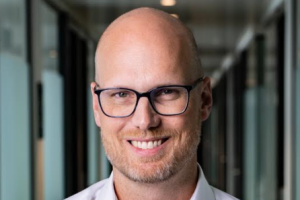
Carl-Michael Simon, Country Manager for Mid-Size Markets at argenx, discusses how the company has grown from its Dutch and Belgian origins into a global biotech delivering precision medicines for autoimmune diseases. From the landmark approval of VYVGART to new formulations, market access strategies, and the ambitious goal of reaching 50,000 patients by 2030, he highlights the collaborative approach underpinning every step of this journey.
What is argenx’s vision and mission, and how do you position yourself globally?
argenx is a global biotech with European roots. We were founded in 2008 in the Netherlands, and our research labs are headquartered in Belgium. From the outset, our mission has been to develop precision medicines for autoimmune diseases, particularly in areas where patients face a significant unmet need. In December 2021, we secured our first approval in the United States for efgartigimod (VYVGART) in generalised myasthenia gravis (gMG), the first neonatal Fc receptor (FcRn) blocker authorised by the FDA. Approvals followed in Japan and the European Union in 2022. Since then, we’ve also secured regulatory approvals in the US, Europe and Japan in Chronic Inflammatory Demyelinating Neuropathy (CIDP) as well as in primary immune thrombocytopenia (ITP) in Japan, and we are now reaching more than 15,000 patients worldwide. Looking ahead, our ambition is to reach 50,000 patients across ten indications by 2030, and we are well on track to deliver on this vision.
Central to how we work is a commitment to co-creation and humility. We recognise that we do not hold a monopoly on understanding disease biology, so we actively partner with leading scientists and clinicians who have dedicated their careers to studying these conditions. VYVGART itself was the result of a collaboration with Professor E. Sally Ward, whose pioneering research into FcRn biology at the University of Texas Southwestern and later at the University of Southampton formed the basis of the molecule. Our pipeline has developed through similar partnerships, such as empasiprubart (ARGX-117) with Professor Erik Hack at Utrecht University, and ARGX-119 with researchers at Leiden University Medical Centre and New York University.
This collaborative approach extends beyond research to regulators, payers, and physicians with whom we aim to establish win-win partnerships to ensure that innovation translates into meaningful patient access. Internally, we embrace the same values – curiosity, openness, and humility – so that the way we work together reflects how we engage externally. For me, that culture of collaboration, underpinned by an understanding that we do not have all the answers ourselves, remains the true “secret sauce” of argenx and the foundation of our continued growth.
How do you approach the mid-size markets region of the Nordics, Benelux, Switzerland, and Austria, and what was the rationale for bringing these countries together under one leadership structure?
Although these countries differ in language, culture, healthcare systems, and reimbursement pathways, the overarching goal is the same: to ensure that our innovative medicines reach patients in ways that are supported by local systems and are workable for us. What unites the region is this shared purpose. Achieving it requires careful listening, a strong understanding of each market’s priorities, and the ability to adapt approaches accordingly. In the end, there are more commonalities than differences, with collaboration and problem-solving as the constant threads.
The decision to establish this cluster was driven by the need to give these markets greater focus. Previously, they were attached to larger neighbours – Switzerland and Austria under Germany, Belgium under France. The thinking was that by creating a mid-size markets region, the larger countries would be able to dedicate their resources to their own priorities, while these important but smaller markets would benefit from leadership dedicated to their specific needs.
What I find most rewarding in this role is the breadth of thinking it demands. Covering nine countries, each with its own dynamics, requires the team to prioritise carefully and adapt quickly. That diversity creates complexity, but also energy and opportunity. Personally, having worked in Belgium, coming from the Nordics, and now having made Switzerland my home, where I am also a national, I feel particularly aligned with this region and its varied perspectives.
How has your region contributed to argenx’s strong global performance, and what does this growth mean internally for your team?
argenx delivered a very strong year in 2024, with full-year global sales hitting USD 2.2 billion. This momentum has carried into 2025, with second-quarter revenues nearly doubling compared to the same period last year. The mid-size markets have contributed to this trajectory by securing reimbursement and broad patient access across much of the region. Belgium achieved reimbursement 18 months ago, the Netherlands nine months ago, and Austria most recently this month. These achievements, followed by subsequent launches, have been central to the region’s contribution to global growth.
What have been your main learnings from launching VYVGART across such diverse markets?
One of the most significant lessons has been the importance of empowering the team. We are a relatively small organisation, yet operating across diverse markets requires people to step up, take ownership, and adapt quickly to local realities. The progress we have made is directly linked to the strength of the team. As a leader, it has been my job to give them the space and trust to act. Allowing that autonomy has been critical in managing both the diversity and the complexity of the challenges we face.
The other major learning is the value of collaboration. Internally, our ability to succeed has depended on how well we work together; externally, it has relied on building constructive partnerships with stakeholders to ensure patient access. When approached with the right mindset, collaboration consistently demonstrates its power, creating solutions that might otherwise have been out of reach and often leading to outcomes that feel genuinely transformative.
What is the significance of VYVGART as a first-in-class therapy, and what impact has it had on patients?
VYVGART represents the first therapy to target the neonatal Fc receptor (FcRn), using an engineered Fc fragment rather than a full-length antibody to block the recycling of immunoglobulin G. This innovation has addressed a clear unmet medical need and is already making a tangible difference in patients’ lives.
From the outset, our mindset was not simply to bring a single formulation to market, but to keep innovating in ways that would matter for patients. We launched VYVGART initially as an intravenous treatment in hospitals, but quickly developed a subcutaneous version that enabled patients in Europe to self-administer their therapy more conveniently; this was approved last year. Most recently, we introduced a pre-filled syringe, a second-generation subcutaneous option that makes self-injection significantly easier.
What distinguishes our approach is that we began developing the pre-filled syringe even before the original intravenous product had been commercially de-risked. We believed early on that this would be essential for patients and a long-term differentiator, and so we were willing to take that risk. This decision has not only enhanced patient experience but is also proving to be an important driver of our growth.
How is argenx advancing its strategy to reach ten indications by 2030, and which therapeutic areas are you prioritising?
Our strategy is anchored in autoimmunity, which is where we will continue to focus our efforts. The first indications have been in the neuromuscular field, but we are now broadening into rheumatology and exploring opportunities within dermatology. Immunology is the thread running through everything we do and remains the foundation of our pipeline.
The central idea guiding our approach is to identify targets that enable precise and controlled intervention in the immune system, rather than relying on the broader, less selective approaches that have dominated in the past, such as systemic immunosuppression or long-term steroid use. We see this as the beginning of a new chapter for immunology, much like the transformation that oncology underwent in recent decades. Across the industry, rapid progress is being made, and we are determined to play a leading role in shaping this new era.
What does the recent European Commission approval of VYVGART for CIDP mean for your markets, and how are you preparing for the rollout?
The approval of VYVGART for chronic inflammatory demyelinating polyneuropathy (CIDP) is a significant milestone. CIDP is a rare, chronic autoimmune neuromuscular disease, and this marks the first meaningful innovation in its treatment for more than three decades. Unsurprisingly, there is substantial interest across the region, reflecting both the considerable unmet medical need and the significance of this new treatment option for patients.
In nearly all of my markets, we are now focused on bringing this innovation to patients, with the immediate priority being reimbursement, as this is always the critical first step. Alongside this, we are preparing the market and engaging with physicians. Many of the same specialists treat both CIDP and gMG, so there is already a high level of familiarity with the underlying mechanism of action, which has been established in gMG, and this makes the transition into CIDP smoother.
The feedback from the medical community has been very encouraging. While the patient population in CIDP is smaller than in gMG, the enthusiasm from physicians underlines the importance of this approval and the opportunity it represents for patients living with this challenging disease.
Why did you choose to base yourself in Switzerland, and how do you view the country’s role within Europe’s biotech ecosystem?
I first moved to Switzerland with Celgene and later joined Vertex as it was establishing its international headquarters here. I was the eighth person hired outside the United States, and it was a very dynamic period of growth. When the company later relocated its headquarters to London, I commuted for a while but eventually concluded that this was not sustainable. Around that time, I came across argenx, and what immediately resonated with me were the company’s values and the opportunity to work with a European biotech for the first time. At that stage, much of the team building argenx’s European operations was based in Switzerland. Now we have teams working across Europe. For me personally, Switzerland has been a place of professional opportunity, with exciting biotech activity and a very strong talent base.
The country itself offers a robust ecosystem, combining the presence of major pharmaceutical players with a vibrant biotech community attracted by stability, and in some cases, tax advantages, but more importantly, access to highly skilled people and Swiss pragmatism. That said, it is not the only thriving ecosystem in Europe. Belgium, where argenx has built a particularly strong base, particularly in Flanders, has enabled companies to bridge the critical period between scientific innovation and commercialisation through sustained government support. Many companies have grown from this environment, building on the foundation laid by Janssen Pharmaceuticals and the country’s established vaccine industry through players like GSK.
Looking to the future, what do you see as the key priorities for the next few years, and what final message would you share with our international readers?
In the near term, our priorities are clear. We want to ensure that new formulations, especially the pre-filled syringe, are launched and available across all markets. Securing reimbursement and achieving successful launches for new indications, beginning with CIDP, will also be essential. At the same time, we are preparing for the introduction of empasiprubart (ARGX-117), which represents a “pipeline within a product” and will hopefully open multiple subsequent indications. These elements will be the key drivers of growth in my region.
Looking at the pipeline, the outlook is equally compelling. argenx currently has four core assets advancing and around 50 clinical trials underway. Within the next 18 months, we expect results from six phase II and six phase III studies, each of which has the potential to shape our trajectory significantly.
My final message is that argenx exemplifies how European innovation can evolve into a truly global biotech company. While we may not yet be widely known everywhere, there is enormous dynamism driving our progress. That dynamism comes from collaboration, whether with leading scientists, physicians, regulators, or partners, wherever we see opportunities for genuine win-win outcomes. Collaboration is at the heart of how we work, and it remains the foundation of our success.