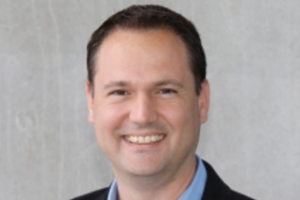
Dr. Dragan Grabulovski, CEO and co-founder of Araris, shared how his journey from co-founding Covagen to advising venture firms shaped his vision for building a platform-driven biotech company. He explained how Araris’s proprietary conjugation technology solves key limitations in ADC development, including enabling multi-payload approaches for greater efficacy. “Our vision is to be the reference in ADC,” he said, highlighting their goal to lead the field while advancing three lead candidates toward the clinic. The recent acquisition by Taiho Pharmaceutical preserves Araris’s independence while providing global reach, positioning the company to transform cancer treatment and expand into other therapeutic areas.
Could you elaborate on the professional journey that led to founding Araris, particularly how your previous experiences shaped your strategic approach?
My professional trajectory has been fundamentally shaped by the opportunity to observe and participate in the complete biotech value creation cycle. Following my doctoral studies in pharmacy at ETH Zurich, I co-founded Covagen in 2007, focusing on bispecific antibody development. This venture provided invaluable insights into scaling biotechnology companies from initial concept through to strategic acquisition.
Over seven years, we expanded Covagen from a two-person start-up to a 35-employee organisation, securing 60 million USD in venture capital and establishing strategic collaborations with Roche and Mitsubishi Tanabe. The competitive acquisition process culminated in Johnson & Johnson’s successful bid in 2014, providing me with comprehensive exposure to corporate development dynamics and strategic decision-making frameworks.
Following this exit, I transitioned into venture capital advisory, working with multiple investment firms while maintaining my scientific currency and industry networks. This role proved instrumental in understanding market dynamics and investment perspectives across diverse therapeutic areas. Simultaneously, my appointment as a start-up coach through ETH and Swiss government programs created the serendipitous connection with Philipp, Araris’s scientific co-founder, in 2018.
When I evaluated Philipp’s platform technology, the strategic potential was immediately apparent. Rather than serving merely as his mentor, I recognised an opportunity to leverage my operational experience and industry relationships to accelerate the technology’s commercial development. The recruitment of Isabella, my former Covagen colleague, completed our founding team and established the foundation for Araris’s inception in 2019.
How does Araris’s technology platform address the fundamental challenges facing current ADC development?
Araris has developed a proprietary conjugation platform that addresses three critical limitations inherent in existing ADC technologies. First, our manufacturing approach eliminates the requirement for prior antibody engineering, enabling direct utilisation of existing antibody assets. This capability is particularly valuable for pharmaceutical companies with extensive antibody libraries, as it allows immediate deployment without additional protein modification or process development.
Second, our platform generates ADCs with superior stability profiles and enhanced therapeutic indices. The conjugation technology produces well-defined products with significantly reduced premature payload release, ensuring maximum toxin delivery specifically to tumour tissues while minimising systemic exposure. This precision translates directly to improved patient safety profiles and potentially expanded therapeutic windows.
Most significantly, our platform enables the development of multi-payload ADCs, addressing the fundamental limitation of single-payload approaches that dominate current ADC development. Historical experience in conventional chemotherapy has consistently demonstrated superior outcomes through multi-agent combination therapy, attacking tumours through diverse mechanistic pathways and reducing resistance development. Current ADC technologies are constrained to single payload classes, creating inherent vulnerability to resistance mechanisms.
Our multi-payload approach represents a paradigm shift, enabling simultaneous delivery of multiple cytotoxic agents with distinct mechanisms of action through a single antibody construct. This strategy mimics the proven efficacy principles of combination chemotherapy while maintaining the precision and reduced systemic toxicity advantages of targeted delivery systems.
What is Araris’s current development status and strategic priorities for clinical advancement?
We are currently advancing three lead ADC candidates toward clinical development in collaboration with Taiho Pharmaceutical. Our development timeline projects the first candidate entering clinical trials in early 2026, with the second candidate following by the end of 2026, and the third candidate initiating clinical development in early 2027.
Our indication selection strategy focuses on areas of significant unmet medical need across both solid tumours and haematological malignancies. This approach reflects our commitment to developing therapeutics for patient populations with limited treatment options, where our multi-payload approach may provide particular advantages over existing standard-of-care regimens.
While oncology represents our primary focus, we are simultaneously evaluating applications beyond cancer treatment, particularly in inflammatory and immunological disorders where targeted payload delivery could address current therapeutic limitations. However, these initiatives remain in earlier stages of development compared to our oncology pipeline.
The strategic vision encompasses establishing clinical proof-of-concept across all three lead candidates while expanding our pipeline through internal development and strategic partnerships. This approach leverages our platform’s capability to generate multiple product candidates while managing resource allocation and risk distribution across diverse therapeutic applications.
How did the strategic acquisition by Taiho Pharmaceutical evolve, and what are the implications for Araris’s future development?
The acquisition represented the culmination of a strategic relationship that began with our 2023 collaboration agreement with Taiho. This initial partnership provided both organisations with valuable insights into technological capabilities and cultural alignment, creating the foundation for deeper strategic engagement.
The acquisition timing reflected several converging factors: our demonstration of compelling preclinical data addressing significant unmet medical needs, Taiho’s strategic focus on ADC technologies, and the broader industry recognition of ADC potential following recent clinical successes. Our position as pioneers in multi-payload ADC development aligned perfectly with Taiho’s strategic expansion priorities.
The integration structure preserves Araris’s operational independence as a fully-owned subsidiary, maintaining our 16-person team and research capabilities while providing access to Taiho’s extensive oncology expertise, clinical development infrastructure, and global commercial reach. This approach creates significant synergies while preserving the entrepreneurial culture and scientific focus that drove our initial success.
Importantly, our existing partnerships with Chugai and Johnson & Johnson continue under the new ownership structure, demonstrating Taiho’s commitment to our platform-based business model and collaborative approach to therapeutic development. This continuity enables sustained advancement of multiple programs while expanding our strategic options for future partnerships.
How does Araris’s partnership approach maximise the value creation potential of your platform technology?
Our partnership strategy recognises the fundamental advantage of platform technologies: the ability to generate multiple product candidates across diverse therapeutic areas and indication sets. This approach enables strategic collaborations with organisations possessing complementary capabilities, market access, or indication-specific expertise.
The platform’s versatility allows partners to leverage our technology for their specific strategic priorities while we maintain the capability to develop internal programs in non-competing areas. This creates multiple value creation pathways and reduces dependence on any single therapeutic program or market opportunity.
Our existing partnerships with Chugai and Johnson & Johnson exemplify this approach, providing these organisations with access to our differentiated ADC technology while generating milestone payments and potential royalty streams for Araris. These collaborations also provide valuable validation of our platform capabilities and support our broader market development efforts.
The partnership strategy will continue expanding under Taiho’s ownership, potentially accelerating our ability to address multiple therapeutic areas simultaneously while leveraging our partners’ clinical development and commercialisation capabilities. This approach aligns with our vision of maximising patient impact through broad platform deployment.
What is your perspective on the transformational potential of ADC technology for cancer treatment?
The fundamental vision driving ADC development across the industry is the replacement of conventional chemotherapy with precision-targeted alternatives. Current chemotherapy regimens impose a significant patient burden through systemic toxicity while often providing limited efficacy improvements, particularly in advanced disease settings.
ADC technology offers the potential to deliver superior therapeutic outcomes while dramatically improving patient quality of life. Early clinical evidence supports this vision, demonstrating improved survival outcomes with substantially reduced adverse event profiles compared to conventional chemotherapy approaches.
This transformation extends beyond immediate patient benefits to encompass healthcare system advantages through reduced hospitalisation requirements, decreased supportive care needs, and improved treatment compliance. The precision targeting capabilities enable treatment of previously undruggable tumour types while expanding therapeutic options for patients who have exhausted conventional treatment alternatives.
The industry trajectory suggests we are approaching an inflexion point where ADCs become standard-of-care across multiple cancer indications, fundamentally reshaping oncology treatment paradigms. Our multi-payload approach positions Araris to contribute significantly to this transformation while addressing resistance mechanisms that limit current ADC effectiveness.
How has Switzerland’s biotech environment contributed to Araris’s development and success?
Switzerland provides a unique combination of academic excellence, industry expertise, and supportive policy frameworks that create exceptional conditions for biotech innovation. The ETH domain institutions, including the Paul Scherrer Institute, represent world-class research capabilities that provide both a talent pipeline and collaborative opportunities.
The established pharmaceutical industry presence creates a deep talent pool with relevant expertise while fostering an ecosystem of suppliers, service providers, and advisory resources. This infrastructure significantly accelerates start-up development timelines and reduces operational complexity.
The Swiss innovation support system proved particularly valuable for Araris through InnoSuisse grant funding that enabled higher-risk research activities not typically supported by private investment. These resources allowed us to generate critical proof-of-concept data that ultimately supported our collaboration negotiations and acquisition discussions with Taiho.
However, successful biotech development requires a global perspective from inception. Our investor base included organisations from Switzerland, the United Kingdom, the United States, and South Korea, reflecting the international nature of our market opportunity and the importance of accessing diverse capital sources and market expertise.
What organisational principles have been essential to building successful biotech companies?
Successful biotech development requires convergence of several critical elements: differentiated technology addressing significant unmet needs, strategic investor partnerships providing both capital and expertise, and exceptional teams capable of executing complex development programs under resource constraints.
Team composition represents perhaps the most crucial element. Our approach emphasises recruiting individuals whose expertise exceeds our own in their respective domains, creating an organisation where leadership learns continuously from team members. This philosophy has enabled Araris to maintain zero employee turnover since its inception, indicating strong cultural alignment and employee satisfaction.
The international composition of our team reflects the global nature of our market opportunity while leveraging diverse perspectives and expertise. Our hiring philosophy prioritises both technical competence and cultural fit, ensuring team members can thrive in the dynamic, resource-constrained environment characteristic of biotech development.
Most importantly, successful biotech leadership requires a willingness to proceed despite incomplete information and significant uncertainties. Our decision to co-found Araris preceded securing investor commitments or university licensing agreements, reflecting our conviction in the technology’s potential and our confidence in our ability to execute the development program.
What are your aspirations for Araris’s position in the global ADC market?
Our vision encompasses establishing Araris as the definitive global leader in ADC technology development. This ambition extends beyond our internal pipeline to include widespread adoption of our platform technology by pharmaceutical companies seeking differentiated ADC capabilities.
The strategy involves demonstrating superior clinical outcomes across multiple indications while continuously advancing our platform capabilities to maintain technological leadership. Success in this vision would position Araris as the preferred partner for organisations seeking best-in-class ADC development capabilities.
This ambitious goal reflects our conviction that multi-payload ADC technology represents the next evolutionary step in targeted cancer therapeutics. By establishing proof-of-concept across diverse therapeutic applications, we anticipate creating a sustainable competitive advantage that drives long-term value creation.
The measurement of success ultimately centres on patient impact: the number of patients who receive improved treatment outcomes through Araris-enabled therapeutics. This patient-centric perspective drives our strategic decisions and reinforces our commitment to maximising the platform’s therapeutic potential.
What guidance would you offer to aspiring biotech entrepreneurs based on your experience?
The most critical advice for potential biotech entrepreneurs is to proceed with conviction when you believe your innovation can meaningfully benefit patients. Successful ventures often begin before all strategic elements are perfectly aligned, requiring founders to advance based on vision and determination rather than complete certainty.
Our experience launching Araris without confirmed investor commitments or finalised university licensing agreements demonstrates the importance of entrepreneurial courage. The key is maintaining confidence in your ability to overcome obstacles and secure necessary resources while making progress toward proof-of-concept.
Success factors include ensuring your technology addresses genuine unmet medical needs, assembling teams with complementary expertise and shared commitment, and securing strategic investors who provide guidance and network access beyond capital. However, the willingness to begin despite uncertainties often distinguishes successful entrepreneurs from those who remain perpetually in preparation phases.
The biotech industry rewards innovation, persistence, and strategic execution. For entrepreneurs with compelling technologies and patient-focused missions, the potential rewards, both financial and societal, justify the inherent risks and uncertainties of biotech development.
The future of medicine depends on individuals willing to transform scientific discoveries into therapeutic realities. For those with relevant innovations and entrepreneurial conviction, the opportunity to contribute to this transformation represents both a privilege and a responsibility that should not be deferred due to perceived obstacles or uncertainties.