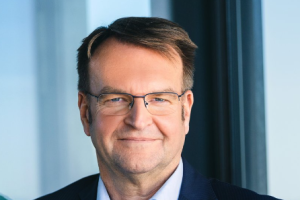
Pharmaceutical manufacturing is evolving into a strategic pillar of competitiveness, shaped by modular design, digital integration, and a growing focus on long-term efficiency. Bilfinger, through its Technology segment, is playing a central role in this transformation, supporting clients across biopharma, energy transition, and nuclear with scalable, future-ready solutions. In this conversation, President Thorsten Hoppe outlines how the company is helping redefine performance standards in high-cost markets like Switzerland and Germany.
How has Bilfinger evolved into a key player in industrial services, and how would you define your role in shaping the Technologies segment today?
This is right, Bilfinger is an international industrial service company. With our more than 30,000 colleagues, we operate in Europe, North America and the Middle East. Our customers come from the chemicals & petrochemicals industry, energy, oil & gas and pharma & biopharma industry. Through our comprehensive service portfolio, we help our customers enhance their efficiency and sustainability.
The group is structured into three business segments. I lead one of them, the Technologies segment, which is built around a design-build approach and serves three core industries: nuclear, energy transition (including hydrogen and carbon capture), and pharma/biopharma. The other two segments – Engineering & Maintenance Europe and Engineering & Maintenance International – complement our work by supporting the full asset lifecycle, from initial capital project execution to long-term maintenance and performance optimisation.
We are organised by customer-oriented business lines rather than traditional country-based entities, enabling us to standardise operations, boost efficiency, and deliver greater value to clients. This integrated, cross-border approach helps us respond quickly to client needs and reinforces our position as a partner of choice for efficiency and sustainability. Switzerland is one of our key markets with offices in the hubs of swiss pharma and bio pharma production.
What consistent principles and delivery frameworks allow you to operate effectively across diverse sectors such as nuclear, energy transition, and biopharma?
While the industries we serve differ in their end products and technical requirements, the way we deliver projects is intentionally consistent. At Bilfinger, we operate through a functionally structured model that allows us to apply the same disciplined, standardised methodology.
We have developed a centralised project delivery framework known as Bilfinger Project Solutions (BPS), which acts as a modular toolkit spanning the entire lifecycle of capital projects. This approach helps us de-risk execution, ensure on-time delivery, and drive quality across markets. Whether a team is working on a hydrogen plant or a pharma facility, they follow the same visual modelling, engineering design, and documentation processes.
Digitalisation is a critical enabler. Within our Business, we integrate engineering, fabrication, and installation workflows under a unified digital system, called DigiFab. This not only reduces inefficiencies but also makes it easier to manage changes dynamically, which is increasingly essential in today’s project environments.
On the operational side, we have built the Bilfinger Collaboration & App Platform (BCAP), our cloud-based ecosystem for OPEX projects. It consolidates a wide range of applications, including those focused on health, safety, environment, and quality (HSEQ), and ensures consistency across our 30,000 employees. This consistency is crucial, not only for compliance and safety but also for turning data into actionable insights. For example, we now routinely conduct remote corrosion assessments using non-destructive methods, eliminating the need to dismantle infrastructure while maintaining asset integrity.
The results of this model are clear. In Switzerland and other markets, we have seen plant availability rise up to 98 percent, and the cost of order reduced by up to 30 percent within three years when clients adopt structured maintenance strategies. Particularly in the pharma and biopharma sectors, where margins are tightening and operational reliability is paramount, predictive maintenance and efficiency-focused partnerships are no longer optional, they are essential.
Ultimately, our shift has been towards embedding sustainability, performance, and digital integration across the asset lifecycle.
How has the pharma and biopharma segment grown in significance within your business, and what are the key capabilities you bring to this space?
Pharma and biopharma have become a cornerstone of our Technologies segment. Our strength in this field lies in the design and delivery of process systems, particularly bioreactors, purification equipment, and the process piping that connects them. What sets us apart is our ability to provide these systems in a modular, standardised format: skid-mounted or “superskid” units, depending on scale. These modules are fully assembled and tested off-site before delivery, dramatically reducing on-site installation time, lowering risk, and ensuring a far higher level of delivery predictability. In an industry where manufacturing timelines can define product success, that reliability is a major advantage.
Looking ahead, we are advancing this concept even further through the development of smart skids; digitally integrated process modules that incorporate automation, monitoring, and data capture from the outset. These next-generation systems enhance traceability and scalability, enabling clients to deploy consistent, repeatable infrastructure across sites and regions. One of our clients, after encountering delays with traditional on-site installation, transitioned to our modular model and saw an immediate, sustained improvement in execution and reliability.
This shift also mirrors broader trends across the industry. As global supply chains fragment, companies are increasingly choosing to invest in localised, purpose-built facilities rather than retrofitting older assets. We are actively supporting this evolution, not only for major pharmaceutical players but also for Contract Development and Manufacturing Organizations. Ultimately, we have become a proving ground for what we stand for as a partner: structured delivery, scalable innovation, and a commitment to efficiency that translates directly into client value.
Why is Switzerland such a strategically important market for Bilfinger, particularly in the context of life sciences investment?
In the life science market, Switzerland stands among our most important markets, alongside Germany, Belgium, and Denmark. Our assessments indicate that investment in the life sciences sector will remain strong. In particular, we see significant long-term potential in operations and maintenance, supporting value creation throughout the entire asset lifecycle. This investment trend is partly driven by the broader shift toward supply chain localisation. As companies move manufacturing closer to their end markets, Switzerland is emerging as a natural hub. Our expertise in bioreactors, purification systems, and cell processing technologies positions us well to support this evolution. We are also active in the blood plasma segment. While already well established in Europe, plasma manufacturing is expanding quickly in other regions, making it an increasingly relevant extension of our portfolio.
How are pharma companies rethinking manufacturing as a strategic function, and what long-term value does Bilfinger offer in this shift?
There has been a marked shift in how pharmaceutical companies view manufacturing. Whereas previously it may have been considered a support function, it is now increasingly recognised as a strategic priority, not least because the commercial window for innovative therapies is shrinking and margins are under pressure. In this context, our discussions with clients have evolved. They are more willing to invest in robust infrastructure when it enhances predictability, accelerates time to market, and safeguards supply continuity. Manufacturing is no longer an afterthought; it is a competitive differentiator.
At Bilfinger, we are well positioned to support this transformation, for example our Net Zero Approach is a digitalised framework that helps clients reduce emissions and boost efficiency from early-stage engineering through to operations and maintenance. Often, relatively small utility modifications such as water recycling or energy optimisation can lead to significant environmental and cost gains. In some cases, we have helped pharmaceutical sites recycle over 80 percent of their water consumption or substantially reduce their carbon footprint.
In parallel, we are advancing large-scale hydrogen projects, including a 100-megawatt electrolysis plant. While this sits outside the pharma sector, it reflects our broader vision: enabling energy independence and decarbonisation through integrated solutions.
This convergence of energy, sustainability, and process expertise is part of what defines our Technology segment. But our strategy is not to offer clients a menu of services; rather, we build long-term partnerships, often starting with a single CAPEX project. From the outset, we prioritise maintainability and operational efficiency, gradually expanding into broader lifecycle support. It is a process of co-development; one rooted in trust, shared goals, and a clear vision of long-term value.
What broader industry trends are influencing the evolution of pharmaceutical manufacturing, and how do you see competitiveness being sustained in high-cost markets like Switzerland and Germany?
The pharmaceutical manufacturing landscape is undergoing a significant transformation, moving steadily toward modularity and standardisation. At Bilfinger, we are contributing to this shift through the delivery of skids and superskids, modular units that constitute core components of production facilities. Looking ahead, I believe the future lies in fully standardised plants supported by advanced digital fabrication methods. The use of digital twins, for example, allows us to replicate systems seamlessly across multiple sites, driving consistency, scalability, and operational efficiency.
This shift is especially critical in high-cost countries like Switzerland and Germany, where labour and operational expenses are considerably higher. To remain globally competitive, we must embrace digitalisation and reduce process variability to a minimum. There is no alternative.
We are also seeing broader shifts in the global supply chain, with a gradual move away from highly centralised production towards regionally anchored, deglobalised models. As a result, companies will increasingly adopt modular, repeatable plant designs that can be implemented across different geographies without sacrificing quality or efficiency. This trend reinforces the importance of investing in innovation to sustain manufacturing presence in Europe.
What message would you share with pharma executives currently shaping manufacturing investment decisions, especially given the strategic yet often underappreciated role of industrial efficiency?
Manufacturing may not always be in the spotlight, but it’s essential for delivering innovation at scale. Boardrooms now recognize that highly customized, one-off projects are too complex and costly. Instead, the focus is shifting to standardization, digitalization, and risk management to enable consistent, efficient, and scalable operations that attract investors. Companies should concentrate on their core strengths, like advancing science and improving patient outcomes, while relying on expert partners to optimize manufacturing. At Bilfinger, we leverage global expertise and data to deliver reliable results for our clients.