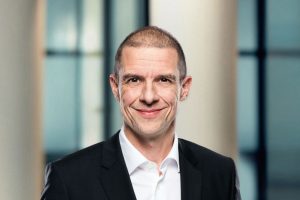
Urs Indermühle sees 2025 shaped by three big shifts and two urgent risks: R&D is now mostly sourced externally (just 35 percent developed in‑house), forcing pharma to master licensing and ecosystem partnerships; Asia, especially China, has become a serious innovation hub, making global IP and footprint strategies a priority; and AI, currently stuck in a post‑hype lull, is about to accelerate as firms roll out enterprise‑wide tools and upskill staff. Meanwhile, cyber‑attacks on IP and clinical data are surging, and Indermühle envisions Switzerland acting as a neutral “Basel for health,” convening regulators, ministries, and industry to set common standards for data sharing and AI in drug development.
Your career at EY spans over two decades. What has sustained your commitment to the organization throughout this extended tenure?
The fundamental attraction lies in the continuous evolution of opportunities and intellectual challenges. Every two to three years, I have encountered pathways to develop new competencies and tackle different strategic imperatives. My journey encompassed four years in audit, sixteen years in transactions, and a decade of international experience across Central and Eastern Europe and Africa. This progression culminated in my current leadership of our Life Sciences practice in Switzerland, followed by my upcoming transition to our consulting division and now my recent appointment as Life Sciences Sector Leader Europe West.
What particularly energizes our environment is the demographic composition of our workforce. Our global median age is 27 years, with Switzerland at 29 years. This creates an extraordinary dynamic where emerging talent continuously brings fresh perspectives on technological advancement and innovative operational models. The result is a culture of perpetual learning that challenges established thinking while fostering the next generation of industry leaders.
How significant is the Swiss office within EY’s global life sciences ecosystem?
While not formally designated as such, the narrative consistently positions Switzerland as a global centre for life sciences excellence. At EY, we are investing substantially in an AI & innovation hub specifically focused on life sciences applications, scheduled for launch later in the year.
Basel has established an extraordinarily strong position, anchored by major pharmaceutical companies employing thousands of highly skilled international professionals in this concentrated geographic area. This is coupled with a significant number of Biotech companies in the region.
Our Basel office has evolved to reflect this ecosystem, serving as a centre for life sciences expertise within our network. The concentration of industry leadership, combined with our strategic investments in AI and innovation capabilities, creates a unique value proposition for clients navigating complex transformation challenges.
What are the primary services you provide to life sciences companies, particularly in the current market environment?
Our core focus centres on comprehensive transformation strategies, with particular emphasis on artificial intelligence integration across the pharmaceutical value chain. We collaborate with clients to reimagine their operational models, from research and development through manufacturing and patient engagement, building compelling value propositions for their specific contexts.
Cybersecurity represents one of our fastest-growing investment areas, addressing the escalating threat landscape targeting intellectual property and sensitive research data. The pharmaceutical industry faces unprecedented risks as malicious actors increasingly target valuable proprietary information and research capabilities.
The industry confronts fundamental structural challenges that demand strategic reconsideration. Research and development costs continue escalating while intellectual property generation decreases, forcing companies into rare disease and ultra-rare disease segments where development costs are exponentially higher. Simultaneously, internal R&D capabilities have shifted dramatically. Whereas pharmaceutical companies historically conducted approximately 70 percent of research and product development internally twenty years ago, this figure has declined to roughly 35 percent today as an industry average, replaced by more external innovation through in-licensing and M&A activities.
This transformation necessitates sophisticated ecosystem management, requiring companies to excel at strategic partnering related to in-sourcing and in-licensing while maintaining equivalent or increased R&D investment ratios relative to sales. Companies must simultaneously address operational efficiency challenges while navigating complex pricing dynamics across different global markets.
How do you assess the changing dynamics between established markets and emerging innovation centres, particularly regarding Asia’s growing influence?
In the EY Firepower report 2025, we highlighted the role China is playing as a Biotech innovation hub, and multi-national companies are increasingly exploring opportunities to access innovative technologies in China; a trend that continues into the 1H 2025.
China has emerged as a formidable innovation centre, fundamentally altering the traditional pharmaceutical development paradigm. This shift challenges the historical assumption that all meaningful intellectual property development in Pharma occurs in Europe and the US.
Companies must now closely evaluate where to best set the strategic focus in future. Whether R&D investment remains optimal for Western markets, or whether it may be worthwhile engaging with Chinese innovation capabilities, represents a competitive consideration.
This evolution extends beyond simple market access considerations to fundamental questions about innovation sourcing and intellectual property development strategies. The traditional model of Western-centric innovation followed by global commercialization is being disrupted by genuinely innovative capabilities emerging from Asian markets.
How do you view Switzerland’s position in balancing innovation leadership with market access limitations, given its small patient population?
Switzerland faces an inherent trade-off between innovation excellence and clinical trial accessibility. The domestic market is neither cost-effective nor sufficiently large for major clinical investigations. However, Switzerland’s competitive advantage lies in innovation capacity and manufacturing excellence, particularly in highly sophisticated therapeutic areas.
Our strength in advanced manufacturing became evident during the COVID-19 pandemic, when Contract Development and Manufacturing Organizations (CMOs) in Switzerland achieved unprecedented mRNA vaccine production timelines. This capability reflects Switzerland’s historical precision manufacturing expertise, evolved from traditional industries like watchmaking into Medtech and biotechnology applications.
The critical success factors include maintaining access to premier educational institutions such as ETH Zurich, EPFL, University of Basel, University of Zurich and University of St. Gallen which attract top-tier international students and talent. We are observing increased talent inflows as individuals choose Switzerland over alternative destinations for their studies as well as for continuous employment.
Our primary challenge relates to work permit accessibility. Historically, obtaining work permits for non-EU talent required up to several months, creating significant competitive disadvantages. While improvements have been implemented, streamlining this process remains essential for maintaining our talent acquisition capabilities required for this innovative space to maintain
What is your assessment of Switzerland’s digital healthcare infrastructure and AI readiness?
Switzerland exemplifies a paradoxical pattern in which we are notably late in initiating digital transformation discussions but exceptionally effective in implementation once decisions are made. Our electronic patient record development significantly lags behind countries like France and Germany, which is concerning given our technological capabilities.
The fundamental challenge lies in our highly fragmented healthcare system. We operate numerous disconnected hospitals without unified data platforms, lacking integration between healthcare providers, universities, insurance systems, and pharmaceutical companies. This fragmentation inhibits the comprehensive data ecosystem necessary for advanced AI applications.
We are investing extensively in data platform development within hospitals and creating interoperability solutions connecting pharmaceutical companies, universities, and healthcare providers. The goal is establishing open electronic health record systems that facilitate data sharing across the entire ecosystem while ensuring patient access and feedback capabilities.
How are your clients approaching AI investment decisions, given the current gap between expectations and practical applications?
The challenge stems from fundamentally different expectation curves. Innovation follows exponential patterns, while management expectations remain linear. Currently, we find ourselves in a valley where technological capabilities have not yet matched elevated expectations, leading to disappointment with initial AI use cases.
However, this situation will reverse rapidly when innovation acceleration surpasses expectation curves. The key lies in identifying the inflection point where practical applications begin delivering transformational value.
We are executing comprehensive AI transformation programs for major pharmaceutical companies, focusing on data foundation development and strategic use case selection. One global client engagement involves end-to-end generative AI transformation across all platforms, with a number of carefully selected high-value use cases. This approach requires organizational commitment from senior leadership through practical implementation and continuous learning adaptation.
Another significant program focuses on daily AI utilization training, ensuring employees are prepared to leverage advancing capabilities effectively. Many organizations underutilize existing AI tools due to lack of awareness, insufficient training, data privacy concerns or unrealistic expectations.
The critical success factor is establishing robust data foundations. Without access to properly structured and accessible data, AI investments cannot deliver anticipated returns, leading to falling behind innovation within a competitive environment.
How do you assess Switzerland’s biotech sector’s global standing and recognition?
Switzerland operates one of the world’s most sophisticated biotech ecosystems, though perhaps not receiving proportionate international recognition. The Swiss Biotech Association conference attracts over 3,000 international participants, demonstrating significant global engagement.
Our biotech companies operate with highly international orientations, maintaining strong connections to Boston and other major innovation centres. Current funding levels approximate CHF 2.5 billion annually, representing solid performance in the current investment environment, though below the CHF 3 billion levels achieved in previous years.
While we lack the venture capital depth found in the US, our funding ecosystem has developed substantially over recent years. We observe significant international company establishment in Switzerland, for both R&D-focused operations as well as commercial organization.
The connectivity of Switzerland within neighbouring European biotech hubs of Munich, Heidelberg, and Lyon creates a robust innovation network, though the scale of capital deployment remains below US levels across all industries.
Could Switzerland develop into the primary financing centre for European biotechnology?
The opportunity exists, though current investment scalability limitations must be addressed. Our venture capital firms maintain international reach, investing across European hubs and globally, but the concentration of dedicated biotechnology capital remains insufficient relative to the market opportunity.
A compelling analogy exists with the Bank for International Settlements, headquartered in Basel, where central bankers globally convene to cooperate on monetary policy. I envision establishing a parallel institution where health ministries and regulatory agencies collaborate on data sharing protocols and international harmonization initiatives.
Such an institution would leverage Switzerland’s neutrality, high trust environment, and regulatory expertise to create global standards for healthcare data integration and cross-border collaboration. This could position Switzerland as the coordination centre for international health innovation policy, complementing our existing pharmaceutical and biotech excellence.
How does EY support biotech companies throughout their development stages?
We engage with biotech companies from formation through commercialization, addressing the complete development spectrum. Early-stage support focuses on establishing proper financial infrastructure, tax optimization strategies, and business plan development that can withstand investor scrutiny.
Many emerging biotechs inadequately prepare financial records and tax structures, creating obstacles when seeking additional funding or eventual acquisition. We help establish robust financial foundations that support both immediate operational needs and long-term strategic objectives, including potential billion-dollar acquisition scenarios.
As companies advance through development stages, we provide IPO readiness services, listing process support, and post-commercialization assistance including market access and pricing strategies. Unfortunately, many Swiss biotechs list on NASDAQ rather than domestic exchanges, representing a missed opportunity for our capital markets.
How does EY differentiate itself within the competitive consulting landscape for life sciences clients?
Our distinctive strength lies in connectivity and our ability to integrate the best capabilities across our global network and diverse competency areas. When executed effectively, this connectivity makes us exceptionally competitive by combining the brightest analytical minds with practical implementation expertise.
We have invested significantly in talent acquisition, hiring twenty partners and directors specifically for life sciences over two years, creating substantial growth momentum. This influx brings diverse experience and perspectives that enhance our capability integration.
The consistent feedback from new hires emphasizes our superior ability to connect complementary skills and international resources to solve complex client challenges. While other firms may excel in specific areas, our integrated approach to problem-solving across multiple dimensions creates unique value propositions.
The challenge lies in consistently executing this connectivity model rather than operating in isolated competency silos.
As you transition to your new role, what strategic priorities do you envision for the team and the broader European life sciences landscape?
The fundamental imperative is openness for both Switzerland as a nation and for our firm as a global organization. We must excel at combining local market knowledge with global talent and capabilities, recognizing that our clients face global challenges requiring international solutions.
Switzerland possesses an extraordinary client base concentration for such a small market, but we cannot assume that optimal talent resides exclusively within our borders. Success requires integrating the best global capabilities with our local expertise to address clients’ worldwide operational challenges.
Looking toward the European landscape, our major strategic investment focuses on agentic AI which is the next evolution beyond current generative AI capabilities. This technology will fundamentally transform our business operations and client value propositions. We must prepare extensively, collaborating with alliance partners to address the unprecedented opportunities and challenges emerging in this space.
The combination of Switzerland’s pharmaceutical excellence, our global connectivity, and advanced AI capabilities positions us to lead industry transformation initiatives that will define the next decade of life sciences evolution.
Any final thoughts on Switzerland’s position in the global pharmaceutical landscape?
Switzerland’s pharmaceutical industry represents our largest export sector, comprising 52percent of global exports, underscoring the industry’s fundamental importance to our national economy. Major pharmaceutical companies have publicly announced billions in continued US investment, demonstrating their commitment to maintaining strong transatlantic partnerships.
Switzerland ranks as the sixth or seventh largest investor in the US, employing approximately 500,000 Americans and maintaining a balanced trade relationship when services are included. This economic integration creates mutual dependencies that transcend individual political cycles and policy shifts.
Our strength lies in presenting Switzerland as a reliable, innovative partner capable of contributing meaningfully to global health challenges while maintaining the collaborative relationships essential for continued pharmaceutical innovation and patient access worldwide.